
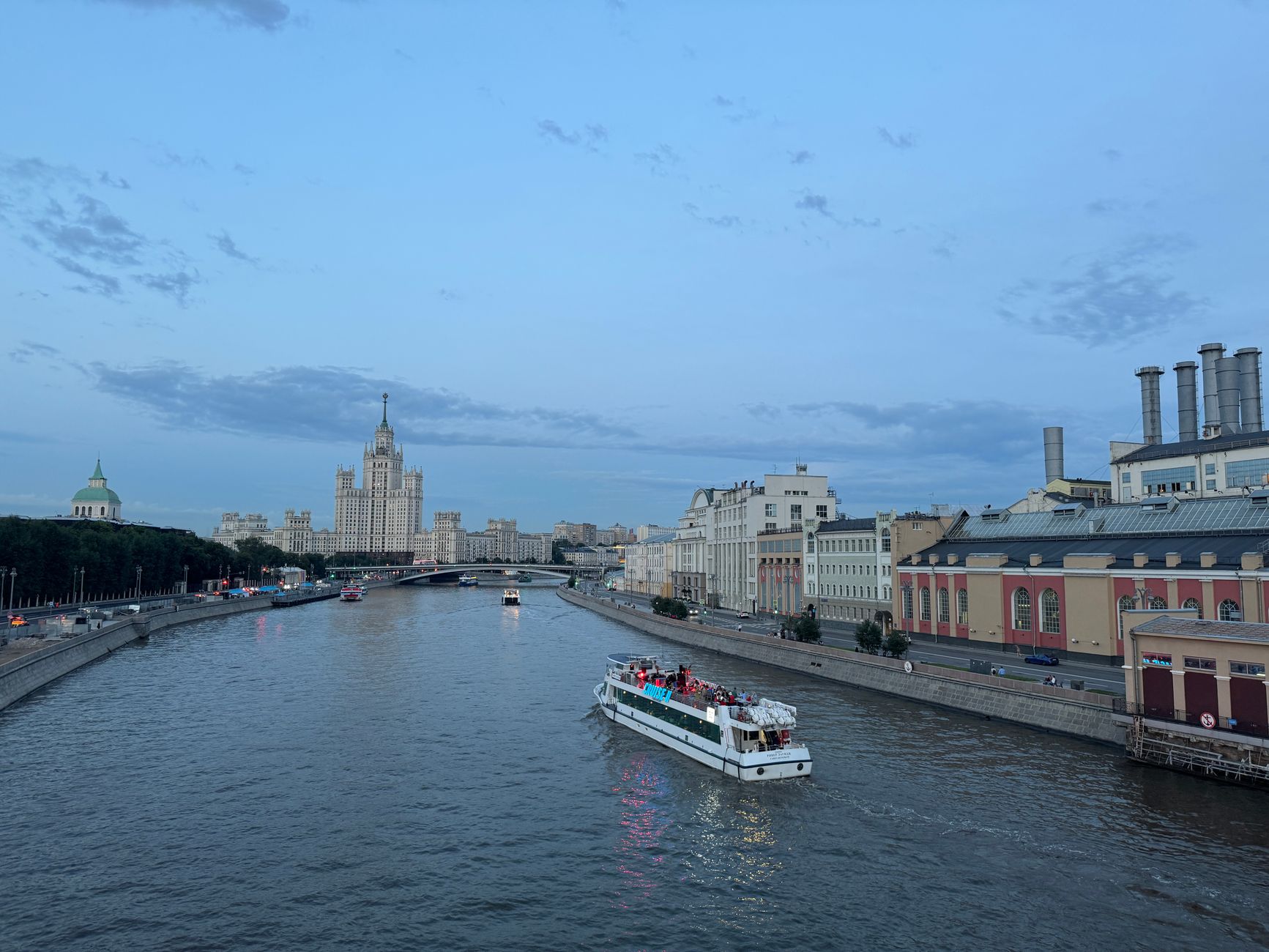
Hero image: Stepan Volkov / Pexels
Kaliningrad as Kremlin Propaganda Hub Exposed
New evidence reveals how the Russian exclave of Kaliningrad has become a laboratory for Kremlin disinformation, with local media and social networks amplifying narratives about NATO aggression, economic collapse, and internal dissent. A synthesis of open-source reporting shows how the region’s unique status enables coordinated propaganda that targets both domestic and international audiences.
Kaliningrad, the Russian Baltic exclave sandwiched between Poland and Lithuania, has long served as a strategic military outpost. But according to multiple independent investigations, it has also become a focal point for Kremlin-backed propaganda operations. By exploiting the region’s geographic isolation, media control, and digital connectivity, disinformation campaigns originating in or amplified through Kaliningrad are shaping narratives about NATO expansion, economic instability, and internal opposition. This investigation synthesizes reporting from StopFake to assess how Kaliningrad functions as an address for state-aligned propaganda and what that means for information integrity across Europe.
Introduction: Kaliningrad as a Propaganda Laboratory
Kaliningrad’s status as a semi-enclave—accessible by sea and air but connected to mainland Russia only by a narrow land corridor—creates both logistical and informational vulnerabilities. These conditions, combined with heavy state influence over local media and a high level of digital engagement, make the region fertile ground for disinformation. While the region’s military significance is well documented, its role in the Kremlin’s information ecosystem has received less scrutiny. StopFake’s investigation, “My Home Is Not My Castle: Kaliningrad as an Address for Kremlin Propaganda. Part 1,” provides a detailed look at how local outlets, social media influencers, and state-aligned Telegram channels amplify narratives that align with Moscow’s broader strategic messaging. This synthesis examines that reporting and situates it within the broader pattern of Russian disinformation operations targeting European audiences.
What StopFake Reports: The Kaliningrad Disinformation Ecosystem
StopFake’s investigation focuses on the coordinated spread of three core narratives in Kaliningrad: NATO as an existential threat, economic hardship caused by Western sanctions, and the suppression of internal dissent. According to StopFake, local media outlets—many of which are either directly state-owned or heavily influenced by regional authorities—routinely publish content that echoes Moscow’s framing of the war in Ukraine and the West’s role in it. These outlets frequently cite anonymous “experts” and “local residents” to lend authenticity to claims about NATO aggression, including assertions that Poland and Lithuania are preparing to annex parts of Kaliningrad. StopFake also documents the use of social media influencers and Telegram channels to amplify these narratives, often through emotionally charged language and fabricated statistics.
StopFake highlights the role of regional television channels and online news portals in normalizing conspiracy theories. For example, StopFake reports that local outlets have repeatedly aired segments suggesting that Western intelligence agencies are recruiting Kaliningrad residents to destabilize the region from within. These segments are often accompanied by calls for vigilance and loyalty to the Russian state, reinforcing a siege mentality. StopFake also notes that fact-checking efforts in the region are limited, with few local journalists willing to challenge official narratives due to legal and professional risks.
Comparing Outlets: Where Reporting Agrees and Diverges
This synthesis draws primarily on StopFake’s investigation, which provides the most detailed open-source analysis of Kaliningrad’s disinformation ecosystem to date. While other outlets have covered related themes—such as the region’s strategic importance or broader Russian disinformation campaigns—none have yet produced a comparable in-depth regional case study. StopFake’s reporting is notable for its granular focus on specific media outlets, social media accounts, and narrative patterns within Kaliningrad, rather than treating the region as part of a generic “Russian disinformation” narrative.
Where StopFake’s reporting diverges from broader analyses is in its emphasis on the local roots of the propaganda. While many studies of Russian disinformation focus on Moscow-based operations or cross-border campaigns, StopFake traces how narratives are localized and amplified by regional actors. This includes not only state media but also seemingly independent influencers who echo official lines. The investigation also underscores the role of geographic isolation: because Kaliningrad is physically separated from mainland Russia, residents may be more susceptible to narratives that frame the outside world as hostile.
The Claim: Kaliningrad as a Kremlin Propaganda Address
The central claim examined here is that Kaliningrad functions as a node in the Kremlin’s propaganda network—not just a passive recipient of disinformation, but an active producer and amplifier of narratives that serve Moscow’s strategic interests. StopFake’s investigation supports this claim by documenting repeated instances of coordinated messaging across local media, social platforms, and Telegram channels. These narratives consistently align with the Kremlin’s framing of the war in Ukraine, portraying NATO as an existential threat, sanctions as unjust economic warfare, and internal dissent as foreign-engineered subversion.
StopFake’s reporting also suggests that the region’s unique status enables this propaganda to spread with less scrutiny than in other parts of Russia. Because Kaliningrad is both a military stronghold and a border region, its media ecosystem is subject to tighter control, making it easier for state-aligned actors to dominate the information space. This combination of control and connectivity allows Kaliningrad-based narratives to reach both domestic audiences in Russia and international audiences in neighboring EU states.
Evidence Synthesis: What the Combined Reporting Shows
Taken together, the evidence from StopFake’s investigation indicates a systematic effort to shape perceptions in Kaliningrad through a blend of state-controlled media, localized influencers, and digital amplification. The narratives identified—NATO aggression, economic collapse due to sanctions, and internal subversion—are not unique to Kaliningrad but are consistently localized to fit the region’s context. For example, StopFake reports that local outlets frequently claim Poland and Lithuania are preparing to seize Kaliningrad, a claim that resonates with the region’s history as a former German territory and its current geopolitical tensions.
StopFake also documents the use of emotionally manipulative content, such as videos of “local residents” expressing fear of NATO or economic hardship, which are then amplified by regional media and social platforms. These tactics are consistent with known disinformation playbooks, including the use of fake experts, anonymous sources, and fabricated statistics. The investigation further highlights the lack of effective local fact-checking, which allows these narratives to persist with minimal challenge.
While StopFake’s reporting is the most detailed source available, it is important to note that it represents a snapshot in time. Disinformation campaigns are dynamic, and the specific narratives and channels may evolve. However, the patterns identified—coordination between state media and influencers, localization of narratives, and exploitation of geographic isolation—are consistent with broader trends in Russian disinformation operations.
Pattern Recognition: How Narratives Are Localized
One of the most striking findings from StopFake’s investigation is the way in which global disinformation narratives are localized to Kaliningrad. For example, the claim that NATO is preparing to attack Kaliningrad is framed not as a general threat but as an imminent danger specific to the region’s residents. This localization increases the perceived relevance of the narrative and makes it more likely to be shared and believed. Similarly, economic hardship caused by sanctions is often attributed to specific policies by Poland and Lithuania, rather than to broader global economic trends, further reinforcing a narrative of external blame.
This pattern of localization is a key tactic in disinformation campaigns, as it makes abstract geopolitical issues feel immediate and personal to audiences. By tailoring narratives to the specific context of Kaliningrad, propagandists increase the likelihood that residents will internalize and amplify these messages.
Who Is Affected and How the Narrative Spreads
According to StopFake, the primary audiences for Kaliningrad’s propaganda are local residents, Russian audiences in other regions, and international audiences in neighboring EU states. For local residents, the narratives serve to reinforce loyalty to the Russian state and justify the region’s militarization. For Russian audiences elsewhere, the narratives help maintain support for the war in Ukraine by portraying NATO as an existential threat. For international audiences, the narratives are designed to sow division and undermine trust in EU institutions.
StopFake reports that the narratives spread through a combination of traditional media and digital platforms. Local television channels and news portals are the primary sources of information for many residents, while social media influencers and Telegram channels amplify the messages to younger and more digitally connected audiences. The use of Telegram is particularly notable, as the platform’s encrypted nature makes it difficult to monitor or counter the spread of disinformation.
The investigation also highlights the role of regional authorities in enabling the spread of propaganda. By controlling key media outlets and tolerating—or even encouraging—the activities of pro-Kremlin influencers, authorities create an environment in which disinformation can thrive. This top-down support is a critical factor in the success of the propaganda campaign.
Red Flags and Debunking Checklist for Consumers
To help readers identify and resist disinformation from Kaliningrad and similar regions, the following checklist outlines specific warning signs and countermeasures.
- Anonymous or vague sourcing: Be skeptical of claims attributed to “experts,” “local residents,” or “anonymous sources” without verifiable identities or affiliations. Cross-check such claims with reputable fact-checkers or independent media.
- Emotionally charged language: Disinformation often relies on fear, anger, or urgency. Pause before sharing content that uses hyperbolic or emotionally manipulative language.
- Localization of global issues: Be wary of narratives that frame global geopolitical issues (e.g., NATO expansion, sanctions) as immediate and personal threats specific to your region. Ask whether the claim is being tailored to exploit local anxieties.
- Lack of verifiable evidence: Disinformation rarely includes primary sources, data, or links to original documents. Demand concrete evidence before accepting a claim as true.
- Coordination across platforms: If the same narrative appears simultaneously across state media, social media influencers, and Telegram channels, it may indicate a coordinated campaign. Check whether multiple sources are independently verifying the claim.
- Geographic isolation as a narrative tool: Regions with limited access to diverse media sources (e.g., exclaves, border areas) may be more susceptible to localized disinformation. Seek out international perspectives to counter one-sided narratives.
- Calls for vigilance or loyalty: Messaging that emphasizes constant vigilance, patriotism, or loyalty to a particular group or state is often a red flag for propaganda. Question the motives behind such appeals.
Expert and Institutional Responses to the Propaganda Pattern
While StopFake’s investigation provides a detailed analysis of the Kaliningrad disinformation ecosystem, broader institutional responses have been limited. European institutions such as the European External Action Service (EEAS) and the European Commission have issued general warnings about Russian disinformation but have not yet produced region-specific assessments of Kaliningrad. This gap highlights the need for more granular monitoring of disinformation hotspots, particularly in areas with unique geopolitical significance.
Civil society organizations, including fact-checking outlets and media literacy initiatives, have begun to address the issue by developing localized resources for residents in border regions. For example, StopFake and other fact-checkers have published guides on identifying disinformation specific to Kaliningrad, including tips for verifying local media claims. These efforts are critical but remain under-resourced compared to the scale of the problem.
Academic researchers have also begun to study the role of exclaves in disinformation campaigns, noting that regions like Kaliningrad offer unique opportunities for localized propaganda due to their isolation and strategic importance. However, more research is needed to understand the long-term effects of such campaigns on public opinion and behavior.
Original Analysis: The Broader Implications of the Kaliningrad Case
Taken together, the reporting on Kaliningrad suggests that the region is not merely a passive recipient of Kremlin propaganda but an active participant in its dissemination. The localization of global narratives—such as the framing of NATO as an existential threat—demonstrates a sophisticated understanding of how to tailor disinformation to specific audiences. This tactic is likely to be replicated in other regions with similar characteristics, such as Russia’s other exclaves or contested territories.
The Kaliningrad case also underscores the challenges of countering disinformation in regions with limited media diversity and high state control. Traditional fact-checking and media literacy efforts, while valuable, may struggle to gain traction in such environments. More innovative approaches—such as supporting independent local journalism, developing alternative digital platforms, and engaging with regional influencers—may be necessary to disrupt the propaganda cycle.
Finally, the Kaliningrad example highlights the need for greater international coordination in monitoring and countering disinformation. Because the narratives spread in Kaliningrad can influence audiences across Europe, a regional response is essential. This could include joint fact-checking initiatives, cross-border media literacy programs, and diplomatic efforts to hold state-aligned actors accountable for their role in spreading disinformation.
What to Do: Countering Propaganda and Protecting Information Integrity
Combating disinformation requires a multi-pronged approach that combines media literacy, institutional support, and public awareness. For individuals, the most effective strategy is to diversify information sources and critically evaluate claims before sharing them. This includes seeking out international perspectives, verifying claims with fact-checkers, and questioning emotionally manipulative content.
For institutions, supporting independent journalism and fact-checking organizations is critical. This can take the form of grants, partnerships, or public awareness campaigns. Institutions can also play a role in exposing disinformation campaigns by documenting and publicizing their tactics, as StopFake has done with Kaliningrad.
At the policy level, governments and international organizations should consider measures to hold state-aligned actors accountable for their role in spreading disinformation. This could include sanctions against individuals or entities involved in coordinated propaganda campaigns, as well as diplomatic efforts to pressure states to curb disinformation within their borders.
Ultimately, protecting information integrity requires a commitment to transparency, accountability, and public education. By understanding how disinformation operates in regions like Kaliningrad, we can better prepare ourselves and our institutions to resist its influence.
FAQ: Addressing Common Questions About Kaliningrad Propaganda
Is Kaliningrad the only Russian region used for propaganda?
No. While Kaliningrad is a notable case due to its geographic isolation and strategic importance, other Russian regions—particularly those near Ukraine or with significant military presence—also serve as nodes for disinformation. However, Kaliningrad’s unique status as an exclave makes it particularly vulnerable to localized propaganda campaigns.
How can I tell if a news story about Kaliningrad is propaganda?
Look for signs such as anonymous sourcing, emotionally charged language, lack of verifiable evidence, and coordination across multiple platforms. Cross-check the claim with reputable fact-checkers or independent media. Be especially wary of narratives that frame NATO or Western institutions as immediate and existential threats specific to Kaliningrad.
Why does Kaliningrad’s geographic isolation matter in disinformation?
Geographic isolation limits access to diverse media sources, making residents more susceptible to localized narratives. It also creates a sense of vulnerability, which propagandists exploit by framing external actors (e.g., NATO, EU states) as threats. This isolation makes it easier for state-aligned actors to dominate the information space.
What role do social media influencers play in Kaliningrad’s propaganda ecosystem?
Influencers—particularly on Telegram—amplify state-aligned narratives to younger and more digitally connected audiences. They often use emotionally manipulative content and localized framing to make global issues feel immediate and personal. Their activities are frequently tolerated or encouraged by regional authorities, creating an environment in which disinformation can thrive.
What can international audiences do to counter Kaliningrad-based propaganda?
International audiences can help by sharing verified information, supporting independent journalism in the region, and demanding transparency from their own media outlets. Fact-checking organizations can also play a role by debunking false claims and documenting disinformation tactics. At the policy level, governments should consider measures to hold state-aligned actors accountable for their role in spreading disinformation.