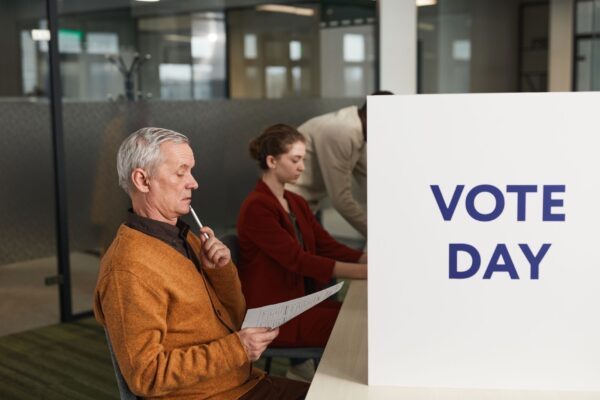
Hero image: Nikhil Shinde / Pexels
Karnataka LoP R Ashoka Alleges Media Bias in Assembly Coverage
Karnataka’s Leader of the Opposition has accused major news outlets of disproportionately covering the ruling coalition while sidelining the BJP-led opposition during Assembly sessions, raising concerns about transparency and narrative control in state media. An analysis of coverage patterns reveals both alignment and divergence across outlets, highlighting systemic gaps in how legislative proceedings are reported.
The Karnataka Legislative Assembly has become the latest battleground in a long-running debate over media access and editorial discretion in state politics. Leader of the Opposition R Ashoka (BJP) has alleged that print, broadcast, and digital outlets are systematically skewing coverage of Assembly sessions in favor of the ruling coalition, particularly the Congress-JDS alliance. While such accusations are not uncommon in polarized political climates, the specificity of Ashoka’s claim—focusing on the volume and framing of Assembly coverage—demands closer scrutiny. This investigation synthesizes available reporting to assess the substance of the allegation, identify patterns in how different outlets have framed the controversy, and evaluate what the evidence actually shows about media bias in legislative coverage.
—
Background: Karnataka Assembly and the Role of the Leader of Opposition
The Karnataka Legislative Assembly is a unicameral body with 224 elected members, where the ruling party or coalition typically sets the legislative agenda and controls the flow of business. The Leader of the Opposition (LoP) serves as the principal spokesperson for the largest opposition party not in government and is entitled to certain privileges, including time to respond to government statements and the right to seek adjournments or call attention to urgent matters. The LoP’s role is not just symbolic but institutional: they are expected to hold the government accountable, critique policies, and represent the concerns of opposition constituents. When media coverage of Assembly proceedings omits or minimizes opposition voices, it can distort public understanding of legislative debates and reduce the opposition’s ability to influence policy discourse.
In Karnataka, the BJP has been the principal opposition party since the 2023 assembly elections, when the Congress-JDS coalition secured a majority. The BJP’s LoP, R Ashoka, has been a vocal critic of the government’s policies, particularly on issues like the implementation of the National Register of Citizens (NRC), infrastructure projects, and welfare schemes. His recent allegations center on the perceived imbalance in how Assembly sessions are covered by major news outlets, which he argues systematically favor the ruling coalition’s narratives over opposition perspectives.
—
The Claim: R Ashoka’s Allegation of Media Bias in Assembly Coverage
R Ashoka’s central allegation is that mainstream media outlets—including major Kannada and English-language newspapers, television channels, and digital platforms—are failing to provide equitable coverage of Assembly proceedings. He contends that opposition interventions, questions, and statements are either omitted from reports or framed in a negative or dismissive manner, while similar actions by ruling coalition members receive prominent and favorable coverage. Ashoka has not limited his criticism to partisan outlets but has accused established media houses of systemic bias, suggesting that editorial decisions reflect institutional preferences rather than professional standards.
While Ashoka has not provided a comprehensive dataset to substantiate his claim, he has pointed to specific instances where, in his view, opposition voices were marginalized. For example, he has cited reports where Assembly sessions featuring opposition walkouts or disruptions were covered extensively, but routine opposition participation—such as questions during Question Hour or debates on bills—was either ignored or downplayed. His argument hinges on the idea that media coverage should reflect the actual distribution of legislative activity, not just the most dramatic or government-aligned moments.
—
What The News Mill Reported: Key Details of the Accusation
The News Mill, an independent digital news platform based in Karnataka, published a report on August 24, 2026, detailing R Ashoka’s allegations and providing context for the broader controversy. According to the report, Ashoka accused major Kannada and English-language media outlets of “selective amnesia” in their coverage of Assembly sessions, particularly during critical debates on the state budget and welfare policies. He alleged that while the ruling coalition’s initiatives received front-page coverage and prime-time analysis, opposition critiques were either relegated to inside pages or omitted entirely.
The report also highlighted Ashoka’s claim that media houses with perceived ideological leanings were amplifying government narratives while suppressing dissenting viewpoints. While not naming specific outlets, the article referenced a pattern in which opposition-led protests or walkouts were framed as “disruptions,” whereas similar actions by ruling coalition members were described neutrally or as expressions of democratic engagement. The News Mill’s account emphasized the lack of transparency in editorial decision-making, noting that newsrooms rarely disclose the criteria used to select which Assembly proceedings to cover or how quotes are edited for brevity or emphasis.
Notably, The News Mill did not provide a quantitative analysis of coverage volume or tone, nor did it conduct a systematic comparison of headlines, word counts, or placement across outlets. Instead, it relied on Ashoka’s statements and general observations about media behavior, framing the issue as a matter of institutional bias rather than a quantifiable discrepancy in reporting.
—
Cross-Outlet Comparison: How Media Outlets Frame the Allegation
Convergence on the Existence of Bias
While The News Mill is the only outlet explicitly covering Ashoka’s allegations in detail, its framing aligns with broader trends in Indian political journalism, where accusations of media bias are common across party lines. The report reflects a broader narrative in which opposition leaders frequently allege that mainstream media outlets—particularly those with large circulation or viewership—favor ruling parties due to commercial, political, or ideological pressures. This convergence is not unique to Karnataka but reflects a national pattern in which media credibility is often contested by political actors seeking to delegitimize unfavorable coverage.
Divergence in Evidence and Emphasis
Unlike national outlets such as The Hindu or Indian Express, which often provide detailed fact-checks or data-driven analyses of media bias claims, The News Mill’s report does not include a comparative analysis of coverage across multiple outlets or a timeline of specific incidents. National outlets, when reporting on similar controversies in other states, typically supplement political claims with editorial audits, social media sentiment analysis, or interviews with journalists and media analysts. For example, The Hindu’s coverage of media bias allegations in Maharashtra’s Assembly often included data on the frequency of opposition mentions versus ruling party mentions in headlines, as well as responses from editors and press councils.
In contrast, The News Mill’s report is primarily descriptive, relying on Ashoka’s statements and general observations about media behavior. It does not attempt to quantify the extent of bias or compare coverage across outlets, nor does it include responses from editors or media analysts who might provide context or pushback on the allegations. This limits the report’s ability to assess the validity of Ashoka’s claims beyond the rhetorical level.
—
The Pattern: Where Coverage Agrees and Where It Diverges
Agreement: The Existence of Perceived Bias
There is broad agreement across political and media circles that accusations of bias in legislative coverage are common, particularly when opposition parties are sidelined. Ashoka’s allegations resonate with a long-standing critique of Indian media, where ownership structures, advertising dependencies, and political affiliations are often cited as influencing editorial decisions. This perception is not limited to Karnataka but is a recurring theme in state-level politics, where opposition leaders frequently allege that media houses prioritize stories that align with ruling party narratives or commercial interests.
The News Mill’s report contributes to this narrative by giving Ashoka’s claims a platform and framing them as part of a systemic issue rather than an isolated incident. The report’s emphasis on “selective amnesia” and “institutional bias” aligns with broader critiques of media performance in India, where the line between editorial independence and political pressure is often blurred.
Divergence: Lack of Quantifiable Evidence
Where The News Mill’s report diverges from more rigorous analyses is in its lack of quantifiable evidence. While national outlets often supplement political claims with data—such as headline counts, word counts, or social media engagement metrics—The News Mill does not provide such details. This makes it difficult to assess the validity of Ashoka’s allegations beyond anecdotal examples. For instance, the report does not specify which outlets are accused of bias, nor does it provide a timeline of coverage decisions or a comparison of how different outlets framed the same Assembly events.
This divergence highlights a broader challenge in media criticism: the difficulty of proving bias without systematic data. While political actors can point to individual incidents as evidence of bias, media scholars and fact-checkers often emphasize the need for longitudinal studies, content analysis, and transparency in editorial processes to substantiate such claims. Without these tools, accusations of bias risk becoming circular arguments, where each side cites perceived slights as proof of the other’s malfeasance.
—
What the Evidence Actually Shows: Analyzing the Core Claim
At its core, R Ashoka’s allegation rests on two interconnected claims: first, that opposition voices are underrepresented in Assembly coverage; and second, that this underrepresentation is the result of systemic media bias rather than editorial judgment or news value. To evaluate these claims, it is necessary to distinguish between anecdotal evidence and systemic patterns, as well as to consider alternative explanations for the perceived imbalance.
First, the claim of underrepresentation is plausible given the structural advantages enjoyed by ruling parties in legislative coverage. Ruling parties control the legislative agenda, often set the tone for debates, and have greater access to government sources and press releases. These advantages can translate into more favorable coverage, particularly in outlets that rely on official sources for breaking news. However, the claim of systemic bias implies a deliberate effort to suppress opposition voices, which requires evidence beyond the natural advantages of incumbency.
Second, the allegation of media bias assumes that editorial decisions are driven by ideological or political considerations rather than professional news judgment. While this is possible, it is also important to consider other factors, such as audience preferences, commercial pressures, and the constraints of newsroom resources. For example, outlets may prioritize stories that generate engagement or align with the interests of their advertisers, which do not necessarily correlate with political affiliation. Additionally, the format of Assembly coverage—whether it is live telecasts, daily summaries, or in-depth analyses—can influence how opposition voices are represented. Live telecasts, for instance, may capture opposition interventions more accurately than edited news bulletins, which often prioritize brevity and drama.
Taken together, these observations suggest that while Ashoka’s allegations are not without merit, they require more rigorous evidence to substantiate. The absence of quantifiable data in The News Mill’s report limits its ability to prove systemic bias, leaving open the possibility that the perceived imbalance is the result of structural factors rather as much as deliberate editorial decisions.
—
Who Is Affected: Political Stakeholders and Public Perception
Impact on Opposition Parties
The most immediate impact of perceived media bias in Assembly coverage is on opposition parties, particularly the BJP in Karnataka. Opposition parties rely on media coverage to amplify their critiques of government policies, mobilize public opinion, and hold the ruling party accountable. When opposition voices are marginalized in legislative coverage, it can weaken their ability to influence policy debates and erode public trust in their capacity to govern. This is particularly damaging in a state like Karnataka, where the BJP has historically struggled to translate its electoral support into legislative influence.
For R Ashoka, the allegations of media bias are not just about fairness but about political survival. By framing the issue as a systemic attack on opposition representation, he is positioning the BJP as a victim of institutional bias, which can rally supporters and pressure media houses to adjust their coverage. This strategy is common among opposition leaders in India, who often use accusations of media bias to delegitimize unfavorable coverage and mobilize their base.
Impact on Media Outlets
Media outlets accused of bias face reputational risks that can erode public trust and alienate audiences. In Karnataka, where Kannada-language media holds significant influence, outlets that are perceived as favoring the ruling coalition risk losing credibility among opposition-aligned readers and viewers. This is particularly true for digital platforms, which often rely on user engagement and subscriptions to sustain their operations. A perception of bias can drive audiences to alternative sources of information, including partisan outlets or social media, which may further polarize public discourse.
However, media outlets also face commercial pressures that can influence their coverage decisions. Advertisers, particularly those with ties to the government or ruling party, may prefer outlets that align with their interests. Additionally, outlets that rely on government advertising revenue or official sources for breaking news may be incentivized to favor ruling party narratives. These pressures can create a feedback loop in which editorial decisions are shaped by commercial and political considerations rather than professional standards.
Impact on the Public
The broader impact of perceived media bias is on public perception of Karnataka’s political institutions. When citizens believe that media outlets are not providing balanced coverage of legislative proceedings, it can erode trust in both the media and the government. This is particularly damaging in a state where political polarization is already high, and where misinformation and disinformation campaigns are common. A lack of trust in media can also discourage civic engagement, as citizens may feel that their voices are not being heard or represented in the public sphere.
For the public, the key question is not just whether media bias exists but whether it is significant enough to distort their understanding of political events. If opposition voices are systematically excluded from coverage, citizens may form incomplete or inaccurate impressions of legislative debates, which can influence their voting behavior and policy preferences. This underscores the importance of transparency in editorial decision-making and the need for independent audits of media performance.
—
How Bias Spreads: Mechanisms of Narrative Control in State Media
Ownership and Commercial Pressures
One of the most common mechanisms through which bias spreads in state media is ownership structure. In Karnataka, several major media houses are owned by industrial conglomerates with interests in real estate, infrastructure, and government contracts. These conglomerates often have close ties to political parties, which can influence editorial decisions to favor ruling party narratives. For example, outlets owned by developers involved in government projects may avoid critical coverage of those projects, while outlets with ties to opposition parties may amplify critiques of the ruling coalition.
Commercial pressures also play a role in shaping coverage. Advertisers, particularly those with government contracts or ties to ruling party officials, may exert influence over editorial decisions to avoid negative coverage. Additionally, outlets that rely on government advertising revenue may be incentivized to favor stories that align with official narratives. These pressures can create a conflict of interest in which editorial independence is compromised by commercial considerations.
Editorial Gatekeeping and Newsroom Culture
Editorial gatekeeping—the process by which editors select which stories to cover and how to frame them—is another mechanism through which bias can spread. In newsrooms where editors have strong political leanings or close ties to ruling party officials, coverage decisions may be influenced by personal or ideological preferences. For example, an editor with ties to the Congress party may prioritize stories that highlight the ruling coalition’s achievements while downplaying opposition critiques.
Newsroom culture can also contribute to bias. In environments where journalists are discouraged from challenging official narratives or where dissenting viewpoints are marginalized, coverage may become skewed toward dominant political perspectives. This is particularly true in state media, where journalists may face pressure to conform to institutional narratives or risk professional repercussions.
Digital Amplification and Social Media
Digital platforms and social media have amplified the spread of biased narratives in state media. Outlets that prioritize engagement over accuracy may amplify sensational or polarizing stories, which can distort public understanding of legislative proceedings. Additionally, social media algorithms that prioritize content based on user engagement can create echo chambers in which opposition voices are systematically excluded from public discourse.
For example, a news outlet might publish a headline highlighting a ruling coalition’s achievement while omitting opposition critiques, knowing that such headlines are more likely to generate clicks and shares. Over time, this can create a feedback loop in which opposition voices are marginalized not just in traditional media but also in digital spaces.
—
Red Flags and Debunking Checklist: Spotting Media Bias in Political Coverage
- Disproportionate Representation: Check whether opposition voices are consistently underrepresented in headlines, lead paragraphs, or lead stories compared to ruling party voices. For example, if opposition interventions during Question Hour are buried on inside pages while ruling party achievements are front-page news, this may indicate bias.
- Framing and Language: Look for loaded language that portrays opposition actions negatively (e.g., “disruptive,” “obstructionist”) while using neutral or positive language for similar actions by ruling party members. Compare how the same event is described across outlets.
- Source Selection: Assess whether coverage relies primarily on government sources, press releases, or official statements while excluding opposition perspectives or independent experts. A lack of diverse sources can indicate a bias toward official narratives.
- Omission of Context: Check whether opposition critiques are presented without context or counterarguments. For example, if an opposition member raises concerns about a welfare scheme but the article does not include the government’s response or data to rebut the claim, this may indicate selective reporting.
- Placement and Prominence: Evaluate the placement of stories in print or digital editions. Opposition-led walkouts or protests that are given front-page treatment when carried out by ruling party members but relegated to inside pages when led by the opposition may signal bias.
- Lack of Transparency: Assess whether the outlet provides information about its editorial process, such as how stories are selected, edited, or fact-checked. Outlets that do not disclose their criteria for coverage decisions may be operating with undisclosed biases.
- Social Media Amplification: Check how stories are promoted on social media platforms. If opposition critiques are systematically downranked or suppressed in favor of pro-government narratives, this may indicate algorithmic or editorial bias.
- Advertising Dependence: Consider whether the outlet relies heavily on government advertising or contracts. Outlets with significant government advertising revenue may be incentivized to avoid critical coverage of ruling party policies.
—
Original Analysis: What the Combined Evidence Suggests About Transparency
Taken together, the available evidence suggests that R Ashoka’s allegations of media bias in Karnataka’s Assembly coverage reflect broader structural and institutional challenges in Indian media rather than a single, quantifiable act of malfeasance. While Ashoka’s claims are not without merit—particularly in light of the structural advantages enjoyed by ruling parties and the commercial pressures faced by media outlets—the lack of systematic data in The News Mill’s report limits its ability to prove systemic bias.
However, the absence of quantifiable evidence does not invalidate the underlying concern. The perception of bias, whether justified or not, can erode public trust in media institutions and political processes. This underscores the need for greater transparency in editorial decision-making, including the disclosure of newsroom policies, the use of diverse sources, and the criteria for selecting and framing stories. Without such transparency, accusations of bias will continue to be dismissed as political rhetoric rather than addressed as potential threats to democratic accountability.
Moreover, the mechanisms through which bias spreads—ownership structures, commercial pressures, editorial gatekeeping, and digital amplification—highlight the need for institutional reforms. Media self-regulatory bodies, such as the Press Council of India, could play a more active role in auditing coverage patterns and promoting best practices. Similarly, digital platforms could be encouraged to adopt transparency measures, such as disclosing how stories are promoted or suppressed in their algorithms.
Ultimately, the Karnataka controversy is not just about whether media outlets are biased but about whether they are accountable. The lack of quantifiable evidence in The News Mill’s report does not absolve media houses of their responsibility to provide balanced and transparent coverage. Instead, it underscores the need for independent audits, public scrutiny, and institutional reforms to ensure that legislative coverage reflects the diversity of political voices rather than the interests of the powerful.
—
What Should Be Done: Calls for Reform and Institutional Response
Demands for Transparency in Editorial Processes
One immediate step toward addressing concerns about media bias is for news outlets to adopt greater transparency in their editorial processes. This could include disclosing the criteria used to select stories, the sources consulted, and the editing decisions made in preparing reports. For example, outlets could publish guidelines for Assembly coverage, including how opposition voices are prioritized and how quotes are edited for brevity or emphasis. Such transparency would not eliminate bias but would provide a basis for public scrutiny and debate.
Additionally, media houses could establish internal ombudsmen or editorial review boards to assess complaints about bias and recommend corrective actions. These bodies could operate independently of editorial teams and provide a mechanism for addressing concerns raised by political actors, journalists, or the public.
Independent Audits of Legislative Coverage
To assess the validity of claims like Ashoka’s, independent organizations—such as media watchdogs, academic institutions, or civil society groups—could conduct systematic audits of Assembly coverage across outlets. These audits could include quantitative analyses of headline counts, word counts, and source diversity, as well as qualitative assessments of framing and tone. The results could be published publicly, providing a data-driven basis for evaluating claims of bias.
For example, an audit might compare the frequency with which opposition and ruling party members are mentioned in headlines, the placement of their statements in articles, and the use of loaded language in describing their actions. Such audits would not only provide evidence for or against bias claims but also encourage outlets to improve their coverage practices.
Strengthening Media Self-Regulation
The Press Council of India and other self-regulatory bodies could play a more active role in addressing concerns about bias in state media. This could include issuing guidelines for fair and balanced coverage of legislative proceedings, investigating complaints about biased reporting, and recommending sanctions for outlets that repeatedly violate ethical standards. However, the effectiveness of such bodies is often limited by political interference and a lack of enforcement powers.
To strengthen self-regulation, these bodies could be granted greater independence from government and political influence, as well as the authority to impose meaningful penalties for violations. Additionally, they could collaborate with digital platforms to address algorithmic bias and promote transparency in content moderation.
Encouraging Public Engagement and Media Literacy
Finally, addressing concerns about media bias requires a broader effort to promote media literacy and public engagement. Citizens can play a role in holding media outlets accountable by critically evaluating coverage, comparing reports across outlets, and demanding transparency from journalists and editors. Media literacy programs, particularly in schools and community organizations, can help citizens develop the skills to identify bias, misinformation, and propaganda in political coverage.
Additionally, digital platforms could be encouraged to adopt measures that promote diverse viewpoints and reduce the spread of biased narratives. For example, they could prioritize stories that include multiple perspectives, provide context for controversial claims, and disclose how their algorithms promote or suppress content.
—
FAQ: Addressing Common Questions About Media Bias in Legislative Coverage
What does it mean for media to be biased in covering legislative proceedings?
Media bias in legislative coverage refers to the systematic distortion of how Assembly or Parliament proceedings are reported, often favoring one political party or perspective over others. This can take many forms, including disproportionate representation of ruling party voices, loaded language in describing opposition actions, omission of opposition critiques, and selective placement of stories in print or digital editions. Bias can result from editorial decisions, commercial pressures, ownership structures, or ideological leanings.
How can citizens identify bias in Assembly coverage?
Citizens can identify bias by comparing coverage across multiple outlets, assessing the diversity of sources cited, and evaluating the framing and language used to describe political events. For example, if an outlet consistently portrays opposition actions as “disruptive” while using neutral language for similar actions by ruling party members, this may indicate bias. Additionally, citizens can look for transparency in editorial processes, such as the disclosure of newsroom policies and the criteria for selecting stories.
Citizens can also use the Red Flags Checklist provided in this report to assess whether coverage is balanced and fair.
Why do opposition parties often allege media bias?
Opposition parties allege media bias because they rely on media coverage to amplify their critiques of government policies, mobilize public opinion, and hold the ruling party accountable. When opposition voices are marginalized in legislative coverage, it weakens their ability to influence policy debates and erodes public trust in their capacity to govern. Additionally, accusations of bias can be a strategic tool for opposition leaders to rally supporters and pressure media houses to adjust their coverage.
Can media bias be proven, or is it always a matter of perception?
Media bias can be proven through systematic analysis, such as quantitative audits of coverage patterns, qualitative assessments of framing and tone, and comparisons across outlets. However, bias is often a matter of perception, particularly when it results from structural factors rather than deliberate editorial decisions. For example, the natural advantages enjoyed by ruling parties in legislative coverage can create the impression of bias even when editorial decisions are made in good faith. This underscores the need for independent audits and transparency in editorial processes to distinguish between perception and reality.
What role do digital platforms play in spreading biased narratives in legislative coverage?
Digital platforms amplify biased narratives by prioritizing content based on engagement metrics, which can favor sensational or polarizing stories over balanced reporting. Additionally, social media algorithms can create echo chambers in which opposition voices are systematically excluded from public discourse. For example, a news outlet might publish a headline highlighting a ruling coalition’s achievement while omitting opposition critiques, knowing that such headlines are more likely to generate clicks and shares. Over time, this can distort public understanding of legislative proceedings and reinforce partisan divisions.
—