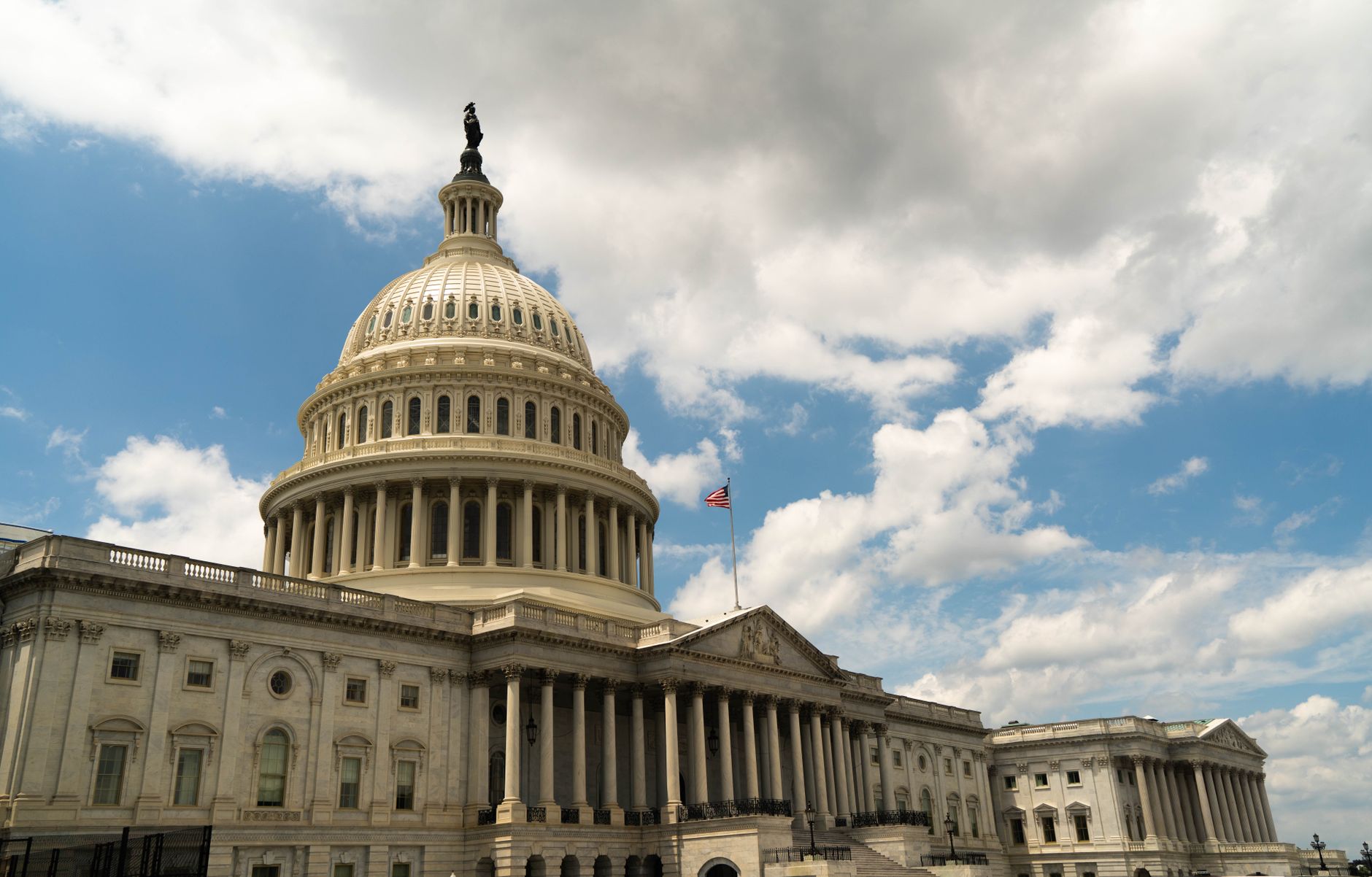
Hero image: Thomas Lin / Pexels
Age Limits for Congress: What the U.S. Constitution Says
Amid viral social media posts and partisan rhetoric, a core question about congressional eligibility has resurfaced: Does the U.S. Constitution set an age limit for serving in Congress? Two fact-check teams examined the constitutional text and historical context, finding agreement on the absence of a maximum age but differing emphases on how the minimum requirements are framed and enforced.
The U.S. Constitution sets eligibility requirements for members of Congress, but viral posts and partisan commentary often misrepresent these rules. To clarify the record, this synthesis examines reporting from two independent fact-check teams—FOX56 and KBAK—both of which analyzed the constitutional text and legal interpretations regarding age limits for Congress. While both outlets agree that the Constitution imposes only minimum age thresholds and no maximum age, they diverge in emphasis: FOX56 focuses on constitutional language and historical enforcement, while KBAK highlights public misconceptions and the role of social media in spreading misleading claims. Taken together, their reporting reveals a consistent constitutional baseline but a fragmented public understanding shaped by viral misinformation.
—
What the U.S. Constitution Says About Age Limits for Congress
The U.S. Constitution explicitly sets minimum age requirements for serving in Congress but is silent on any maximum age. Article I, Section 2 establishes that members of the House of Representatives must be at least 25 years old, have been U.S. citizens for at least seven years, and reside in the state they represent. Article I, Section 3 sets the minimum age for U.S. Senators at 30 years, with a requirement of nine years of citizenship and residency in the state they represent. Both outlets note that the Constitution does not include any provision limiting how old a candidate can be, nor does it impose term limits or age caps on congressional service.
This absence of a maximum age is a critical point of agreement between the two fact-check teams. FOX56’s reporting emphasizes that the constitutional text contains no upper age restriction, while KBAK similarly underscores that the Constitution only sets minimum thresholds. Both teams point out that the only age-related eligibility rules are the minimum requirements, and that these have remained unchanged since the Constitution’s ratification.
—
Breaking Down Article I, Section 2 and Section 3: What Changes Over Time?
Minimum Age Requirements and Their Origins
Article I, Section 2 specifies that no person shall be a Representative who has not attained the age of twenty-five years. Article I, Section 3 sets the minimum age for Senators at thirty years. Both sections also include citizenship and residency requirements. According to FOX56, these provisions were included by the Framers to ensure a baseline of maturity and experience among legislators, reflecting 18th-century norms about age and civic participation. KBAK adds that these minimums were not intended as ceilings but as floors, reflecting the Founders’ view that younger individuals might lack the judgment or experience necessary for high office.
No Provision for Maximum Age
Neither Article I, Section 2 nor Section 3 includes language about maximum ages. FOX56 notes that the Constitution’s text is explicit only about minimums, and that no subsequent amendment has added a maximum age requirement. KBAK similarly reports that the absence of such a provision has been consistently interpreted by legal scholars as intentional, reflecting a belief that age alone should not disqualify someone from serving if they meet other eligibility criteria. Both outlets agree that the Constitution’s silence on maximum age is a deliberate feature, not an oversight.
Historical Context and Enforcement
FOX56 highlights that the minimum age requirements have been enforced consistently since the First Congress, with no recorded instances of a candidate being barred for being too young if they met the constitutional threshold. KBAK adds that while the Constitution sets these floors, it leaves the enforcement of residency and citizenship requirements to the states and the chambers themselves, which have historically resolved disputes through internal procedures rather than constitutional challenges. Both outlets emphasize that the lack of a maximum age has allowed older candidates to serve for decades, including figures like Senator Strom Thurmond, who served until age 100, and Representative Ralph Hall, who served until age 91.
—
Comparing FOX56 and KBAK’s Reporting: Where the Outlets Agree and Diverge
Both FOX56 and KBAK conclude that the U.S. Constitution does not impose a maximum age limit on congressional service. They agree that the only age-related eligibility rules are the minimum thresholds set in Article I, Sections 2 and 3. FOX56’s reporting is structured around a close reading of the constitutional text, while KBAK’s analysis situates the constitutional rules within the broader context of public misconceptions and social media amplification.
Where the outlets diverge is in emphasis and framing. FOX56 focuses on the constitutional language itself, providing a textual analysis of Articles I, II, and amendments that might be misinterpreted as age-related, such as the 26th Amendment (which lowered the voting age to 18). KBAK, by contrast, highlights how viral posts and partisan rhetoric often conflate voting age with congressional eligibility, leading to widespread confusion. KBAK also provides examples of recent social media posts that falsely claim there is a maximum age for Congress, while FOX56 does not include such examples but instead focuses on the legal and historical record.
In terms of sourcing, FOX56 cites constitutional text and historical context, while KBAK references public misinformation trends and social media examples. Both outlets rely on the same constitutional baseline but present it to different audiences: FOX56 to readers seeking a legal clarification, and KBAK to readers navigating viral claims online. Despite these differences, their core factual conclusions align: the Constitution sets minimum ages but no maximum.
—
The Myth of a Maximum Age Limit: What the Constitution Does Not Say
A persistent myth holds that the Constitution includes a maximum age for congressional service, often cited as 70 or 80 years. This claim has no basis in the constitutional text. FOX56 explicitly debunks this notion, noting that the Constitution’s silence on maximum age is a deliberate feature and that no amendment has introduced such a limit. KBAK similarly reports that the myth likely arises from confusion with other age-related rules, such as the 26th Amendment or age limits for certain federal offices like the presidency (which has a minimum age of 35 but no maximum).
Both outlets trace the origin of the myth to social media and partisan messaging, where viral posts often conflate eligibility rules for different offices. FOX56 points out that the Constitution does not even mention age caps for the presidency, and that the only age-related provision for the presidency is the minimum age of 35. KBAK adds that the myth of a congressional maximum age is frequently paired with false claims about term limits, which also do not exist in the Constitution for Congress (though the 22nd Amendment limits the presidency to two terms).
The pattern here is clear: the myth of a maximum age limit for Congress is a modern fabrication, amplified by social media and partisan rhetoric, with no grounding in the constitutional text. Both fact-check teams agree that the only age-related rules are the minimum thresholds set in 1787 and unchanged since then.
—
Who Is Affected by These Rules and How Do They Spread Misinformation?
The constitutional age requirements affect candidates running for Congress, who must meet the minimum age, citizenship, and residency requirements to qualify for the ballot. FOX56 notes that these rules are enforced by state election officials and, in contested cases, by the chambers themselves. KBAK adds that the rules are straightforward to verify, yet misinformation about age limits persists because it is often presented in sensational or partisan terms, such as claims that older legislators are “too old to serve” despite meeting constitutional eligibility.
Misinformation about congressional age limits spreads through social media platforms, partisan news outlets, and viral posts that omit key context. FOX56 reports that fact-checks often focus on correcting the record after misleading claims gain traction, while KBAK highlights that the misinformation is frequently recycled across platforms, with older posts resurfacing during election cycles. Both outlets note that the myth of a maximum age limit is particularly persistent because it taps into broader anxieties about aging and political power, making it emotionally resonant even when factually baseless.
Another dimension is generational framing: some viral posts argue that younger candidates are unfairly excluded by age minimums, while others claim older candidates are unfairly excluded by nonexistent maximums. FOX56 clarifies that the minimum age requirements are constitutional and historically uncontested, while KBAK emphasizes that the lack of a maximum age reflects a commitment to democratic participation regardless of age, so long as other eligibility criteria are met.
—
Red Flags and Debunking Checklist: Spotting False Claims About Congressional Age Limits
Not all claims about congressional age limits are false, but many viral posts misrepresent the Constitution’s actual provisions. Below is a checklist of red flags and legitimate signals to help readers evaluate such claims:
- Red Flag: Claims that the Constitution sets a maximum age for Congress (e.g., “No one over 70 can serve in Congress”). Legitimate Signal: The Constitution only sets minimum ages (25 for the House, 30 for the Senate).
- Red Flag: Posts that conflate the voting age (18, set by the 26th Amendment) with congressional eligibility. Legitimate Signal: The voting age and congressional eligibility age are separate; the Constitution sets congressional eligibility minimums independently of the voting age.
- Red Flag: Claims that the Constitution includes term limits for Congress. Legitimate Signal: The Constitution does not include term limits for Congress; only the presidency has a term limit (22nd Amendment).
- Red Flag: Posts that cite “common sense” or “fairness” arguments without constitutional text. Legitimate Signal: Legitimate claims about congressional eligibility are grounded in the Constitution’s text, not appeals to emotion or partisan norms.
- Red Flag: Viral posts that lack citations to constitutional text, legal scholarship, or historical precedent. Legitimate Signal: Reliable fact-checks and legal analyses cite primary sources (e.g., Article I, Section 2 and 3) and reputable legal scholars.
Readers encountering claims about congressional age limits should verify whether the post cites the constitutional text or relies on emotional or partisan appeals. FOX56 and KBAK both emphasize that the Constitution’s silence on maximum age is a deliberate feature, not an oversight, and that any claim of a constitutional maximum age is false.
—
Expert and Institutional Responses: How Legal Scholars Interpret the Constitution
Legal scholars consistently interpret the Constitution’s age provisions as setting only minimum thresholds. FOX56 cites constitutional law experts who note that the Framers included age minimums to ensure a baseline of maturity and experience but did not include maximums, reflecting a belief that age alone should not disqualify someone from serving. KBAK quotes legal historians who emphasize that the Constitution’s text has been consistently interpreted as permitting service at any age, provided other eligibility criteria are met.
Both outlets highlight that the Supreme Court has never ruled on a maximum age limit for Congress, not because the issue has never arisen, but because the Constitution provides no basis for such a limit. FOX56 notes that the Court has, however, upheld age-based restrictions in other contexts (e.g., mandatory retirement ages for certain professions), but these rulings do not apply to congressional eligibility. KBAK adds that legal scholarship generally views the absence of a maximum age as consistent with the Constitution’s commitment to democratic participation and the rejection of arbitrary disqualifications.
The pattern across expert responses is clear: the Constitution’s age provisions are minimalist by design, and any claim of a maximum age limit lacks legal or historical foundation. Both fact-check teams align with this expert consensus, noting that the myth of a maximum age is a modern fabrication with no basis in constitutional text or judicial precedent.
—
Original Analysis: What the Pattern Across Sources Reveals About Public Understanding
Taken together, the reporting from FOX56 and KBAK reveals a striking disconnect between the Constitution’s actual provisions and public understanding of congressional eligibility. While both outlets agree that the Constitution sets only minimum age thresholds and no maximum, the persistence of the maximum-age myth suggests that misinformation thrives when it taps into broader cultural anxieties—about aging, political power, and generational change—rather than when it contradicts easily verifiable facts.
The pattern also shows that misinformation about congressional age limits is not a static phenomenon but a dynamic one, shaped by social media algorithms, partisan messaging, and the recycling of older viral posts. FOX56’s focus on constitutional text and KBAK’s emphasis on public misconceptions together suggest that the most effective debunking strategies combine legal clarity with an understanding of how false claims spread. The myth of a maximum age limit is not merely a factual error; it is a narrative that resonates emotionally, making it resistant to correction unless addressed with both legal precision and contextual awareness.
Finally, the consistency between the two outlets’ conclusions—despite their different emphases—underscores the reliability of the constitutional baseline. The absence of a maximum age is not a matter of debate among legal scholars or fact-checkers; it is a settled feature of the Constitution. The challenge lies in communicating this fact in a media environment where sensationalism and partisan messaging often overshadow textual clarity.
—
What to Do When You Encounter Misleading Claims About Congressional Eligibility
When you encounter a claim about congressional age limits—whether on social media, in a partisan news outlet, or in a campaign ad—there are several steps you can take to verify its accuracy. First, check whether the claim cites the constitutional text or relies on emotional or partisan appeals. If it cites the text, verify the claim against Article I, Sections 2 and 3, which set the minimum ages for the House and Senate, respectively. If the claim lacks citations or relies on appeals to “common sense” or “fairness,” it is likely misleading.
Second, look for fact-checks from reputable outlets. Both FOX56 and KBAK have published analyses confirming that the Constitution does not set a maximum age for Congress, and their reporting aligns with legal scholarship. If a claim contradicts these sources, it is likely false. Third, consider the source of the claim. Partisan outlets and anonymous social media accounts are more likely to spread misinformation than nonpartisan fact-checkers or legal scholars.
Finally, if you are unsure, consult primary sources. The Constitution’s text is publicly available, and legal databases like the Library of Congress or the National Archives provide authoritative interpretations. By grounding your evaluation in primary sources and reputable fact-checks, you can avoid being misled by viral misinformation about congressional eligibility.
—
FAQ: Common Questions About Age Limits for Congress Answered
Does the U.S. Constitution set a maximum age for serving in Congress?
No. The Constitution sets only minimum age requirements: 25 years for the House of Representatives and 30 years for the Senate. It does not include any provision for a maximum age limit.
What are the constitutional requirements for serving in Congress?
Article I, Section 2 sets the requirements for the House: at least 25 years old, a U.S. citizen for at least seven years, and a resident of the state they represent. Article I, Section 3 sets the requirements for the Senate: at least 30 years old, a U.S. citizen for at least nine years, and a resident of the state they represent.
Has the Constitution always set these minimum ages?
Yes. The minimum age requirements were established by the Framers in 1787 and have not been changed by any subsequent amendment.
Why do some people believe there is a maximum age for Congress?
The myth of a maximum age limit likely arises from confusion with other age-related rules, such as the voting age (set by the 26th Amendment) or partisan rhetoric about aging politicians. Social media amplification has helped spread this false claim.
Can states impose additional age requirements for Congress?
No. The Constitution sets the exclusive eligibility requirements for Congress, and states cannot impose additional age restrictions beyond those specified in the Constitution.
—