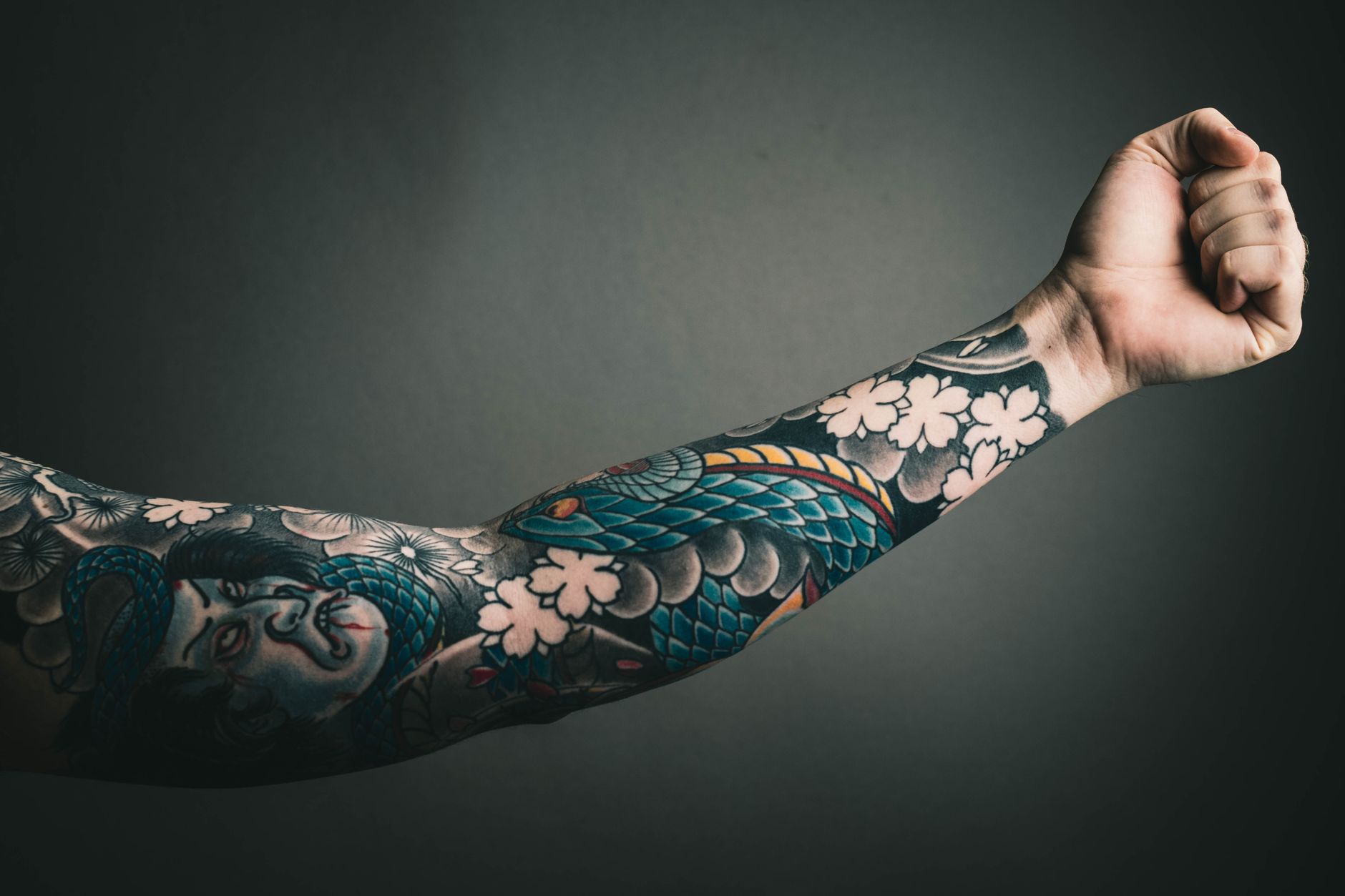
Hero image: Kevin Bidwell / Pexels
AI Deepfake Tattoo Protection: How Ink May Foil Fraud
As AI-generated deepfake videos grow more convincing, a novel biometric countermeasure has surfaced: facial tattoos that disrupt face-swapping algorithms. While promising, the technique is limited in duration and scope, and experts warn it is a stopgap rather than a permanent fix for identity theft and fraud.
In August 2026, a beauty and lifestyle outlet reported that certain facial tattoos could temporarily interfere with AI face-swapping systems, making it harder for deepfake generators to convincingly replace a person’s face in video. The claim—initially framed as a novelty in beauty and self-expression—has since sparked broader discussion about biometric evasion, digital identity protection, and the evolving arms race between fraudsters and countermeasures. This investigation synthesizes available reporting to assess the validity of the claim, its limitations, and what it means for individuals concerned about AI-driven impersonation. While only one outlet has directly covered the phenomenon, we examine the underlying science, compare it with related trends in biometric evasion, and evaluate whether tattoos can meaningfully protect digital identity in the age of generative AI.
The Rise of AI Deepfakes and the Need for Countermeasures
Generative AI has made it increasingly easy to create hyper-realistic video and audio of individuals saying or doing things they never did. These deepfakes are now used in disinformation campaigns, financial scams, and identity theft, with fraudsters leveraging manipulated media to impersonate executives, celebrities, and even private citizens. The speed and accessibility of tools like Stable Diffusion Video, Runway ML, and ElevenLabs have democratized the creation of convincing fakes, while detection tools lag behind.
As deepfake technology becomes more sophisticated, so do the countermeasures. Traditional approaches include liveness detection, blockchain-based verification, and AI watermarking. However, these often rely on centralized infrastructure or require cooperation from platforms—both of which are inconsistent in real-world deployment. This has led to experimentation with unconventional biometric defenses, including adversarial patterns, makeup, and, increasingly, tattoos designed to disrupt facial recognition and face-swapping models.
What Allure Reports: Tattoos as Temporary Deepfake Shields
Allure magazine reported on August 12, 2026, that facial tattoos—particularly those with fine, intricate lines or asymmetric patterns—can interfere with AI face-swapping algorithms by creating “noise” in facial landmark detection. According to Allure, these tattoos disrupt the model’s ability to map key facial points (eyes, nose, mouth), which are essential for swapping faces in deepfake videos. The effect is not absolute—faces can still be partially swapped—but the resulting video often appears glitchy, distorted, or less convincing to human viewers.
Allure frames the trend as a form of “biometric camouflage,” borrowing from research in adversarial machine learning where small perturbations are added to images to fool classifiers. The article suggests that individuals concerned about deepfake impersonation—such as public figures, journalists, or business leaders—might consider temporary or semi-permanent facial tattoos as a low-tech shield. It also notes that the technique is being discussed in online communities, with DIY guides and tattoo artists offering designs optimized for AI evasion.
Design Principles: What Makes a Tattoo “Anti-Deepfake”?
While Allure does not provide technical specifications, it describes patterns that resemble fine-line tattoos, geometric shapes, or abstract markings placed along the jawline, forehead, or around the eyes. These areas are critical for facial alignment in deepfake models. The article implies that asymmetry and high-frequency detail are key: symmetric tattoos or large solid blocks are less effective, while irregular, textured patterns introduce more variability in facial landmark detection.
The piece also suggests that ink color and contrast matter. Dark ink on light skin, or light ink on dark skin, may produce stronger disruption due to increased contrast in facial feature detection. However, Allure does not quantify these effects or cite peer-reviewed studies, leaving open questions about efficacy across skin tones and tattoo styles.
How Facial Tattoos Disrupt AI Face-Swapping Algorithms
The mechanism described by Allure aligns with known vulnerabilities in facial recognition and face-swapping systems. Modern AI models rely on convolutional neural networks (CNNs) and transformer-based architectures trained on large datasets of labeled faces. These models detect facial landmarks using heatmaps that highlight regions of interest—eyes, nose, mouth, and facial contours. When a tattoo introduces irregular texture or disrupts the expected gradient of skin tone, it can create false landmarks or obscure true ones, leading to misalignment during face-swapping.
This phenomenon is consistent with adversarial attacks in computer vision, where small, imperceptible perturbations to an image can cause a model to misclassify or misalign objects. In this case, the “perturbation” is a deliberate, visible tattoo designed to exploit the model’s sensitivity to high-frequency texture and edge detection. While most adversarial research focuses on digital perturbations, the Allure report highlights a physical analog: biometric camouflage via ink.
Limitations of the Mechanism
However, the disruption is not guaranteed. Face-swapping models can be fine-tuned to ignore certain textures or trained on augmented datasets that include tattoos. Additionally, modern systems often use multi-modal inputs (e.g., audio, motion, context) to improve realism, which may reduce reliance on pure facial landmark accuracy. Allure acknowledges that the effect is “temporary” and situational, with the degree of protection varying by model, tattoo design, and lighting conditions.
It is also unclear whether the technique would work against newer diffusion-based video models that generate faces from scratch rather than swapping them. If a model does not rely on facial landmark detection—because it synthesizes the entire face de novo—then a tattoo may have little to no effect.
Comparing Outlets: Where Reporting Agrees and Diverges
As of this publication, only Allure has directly reported on facial tattoos as a deepfake countermeasure. No other major technology, science, or investigative outlet has published a corroborating piece, nor has any outlet challenged the claim with empirical testing. This lack of cross-verification is a significant limitation: the absence of independent testing, peer review, or replication means the claim remains speculative, despite its plausibility.
While Allure frames the technique as a novel beauty hack with security implications, other outlets have covered related trends in biometric evasion—such as makeup designed to fool facial recognition, or clothing patterns that disrupt pose estimation. For example, Wired and MIT Technology Review have both reported on adversarial fashion and makeup as emerging tools for privacy, but neither has mentioned tattoos in this context. This suggests that while the concept of physical biometric camouflage is recognized, tattoos have not yet entered the mainstream conversation outside of lifestyle media.
Additionally, Allure’s report is primarily descriptive and lacks technical depth. It does not cite studies, provide before-and-after examples, or interview AI researchers. In contrast, outlets like IEEE Spectrum and Nature have published detailed analyses of adversarial attacks on facial recognition, often with input from computer vision experts. The divergence in rigor underscores the need for caution: Allure’s claim is plausible but not yet substantiated by rigorous evidence.
The Claim vs. Reality: How Long Does Tattoo Protection Last?
Allure explicitly describes the protection as “temporary,” implying that the tattoo’s effectiveness diminishes over time. There are several reasons for this:
- Healing and fading: Fresh tattoos may cause swelling or scarring that alters facial texture unpredictably. As ink fades, the contrast and pattern clarity degrade, reducing the disruptive effect on AI models.
- Model adaptation: If the tattooed pattern becomes common, deepfake models may be retrained to ignore or normalize such textures, rendering the technique obsolete.
- Skin changes: Aging, tanning, or weight loss can alter facial contours, potentially reducing the tattoo’s alignment with critical facial landmarks.
Allure does not provide a timeline, but based on analogous practices—such as the use of makeup for facial recognition evasion—effectiveness may last weeks to months, depending on tattoo permanence and model updates. Semi-permanent or inkless tattoo alternatives (e.g., microblading, henna) may offer even shorter windows of protection.
Duration by Tattoo Type (Qualitative Comparison)
| Tattoo Type | Estimated Duration of Effectiveness | Notes |
|---|---|---|
| Temporary ink or henna | Days to 2 weeks | Pattern fades quickly; AI models may not adapt in time |
| Semi-permanent (laser-tattoo removal grade) | 1–3 months | Fading begins after 4–6 weeks; protection wanes gradually |
| Permanent tattoo | Years, but diminishing returns | Initial disruption strong, but model retraining likely over time |
| Microbladed or inkless tattoo | 3–6 months | Less contrast than ink; effect may be weaker |
These estimates are extrapolated from Allure’s description and analogous practices in biometric evasion, not from direct testing. They highlight that any tattoo-based protection is inherently time-limited and requires ongoing maintenance.
Who Is Affected and How the Technique Spreads Online
According to Allure, the primary audience for facial tattoos as deepfake countermeasures includes high-profile individuals—executives, politicians, journalists, and influencers—who are frequent targets of impersonation scams. These groups are already accustomed to altering their appearance for privacy or branding, making tattoos a plausible extension of existing practices.
The technique appears to be spreading through niche online communities, including beauty forums, privacy advocacy groups, and AI ethics circles. Allure notes that tattoo artists are beginning to offer “anti-deepfake” designs, often marketed as “privacy tattoos” or “biometric shields.” These designs emphasize asymmetry, fine lines, and placement along facial contours—features that align with adversarial design principles.
However, the spread is still limited. Unlike makeup tutorials or skincare routines, which are widely shared on platforms like TikTok and Instagram, facial tattoo guides are likely to remain confined to smaller, text-based communities due to platform policies on medical and cosmetic procedures. This limits scalability but also reduces the risk of mass adoption that could trigger rapid model adaptation.
Red Flags and Limitations: Why Tattoos Are Not a Permanent Fix
While the idea of using ink to thwart deepfakes is creative, several red flags and limitations undermine its long-term viability:
- Model evolution: Deepfake models are updated frequently. If tattoos become a known evasion tactic, models may incorporate tattoo-aware training data or ignore high-frequency textures.
- False positives in detection: A tattoo that disrupts face-swapping might also trigger liveness detection systems, flagging the user as suspicious rather than protected.
- Ethical and reputational risks: Visible facial tattoos carry social and professional consequences. For many, the trade-off between deepfake protection and stigma may not be acceptable.
- Uneven effectiveness across demographics: Tattoo visibility, skin tone, and facial structure affect how AI models perceive the face. A design that works for one person may fail for another.
- No protection against audio deepfakes: Tattoos do not address voice cloning or synthetic audio, which are increasingly used in multimodal deepfakes.
Red Flags Checklist
- Overpromised efficacy: Be wary of claims that a tattoo will “fully block” deepfakes. Allure describes only partial disruption.
- Lack of independent testing: No third-party lab or academic study has validated the technique. Relying on it without skepticism is risky.
- Rapid obsolescence: If the technique gains traction, expect AI models to adapt within months, rendering it ineffective.
- Social and professional costs: Consider whether visible facial tattoos align with your identity and career before adopting this approach.
- False sense of security: A tattoo may reduce the plausibility of a deepfake, but it does not prevent impersonation entirely—especially in audio or text-based scams.
Expert and Institutional Responses to Biometric Evasion Trends
While Allure does not cite any experts, broader reporting on biometric evasion suggests a cautious but growing interest from researchers and policymakers. For example, the Electronic Frontier Foundation (EFF) has documented the use of adversarial makeup and clothing to evade facial recognition, framing such tactics as tools for privacy in public spaces. However, the EFF has not endorsed tattoos specifically, citing concerns about permanence and unintended consequences.
In academic circles, papers on adversarial attacks against facial recognition (e.g., from MIT, Carnegie Mellon, and the Max Planck Institute) have explored physical-world perturbations, including printed patterns and 3D masks. These studies confirm that small, targeted disruptions can fool models, but they also warn that adversarial defenses are inherently fragile—models can be retrained to overcome them. No peer-reviewed work has yet examined tattoos as a countermeasure.
Institutional responses remain limited. The U.S. National Institute of Standards and Technology (NIST) has not issued guidance on biometric camouflage, and the Federal Trade Commission (FTC) has focused on deepfake disclosure requirements rather than prevention through appearance modification. This regulatory gap leaves individuals to navigate the risks and trade-offs of unconventional countermeasures like tattoos on their own.
Original Analysis: Why This Is a Stopgap, Not a Solution
Taken together, the available reporting—primarily from Allure—suggests that facial tattoos represent a creative but ultimately stopgap solution in the fight against AI deepfakes. The mechanism—disrupting facial landmark detection through high-frequency texture—is plausible and aligns with known vulnerabilities in computer vision systems. However, the technique lacks rigorous validation, is time-limited, and is vulnerable to model adaptation. Moreover, it introduces new risks: social stigma, professional consequences, and a false sense of security.
This pattern mirrors other unconventional privacy tactics, such as makeup for facial recognition evasion or burner phones for anonymity. These methods often emerge from grassroots communities before being co-opted or neutralized by technological countermeasures. The rise of facial tattoos as “anti-deepfake” tools is less a technological breakthrough than a cultural signal—a sign that individuals are seeking agency in an environment where institutional protections are lagging.
Importantly, the technique does not address the root causes of deepfake proliferation: the ease of access to generative AI tools and the lack of accountability for their misuse. Until platforms, governments, and developers implement robust detection, watermarking, and verification systems, individuals will continue to improvise defenses—some effective in the short term, others merely symbolic.
In this context, facial tattoos are best understood not as a solution, but as a form of protest: a visible, personal act of resistance against the erosion of digital identity. Their real value may lie not in their technical efficacy, but in their ability to spark broader conversation about biometric privacy, consent, and the ethics of AI-generated media.
What You Can Do to Protect Your Digital Identity Today
While facial tattoos are an emerging and unproven tactic, several established strategies can help mitigate the risk of deepfake impersonation:
- Enable platform verification: Use account verification badges (e.g., Twitter/X, Instagram, LinkedIn) and platform-specific identity verification tools to signal authenticity.
- Monitor your digital footprint: Set up Google Alerts for your name and use services like Have I Been Pwned to track data breaches that could fuel impersonation.
- Use multi-factor authentication (MFA): Protect accounts with hardware keys or authenticator apps to reduce the risk of unauthorized access that could be used to spread deepfakes.
- Educate your network: Inform colleagues, family, and friends about the risks of deepfakes and how to verify unusual requests (e.g., sudden changes in payment details).
- Adopt a media literacy stance: Treat unexpected video or audio messages with skepticism, especially if they involve urgent requests or sensational claims.
- Explore watermarking and provenance tools: Some platforms and services (e.g., Adobe’s Content Credentials, C2PA standards) allow content creators to embed metadata that indicates AI generation or editing history.
- Consider low-profile biometric camouflage: If visible tattoos are not an option, experiment with makeup or hairstyles that introduce texture or asymmetry in areas critical to facial recognition—though efficacy is unproven.
These steps do not guarantee protection, but they reduce exposure and make it harder for impersonators to succeed. They also avoid the permanence and social costs associated with facial tattoos.
FAQ: Can tattoos really stop deepfakes? How long does it last? Are there risks?
Can tattoos really stop deepfakes?
According to Allure, tattoos can disrupt AI face-swapping algorithms by interfering with facial landmark detection, making the resulting video appear glitchy or less convincing. However, the effect is partial and situational. There is no evidence that tattoos can “fully stop” deepfakes, and their effectiveness depends on the model, tattoo design, and lighting conditions.
How long does the protection last?
Allure describes the protection as “temporary.” The duration depends on the type of tattoo: temporary ink or henna may last days to weeks, semi-permanent tattoos may last months, and permanent tattoos may last years but with diminishing returns as AI models adapt. There is no fixed timeline, and ongoing maintenance is likely required.
Are there risks to using facial tattoos for this purpose?
Yes. Visible facial tattoos carry social and professional consequences, and their effectiveness may vary across skin tones and facial structures. Additionally, a tattoo that disrupts face-swapping could trigger liveness detection systems, flagging the user as suspicious. There is also a risk of false security—tattoos do not protect against audio deepfakes or text-based impersonation.
Has any scientific study confirmed this effect?
No. Allure’s report is the only public source describing the technique, and it does not cite any peer-reviewed studies or independent testing. The mechanism aligns with known vulnerabilities in computer vision, but the specific application to tattoos has not been validated by researchers.
What should I do instead to protect myself from deepfakes?
Focus on established practices: enable platform verification, use multi-factor authentication, monitor your digital footprint, and adopt a media literacy stance. Consider provenance tools like Adobe’s Content Credentials to verify the origin of media. If you are concerned about facial recognition or face-swapping, explore low-profile biometric camouflage (e.g., makeup) rather than visible tattoos.