
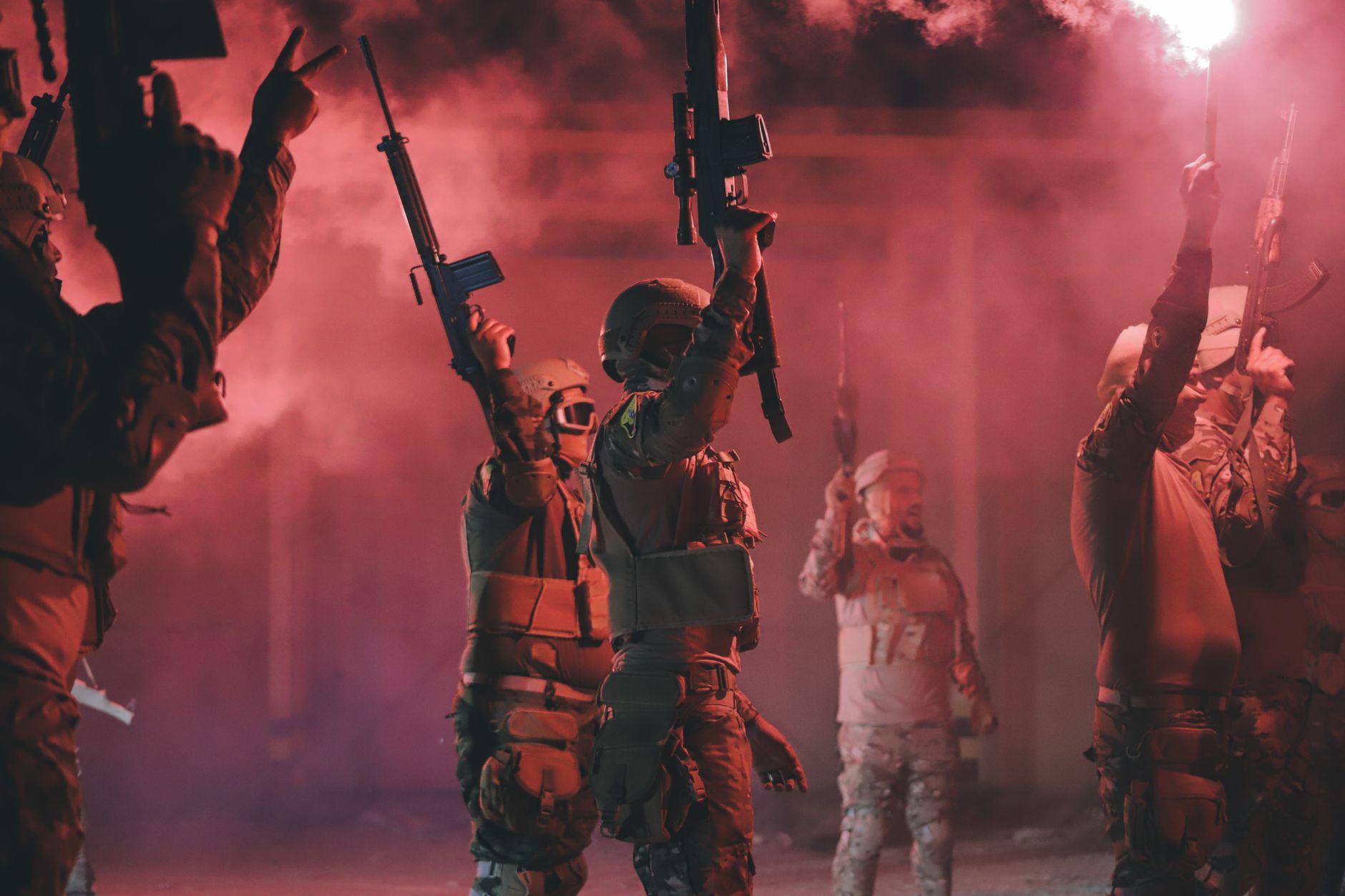
الصورة الرئيسية:إبراهيم بشير / Pexels
دراسة حرب المعلومات المدعومة بالذكاء الاصطناعي واستقرار الأزمات
This investigative report examines the intersection of automated computational propaganda and geopolitical crisis stability based on analysis from the Centre for Strategic and Contemporary Research. We analyze how generative systems and automated narrative deployment alter escalation dynamics between nuclear-armed and regionally competitive states.
Modern geopolitical friction increasingly relies on digital operations designed to manipulate perception, manufacture artificial consensus, and accelerate decision-making cycles among political and military elites. As artificial intelligence technologies mature, the velocity, volume, and targeting precision of these information campaigns undergo fundamental structural transformations. Security analysts tracking narrative warfare must evaluate whether automated deception creates new triggers for accidental escalation or preemptive strikes during high-stakes diplomatic standoffs. Understanding these dynamics requires a rigorous examination of how automated influence operations interact with traditional concepts of crisis stability.
Introduction to AI-Enabled Information Warfare
AI-enabled information warfare represents the systematic use of machine learning algorithms, large language models, synthetic media, and automated bot networks to wage cognitive conflict at a scale previously unattainable by human-operated units. According to the Centre for Strategic and Contemporary Research, these technologies allow state and non-state actors to bypass traditional editorial gates and cultural filters, flooding target populations and decision-makers with tailored narratives in real time. This capability alters the foundational calculus of international relations by blurring the line between persuasion, subversion, and kinetic aggression.
The core components of this operational environment include automated content generation, hyper-personalized micro-targeting, and synthetic media creation such as deepfakes. When deployed during active geopolitical crises, these systems can generate thousands of distinct variations of a deceptive narrative, testing which iteration gains traction among key demographic groups or military personnel. The Centre for Strategic and Contemporary Research notes that this shifts information operations from clumsy propaganda broadcasts to dynamic, adaptive feedback loops that continuously optimize for maximum cognitive disruption.
The strategic utility of AI in this domain stems from its low barrier to entry and high plausible deniability. Because synthetic content can be rapidly generated and distributed across decentralized networks, attribution becomes exceptionally difficult for defenders and intelligence agencies. This creates an asymmetric advantage for offensive actors who can overwhelm verification mechanisms before a narrative’s falsehood can be established. Consequently, political leadership groups find themselves operating in fractured informational spaces where baseline consensus on reality is actively eroded by algorithmic manipulation.
Evaluating Crisis Stability in the Digital Age
Crisis stability refers to the absence of incentives for either side to launch a preemptive military strike or escalate aggressively during a tense diplomatic standoff. Historically, analysts evaluated crisis stability through the lens of force postures, mobilization timelines, and direct military communications. However, the Centre for Strategic and Contemporary Research emphasizes that modern digital ecosystems introduce cognitive vulnerabilities that severely undermine these traditional stabilizing mechanisms by distorting early-warning assessments and misrepresenting opponent intentions.
The Compression of Decision Cycles
In a traditional crisis, leaders typically possess hours or days to verify threat reports, consult allies, and calibrate diplomatic responses. AI-enabled information warfare shortens this window by inundating command centers and public spheres with synchronized waves of synthetic panic, false mobilization alerts, and fabricated diplomatic ultimatums. When decision-makers operate under the assumption that their digital networks are heavily compromised by adaptive algorithms, the pressure to act preemptively increases exponentially, destabilizing situations that might otherwise have been resolved through standard diplomatic channels.
Erosion of Reliable Signaling
Diplomatic signaling relies on clear, verifiable indicators of intent and resolve. Automated information campaigns degrade this currency by flooding diplomatic and public channels with contradictory signals, false flags, and synthetic evidence of hostile preparations. The Centre for Strategic and Contemporary Research highlights that when leaders can no longer distinguish between genuine military mobilization and sophisticated AI-generated deception, the risk of miscalculation rises dramatically. This uncertainty strips away the confidence required to de-escalate crises, turning ambiguous digital noise into dangerous strategic friction.
Evidence from the Centre for Strategic and Contemporary Research
The Centre for Strategic and Contemporary Research has analyzed how the deployment of artificial intelligence in cognitive domains fundamentally alters traditional deterrence frameworks. Their research underscores that information warfare is no longer an auxiliary tool used merely to demoralize populations during a conflict; rather, it has become an integrated domain of warfare capable of preemptively shaping the strategic environment before kinetic hostilities even commence. This paradigm shift requires security institutions to revise their conceptual models of escalation and deterrence.
| Traditional Information Operations | AI-Enabled Information Warfare |
|---|---|
| Manual content creation by human operators with slow distribution speeds. | Automated generation of millions of distinct narratives via machine learning models. |
| Broad, generic messaging aimed at entire populations or broad demographics. | Hyper-personalized micro-targeting based on real-time psychological profiling. |
| Relatively easy attribution through linguistic style and predictable publishing schedules. | High plausible deniability with obfuscated origins and rapidly mutating synthetic assets. |
| Operates on secondary timelines parallel to diplomatic and military actions. | Directly integrates into strategic decision cycles, accelerating crisis escalation dynamics. |
The Centre for Strategic and Contemporary Research points out that the integration of automated analytics allows hostile actors to map the psychological vulnerabilities of adversary command structures with unprecedented precision. By analyzing public statements, social media footprints, and historical reactions of specific political leaders, offensive algorithms can anticipate how a target nation will react to a specific provocative narrative. This capability transforms information warfare from a blunt instrument into a finely tuned surgical tool designed to provoke specific operational errors.
Furthermore, the Centre notes that democratic and open societies face unique structural vulnerabilities when confronting these operations. The protection of free speech, open media ecosystems, and decentralized information flows can be exploited by adversaries using automated distribution networks to amplify internal divisions and paralyze institutional decision-making. Addressing this structural asymmetry requires moving beyond simple content moderation toward systemic resilience frameworks that can withstand high-volume cognitive assaults without abandoning democratic principles.
Mechanisms of Narrative Control and Information Operations
Controlling the narrative during a high-stakes international dispute involves more than simply spreading falsehoods; it requires establishing emotional dominance and framing the operational environment to favor one’s strategic objectives. AI-enabled operations achieve this through sophisticated narrative pacing, emotional resonance optimization, and the synchronized deployment of multi-channel deception. The Centre for Strategic and Contemporary Research details how these mechanisms operate in practice to manipulate both public opinion and elite perception.
Algorithmic Amplification and Astroturfing
Modern information operations utilize autonomous bot networks integrated with large language models to simulate authentic grassroots movements—a practice known as astroturfing. These networks do not merely repeat static talking points; they engage in contextual conversations, adapt their rhetorical strategies based on recipient pushback, and strategically amplify divisive content at moments of peak public anxiety. According to the Centre for Strategic and Contemporary Research, this creates an artificial illusion of consensus that can force political leaders to respond to manufactured crises as if they were genuine existential threats.
Synthetic Evidence and Epistemic Closure
To prevent target audiences from verifying claims, AI-enabled campaigns frequently deploy synthetic audio, video, and imagery that appears to depict high-level military failures, political corruption, or diplomatic insults. When these fabrication artifacts saturate the information ecosystem, target populations experience epistemic closure—a state where individuals retreat into partisan or insulated echo chambers because objective verification becomes too cognitively demanding. The Centre for Strategic and Contemporary Research notes that this fragmentation of shared reality directly impairs a nation’s ability to forge a unified, rational response during a foreign policy crisis.
Institutional Assessments and Strategic Implications
As state and non-state actors increasingly incorporate algorithmic tools into their strategic arsenals, defense planners and intelligence agencies are forced to reassess foundational concepts of national security. The findings from the Centre for Strategic and Contemporary Research indicate that traditional deterrence theories, which rely on the clarity of nuclear or conventional power balances, are insufficient when the cognitive layer is continuously disrupted by automated deception. Protecting national security now requires treating informational resilience as a core pillar of national defense.
The Challenge of Attribution and Retaliation
Deterrence traditionally relies on the credible threat of retaliation, which in turn depends on the unambiguous identification of the aggressor. AI-enabled information warfare severely complicates this requirement through proxy networks, commercial cloud infrastructures, and automated distribution channels that obscure the ultimate origin of an attack. The Centre for Strategic and Contemporary Research warns that this ambiguity creates a dangerous threshold problem: if a victim state cannot definitively prove who launched a catastrophic information attack that destabilized its economy or panicked its populace, formulating an appropriate retaliatory response becomes nearly impossible, weakening overall deterrence.
Redefining Strategic Readiness
Military and intelligence institutions must adapt their readiness frameworks to account for the speed and scale of automated cognitive attacks. This involves investing in advanced verification technologies, establishing cross-sector fusion centers to monitor information flows, and training leadership cadres to recognize and withstand synthetic panic. The Centre for Strategic and Contemporary Research underscores that readiness in the twenty-first century encompasses not only hardware and force posture, but also the cognitive fortification of decision-making bodies against sophisticated narrative manipulation.
Analyzing the Broader Impact on Global Security
The proliferation of AI-enabled information warfare extends far beyond bilateral rivalries, influencing global governance, economic stability, and international law. When major powers routinely engage in automated cognitive operations, the foundational trust required for multilateral diplomacy and arms control agreements begins to erode. The Centre for Strategic and Contemporary Research highlights that this degradation of international trust makes negotiating verifiable treaties significantly more difficult, as participating states suspect hidden digital subversion behind every diplomatic overture.
Furthermore, the accessibility of these technologies means that middle powers and non-state actors can project influence far beyond their traditional capabilities. This democratization of disinformation threatens to destabilize fragile regions where local conflicts can be easily inflamed by external actors deploying automated narrative campaigns. The Centre for Strategic and Contemporary Research stresses that international security frameworks must evolve to address these decentralized threats, establishing norms and accountability mechanisms before algorithmic cognitive warfare becomes the default mode of international competition.
الخلاصة والنظرة المستقبلية
The intersection of artificial intelligence and information warfare presents a profound challenge to international stability and crisis management. Insights from the Centre for Strategic and Contemporary Research demonstrate that automated narrative deployment and synthetic media generation actively compress decision timelines, distort strategic signaling, and erode the epistemic foundations of deterrence. Addressing these vulnerabilities requires a concerted effort by governments, researchers, and civil society to build robust verification mechanisms and enhance cognitive resilience across all levels of governance.
Looking ahead, the ongoing evolution of machine learning models suggests that information operations will become even more autonomous, personalized, and difficult to detect. Without proactive institutional adaptation and international norms governing the use of AI in the cognitive domain, the risk of accidental escalation driven by digital deception will continue to grow. Securing the future of crisis stability demands that the international community treats cognitive security with the same urgency and rigor traditionally reserved for physical and nuclear defense.
قائمة العلامات الحمراء
- Sudden, synchronized surges of emotionally charged narratives across multiple unverified digital accounts during a diplomatic standoff.
- The emergence of high-impact audio or video evidence of military actions or diplomatic insults that lack independent verification from established, credible news organizations.
- Narratives explicitly designed to exploit pre-existing internal political, ethnic, or socioeconomic divisions within a target nation at a moment of crisis.
- Rapid attribution shifts designed to obscure the true origin of a provocative digital leak or cyber incident.
- Automated bot behavior exhibiting real-time contextual adaptation and conversational fluency during political debates.
الأسئلة الشائعة
What is AI-enabled information warfare?
AI-enabled information warfare is the use of machine learning, large language models, and automated networks to generate and distribute deceptive narratives, synthetic media, and influence operations at a scale and speed that surpasses human capabilities, as outlined by the Centre for Strategic and Contemporary Research.
How does AI impact crisis stability?
It impacts crisis stability by compressing decision-making timelines, eroding trust in diplomatic signaling, and creating an environment of acute uncertainty where leaders may miscalculate opponent intentions or feel pressured to act preemptively.
Why is attribution difficult in automated information operations?
Attribution is difficult because offensive actors utilize proxy networks, decentralized cloud infrastructure, and obfuscated distribution channels to conceal the true origin of synthetic content and influence campaigns.
What role does the Centre for Strategic and Contemporary Research play in this analysis?
The Centre for Strategic and Contemporary Research provides analytical assessments examining how computational propaganda and automated narrative warfare interact with traditional deterrence and escalation frameworks in international relations.
How can societies build resilience against these threats?
Societies can build resilience by investing in advanced verification technologies, establishing cross-sector information fusion centers, and training leadership and populations to recognize synthetic media and manipulative narratives.