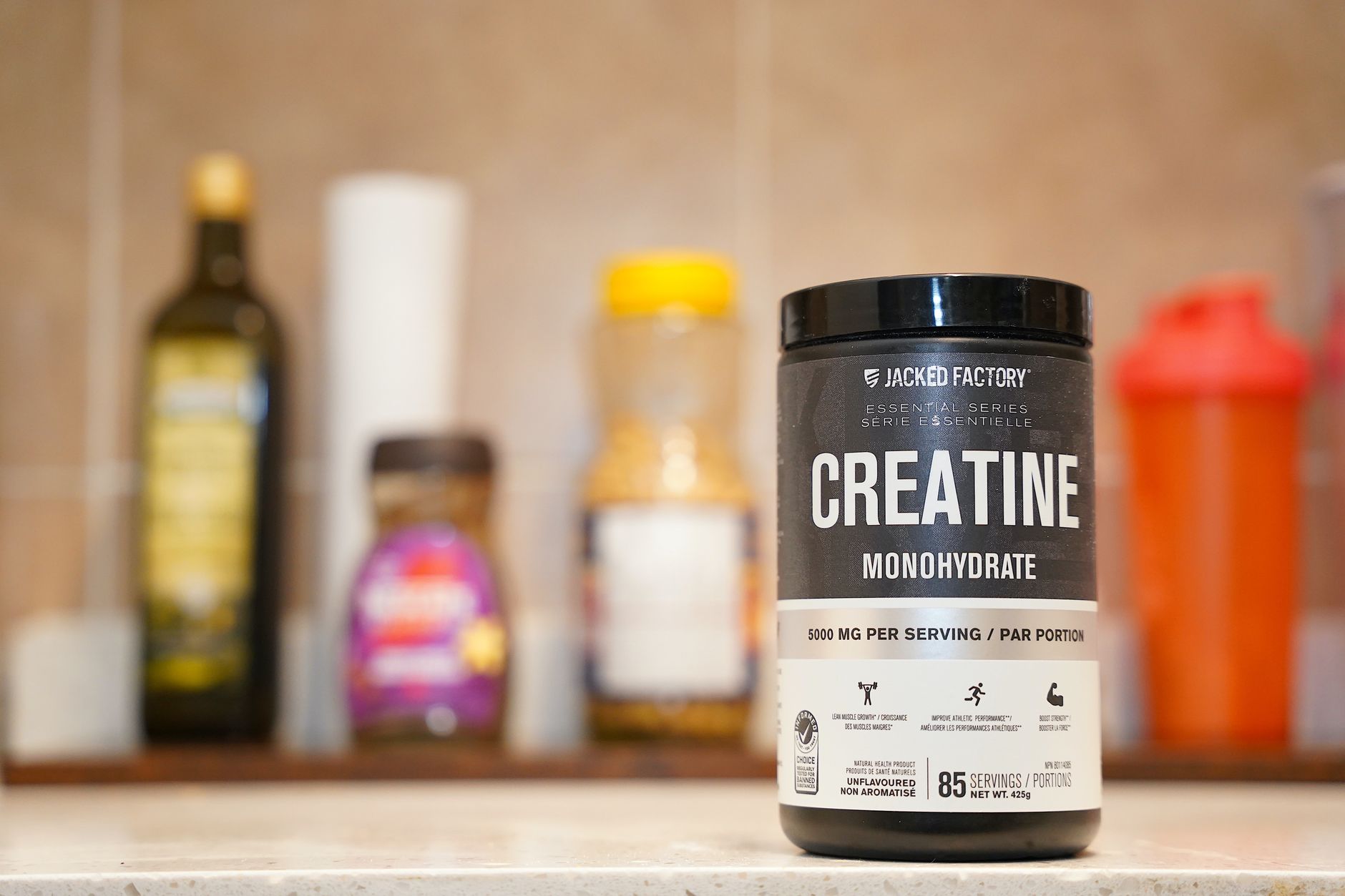
الصورة الرئيسية:Gupta Sahil / Pexels
إعلانات الكريتين عن العضلات: التحقيق في أسطورة "بدون تمرين"
As the wellness and fitness industries continue to expand across digital platforms, viral health claims frequently outpace rigorous scientific scrutiny. A recent examination by Arnold Schwarzenegger’s Pump Club and Men’s Journal highlights how exaggerated assertions regarding standard dietary supplements can mislead consumers seeking physical improvements.
Dietary supplements occupy a multi-billion-dollar marketplace where marketing narratives often distort the actual biochemical functions of raw ingredients. Among the most widely researched and utilized compounds in sports nutrition is creatine, a substance naturally produced by the human body and found in various protein-rich foods. While decades of physiological research have established its efficacy when paired with resistance training, digital wellness spaces occasionally introduce fringe interpretations of its capabilities. One such narrative suggests that individuals can build significant muscle mass simply by supplementing with creatine, eliminating the requirement for strenuous physical exercise. Examining this premise requires a careful evaluation of primary reporting, underlying metabolic mechanisms, and the broader ecosystem of fitness misinformation.
Context and Background on Fitness Misinformation
The modern fitness landscape is heavily influenced by social media algorithms, digital newsletters, and online wellness publications that compete for consumer attention. In this environment, nuanced scientific data is frequently compressed into sensational headlines or absolute claims. Compounds that offer modest, well-documented benefits are sometimes repackaged as miraculous solutions capable of bypassing the fundamental laws of human physiology. Understanding the genesis of these narratives requires looking at how wellness brands, influencers, and aggregators interpret clinical literature.
Nutritional science is inherently incremental, relying on controlled trials, double-blind methodologies, and longitudinal studies to determine cause and effect. Conversely, digital marketing operates on velocity and emotional resonance, favoring simplicity over precision. When a supplement like creatine is associated with cellular hydration, ATP regeneration, and increased workload capacity during exercise, marketing interpretations can leap from supporting resistance training to substituting for it entirely. This transformation from an ergogenic aid to a standalone transformative agent is a classic hallmark of modern health misinformation.
The Economics of Dietary Supplement Marketing
The financial incentive behind exaggerated supplement claims cannot be ignored. Consumers are perpetually searching for efficiency, seeking maximum physical transformation with minimum time investment. This psychological vulnerability creates a fertile market for products that promise shortcuts. When a well-known health platform or fitness authority examines these claims, it provides a vital public service by contrasting commercial hyperbole against empirical reality.
Evaluating these financial and promotional strategies involves dissecting the language used in digital advertisements and sponsored content. Terms like effortless, passive, and breakthrough frequently signal a departure from evidence-based science. Investigative scrutiny helps separate legitimate nutritional science from promotional exaggeration, protecting consumers from financial deception and unrealistic expectations.
The Origin of the No-Workout Creatine Claim
The specific notion that creatine can build muscle in the absence of exercise stems from a fundamental misunderstanding of how muscle hypertrophy occurs. Muscle tissue does not grow spontaneously; it adapts to mechanical tension, metabolic stress, and progressive overload. When a narrative emerges claiming that a supplement alone can induce muscle growth without physical stimulus, it misrepresents the foundational mechanisms of human biology.
According to reporting from Men’s Journal, this specific iteration of the claim gained traction within digital wellness discussions, prompting a critical review by Arnold Schwarzenegger’s Pump Club. The publication noted that while creatine is exceptionally effective at enhancing performance during high-intensity training, it cannot trigger muscle protein synthesis in a sedentary individual. The origin of the myth lies in confusing water retention and cellular volumization within muscle cells with actual structural muscle fiber hypertrophy.
Cellular Volumization Versus Hypertrophy
To understand why the no-workout claim gained momentum, one must examine what creatine actually does inside muscle tissue. Creatine draws water into the intracellular space, causing muscle cells to swell slightly. This process, known as cellular volumization, can lead to a rapid increase in scale weight and a fuller appearance in the muscles within the first week of supplementation.
Misinterpreting this water retention as new muscle tissue is a common error among casual consumers and opportunistic marketers. While intracellular hydration is a positive physiological state that supports protein synthesis during exercise, it is not synonymous with the creation of new contractile protein structures. Without the mechanical stimulus of resistance exercise, the body will not utilize the available creatine to build new muscle fibers.
What Men’s Journal and Pump Club Discovered
The investigation highlighted by Men’s Journal, drawing on insights from Arnold Schwarzenegger’s Pump Club, systematically dismantled the idea of passive muscle growth via supplementation. The fitness collective emphasized that while creatine remains one of the most thoroughly tested and beneficial ergogenic aids available, its efficacy is strictly tied to physical exertion. Without lifting weights or engaging in rigorous physical activity, the biochemical pathway leading to muscle adaptation simply is not activated.
Men’s Journal reported that the Pump Club addressed the viral claim directly, warning readers against falling for marketing tricks that promise something for nothing. The analysis pointed out that consumers often mistake the physiological role of supplements for the primary driver of fitness results, ignoring the fact that nutrition and supplementation are meant to amplify the effects of hard work, not replace it.
| Claim Aspect | Marketing Narrative | Scientific Reality |
|---|---|---|
| Muscle Growth | Creatine builds muscle without exercise. | Muscle hypertrophy requires mechanical tension and resistance training. |
| Weight Gain Mechanism | All initial weight gain is pure muscle tissue. | Initial weight gain is primarily intracellular water retention. |
| Mechanism of Action | Acts as a standalone anabolic agent. | Functions as an ATP recycler to improve exercise performance. |
| Target Audience | Anyone seeking effortless physical transformation. | Athletes and active individuals engaging in high-intensity training. |
The Role of Authoritative Fact-Checking in Fitness
The intervention by prominent fitness figures and respected journalism outlets is crucial in combating widespread health myths. When platforms with significant reach take the time to clarify complex biochemical realities, they help counteract the noise generated by sensationalist content creators. Men’s Journal and the Pump Club demonstrated how responsible media coverage can demystify supplements and provide actionable, grounded guidance to the public.
This level of reporting relies on consensus science rather than isolated anecdotes. By anchoring their analysis in established physiological principles, the investigators ensured that readers understood both the genuine benefits of creatine and its strict limitations. This approach protects public health and promotes a more rational, evidence-based relationship with nutritional supplements.
Analyzing the Scientific Reality of Creatine
Creatine is an organic compound synthesized in the liver and kidneys from amino acids, primarily arginine, glycine, and methionine. It is also ingested through the consumption of red meat and fish. Inside the body, it is phosphorylated to form phosphocreatine, which acts as a rapid reserve of high-energy phosphates in skeletal muscle and brain tissue to recycle adenosine triphosphate (ATP) during high-intensity, short-duration tasks.
Clinical studies consistently show that creatine supplementation increases intramuscular phosphocreatine stores. This elevation allows athletes to perform slightly more work during repeated bouts of high-intensity exercise, leading to greater long-term gains in strength, power, and muscle mass when combined with resistance training. However, every rigorous clinical trial evaluating creatine requires an exercise component to observe hypertrophic outcomes.
The Biochemical Pathway of Muscle Adaptation
Building skeletal muscle requires mechanical load to activate mechanoreceptors on the muscle cell membrane, signaling intracellular pathways such as the mTOR pathway to initiate muscle protein synthesis. Creatine supports this process by ensuring that the cellular energy currency, ATP, remains abundant during intense contractions, thereby delaying fatigue and allowing the individual to lift heavier weights or complete more repetitions.
Without the initiating mechanical stimulus, the mTOR pathway remains quiescent. Supplementing with creatine in a sedentary state will elevate resting intramuscular creatine stores to saturation levels, but the excess will simply be excreted by the kidneys as creatinine without inducing structural changes in muscle tissue. The science is definitive: supplementation without exertion yields no hypertrophic benefit.
How Misleading Supplement Claims Spread
The propagation of health and fitness misinformation relies heavily on digital distribution networks that reward engagement over accuracy. Sensational claims about effortless muscle growth generate clicks, shares, and ad revenue, creating a perverse incentive for content creators to stretch scientific findings beyond recognition. This section examines the mechanisms through which these myths infiltrate public consciousness.
Misleading claims often originate from a kernel of truth. In the case of creatine, legitimate studies showing that it increases strength and muscle mass when paired with exercise are cited out of context. Content creators drop the qualifying phrase when combined with resistance training, transforming a conditional scientific finding into an unconditional, sensationalized guarantee.
The Echo Chamber of Wellness Influencers
Once a distorted claim enters the digital ecosystem, social media algorithms amplify it across multiple platforms. Fitness influencers, supplement brands seeking to boost sales, and automated content aggregators repackage the myth into short-form videos, infographics, and sensational headlines. Consumers are repeatedly exposed to the narrative, making it difficult to discern between verified science and promotional fiction.
This echo chamber effect underscores the importance of critical media literacy. When readers encounter claims that defy basic physiological logic, consulting evidence-based publications and checking primary sources is essential. The work done by Men’s Journal and Arnold Schwarzenegger’s Pump Club serves as a direct antidote to this digital misinformation cycle.
Evaluating the Catch Behind the Hype
Every exaggerated supplement claim conceals a catch, and the no-workout creatine myth is no exception. As Men’s Journal and the Pump Club pointed out, the primary catch is that consumers who buy into the hype are investing time and money into a product expecting results that physiology will not deliver without physical effort. This mismatch between expectation and reality often leads to disillusionment with supplementation altogether.
Furthermore, relying on supplements as a substitute for lifestyle modifications diverts attention from the fundamental pillars of health and fitness: consistent exercise, adequate sleep, balanced nutrition, and progressive overload. When marketing campaigns obscure these foundational truths, they inflict a dual harm on the consumer: financial deception and stalled physical progress.
Financial and Health Implications
While creatine is widely regarded as safe and cost-effective when used as directed, purchasing it under false pretenses represents a misallocation of personal financial resources. Consumers operating under the belief that they can build muscle passively may neglect the hard work required in the gym, leading to frustration when their bodies do not change.
Responsible reporting exposes these marketing tactics, ensuring that consumers view supplements as what they truly are: minor adjuncts to a disciplined lifestyle. By uncovering the catch behind the hype, investigative journalism protects the integrity of sports nutrition and empowers individuals to make informed, realistic health decisions.
قائمة العلامات الحمراء
Identifying misleading fitness and supplement claims requires vigilance. Use this checklist to evaluate health promises encountered online:
- Promises of significant muscle growth or fat loss without physical exercise or dietary changes.
- The use of absolute, hyperbolic language such as effortless, miraculous, or secret loophole.
- Absence of references to peer-reviewed clinical trials or misrepresentation of scientific data out of context.
- Financial models that tie the purchase of expensive, proprietary supplement blends to guaranteed outcomes.
- Vague explanations of physiological mechanisms that rely on pseudoscientific buzzwords rather than established biology.
الأسئلة الشائعة
Does creatine build muscle without working out?
No. Clinical research and investigations by outlets like Men’s Journal confirm that creatine only increases muscle mass when combined with resistance training and adequate physical exertion.
Why do people gain weight when they first start taking creatine?
Initial weight gain is primarily caused by intracellular water retention as creatine draws water into muscle cells, not by the creation of new muscle tissue.
What are the actual scientifically proven benefits of creatine?
Creatine is proven to increase cellular phosphocreatine stores, helping regenerate ATP during high-intensity exercise, which improves strength, power, and training volume.
How did Arnold Schwarzenegger’s Pump Club address this issue?
The Pump Club reviewed and critiqued viral claims regarding passive muscle growth, warning consumers against marketing narratives that misrepresent nutritional science.
Are there financial risks associated with exaggerated supplement claims?
Yes, consumers may waste money on products purchased under false pretenses, expecting passive results that dietary supplements cannot physiologically deliver.
Conclusion and Practical Takeaways
The investigation by Men’s Journal and Arnold Schwarzenegger’s Pump Club into the no-workout creatine claim underscores the ongoing challenge of misinformation in the wellness industry. While creatine remains a valuable, evidence-backed supplement for individuals engaged in rigorous physical training, it is not a magical shortcut that bypasses the need for hard work. Understanding the distinction between cellular water retention and true muscle hypertrophy is essential for anyone navigating the complex marketplace of sports nutrition.
Consumers should approach wellness claims with analytical skepticism, watching for red flags such as promises of passive results and sensationalized marketing language. By anchoring fitness decisions in established science, disciplined exercise, and balanced nutrition, individuals can achieve sustainable physical progress while avoiding the pitfalls of financial deception and exaggerated health hype.