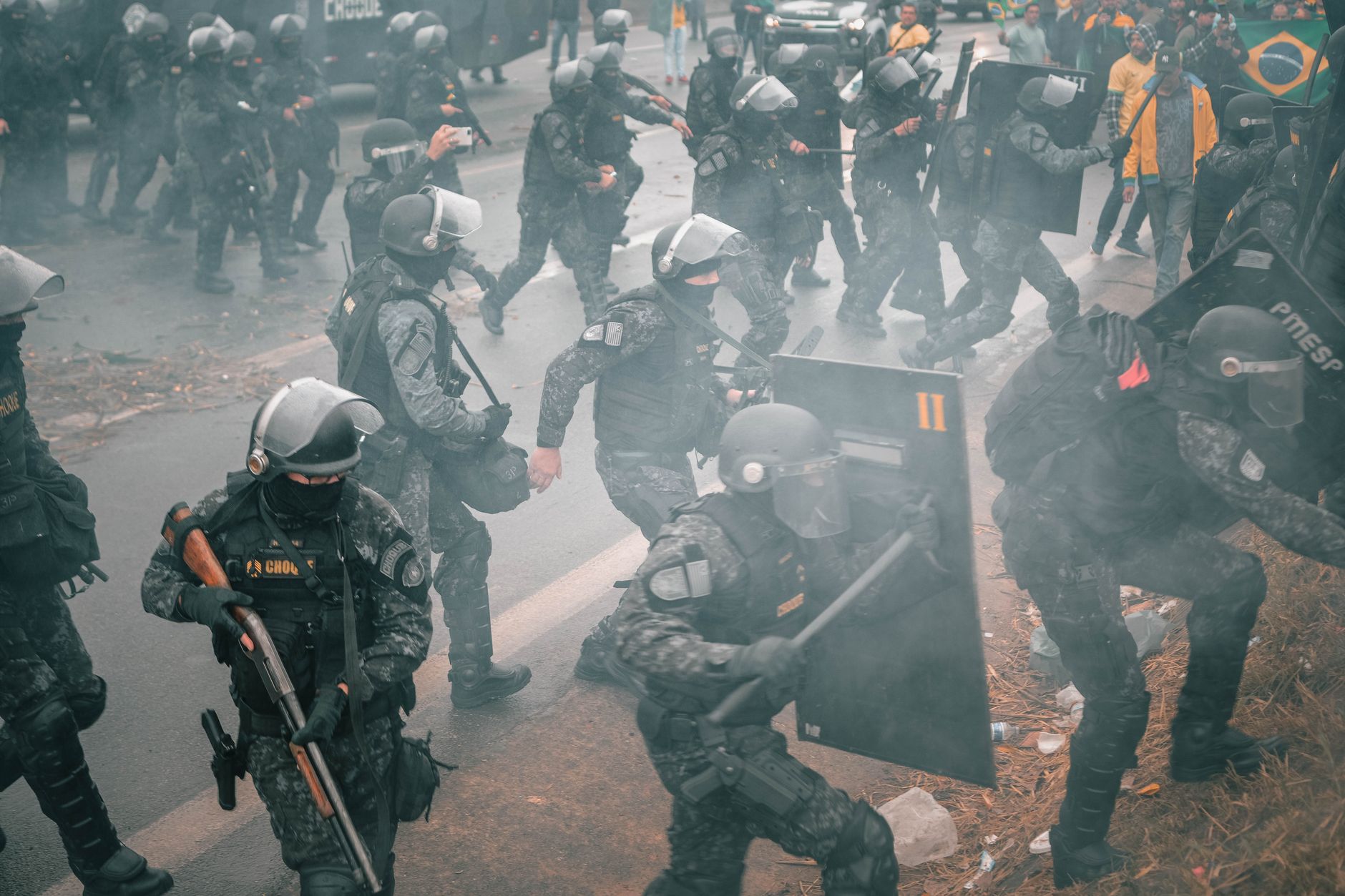
الصورة الرئيسية:Joel Santos / Pexels
فلافيو بولسونارو: حملة التهرب من المسؤولية عن المعلومات الكاذبة في الولايات المتحدة مكشوفة
An analytical breakdown of the narrative surrounding the alleged departure of Flávio Bolsonaro to the United States, highlighting how unverified claims circulate, mutate, and exploit information vacuums. This investigation examines the mechanisms of modern political disinformation using reporting from Valor International.
In contemporary political communications, few events generate as much immediate digital friction as the purported sudden departure of a high-profile political figure. The emergence of intense speculation regarding an alleged flight from legal or political accountability creates a volatile ecosystem where rumor frequently outpaces verification. Recently, public discourse experienced a sharp spike in uncorroborated reports concerning a supposed departure of a prominent Brazilian political figure to North America. As documented by Valor International, the circulation of these unverified assertions quickly became shrouded in a concerted disinformation campaign designed to manipulate public perception rather than inform it. Understanding how this narrative was constructed requires a rigorous examination of the underlying claims, the channels of dissemination, and the structural red flags that distinguish political propaganda from evidence-based journalism.
Introduction to the Flávio Bolsonaro Disinformation Campaign
The controversy surrounding the purported international travel of Brazilian politicians often serves as fertile ground for narrative manipulation. When reports emerged regarding Flávio Bolsonaro and a supposed U.S. escape, the digital information ecosystem reacted with immediate polarization. According to reporting published by Valor International, the unfolding situation was rapidly enveloped in a dense web of disinformation, obscuring verifiable facts behind layers of speculation and partisan messaging.
In political investigations, distinguishing between substantiated reporting and orchestrated narrative-pushing is essential for maintaining public trust. The framing of the situation as an urgent flight or clandestine exit is a classic trope in digital propaganda, engineered to evoke strong emotional responses and bypass analytical scrutiny. Valor International highlighted how initial fragments of information were systematically distorted to fit predetermined political narratives, creating a false sense of urgency and certainty where none existed.
The implications of such disinformation campaigns extend far beyond immediate political posturing. By degrading the quality of public debate and exploiting institutional vulnerabilities, these coordinated efforts undermine the public’s ability to assess political developments objectively. Through a close reading of the reporting provided by Valor International, this investigation dissects the anatomy of the claims, analyzes the spread mechanisms, and outlines concrete methodologies for identifying digital deception.
Anatomy of the Claims Regarding the U.S. Escape
The Genesis of the Flight Narrative
The narrative surrounding the Flávio Bolsonaro U.S. escape began with fragmented, unverified social media posts and anonymous tips. These initial digital footprints lacked primary source verification, passenger manifests, or official statements from relevant authorities. Despite the complete absence of foundational evidence, the narrative gained traction as digital amplifiers seized upon the emotive terminology of flight and evasion. Valor International documented how these speculative origins were rapidly laundered through partisan networks, transforming unconfirmed rumors into authoritative-sounding assertions of fact.
Escalation and Exaggeration
As the narrative propagated across digital platforms, secondary actors introduced escalating claims regarding the motivations and legal implications of the alleged journey. Without any grounding in official documentation, commentators attributed specific strategic intents to the subject, framing the movement as an avoidance of accountability. Valor International pointed out that this escalation phase is typical of coordinated disinformation efforts, where the lack of verifiable counter-information allows propagators to continually expand the scope of the original claim without evidentiary constraint.
Exploiting Information Vacuums
A critical component in the success of the Flávio Bolsonaro U.S. escape narrative was the intentional exploitation of an information vacuum. During periods when official confirmation or denial is pending, speculative reporting rushes in to fill the void. Valor International demonstrated how opportunistic actors leveraged this temporal gap, manufacturing certainty out of ambiguity and presenting unsubstantiated hypotheses as confirmed intelligence to capture audience attention and direct political discourse.
What the Evidence Actually Shows According to Valor International
A rigorous examination of the available facts requires stripping away the speculative rhetoric that defines digital propaganda. According to the reporting by Valor International, the claims of an orchestrated or clandestine U.S. escape lacked the institutional corroboration necessary to establish them as factual occurrences. Journalism grounded in evidence demands verifiable documentation, official travel records, or direct attribution from competent authorities—elements that were conspicuously absent from the primary wave of rumors.
Furthermore, Valor International contextualized the rumors within the broader patterns of political communication in Brazil, where high-profile figures are frequently the subject of speculative reporting during politically sensitive periods. The publication’s coverage emphasized that assertions regarding international travel and legal flight must be weighed against institutional realities, such as border control records, legal status, and official public schedules. When these standards of verification are applied, the narrative of a secretive escape dissolves into a mosaic of politically motivated conjecture.
It is vital to contrast the meticulous reporting of established journalistic outlets with the rapid-fire distribution models of partisan digital networks. While professional news organizations like Valor International exercise editorial restraint and demand corroboration before publishing definitive claims, digital propagandists operate on velocity and emotional resonance. The divergence between what is empirically verifiable and what is amplified online underscores the necessity of relying on disciplined, evidence-first reporting during political controversies.
Mechanisms of Spread and Narrative Control
Algorithmic Amplification and Speed
The rapid dissemination of the Flávio Bolsonaro U.S. escape narrative relied heavily on the structural mechanics of modern social media platforms. Algorithms designed to maximize user engagement inherently favor emotionally charged, sensational content over nuanced, verified reporting. Valor International observed how rumors regarding high-profile escapes trigger immediate user reactions—shares, comments, and outrage—which signal platform algorithms to distribute the content more widely. This speed-first distribution model ensures that unverified claims reach millions of users long before journalistic fact-checking operations can conduct thorough investigations.
Coordinated Partisan Networks
Beyond organic user engagement, the spread of this disinformation campaign was propelled by coordinated partisan networks acting in concert. These networks utilize automated accounts, cross-posting strategies, and synchronized messaging to create a synthetic illusion of consensus. By repeating the same unverified assertions across multiple channels simultaneously, these actors attempt to manufacture mainstream credibility. Valor International noted that this deliberate orchestration is designed to overwhelm counter-narratives and exhaust independent fact-checkers who attempt to correct the record.
Strategic Framing and Emotional Resonance
Narrative control is achieved not merely by repeating a claim, but by framing it within a specific emotional and political context. The framing of international travel as an illicit escape taps into deep-seated public anxieties regarding justice, accountability, and political corruption. Valor International illustrated how this emotional resonance acts as a cognitive shield, making audiences who are ideologically predisposed to distrust the subject less likely to question the veracity of the underlying claims. Emotional manipulation thus replaces empirical validation as the primary metric of truth.
Identifying Red Flags in Political Disinformation
To assist readers in independently evaluating political claims and digital rumors, professional fact-checkers and investigative journalists look for specific structural warning signs. The following checklist details the primary red flags identified in modern disinformation campaigns such as the one surrounding the Flávio Bolsonaro U.S. escape narrative.
- Anonymous or Unverified Sourcing: Claims relying entirely on unnamed insiders, anonymous social media accounts, or uncorroborated rumors without primary documentation.
- Absence of Official Confirmation: A complete lack of corroborating statements, public records, or official announcements from relevant government agencies, border authorities, or legal institutions.
- Sensationalist and Emotive Language: The use of loaded vocabulary—such as escape, clandestine flight, or panic—designed to provoke immediate emotional reactions rather than convey objective information.
- Rapid, Synchronized Distribution: Identical claims appearing simultaneously across multiple partisan accounts or coordinated networks without prior independent journalistic verification.
- Exploitation of Information Vacuums: Speculative narratives manufactured during periods of delay or ambiguity before official facts can be established and verified.
- Lack of Falsifiability: Assertions constructed in a manner that makes them impossible to disprove, often shifting parameters when initial claims are challenged.
Institutional and Journalistic Response
Responding to sophisticated disinformation campaigns requires a concerted effort from professional media organizations, institutional watchdogs, and digital platforms. When the narrative concerning the Flávio Bolsonaro U.S. escape began circulating, responsible journalism played a critical role in anchoring the public discourse in verifiable reality. Outlets such as Valor International demonstrated the importance of resisting the temptation to amplify unverified social media chatter, choosing instead to rigorously vet information before publication.
However, the burden of combating political deception cannot rest solely on traditional newsrooms. Institutional transparency is paramount; timely and accurate communication from official bodies helps eliminate the information vacuums that bad actors exploit. Furthermore, independent fact-checking organizations must continuously analyze the structural mechanics of these campaigns, exposing the networks and tactics behind coordinated narrative manipulation. By documenting how rumors are manufactured and spread, the journalistic community builds systemic resilience against future disinformation efforts.
Ultimately, the institutional response must balance speed with accuracy. In an information environment driven by instant updates, the deliberate pace of rigorous journalism often appears disadvantaged against the rapid dissemination of falsehoods. Yet, maintaining rigorous editorial standards remains the single most effective antidote to propaganda, ensuring that the historical record reflects evidence rather than fabrication.
Navigating Misinformation and What Readers Can Do
Empowering readers to navigate the complex modern information ecosystem is a core mission of evidence-based journalism. When confronting explosive political claims, such as those analyzed by Valor International regarding international travel and alleged escapes, individuals must adopt a rigorous, skeptical approach to media consumption. Cultivating digital media literacy begins with pausing before sharing sensational content and examining the source of the information.
Readers should routinely ask critical questions: Where did this claim originate? Does the reporting rely on verifiable documents or anonymous speculation? Are multiple independent, credible news outlets confirming the story? By refusing to act as passive amplifiers for unvetted digital chatter, individuals disrupt the mechanisms of spread that propaganda campaigns rely upon. Seeking out primary sources, consulting trusted investigative reporting, and remaining vigilant against emotional manipulation are essential practices for maintaining an informed, resilient public.
الأسئلة الشائعة
What was the core claim of the Flávio Bolsonaro U.S. escape narrative?
The core claim revolved around unverified assertions that a prominent Brazilian political figure had secretly or urgently traveled to the United States to evade political or legal scrutiny, lacking any official corroboration.
How did Valor International cover the situation?
Valor International provided rigorous, evidence-based reporting that exposed the claims as being shrouded in an orchestrated disinformation campaign, emphasizing the absence of verified facts and official documentation.
Why do disinformation campaigns exploit information vacuums?
Information vacuums occur during periods when official news is pending, allowing bad actors to introduce speculative rumors and present them as fact before verified reporting can be established.
What are the primary red flags of political disinformation?
Key warning signs include anonymous sourcing, a lack of official confirmation, emotionally charged and sensationalist language, synchronized distribution across partisan networks, and the exploitation of ambiguous timing.
How can readers protect themselves against digital propaganda?
Readers can protect themselves by practicing digital skepticism, verifying sources, looking for independent corroboration from trusted journalistic outlets like Valor International, and avoiding the uncritical sharing of sensational social media rumors.