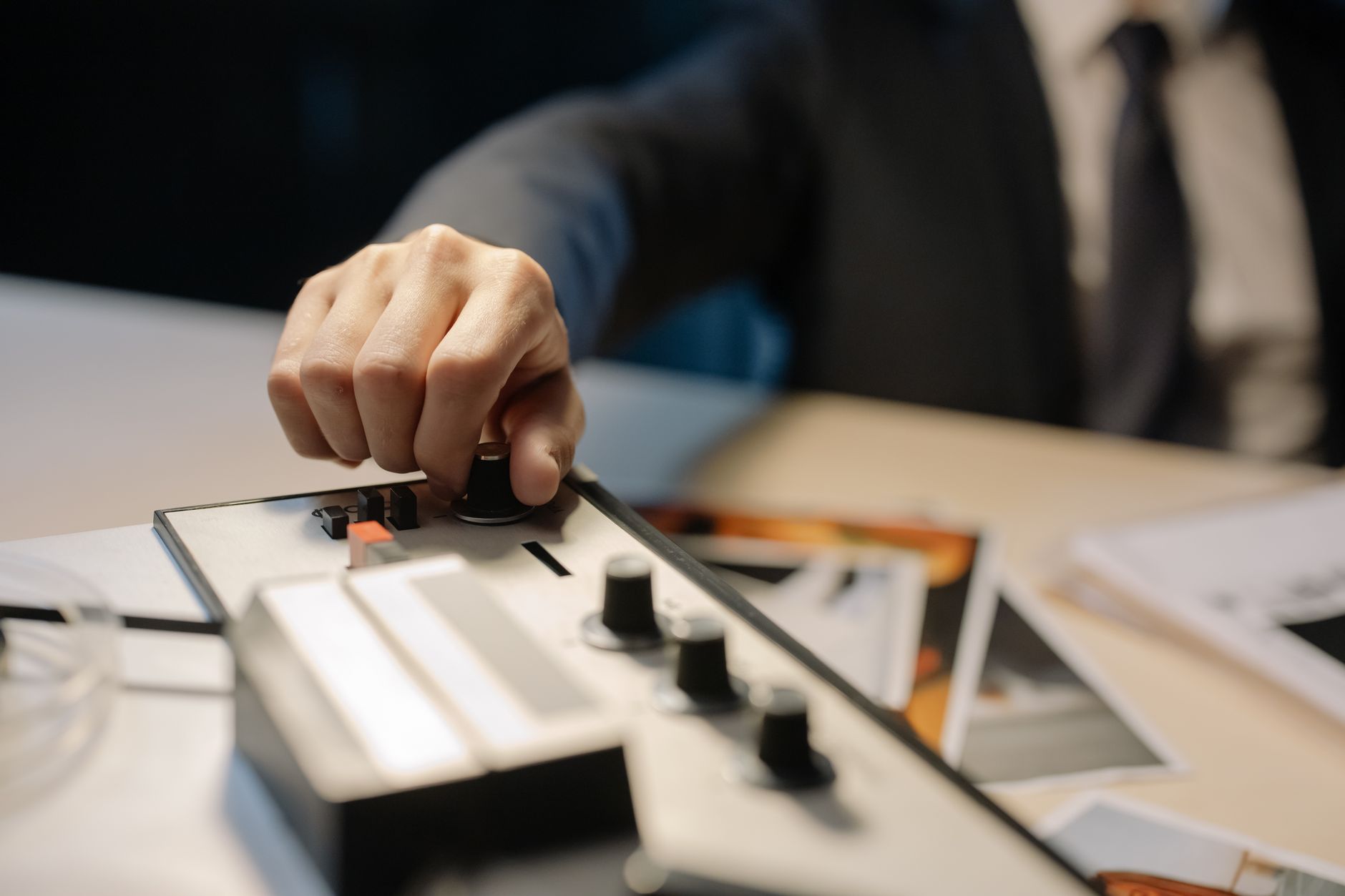
الصورة الرئيسية:قطن برو ستوديو / بيكسيلز
أجهزة الكشف عن الكذب المدعومة بالذكاء الاصطناعي: طلب Pentagon تمويل بقيمة 30 مليون دولار
أعلنت وزارة الدفاع عن اهتمامها بالأدوات الحديثة لتفحص الخداع، وتخطط للاستثمار المالي الكبير في تطوير أنظمة التحقق الآلي. وفقًا لتقرير نشرته مجلة MIT Technology Review، يثير هذا المبادرة أسئلة حاسمة حول جدوى هذه الأنظمة التقنية، وحدودها الأخلاقية، وفشلها التاريخي في استكشاف التقييم النفسي الآلي.
في عصر يتميز بتقدم سريع في مجال الذكاء الاصطناعي والتعلم الآلي، تُبقي المؤسسات البحثية العسكرية على دراية دائمة بتقييم القدرات التكنولوجية الجديدة لضمان البنية التحتية للدفاع الوطني. تتداخل معالجة البيانات التلقائية وتحليل سلوك الإنسان في مجال جديد مثير للجدل: تقييم صدق المعلومات تلقائيًا. مؤخرًا، توجهت الانتباه نحو تخصيص مالي كبير مقترح لإنشاء نظام فحص الكذب التلقائي. كصحفيين تحقيقيين ومحللين للتحقق من الحقائق، يتطلب فحص صحتهم، آلياتهم، والتأثيرات المؤسسية لهذه المبادرة مراجعة شاملة للادعاءات، التكنولوجيا الأساسية، ومقومات تاريخية لمethods فحص الكذب شبه العلمي.
مقدمة عن مبادرة الذكاء الاصطناعي للبنوك الخمس [HTML tags and placeholders remain unchanged]
الوزارة الأمريكية للدفاع بدأت جهودًا لاستكشاف تطبيقات الذكاء الاصطناعي المتقدمة مصممة لتحديد الكذب في الأفراد. وفقًا لمجلة MIT Technology Review، فإن هذه المبادرة المدعومة من الدفاع تركز على استغلال نماذج حوسبية لتقييم مؤشرات السلوكية والفسيولوجية للصدق. تهدف البحث عن أدوات فحص آلية إلى تلبية طلب مؤسسي متواصل لأساليب سريعة ومقيسة لتقييم الموظفين، وتقييم مصادر الاستخبارات، وحماية العمليات الحساسة من التهديدات الداخلية والخارجية.
بينما يبدو وعد حماية موضوعية وآلية ضد الغش جذابًا للمخططين العسكريين، كانت المجتمع العلمي منذ فترة طويلة يتناقش حول موثوقية تحليل السلوك الآلي. يساهم دمج التعلم الآلي في بيئات الأمن ذات المخاطر العالية في نقل عبء الحكم من مقابلة خبراء مدربين إلى شبكات عصبية معقدة. أشارت مجلة MIT Technology Review إلى أن هذا المشروع يمثل زيادة كبيرة في اعتماد الجيش على الذكاء الاصطناعي السلوكي، حيث يتقدم من جمع البيانات السلبي إلى تقييم نفسي نشط وتقييم مصداقية.
تقييم هذه المبادرة يتطلب دراسة دقيقة لكيفية عمل هذه الأنظمة وما إذا كانت العلوم الأساسية التي تستند إليها صالحة. يدافع المدافعون عن أن نماذج التعلم الآلي الحديثة يمكن أن تكتشف تعبيرات الوجه الدقيقة والمتغيرات الصوتية الصغيرة التي تفوت الانتباه البشري. من ناحية أخرى، يحذر الباحثون المستقلون ومدافعو الحريات المدنية من أن الكشف الآلي عن الخداع يrisk تشريع التحيز، وتفسير التغيرات الفسيولوجية الطبيعية على أنها علامات للذنب، والعمل كشكل متقدم من العلوم الزائفة التكنولوجية.
الميزانية المقترحة بقيمة 30 مليون دولار وأهدافها
الاستثمارات المالية في تقنيات عسكرية ناشئة غالبًا ما تقدم نافذة واضحة على أولويات المؤسسات. ذكرت مجلة MIT Technology Review أن وزارة الدفاع الأمريكية تبحث عن 30 مليون دولار لبناء واختبار هذا جهاز كشف الكذب المدعوم بالذكاء الاصطناعي. تهدف هذه تخصيصات مالية إلى تمويل مراحل البحث والتطوير، بروتوكولات جمع البيانات، وتطوير نموذج أولي في بيئات دفاعية آمنة.
The stated objectives of the funding package revolve around creating a system capable of processing multimodal inputs—such as video feeds, audio recordings, and physiological telemetry—to generate real-time truthfulness scores. Defense contractors and academic laboratories competing for these funds are tasked with building algorithms that can differentiate between deceptive and truthful statements under controlled experimental conditions. The financial scale of the project underscores the Department of Defense’s confidence in computational approaches to human security challenges.
However, financial backing does not validate technological efficacy. Critics point out that allocating tens of millions of dollars toward a fundamentally flawed premise risks repeating historical errors associated with flawed credibility assessment tools. The objectives outlined by defense planners rely heavily on the assumption that deception leaves a uniform, detectable digital footprint across diverse populations, an assumption that lacks robust empirical backing in peer-reviewed psychological literature.
آليات تقنية خلف الكشف عن خداع الذكاء الاصطناعي
Multimodal Data Processing
Modern automated lie detection proposals rely heavily on multimodal data fusion. As outlined by MIT Technology Review, these systems ingest vast quantities of data points simultaneously, attempting to correlate computer vision outputs of facial movements with acoustic feature analysis of speech patterns and physiological metrics like heart rate variability. The underlying architecture attempts to map these disparate data streams into a unified probability score indicating whether a subject is being truthful.
Computer Vision and Micro-Expressions
A primary component of proposed AI lie detectors involves facial landmark tracking and micro-expression analysis. Machine learning models are trained to identify rapid, involuntary muscle movements associated with suppressed emotions. However, psychological research consistently demonstrates that micro-expressions are not reliable universal indicators of deceit; they merely reflect a broad spectrum of emotional states, including anxiety, confusion, or neutrality, which are frequently experienced during high-stakes security interviews regardless of guilt.
Voice Stress and Acoustic Modeling
In addition to visual cues, these systems utilize advanced acoustic modeling to detect vocal tremor, pitch elevation, and cadence shifts. The premise is that cognitive load and stress induced by lying produce distinct acoustic anomalies. Yet, linguistic and phonetic experts emphasize that voice stress analysis is notoriously susceptible to false positives caused by background noise, speech impediments, cultural differences in communication styles, and the natural anxiety of being interrogated by military authorities.
تاريخي السياق للتكنولوجيا المستخدمة في كشف الكذب --- **التاريخي السياق للتكنولوجيا المستخدمة في كشف الكذب** --- **تاريخي السياق للتكنولوجيا المستخدمة في كشف الكذب** --- **تاريخي السياق للتكنولوجيا المستخدمة في كشف الكذب** --- **تاريخي السياق للتكنولوجيا المستخدمة في كشف الكذب** --- **تاريخي السياق للتكنولوجيا المستخدمة في كشف الكذب** --- **تاريخي السياق للتكنولوجيا المستخدمة في كشف الكذب** --- **تاريخي السياق للتكنولوجيا المستخدمة في كشف الكذب** --- **تاريخي السياق للتكنولوجيا المستخدمة في كشف الكذب** --- **تاريخي السياق للتكنولوجيا المستخدمة في كشف الكذب** --- **تاريخي السياق للتكنولوجيا المستخدمة في كشف الكذب** --- **تاريخي السياق للتكنولوجيا المستخدمة في كشف الكذب** --- **تاريخي السياق للتكنولوجيا المستخدمة في كشف الكذب** --- **تاريخي السياق للتكنولوجيا المستخدمة في كشف الكذب** --- **تاريخي السياق للتكنولوجيا المستخدمة في كشف الكذب** --- **تاريخي السياق للتكنولوجيا المستخدمة في كشف الكذب** --- **تاريخي السياق للتكنولوجيا المستخدمة في كشف الكذب** --- **تاريخي السياق للتكنولوجيا المستخدمة في كشف الكذب** --- **تاريخي السياق للتكنولوجيا المستخدمة في كشف الكذب** --- **تاريخي السياق للتكنولوجيا المستخدمة في كشف الكذب** --- **تاريخي السياق للتكنولوجيا المستخدمة في كشف الكذب** --- **تاريخي السياق للتكنولوجيا المستخدمة في كشف الكذب** --- **تاريخي السياق للتكنولوجيا المستخدمة في كشف الكذب** --- **تاريخي السياق للتكنولوجيا المستخدمة في كشف الكذب** --- **تاريخي السياق للتكنولوجيا المستخدمة في كشف الكذب** --- **تاريخي السياق للتكنولوجيا المستخدمة في كشف الكذب** --- **تاريخي السياق للتكنولوجيا المستخدمة في كشف الكذب** --- **تاريخي السياق للتكنولوجيا المستخدمة في كشف الكذب** --- **تاريخي السياق للتكنولوجيا المستخدمة في كشف الكذب** --- **تاريخي السياق للتكنولوجيا المستخدمة في كشف الكذب** --- **تاريخي السياق للتكنولوجيا المستخدمة في كشف الكذب** --- **تاريخي السياق للتكنولوجيا المستخدمة في كشف الكذب** --- **تاريخي السياق للتكنولوجيا المستخدمة في كشف الكذب**
The pursuit of mechanical or automated deception detection is not a novel phenomenon within military and intelligence agencies. Throughout the twentieth century, governments invested heavily in the polygraph machine, despite widespread scientific consensus questioning its reliability. The polygraph measures peripheral physiological responses—such as galvanic skin response, blood pressure, and respiration—under the assumption that autonomic arousal correlates directly with lying. Decades of independent reviews, including comprehensive evaluations by the National Academy of Sciences, have repeatedly found that polygraphs lack scientific validity and can be easily manipulated.
Transitioning from analog polygraphs to digital, AI-driven facial and vocal analysis represents a technological evolution, but it shares the same foundational epistemological flaw. Instead of measuring autonomic nervous system activity, automated lie detectors measure behavioral proxies that are equally disconnected from the cognitive state of truth-telling. By examining the historical trajectory of security screening technologies, observers can see a recurring cycle: institutional demand for foolproof security leads to the uncritical embrace of emerging technological tools that promise certainty where none exists.
Furthermore, the history of automated psychological profiling highlights persistent issues regarding bias and discrimination. Early automated screening systems deployed in border security and employment vetting have frequently demonstrated disparate impact across demographic lines, misinterpreting cultural norms of eye contact, facial movement, and vocal modulation as suspicious behavior. The Pentagon’s current initiative risks amplifying these historical shortcomings on a much larger scale, embedding systemic biases into automated decision-making pipelines.
Implications and Limitations of Automated Screening
Civil Liberties and Privacy Concerns
The deployment of AI-powered lie detectors within military and security frameworks raises profound civil liberties questions. Continuous monitoring of facial expressions, vocal patterns, and physiological telemetry creates an unprecedented surveillance footprint. As highlighted in coverage by MIT Technology Review, subjects subjected to these tests have little recourse if the algorithm misclassifies them, leading to severe professional, legal, and personal consequences without transparent due process.
The Danger of Algorithmic Determinism
When complex human psychological states are reduced to a binary output or a numerical probability score by an opaque algorithm, decision-makers tend to attribute unwarranted authority to the machine. This phenomenon, known as automation bias, can lead investigators to override their own critical judgment in favor of a computerized assessment. In high-stakes national security contexts, relying on flawed algorithmic outputs can result in wrongful accusations against loyal personnel while allowing sophisticated actors who have trained to beat the system to pass undetected.
| System Claim | أدلة تجريبية |
|---|---|
| AI can reliably detect universal micro-expressions of lying. | Micro-expressions reflect general emotional arousal, not specific deception. |
| Vocal stress analysis provides objective proof of guilt. | Acoustic anomalies are easily confounded by anxiety, culture, and context. |
| Multimodal AI eliminates human bias in security screening. | Algorithms internalize and automate historical biases from training data. |
| Automated systems are resistant to countermeasures. | Subjects can readily train to manipulate physiological and behavioral outputs. |
**المسؤوليات المؤسسية وآفاق المستقبل** [المسؤوليات المؤسسية وآفاق المستقبل] {content} [المسؤوليات المؤسسية وآفاق المستقبل] {content} [المسؤوليات المؤسسية وآفاق المستقبل] {content} [المسؤوليات المؤسسية وآفاق المستقبل] {content} [المسؤوليات المؤسسية وآفاق المستقبل] {content} [المسؤوليات المؤسسية وآفاق المستقبل] {content} [المسؤوليات المؤسسية وآفاق المستقبل] {content} [المسؤوليات المؤسسية وآفاق المستقبل] {content} [المسؤوليات المؤسسية وآفاق المستقبل] {content} [المسؤوليات المؤسسية وآفاق المستقبل] {content} [المسؤوليات المؤسسية وآفاق المستقبل] {content} [المسؤوليات المؤسسية وآفاق المستقبل] {content} [المسؤوليات المؤسسية وآفاق المستقبل] {content} [المسؤوليات المؤسسية وآفاق المستقبل] {content} [المسؤوليات المؤسسية وآفاق المستقبل] {content} [المسؤوليات المؤسسية وآفاق المستقبل] {content} [المسؤوليات المؤسسية وآفاق المستقبل] {content} [المسؤوليات المؤسسية وآفاق المستقبل] {content} [المسؤوليات المؤسسية وآفاق المستقبل] {content} [المسؤوليات المؤسسية وآفاق المستقبل] {content} [المسؤوليات المؤسسية وآفاق المستقبل] {content} [المسؤوليات المؤسسية وآفاق المستقبل] {content} [المسؤوليات المؤسسية وآفاق المستقبل] {content} [المسؤوليات المؤسسية وآفاق المستقبل] {content} [المسؤوليات المؤسسية وآفاق المستقبل] {content} [المسؤوليات المؤسسية وآفاق المستقبل] {content} [المسؤوليات المؤسسية وآفاق المستقبل] {content} [المسؤوليات المؤسسية وآفاق المستقبل] {content} [المسؤوليات المؤسسية وآفاق المستقبل] {content} [المسؤوليات المؤسسية وآفاق المستقبل] {content} [المسؤوليات المؤسسية وآفاق المستقبل]
The institutional enthusiasm surrounding the Pentagon’s $30 million proposal reflects a broader tech-solutionist mindset within modern defense procurement. Proponents within the military-industrial complex argue that continuous iteration, larger training datasets, and advanced neural network architectures will eventually overcome historical limitations in deception detection. They maintain that even an imperfect automated screener provides a useful triage tool to narrow down investigative targets in resource-constrained environments.
Conversely, independent academic researchers, ethicists, and oversight bodies urge extreme caution. They argue that pouring millions of dollars into developing systems built on fundamentally unsound scientific premises is an inefficient use of public funds and a dangerous encroachment on human rights. The scientific consensus remains clear: there is no credible evidence that any machine, whether an analog polygraph or a multimodal deep learning model, can reliably detect whether a human being is telling the truth.
Looking ahead, the trajectory of this initiative will depend heavily on congressional oversight, independent scientific auditing, and the willingness of defense leadership to heed empirical critiques. If the project proceeds without rigorous, transparent validation from outside the defense establishment, it threatens to enshrine sophisticated digital pseudoscience into official military protocols, with lasting ramifications for national security and individual rights.
قائمة العلامات الحمراء
- Promising a simple technological solution to an immensely complex psychological problem.
- Relying on proprietary algorithms that cannot be independently audited by the scientific community.
- Conflating emotional stress, anxiety, or nervousness with definitive proof of deception.
- Failing to account for cultural, linguistic, and physiological diversity in training datasets.
- Citing large financial investments as proof of technological efficacy rather than peer-reviewed empirical studies.
الأسئلة الشائعة
What is the primary goal of the Pentagon’s proposed AI initiative?
The initiative seeks to allocate $30 million toward developing an automated system capable of evaluating behavioral and physiological indicators to assess truthfulness in human subjects.
How does an AI-powered lie detector claim to operate?
These systems utilize multimodal data processing, combining computer vision to track micro-expressions, acoustic modeling to analyze voice stress, and physiological telemetry to generate a truthfulness probability score.
Why do scientists criticize automated deception detection?
Independent researchers point out that deception does not produce a universal, detectable physiological or behavioral footprint, meaning these systems frequently misinterpret normal anxiety or emotional variation as guilt.
What role does historical precedent play in evaluating this technology?
Decades of scientific consensus demonstrated that traditional polygraphs—which measured autonomic arousal—lacked validity; critics argue that AI lie detectors simply modernize the same flawed premise.
What are the primary risks associated with deploying these systems?
Risks include automation bias among investigators, severe civil liberties violations, lack of due process for misclassified individuals, and the codification of algorithmic bias.