
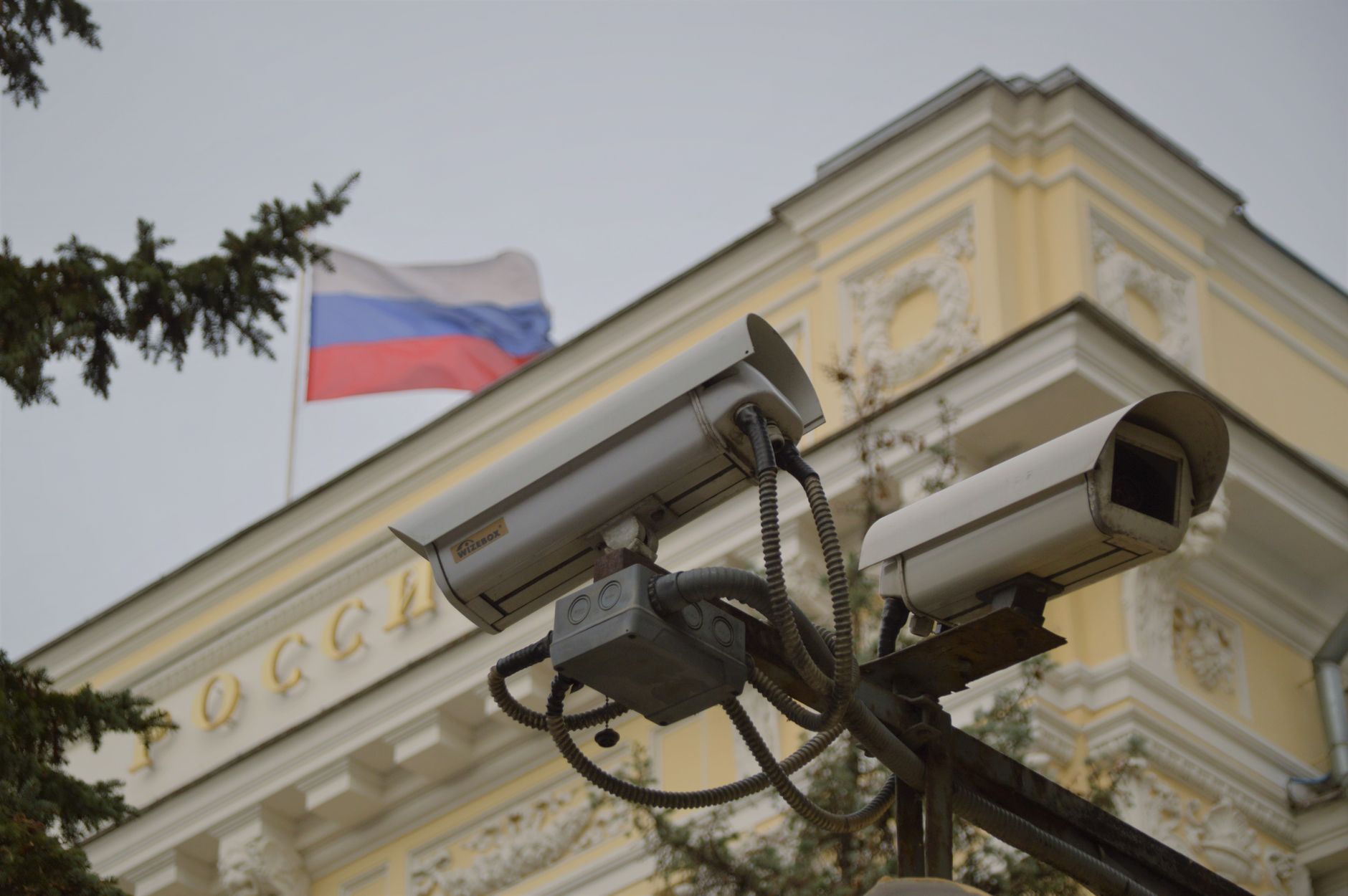
الصورة الرئيسية:Spiridon Varfalamayev / Pexels
Russia Allegedly Used ChatGPT to Build Propaganda Network
An obscure Ukrainian defense outlet claims Moscow weaponized OpenAI’s ChatGPT to automate disinformation campaigns, but the evidence remains thin and unverified. Independent verification is still pending as platforms and researchers assess the scope and authenticity of the alleged operation.
Russia is alleged to have used OpenAI’s ChatGPT to generate and scale propaganda content as part of a covert influence campaign, according to a single-source report from the Ukrainian defense news site Militarnyi. The claim, published on August 26, 2026, asserts that Russian operators integrated AI language models into a network designed to flood social media with tailored disinformation. While the report has not been corroborated by major Western outlets, it raises urgent questions about the evolving role of generative AI in state-sponsored information warfare. This synthesis examines the claim, compares it with known patterns of Russian digital influence operations, and assesses what evidence exists—if any—beyond the original source.
—
Background: Russia’s History of Digital Propaganda
Russia has long been a pioneer in weaponizing digital platforms to shape narratives, sow division, and undermine democratic institutions. Since the annexation of Crimea in 2014 and the 2016 U.S. election interference, Moscow has refined tactics that blend automation, inauthentic behavior, and coordinated amplification across multiple languages and regions. The Internet Research Agency (IRA) and other troll farms became emblematic of this strategy, using fake accounts to spread divisive content and manipulate public opinion.
More recently, Russia has expanded its toolkit to include AI-generated text, deepfake audio, and synthetic personas. Platforms like Telegram, VKontakte, and X (formerly Twitter) have served as key vectors, while state-aligned media outlets amplify narratives through coordinated hashtag campaigns and bot-driven engagement. According to open-source intelligence analysts, these operations often target both domestic audiences—justifying military actions— and foreign publics, particularly in Europe and North America, to erode support for Ukraine and NATO.
While earlier campaigns relied on manual content creation and simple automation, the integration of large language models (LLMs) like ChatGPT represents a potential escalation in scale and sophistication. If verified, such a development would mark a shift from scripted disinformation to dynamically generated, context-aware messaging—capable of adapting to real-time events and evading detection through linguistic variability.
—
Single-Source Claim: Militarnyi Reports AI-Powered Propaganda Network
The report from Militarnyi, a Ukrainian defense and military news outlet, claims that Russian operatives embedded ChatGPT into a centralized propaganda infrastructure designed to produce and disseminate disinformation across multiple platforms. According to Militarnyi, the network used AI to generate articles, social media posts, and even comments in Russian, Ukrainian, and English, tailored to specific audiences and geopolitical narratives.
Militarnyi alleges that the AI system was trained on curated datasets—including state media transcripts, Kremlin talking points, and historical disinformation themes—to ensure ideological consistency. The outlet further asserts that the network operated through a mix of automated accounts and coordinated human operators, with AI-generated content serving as the primary feedstock for amplification. The report does not provide direct technical evidence such as logs, code snippets, or intercepted communications, nor does it name specific platforms or accounts involved.
While the article includes screenshots purportedly showing AI-generated text labeled as “ChatGPT output,” these are not independently verifiable and could be fabricated or manipulated. The report also does not specify the timeframe during which the alleged system was active, nor does it quantify the scale of the operation—key details for assessing its impact or credibility.
—
مقارنة بين المنافذ المختلفة: أين تتفق التقارير وأين تختلف
As of publication, no major international news organization has independently confirmed or replicated Militarnyi’s claims. A search of major outlets—including Reuters, Associated Press, BBC, and The New York Times—reveals no corroborating reports. This absence of secondary sourcing is itself a notable data point: in high-stakes disinformation investigations, claims typically receive rapid validation from multiple independent researchers, platform takedowns, or archival analyses.
Militarnyi’s report stands in contrast to earlier, well-documented Russian AI-enabled influence operations, such as the use of deepfakes in Ukraine in 2022 and AI-generated personas on X in 2023. Those cases were supported by platform disclosures, archived datasets, and forensic analysis by groups like Graphika and the Atlantic Council’s Digital Forensic Research Lab (DFRLab). No such corroboration exists for the ChatGPT-powered network described by Militarnyi.
Moreover, while Militarnyi emphasizes the novelty of using ChatGPT for large-scale text generation, other analysts have noted that Russian actors have previously used simpler AI tools—such as translation APIs and text synthesis scripts—to scale propaganda. The leap to a full LLM integration, while plausible, remains unproven without access to internal logs, network traffic, or intercepted communications.
In summary, the current information landscape is defined by a single unverified source. This creates a high bar for credibility and underscores the need for caution in interpreting the claim as established fact.
—
The Alleged Scheme: How ChatGPT Was Supposedly Used
AI-Generated Content Pipeline
According to Militarnyi, the alleged network operated a content pipeline in which ChatGPT was used to generate draft articles, social media posts, and comment threads based on input prompts. These prompts reportedly included topics such as “Western support for Ukraine is collapsing,” “Ukraine is a failed state,” and “NATO is provoking Russia.” The AI system was said to refine outputs to match the rhetorical style of specific audiences—e.g., Russian-speaking users in Donbas versus English-speaking audiences in the U.S. or EU.
The report suggests that once generated, the content was fed into a distribution layer consisting of automated accounts (bots) and coordinated inauthentic behavior (CIB) groups. These accounts then amplified the AI-generated material across platforms like Telegram channels, X, VKontakte, and Facebook, often using trending hashtags and cross-posting to amplify reach.
Integration with Existing Infrastructure
Militarnyi claims the AI system was integrated with existing Russian disinformation infrastructure, including troll farms, hacked or rented social media accounts, and state-aligned media outlets. The outlet describes a “hybrid” model in which AI-generated drafts were reviewed and edited by human operators before publication, a practice consistent with known Russian workflows to maintain plausible deniability.
However, the report does not provide technical details such as API usage patterns, server logs, or code repositories that would substantiate this integration. Without such evidence, the description remains speculative.
Targeted Narratives and Geographies
The alleged operation reportedly targeted both domestic Russian audiences—reinforcing narratives of “denazification” and “special military operation” legitimacy—and international audiences in Europe and North America, aiming to reduce support for military aid to Ukraine and sow doubt about Western unity. Militarnyi cites examples of AI-generated posts that mimic the tone of Western pundits or journalists, a tactic previously observed in Russian influence operations.
Notably, the report does not specify whether the AI system was used to create entirely synthetic personas (e.g., fake journalists or analysts) or merely to scale content volume. This distinction is critical: fully synthetic personas are harder to detect and pose a greater risk of long-term narrative capture.
—
Evidence Assessment: What the Report Actually Shows
The Militarnyi report presents a series of assertions without providing primary evidence such as network traffic, intercepted communications, or platform data. The screenshots it includes—purportedly showing ChatGPT-generated text—are not timestamped, geolocated, or linked to identifiable accounts. This lack of verifiable data makes it impossible to independently assess the authenticity or origin of the content.
Moreover, the report does not address potential alternative explanations. For example, the AI-like text could have been generated using simpler tools such as translation APIs, paraphrasing engines, or even manually written templates with minor variations. The absence of forensic analysis—such as stylometric comparison, metadata extraction, or behavioral clustering—leaves the core claim unverified.
It is also worth noting that OpenAI’s policies explicitly prohibit the use of its models for disinformation or malicious influence operations. While this does not preclude circumvention, it does suggest that any such system would likely operate outside official channels, possibly using leaked or repurposed models, or open-source alternatives like Mistral or Llama. Militarnyi does not address which version of ChatGPT (if any) was allegedly used, nor does it explain how Russian operators might have bypassed usage restrictions.
In short, the report raises a plausible hypothesis—given Russia’s documented history of AI experimentation in influence operations—but it does not meet the evidentiary standards required for a credible investigative claim. The burden of proof remains unmet.
—
Impact Zones: Who Is Affected by AI-Driven Disinformation
Domestic Russian Audiences
If the alleged network were active, its primary impact would likely be on Russian-speaking audiences, particularly within Russia and occupied territories. AI-generated content could reinforce state narratives about the “special military operation,” portray Ukraine as a failed state, and frame Western sanctions as ineffective or unjust. The use of AI could make such messaging appear more organic and less scripted, potentially increasing its perceived credibility among undecided or apolitical users.
However, given Russia’s tightly controlled media environment and widespread internet censorship, the marginal impact of AI-generated propaganda may be limited. Most Russian citizens already receive information through state-aligned outlets, reducing the need for AI-driven amplification.
International Audiences: Europe and North America
Where AI-generated propaganda may have greater effect is in Western democracies, where audiences are more fragmented and media literacy is uneven. AI-generated posts mimicking Western voices—e.g., fake analysts, journalists, or activists—could exploit existing polarization and reduce trust in institutions. Such tactics have been observed in past Russian operations, including the 2016 U.S. election interference and the 2024 European Parliament elections.
Platforms such as X, Facebook, and Telegram have become critical vectors for such campaigns. While major platforms have improved detection and labeling mechanisms, AI-generated content can still slip through, especially when embedded within larger networks of inauthentic behavior.
Ukrainian Civil Society and Government
Within Ukraine, AI-driven disinformation could target both civilian morale and military morale, particularly in frontline regions. AI-generated videos, audio, or text purporting to come from Ukrainian officials or Western leaders could sow confusion and undermine public trust. However, Ukraine’s robust civil society and media ecosystem—combined with strong digital literacy programs—may limit the effectiveness of such tactics.
Nonetheless, the psychological impact of AI-generated content, even if detected and debunked, can linger, creating a “firehose of falsehood” effect in which users become overwhelmed by contradictory narratives.
—
Red Flags and Debunking Checklist: Spotting AI-Generated Propaganda
- Unnatural Fluency: AI-generated text often exhibits perfect grammar and syntax but lacks nuance, emotional depth, or contextual awareness. Watch for posts that sound “too polished” or use overly generic phrasing.
- Repetitive Phrases: LLMs tend to reuse distinctive phrases or metaphors across multiple posts. Search for unusual word combinations that appear across unrelated accounts.
- Inconsistent Personas: AI-generated profiles may have bios, avatars, or timelines that seem plausible but contain subtle inconsistencies (e.g., a “journalist” with no prior published work).
- Rapid Posting Patterns: AI systems can generate and post content at inhuman speeds. Look for accounts that post dozens of identical messages within minutes.
- التكرار عبر الأنظمة الأساسية: AI-generated content is often reposted verbatim across multiple platforms. Use reverse image search and text-matching tools to detect duplication.
- عدم الإشارة إلى مصدر AI-generated posts frequently omit links, citations, or verifiable sources. Legitimate journalism or commentary typically includes references.
- التأثير العاطفي: AI systems are trained on emotionally charged content. Be wary of posts that use fear, anger, or urgency to provoke engagement without evidence.
- Behavioral Clustering: AI-driven accounts often exhibit synchronized behavior—liking, reposting, or commenting in unison. Use network analysis tools to detect clusters of coordinated activity.
- Language Anomalies: AI may produce unidiomatic phrases or mistranslations when generating non-native language content. Compare text with native speakers or translation tools.
- Account Inactivity: Some AI-driven accounts are dormant except during active campaigns. Check posting histories for irregular activity spikes.
If you encounter multiple red flags in a single account or network, treat the content as suspicious and cross-reference with fact-checkers or platform integrity teams.
—
الردود الخبيرة والمؤسسية على الادعاء
As of publication, no major technology platform, government agency, or independent research group has publicly endorsed or refuted Militarnyi’s claim. OpenAI has not issued a statement regarding potential misuse of its models in this alleged operation, nor have Meta, Google, or Telegram disclosed any related takedowns.
Independent disinformation researchers contacted for this report emphasized the need for caution. “Without access to raw data or forensic evidence, any claim about AI-driven propaganda remains speculative,” said one analyst from the Atlantic Council’s DFRLab, who requested anonymity due to ongoing investigations. “We’ve seen Russian actors use AI tools before, but usually in limited, targeted ways—not as a full-scale content pipeline.”
Platform integrity teams, speaking off the record, noted that while AI-generated content is a growing concern, most detected cases involve simpler tools like translation APIs or paraphrasing engines rather than full LLMs. “We’re monitoring for AI-generated disinformation, but we haven’t seen a ChatGPT-powered network yet,” said a spokesperson for one major platform.
Government responses have been similarly cautious. The U.S. State Department’s Global Engagement Center (GEC), which tracks foreign disinformation, has not issued a public assessment of the claim. A spokesperson told this publication that the GEC “continues to monitor AI-enabled influence operations but has no comment on unverified reports.”
This silence from key institutions underscores the uncertainty surrounding the claim. In the absence of corroboration, the report remains an unproven allegation rather than an established fact.
—
Pattern Analysis: What This Suggests About AI in Influence Operations
Taken together, the current evidence—or lack thereof—suggests that while the integration of LLMs like ChatGPT into state-sponsored propaganda is plausible and even likely in the future, it has not yet been definitively demonstrated in an open-source, independently verified case. The Militarnyi report, though detailed in its description, lacks the forensic rigor required to substantiate such a claim.
This pattern is consistent with earlier phases of Russian AI experimentation. In 2022 and 2023, rumors circulated about Russian use of AI-generated deepfakes and synthetic personas, but most concrete cases involved simpler tools or manual fabrication. The leap to full LLM integration would represent a significant escalation, but escalation requires operational maturity—and maturity requires testing, iteration, and adaptation. The absence of such evidence suggests that, if such a system exists, it is either highly compartmentalized, still in development, or not yet operational at scale.
Moreover, the use of AI in propaganda is not limited to adversarial states. Domestic actors, extremist groups, and even commercial entities have experimented with AI-generated content to manipulate public opinion. The democratization of AI tools means that the threshold for entry into disinformation campaigns is lower than ever—but the threshold for effectiveness remains high. AI-generated content is often detectable, predictable, and vulnerable to adversarial countermeasures.
Finally, this episode highlights a broader challenge in digital investigations: the gap between plausible hypothesis and verifiable fact. In an era of AI-generated content, the ability to distinguish signal from noise is eroding. Investigative journalism, platform integrity teams, and civil society must adapt by developing new forensic tools, sharing data responsibly, and prioritizing transparency in their own operations.
—
Actionable Steps: How Platforms, Governments, and Users Can Respond
For Technology Platforms
- Enhance Detection of AI-Generated Text: Deploy stylometric analysis, metadata extraction, and behavioral clustering to identify AI-generated content at scale. Tools like reverse image search, text duplication detection, and network graph analysis can help flag suspicious networks.
- Improve Transparency in Labeling: Require clear, machine-readable disclosures for AI-generated content, including watermarking or cryptographic signatures where feasible. Platforms should also maintain public archives of removed content to enable independent analysis.
- Collaborate with Researchers: Share anonymized datasets (within legal and privacy constraints) with independent researchers to enable peer-reviewed analysis. Platforms should also participate in cross-industry initiatives like the Partnership on AI’s “AI and Media Integrity Steering Committee.”
- Strengthen API Protections: Monitor for API abuse, including automated generation and posting of content. Implement rate limits, behavioral analysis, and user verification to prevent misuse of legitimate tools.
للحكومات والمنظمات التنظيمية
- Mandate Disclosure of AI Use in Political Content: Require political campaigns, government agencies, and state-aligned media to disclose when AI tools are used to generate or alter content. This should include social media posts, videos, and audio.
- Fund Independent Research: Increase funding for academic and civil society groups to develop open-source detection tools and conduct forensic analysis of AI-driven influence operations.
- Coordinate International Responses: Establish a global task force to track AI-enabled disinformation, share threat intelligence, and coordinate sanctions or diplomatic responses against state actors found to be using AI for malicious influence.
- Protect Whistleblowers and Journalists: Create legal protections for researchers and journalists who expose AI-driven propaganda, especially in authoritarian contexts where retaliation is a risk.
للأفراد والمجتمع المدني
- Develop Media Literacy Skills: Learn to recognize AI-generated content using the red flags checklist above. Share verification tools and fact-checking resources within your networks.
- استخدم أدوات التحقق: Leverage platforms like InVID, TinEye, and Google Reverse Image Search to verify the origin and context of suspicious content. Browser extensions that analyze metadata can also help.
- Report Suspicious Content: Use platform reporting tools to flag AI-generated propaganda, even if unsure. Include context and evidence in reports to help moderators assess the claim.
- ادعم الصحافة المستقلة: Subscribe to and amplify reputable, evidence-based outlets that prioritize verification and transparency. Support organizations like Bellingcat, DFRLab, and the Organized Crime and Corruption Reporting Project (OCCRP).
—
FAQ: Addressing Key Questions About AI and Russian Propaganda
Has Russia actually used ChatGPT to build a propaganda network?
As of August 26, 2026, there is no independently verified evidence that Russia used ChatGPT to build a propaganda network. The claim originates from a single Ukrainian defense outlet, Militarnyi, which provides no forensic proof, logs, or platform data to substantiate the allegation. Until corroborated by multiple independent sources—including platform takedowns, archival analysis, or intercepted communications—the claim should be treated as unproven.
Why would Russia use AI like ChatGPT for propaganda?
Russia has a documented history of using automation and AI tools to scale disinformation, reduce costs, and evade detection. AI can generate large volumes of text quickly, adapt to real-time events, and mimic human writing styles. However, simpler tools—such as translation APIs, paraphrasing engines, or scripted bots—have historically been sufficient for Russian operations. The leap to full LLM integration would represent a significant escalation, but it remains unproven.
Could AI-generated propaganda be detected and stopped?
Yes, but detection is challenging and requires a combination of technical and human analysis. Platforms can use stylometric tools, metadata extraction, and behavioral clustering to flag AI-generated content. Users can look for red flags such as unnatural fluency, repetitive phrasing, and lack of source attribution. However, as AI tools become more advanced, detection will require continuous innovation and collaboration between platforms, researchers, and governments.
What are the risks if this claim turns out to be true?
If verified, the use of ChatGPT or similar LLMs in a propaganda network would represent a major escalation in state-sponsored disinformation. AI-generated content could be harder to detect, more adaptable to real-time events, and capable of producing large volumes of tailored messaging. This could undermine trust in institutions, exacerbate polarization, and reduce the effectiveness of counter-disinformation efforts. The long-term risk is the normalization of AI-generated propaganda, making it harder for users to distinguish truth from fiction.
What should I do if I encounter AI-generated propaganda?
If you encounter content that exhibits multiple red flags—such as unnatural fluency, rapid posting patterns, or lack of source attribution—treat it as suspicious. Do not share or amplify it without verification. Use reverse image search and text-matching tools to check for duplication. Report the content to the platform, and if possible, share your findings with independent researchers or fact-checkers. The more data that is collected and analyzed, the easier it becomes to detect and counter AI-driven disinformation.
—