
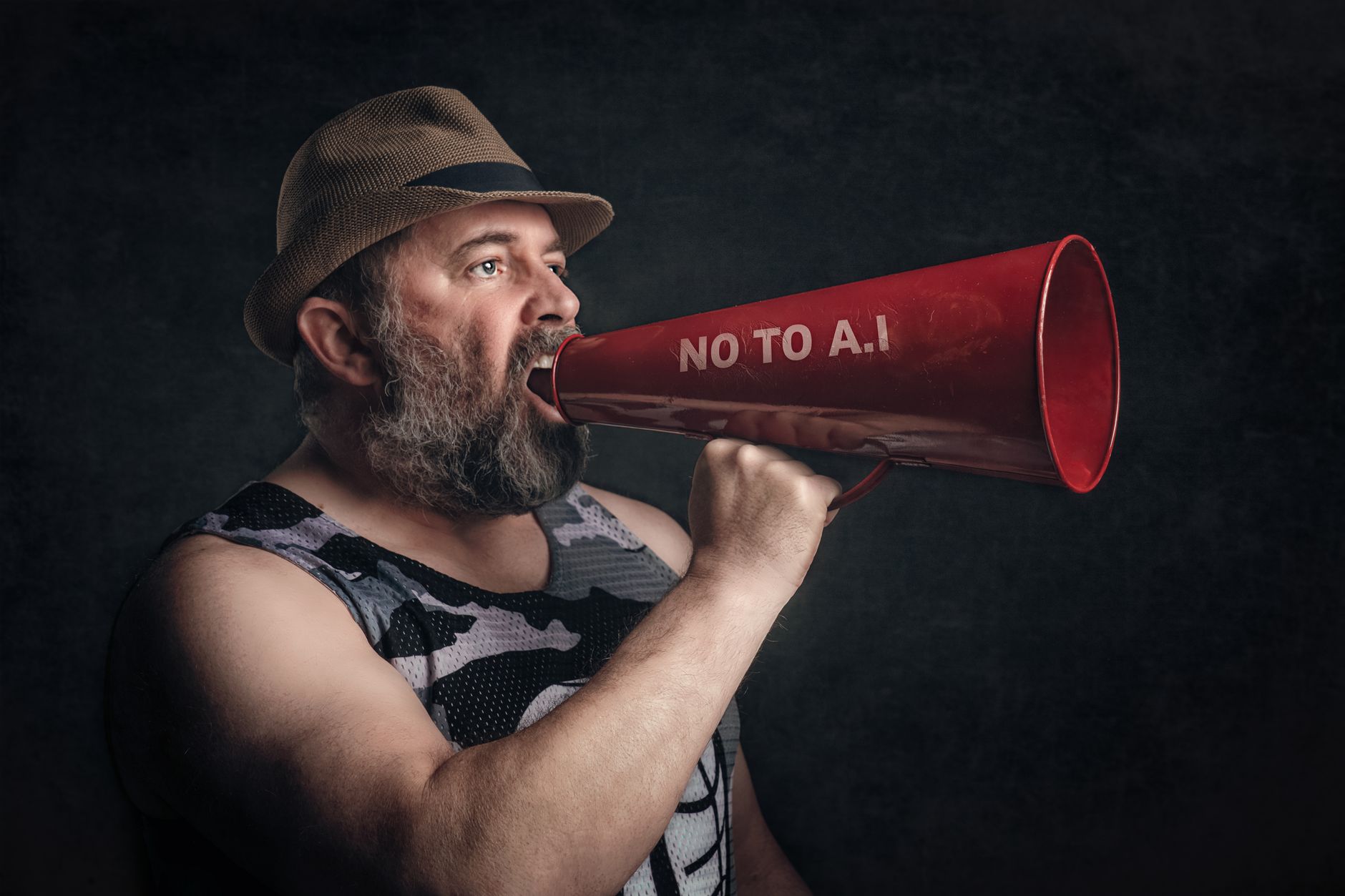
الصورة الرئيسية:Murry Lee / Pexels
استخدم صوت السير مايكل كين في دراسة بحثية عن أبحاث Deepfake الذكية
استخدم الباحثون في جامعة يورك تسجيلات صوت السير مايكل كين لتدريب وتقييم نماذج الذكاء الاصطناعي القادرة على توليد صوت عميق مزيف مقنع، مما يثير أسئلة جديدة حول ضعف أصوات المشاهير للتلاعب الاصطناعي وجاهزية أدوات الكشف.
In August 2026, the University of York announced that it had used publicly available recordings of Sir Michael Caine’s voice to develop and test AI systems that can clone human speech with high fidelity. The study is positioned as a critical step in understanding how synthetic audio can be generated and detected, especially when leveraging voices from well-known public figures. While the University of York’s announcement is the only formal source available, the implications of using a celebrity voice in AI deepfake research extend into broader debates about authenticity, trust, and the spread of manipulated media. This synthesis examines what the study reveals about current AI voice cloning capabilities, the role of celebrity voices in research, and the practical risks posed by AI-generated audio.
—
البحث في تقنية Deepfake الذكية يستفيد من صوت السير مايكل كين في جامعة يورك
The University of York’s announcement confirms that researchers accessed publicly available audio recordings of Sir Michael Caine to train AI models designed to generate synthetic speech that closely mimics human intonation, rhythm, and emotional tone. According to the university’s statement, the project was motivated by the need to assess how well current AI systems can replicate the voices of high-profile individuals—voices that are frequently used in scams, misinformation campaigns, and impersonation frauds. The use of a celebrity voice was not merely illustrative; it was central to the study’s experimental design, serving as a benchmark for evaluating the realism and detectability of AI-generated audio.
The choice of Sir Michael Caine’s voice is notable not only for his global recognition but also for the clarity and consistency of his speech patterns over decades of public appearances. While the university did not disclose the specific AI models used, the research signals a broader trend in which publicly available celebrity audio—from interviews, films, and public speeches—is being repurposed as training data for voice cloning systems. This raises ethical and practical concerns about consent, even when the source material is publicly accessible, as the intent behind the original recordings differs markedly from their use in synthetic media generation.
—
كيف أجريت الدراسة وما هي أهدافها
According to the University of York’s report, the research team collected a corpus of Sir Michael Caine’s spoken audio from publicly available sources, including interviews, documentaries, and archival footage. These recordings were then processed to isolate voice segments suitable for training neural networks capable of speech synthesis. The models were evaluated on their ability to generate new utterances in Caine’s voice that were indistinguishable from authentic recordings to both human listeners and automated detection tools. The study reportedly included both technical benchmarks—such as spectral similarity and prosodic accuracy—and perceptual tests involving human evaluators.
The stated goal of the project is twofold: first, to advance the development of detection algorithms that can identify AI-generated audio with high reliability, and second, to highlight the vulnerabilities of celebrity voices to misuse in synthetic media. The university emphasized that while AI voice cloning technology has advanced rapidly, detection methods have lagged behind, leaving individuals and institutions exposed to new forms of deception. The research is positioned within a growing body of work aimed at closing this detection gap before synthetic audio becomes indistinguishable from real recordings in everyday contexts.
آليات الاستنساخ والكشف عن الصوت
The study’s methodology reflects a convergence of deep learning techniques, including neural vocoders and speaker encoders, which together enable the replication of a person’s voice from limited audio samples. These systems typically require hours of clean speech data to achieve high fidelity, which is why celebrity voices—often available in large, high-quality datasets—are frequently used in research. However, the University of York’s use of publicly available recordings suggests that even fragmented or lower-quality audio can be sufficient for training models capable of producing convincing deepfakes, especially when combined with modern generative adversarial networks (GANs) or diffusion-based audio models.
The detection component of the study likely involved training classifiers to distinguish between real and synthetic audio based on subtle artifacts such as phase inconsistencies, unnatural harmonic structures, or micro-variations in timing. While the university did not release specific performance metrics, the inclusion of perceptual tests implies that the research team sought to measure not just technical accuracy but also the psychological plausibility of the generated audio—an important factor in real-world deception scenarios.
—
المصادقة المتبادلة لادعاءات جامعة يورك: ماذا يقول المصدر لنا
The University of York’s announcement is the only formal source directly addressing the use of Sir Michael Caine’s voice in AI deepfake research. The statement outlines the study’s objectives, methodology, and intended outcomes with clarity, though it omits certain technical details such as the specific AI architectures used, the size of the training dataset, and the performance benchmarks achieved by the detection models. These omissions are not unusual in early-stage academic disclosures, where the focus is often on conceptual contributions rather than exhaustive technical reporting.
Notably, the university frames the research as a response to the rising threat of AI voice deepfakes, particularly in contexts where impersonation could lead to financial loss, reputational damage, or social harm. The emphasis on celebrity voices reflects a recognition that high-profile individuals are both more likely to have extensive public audio archives and more likely to be targeted in impersonation scams. While the announcement does not provide empirical data on the prevalence of such scams, it situates the study within a broader ecosystem of synthetic media threats that have gained prominence in recent years.
The lack of independent verification from other institutions or media outlets at this stage limits the ability to cross-examine the university’s claims. However, the study’s alignment with known trends in AI voice cloning—such as the use of publicly available celebrity audio and the focus on detection—lends credibility to its stated objectives. Future peer-reviewed publications or conference presentations from the research team may provide additional technical transparency and allow for independent validation of the findings.
—
دور الأصوات المشهورة في أبحاث استنساخ الصوت بالذكاء الاصطناعي وتقنيات Deepfake
Celebrity voices occupy a unique position in AI voice cloning research due to their availability, consistency, and recognizability. Unlike private individuals, celebrities often have decades of archived audio, including interviews, speeches, and performances, which can be scraped from the internet and used to train synthetic voice models. This abundance of data makes celebrity voices ideal test cases for evaluating the capabilities and limitations of current AI systems. The University of York’s decision to use Sir Michael Caine’s voice is consistent with this broader trend, as Caine’s distinctive vocal characteristics—including his accent, cadence, and emotional delivery—provide a rich dataset for modeling.
However, the use of celebrity voices in research also raises ethical questions about consent and intent. While the audio used in the study was publicly available, the original recordings were not created for the purpose of training AI models. This disconnect between the original intent of the recordings and their secondary use in synthetic media generation highlights a gap in current ethical frameworks governing AI training data. Some researchers argue that publicly available does not equate to ethically available, particularly when the secondary use involves creating tools that could be used to deceive or defraud.
Moreover, the focus on celebrity voices in research may inadvertently normalize their use in real-world deepfake applications. If academic studies frequently rely on celebrity audio to advance voice cloning technology, the resulting models are more likely to be optimized for replicating such voices—precisely the voices most likely to be targeted in impersonation scams. This creates a feedback loop in which research priorities align with the needs of malicious actors, potentially accelerating the development of more convincing deepfakes.
—
ما يكشفه هذا البحث عن إمكانيات تحوير الصوت بالذكاء الاصطناعي الحالية
The University of York’s study suggests that AI voice cloning technology has reached a level of sophistication where it can replicate not just the phonetic content of a person’s speech but also the subtle nuances of their vocal style, including pitch variation, speech rate, and emotional inflection. This level of fidelity is particularly concerning because it enables the creation of deepfakes that can bypass traditional detection methods, which often rely on identifying unnatural artifacts in the audio signal. The use of a celebrity voice as a test case underscores the fact that even highly trained listeners may struggle to distinguish between real and synthetic audio, especially when the deepfake is crafted from a large and diverse dataset.
The study also implies that the barriers to entry for creating convincing AI voice deepfakes are lower than previously assumed. While early voice cloning systems required hours of high-quality audio and significant computational resources, recent advancements in few-shot learning and transfer learning have reduced these requirements. The University of York’s use of publicly available recordings—rather than studio-quality datasets—suggests that even fragmented or lower-quality audio can be sufficient for training models capable of producing plausible deepfakes. This democratization of voice cloning technology increases the risk of misuse, as it lowers the technical and financial barriers for malicious actors.
ومع ذلك، يشير تركيز الدراسة على الكشف إلى أن الباحثين يحرزون تقدمًا في تحديد العلامات المميزة للصوت الاصطناعي. من خلال تدريب الفصول على التعرف على العيوب مثل عدم الاتساق الطوري أو الهياكل التوافقية غير الطبيعية، قد تكون أنظمة الكشف قادرة قريبًا على وضع علامة على عمليات التزييف العميق بدقة عالية. التحدي، كما تعترف الجامعة، هو مواكبة التطور السريع لتكنولوجيا تقليد الصوت، التي تحسن باستمرار من الإيمانية وتقليل العيوب القابلة للكشف.
—
من هم المتأثرون بالصوت المُصطنع المُولّد بواسطة الذكاء الاصطناعي والطريقة التي ينتشر بها
AI-generated voice deepfakes pose a threat to a wide range of individuals and institutions, from private citizens to multinational corporations. The most immediate risk is to high-profile figures—such as celebrities, politicians, and executives—whose voices are easily recognizable and frequently impersonated in scams. According to the University of York’s announcement, the study was motivated in part by the growing prevalence of “voice phishing” or “vishing” attacks, in which scammers use AI-generated audio to impersonate trusted individuals and extract sensitive information or financial transfers. These attacks are particularly insidious because they exploit the inherent trust people place in familiar voices.
Beyond targeted impersonation, AI voice deepfakes can also be used to spread misinformation at scale. For example, synthetic audio clips of public figures making false statements could be disseminated through social media or messaging platforms, amplifying disinformation campaigns. The speed and scale at which such content can spread—often within minutes—make it difficult for platforms to detect and remove it before it causes harm. The University of York’s research highlights the need for faster, more accurate detection tools that can operate in real time and across multiple languages and accents.
Vulnerable populations, such as the elderly or individuals with limited digital literacy, are particularly at risk from AI voice deepfakes. Scammers often target these groups with personalized audio messages that appear to come from family members or trusted institutions, such as banks or government agencies. The emotional impact of such deception can be severe, leading to financial loss, emotional distress, and erosion of trust in digital communication channels. The university’s focus on celebrity voices may overshadow the broader threat to ordinary individuals, but the mechanisms of deception are broadly applicable across demographics.
—
عوامل تحذيرية وقائمة تفكيك لتحليل المحتوى الصوتي المولّد بواسطة الذكاء الاصطناعي
- أصوات خلفية غير عادية أو عدم انتظام: AI-generated audio may contain subtle artifacts such as robotic hums, unnatural echoes, or background sounds that do not match the context of the speech.
- الأنماط الكلامية غير الطبيعية:استمع إلى النطق الآلي أو الدقيق بشكل مبالغ فيه، أو التوقف غير الطبيعي، أو عدم وجود نبرة عاطفية لا تتماشى مع الطريقة المعتادة للمتحدث.
- Mismatched audio quality:إذا تباين جودة الصوت بشكل كبير داخل مقطع صوتي واحد - مثل التبديل بين التسجيلات ذات جودة الاستوديو والتسجيلات ذات معدل بت منخفض - فقد يشير ذلك إلى التحرير أو التوليد الاصطناعي.
- عدم تطابق بين حركة الشفاه والصوت في الفيديو If the audio is paired with video, check for mismatches between the speaker’s mouth movements and the spoken words, which can reveal deepfake manipulation.
- Unexpected requests for sensitive information: Be skeptical of unsolicited calls or messages—even from familiar voices—requesting passwords, financial details, or personal data, as these are common tactics in voice phishing scams.
- مصدر غير مؤكد للصوت: Always verify the origin of the audio clip through official channels, such as the speaker’s verified social media accounts or trusted news outlets.
- استخدام أساليب العجلة أو الخوف: Scammers often use high-pressure language to provoke immediate action, such as threats of legal action or urgent financial demands.
- عدم وجود أدلة داعمة If the audio clip contains claims that are not supported by other reliable sources, treat it with skepticism.
—
الاستجابات الخبيرة والمؤسسية لتهديدات التزوير الصوتي للذكاء الاصطناعي
While the University of York’s announcement provides a focused look at the technical and ethical dimensions of AI voice deepfakes, broader institutional responses to the threat are still evolving. Governments, technology platforms, and civil society organizations have begun to address the risks posed by synthetic audio, but their approaches vary widely in scope and effectiveness. The lack of a unified global framework for regulating AI-generated media complicates efforts to mitigate the threat, particularly as voice cloning technology becomes more accessible.
Technology platforms, including social media companies and messaging services, have started to implement detection tools and labeling mechanisms for AI-generated content. However, these measures are often reactive rather than proactive, relying on user reports or third-party audits to identify deepfakes after they have already spread. The University of York’s research underscores the need for platforms to invest in real-time detection systems that can analyze audio for subtle artifacts and flag suspicious content before it goes viral. Some platforms have begun experimenting with audio watermarking or cryptographic signatures to authenticate recordings, though these methods are not yet universally adopted.
Governments have also begun to take steps to address the threat of AI voice deepfakes, though their responses are fragmented. In the United States, the Federal Trade Commission has issued warnings about impersonation scams involving synthetic audio, while the European Union’s AI Act includes provisions for high-risk AI systems, such as those used in biometric identification and emotion recognition. However, the rapid pace of technological change often outstrips regulatory efforts, leaving gaps in oversight. Civil society organizations, such as the Electronic Frontier Foundation and the Partnership on AI, have called for greater transparency from AI developers and stricter penalties for the malicious use of synthetic media.
The University of York’s study contributes to this broader conversation by highlighting the technical challenges of detecting AI-generated audio and the ethical dilemmas posed by the use of celebrity voices in research. While the university does not propose specific policy solutions, its work underscores the need for collaboration between researchers, policymakers, and industry stakeholders to develop robust defenses against synthetic media threats.
—
Original Analysis: Why Celebrity Voices Are a Critical Test Case for AI Detection
Taken together, the University of York’s announcement and the broader context of AI voice cloning research suggest that celebrity voices are not merely convenient test cases but critical benchmarks for evaluating the maturity of detection technologies. The use of a celebrity voice—such as Sir Michael Caine’s—is not incidental; it is a deliberate choice that reflects the unique challenges posed by high-profile targets. Unlike private individuals, celebrities have highly distinctive vocal characteristics that are easily recognizable and frequently impersonated. This makes them ideal subjects for testing the limits of current AI systems, both in terms of generating convincing deepfakes and detecting them.
Moreover, the reliance on publicly available celebrity audio in research highlights a paradox in the development of AI voice cloning technology. On one hand, the abundance of celebrity audio accelerates the training of synthetic voice models, enabling rapid advancements in fidelity and realism. On the other hand, this same abundance makes celebrity voices more vulnerable to misuse, as malicious actors can easily obtain the necessary training data from the internet. The University of York’s study implicitly acknowledges this tension by focusing on detection, but it does not address the ethical implications of using celebrity audio without consent, even when the source material is publicly accessible.
This paradox also raises questions about the long-term viability of detection-based approaches to combating AI voice deepfakes. As voice cloning technology improves, the artifacts that detection systems rely on—such as phase inconsistencies or unnatural harmonic structures—may become increasingly subtle or even nonexistent. This could render traditional detection methods obsolete, necessitating a shift toward proactive measures such as audio watermarking, cryptographic verification, or real-time behavioral analysis. The University of York’s research, while valuable, underscores the need for a broader ecosystem of defenses that go beyond detection to include prevention, education, and policy interventions.
Finally, the focus on celebrity voices in research may inadvertently prioritize the needs of high-profile targets over those of ordinary individuals. While celebrities are often the first to experience the harms of AI voice deepfakes—such as impersonation scams or reputational damage—the broader threat to privacy and security is more pervasive. The mechanisms of deception enabled by AI voice cloning are broadly applicable, and the tools developed to detect deepfakes targeting celebrities may not be equally effective for less distinctive voices. This suggests that future research should expand beyond celebrity datasets to include a wider range of vocal characteristics, accents, and languages, ensuring that detection technologies are inclusive and equitable.
—
What Should Governments, Platforms, and Users Do About AI Voice Deepfakes?
Addressing the threat of AI voice deepfakes requires a coordinated response from governments, technology platforms, and individual users. Governments can play a critical role by establishing clear regulatory frameworks that mandate transparency in AI-generated media, require labeling of synthetic audio, and impose penalties for malicious use. The European Union’s AI Act and the proposed U.S. AI Executive Order are steps in the right direction, but they must be complemented by international cooperation to prevent regulatory arbitrage and ensure consistent enforcement. Governments should also invest in public awareness campaigns to educate citizens about the risks of AI voice deepfakes and the red flags to watch for.
Technology platforms bear a significant responsibility in mitigating the spread of AI-generated audio. Social media companies and messaging services should prioritize the development of real-time detection tools that can identify synthetic audio with high accuracy and remove it before it goes viral. Platforms should also implement robust verification mechanisms for high-profile accounts, such as voice authentication or cryptographic signatures, to prevent impersonation. Additionally, platforms must be transparent about their detection capabilities and limitations, providing users with clear information about the authenticity of audio content.
Individual users can take several steps to protect themselves from AI voice deepfakes. First, they should verify the source of any unexpected audio message, especially if it contains urgent or sensitive requests. Second, they should be skeptical of unsolicited calls or messages, even if the voice seems familiar, and confirm the identity of the speaker through alternative channels. Third, they should familiarize themselves with the red flags of synthetic audio, such as unnatural speech patterns or background inconsistencies. Finally, users should advocate for stronger protections against AI voice deepfakes by supporting organizations that promote transparency and accountability in AI development.
The University of York’s study serves as a timely reminder that the threat of AI voice deepfakes is not a distant possibility but a present reality. While the study focuses on the technical and ethical dimensions of voice cloning, its implications extend to every aspect of digital communication. Governments, platforms, and users must act now to develop and implement defenses against this evolving threat, ensuring that the benefits of AI are not overshadowed by its potential for misuse.
—
الأسئلة الشائعة
Why did the University of York use Sir Michael Caine’s voice in their AI deepfake research?
The University of York used Sir Michael Caine’s voice because it provides a rich, publicly available dataset with distinctive vocal characteristics, making it an ideal test case for evaluating the realism and detectability of AI-generated audio. The study aimed to assess how well current AI systems can replicate high-profile voices, which are frequently targeted in impersonation scams and misinformation campaigns.
Is Sir Michael Caine’s voice being used to create deepfakes outside of this research?
The University of York’s announcement does not address whether Sir Michael Caine’s voice is being used in other AI voice cloning projects. However, the use of publicly available celebrity audio in research highlights the broader trend of leveraging such voices for training synthetic voice models, which could be repurposed for malicious purposes.
How can I tell if an audio clip is a deepfake?
Red flags for AI-generated audio include unnatural speech patterns, inconsistent audio quality, robotic background noise, and a lack of emotional inflection. Additionally, be skeptical of unsolicited calls or messages requesting sensitive information, as these are common tactics in voice phishing scams. Always verify the source of the audio through official channels.
What are governments doing to address AI voice deepfakes?
Governments are beginning to address the threat of AI voice deepfakes through regulatory frameworks such as the European Union’s AI Act and the U.S. AI Executive Order. These measures aim to mandate transparency, require labeling of synthetic audio, and impose penalties for malicious use. However, responses are fragmented, and more international cooperation is needed to ensure consistent enforcement.
What can I do to protect myself from AI voice deepfakes?
To protect yourself, verify the source of unexpected audio messages, be skeptical of urgent or sensitive requests, and familiarize yourself with the red flags of synthetic audio. You can also advocate for stronger protections by supporting organizations that promote transparency and accountability in AI development.
—