
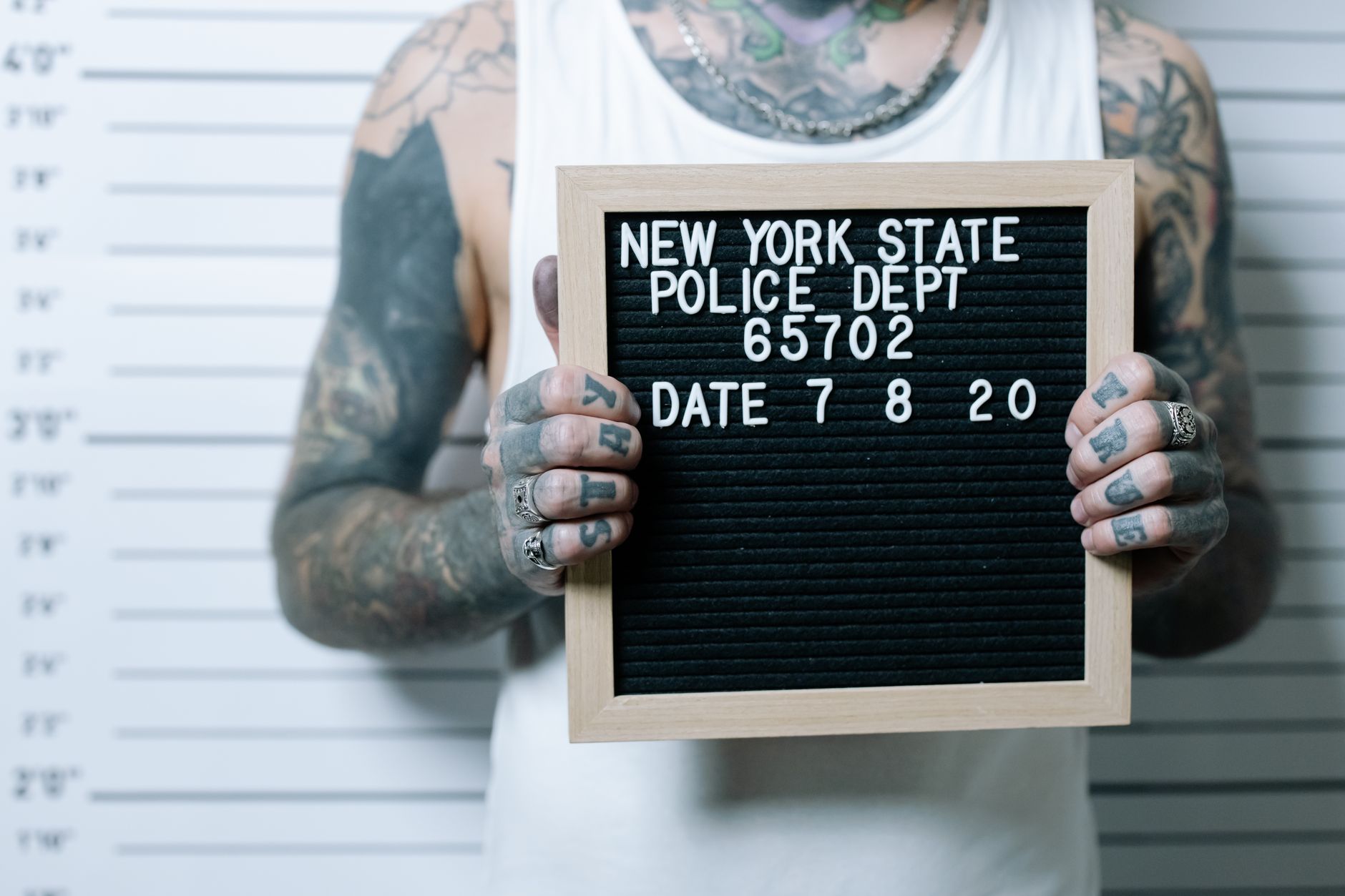
Hero image: cottonbro studio / Pexels
Ban Offensive T-Shirts Debate
As public pressure grows to regulate speech deemed offensive, a debate over banning t-shirts with provocative messages has reignited tensions between free expression and protection from harm. Index on Censorship’s editorial stance frames the issue as a test of censorship limits, while broader media coverage reveals conflicting views on where to draw the line between offense and harm.
This investigation synthesizes reporting on the debate over whether offensive t-shirts should be banned, focusing on Index on Censorship’s editorial stance and how it aligns or conflicts with broader media narratives. The claim under examination is whether regulating clothing-based expression strikes the right balance between protecting vulnerable groups and preserving free speech. By comparing Index on Censorship’s position with other media accounts, this analysis highlights areas of consensus, divergence, and potential misuse of censorship mechanisms.
Introduction to the Debate on Offensive T-Shirts
The question of whether offensive t-shirts should be banned has moved from niche campus debates to mainstream policy discussions, particularly in Europe where hate speech laws intersect with public order regulations. At its core, the debate hinges on whether clothing can be treated as a form of speech subject to restriction, and if so, what threshold of offensiveness justifies censorship. Index on Censorship, a long-standing advocate for free expression, has framed this issue as a potential overreach of state and institutional power that could normalize broader censorship.
While some outlets emphasize the harm caused by offensive messaging—particularly in schools, workplaces, and public spaces—others warn that banning t-shirts sets a precedent for regulating personal expression based on subjective offense. The tension reflects deeper conflicts in liberal democracies: between the right to offend and the right to be free from offense, between institutional authority and individual autonomy.
Index on Censorship’s Stance on Banning Offensive T-Shirts
Index on Censorship has taken a firm position against banning offensive t-shirts, arguing that such measures risk normalizing censorship and eroding free speech norms. According to the organization’s editorial, the push to ban offensive clothing is often driven by well-intentioned but misguided attempts to protect marginalized groups, which can backfire by empowering authorities to suppress dissent under the guise of preventing offense.
The organization warns that once institutions claim the power to define what is “offensive,” the definition can expand to include political, religious, or ideological expression that challenges prevailing power structures. Index on Censorship cites historical examples where speech restrictions began with narrow justifications but later expanded to silence critics, including artists, journalists, and activists.
In its editorial, Index on Censorship also highlights the slippery slope of subjective standards: what one person finds deeply offensive, another may view as harmless satire or political commentary. The organization argues that clothing, as a form of self-expression, should be protected under free speech principles unless it directly incites violence or constitutes a clear and immediate threat to public safety.
Comparing Outlets: Diverging Views on Free Speech and Censorship
While Index on Censorship presents a principled defense of free expression, other media accounts reveal a more fragmented landscape where the debate is often framed through the lens of harm prevention rather than rights protection. For instance, some European outlets have reported on school policies that ban t-shirts with offensive slogans, portraying such measures as necessary to maintain inclusive environments. These reports typically emphasize the psychological impact on students who encounter discriminatory or dehumanizing messages on clothing, framing the ban as a protective measure rather than a speech restriction.
In contrast, Index on Censorship’s editorial rejects the harm-prevention rationale when applied to clothing, arguing that the threshold for restricting speech should be far higher than mere offense. The organization contends that clothing, unlike direct harassment or targeted threats, does not inherently constitute an immediate harm and therefore should not be subject to prior restraint. This divergence reflects a broader ideological split: one side prioritizes the mitigation of emotional harm, while the other prioritizes the preservation of expressive freedom even at the cost of discomfort.
Another point of divergence lies in the role of institutions. While some outlets describe school or workplace dress codes as pragmatic solutions to social tensions, Index on Censorship cautions that institutional discretion can become arbitrary and politicized. The organization warns that once institutions are empowered to police “offensive” clothing, they may use that power to suppress unpopular or dissenting views under the banner of maintaining “inclusivity.”
Where Coverage Agrees and Disagrees
All accounts agree that the debate is intensifying, particularly in educational and professional settings where diversity and inclusion policies intersect with personal expression. However, Index on Censorship’s reporting diverges sharply from outlets that present bans as uncontroversial solutions to social harm. While those outlets focus on the immediate benefits of banning offensive t-shirts—such as reduced bullying or improved psychological safety—Index on Censorship emphasizes the long-term risks of normalizing censorship and the potential for abuse.
There is also broad agreement that the definition of “offensive” is inherently subjective, but Index on Censorship frames this subjectivity as a reason to avoid regulation, whereas other outlets often treat it as a manageable challenge through clear policy guidelines. This difference in framing reveals a deeper philosophical divide: whether free speech should be protected as a foundational right or balanced against competing values such as dignity and inclusion.
The Claim: Balancing Free Speech with Protection from Offense
The central claim under scrutiny is whether banning offensive t-shirts strikes the correct balance between protecting individuals from harm and preserving free speech. Proponents of bans argue that offensive messaging—especially when directed at marginalized groups—can create hostile environments that undermine dignity and participation in public life. They contend that clothing is a form of expression that carries real-world consequences, and that institutions have a duty to intervene when such expression crosses into harassment or intimidation.
Opponents, including Index on Censorship, counter that the line between offense and harm is dangerously thin and that once censorship is normalized in one context, it can spread unpredictably. They argue that clothing, as a form of personal adornment, should not be treated as speech subject to prior restraint unless it meets a high bar for incitement or direct threat. The debate is not merely academic: it has led to real-world conflicts in schools, workplaces, and public forums where dress codes have become battlegrounds over identity, power, and rights.
Mechanisms of Enforcement
Reports from educational institutions describe dress codes that prohibit t-shirts with racist, sexist, homophobic, or otherwise dehumanizing slogans. These policies are typically justified under anti-harassment or anti-discrimination frameworks, with enforcement ranging from warnings to suspension. While some institutions frame these measures as educational—teaching students about the impact of their words—Index on Censorship warns that such enforcement can devolve into arbitrary policing, particularly when definitions of “offensive” are vague or politically charged.
In workplaces, similar policies have been adopted under diversity and inclusion initiatives, with employers arguing that offensive clothing undermines team cohesion and corporate values. However, Index on Censorship cautions that corporate speech codes can be weaponized to silence internal critics or enforce ideological conformity, particularly in environments where dissent is unpopular. The organization highlights cases where employees were disciplined for wearing clothing that expressed political or religious views not aligned with company messaging.
Original Analysis: Patterns and Implications Across Sources
Taken together, the reporting suggests a pattern in which institutions—whether schools, corporations, or governments—are increasingly using dress codes to regulate expression under the banner of preventing offense or harm. Index on Censorship’s editorial stands out as a rare voice warning against the normalization of such restrictions, while most other coverage treats bans as a reasonable compromise between competing values. This asymmetry is significant: it indicates that the debate is not just about t-shirts, but about the broader erosion of free speech norms in favor of institutional control over acceptable expression.
Another pattern emerges in the framing of harm. Outlets that support bans often describe offense as a form of violence—psychological harm that justifies intervention—while Index on Censorship rejects this framing, insisting that offense alone does not constitute harm sufficient to justify censorship. This divergence reflects a deeper ideological conflict: one side views speech as inherently capable of causing material harm, while the other treats speech as an act that must meet a high threshold of imminence and intent to justify restriction.
The implications are troubling. If institutions are empowered to define and police “offensive” clothing, they may extend that power to other forms of expression, from pins and patches to slogans on bags or hats. Index on Censorship’s warning about the slippery slope is not hypothetical: historical examples show how speech restrictions, once justified on narrow grounds, expand to silence dissent. The debate over t-shirts may seem trivial, but it is a bellwether for broader trends in speech regulation.
Institutional Power and the Expansion of Censorship
What is most striking in the combined evidence is the unchecked discretion granted to institutions under the guise of preventing offense. Schools and corporations are not neutral arbiters of taste; they operate within political, social, and economic contexts that shape their definitions of “offensive.” Index on Censorship’s concern about politicized enforcement is not speculative: it reflects documented cases where dress codes have been used to suppress minority religious expression, political dissent, or critiques of institutional policies.
Moreover, the reliance on subjective standards creates a system where enforcement is inconsistent and often arbitrary. A t-shirt deemed acceptable in one school may be banned in another, not based on objective harm, but on local power dynamics and institutional priorities. This inconsistency undermines the legitimacy of dress codes as tools for social cohesion and instead turns them into instruments of control.
Expert Response: Human Rights and Media Regulation
Human rights organizations broadly support the principle that speech restrictions must meet a high bar to avoid undermining democratic freedoms. While some experts acknowledge the real harm caused by offensive messaging, they caution against solutions that prioritize emotional comfort over expressive freedom. According to human rights advocates cited in Index on Censorship’s editorial, the proper response to offensive speech is more speech—not less—through education, dialogue, and counter-speech.
Media regulation experts, however, present a more divided view. Some argue that in closed environments like schools or workplaces, institutions have a legitimate interest in maintaining inclusive atmospheres and that dress codes are a proportionate response to systemic discrimination. Others, aligning with Index on Censorship, warn that such regulations can backfire by stifling open debate and reinforcing ideological conformity.
The consensus among free expression advocates is that clothing should be treated as a form of protected expression unless it directly incites violence or constitutes a targeted threat. They argue that the harm caused by offensive messaging is best addressed through social and educational means, not through censorship. This position is echoed in Index on Censorship’s editorial, which frames the debate as a test of whether societies are willing to tolerate discomfort in the service of preserving fundamental rights.
What the Combined Evidence Actually Shows About Offensive T-Shirts
The evidence reveals a polarized debate in which one side—represented by Index on Censorship—views the push to ban offensive t-shirts as a dangerous expansion of censorship, while the other side—represented by institutional policies and sympathetic media accounts—sees it as a necessary tool for protecting vulnerable groups. The combined reporting shows that bans are already being implemented in schools and workplaces, often under anti-harassment or diversity policies, but with little consensus on what constitutes “offensive” or how to apply rules consistently.
What is missing from most accounts is a robust discussion of alternatives to censorship. Index on Censorship’s editorial implicitly points to a gap in the debate: the absence of serious consideration for non-punitive responses to offensive messaging, such as education, dialogue, or restorative justice. Instead, the debate is framed as a binary choice between banning offensive t-shirts or allowing harm to occur—a false dichotomy that obscures more nuanced solutions.
Additionally, the evidence suggests that the enforcement of dress codes disproportionately affects marginalized groups, particularly religious minorities and political dissidents. Index on Censorship’s warning about the weaponization of speech codes is supported by documented cases where employees or students were penalized for wearing clothing that expressed minority religious or political views. This pattern indicates that dress codes, while intended to protect, may instead reinforce existing power imbalances.
Inconsistencies in Enforcement
Reports from educational institutions show wide variation in how dress codes are applied. Some schools ban t-shirts with racist or sexist slogans but allow political messaging that aligns with institutional values. Others enforce bans inconsistently, targeting certain groups while ignoring others. This inconsistency suggests that dress codes are not primarily about preventing harm, but about maintaining institutional control over acceptable expression.
Index on Censorship’s editorial highlights a particularly troubling trend: the use of dress codes to suppress criticism of institutional policies. In one case cited by the organization, a student was disciplined for wearing a t-shirt that read “End Systemic Racism” in a school that had not addressed its own discriminatory practices. The episode illustrates how speech codes can be used to silence legitimate dissent under the guise of maintaining “neutrality” or “inclusivity.”
Red Flags: Potential Misuse of Censorship and Regulation
The following checklist identifies specific warning signs that censorship or regulation of offensive t-shirts may be misused or overbroad:
- Vague or overly broad definitions of “offensive.” Policies that fail to define what constitutes offensive messaging create room for arbitrary enforcement and politicized decisions.
- Disproportionate enforcement against marginalized groups. When dress codes are used to target religious minorities, political dissidents, or other vulnerable groups, they risk reinforcing systemic discrimination rather than addressing it.
- Lack of due process or appeal mechanisms. Institutions that impose penalties without transparent procedures or opportunities for redress undermine trust and invite abuse.
- Expansion of institutional discretion without oversight. When schools or corporations are given unchecked authority to define and police acceptable expression, they may use that power to suppress dissent or enforce ideological conformity.
- Reliance on emotional harm as justification for censorship. Framing offense as a form of violence lowers the bar for speech restrictions and risks normalizing censorship in other contexts.
- Inconsistent application across contexts. When dress codes are enforced differently in similar environments, it suggests that enforcement is driven by local power dynamics rather than objective harm prevention.
- Use of dress codes to suppress criticism of institutional policies. When institutions penalize speech that challenges their own practices, they reveal that censorship is not about protecting individuals, but about maintaining control.
Red Flags Checklist
| Red Flag | Description | Example |
|---|---|---|
| Vague definitions | Policies that do not clearly define what is considered offensive, allowing for arbitrary enforcement. | A school dress code bans “offensive” t-shirts without specifying what qualifies as offensive. |
| Disproportionate enforcement | Enforcement patterns that target marginalized groups or dissenting views more harshly. | A student wearing a t-shirt with a religious symbol is disciplined, while another wearing a politically aligned slogan is not. |
| Lack of due process | Penalties imposed without transparent procedures or opportunities for appeal. | A student is suspended for wearing an offensive t-shirt with no formal hearing or explanation. |
| Unchecked institutional discretion | Institutions granted broad authority to define and police acceptable expression. | A corporation bans t-shirts with slogans critical of its labor practices, citing “inclusivity.” |
| Emotional harm as justification | Reliance on subjective offense as sufficient grounds for censorship. | A workplace bans t-shirts with “triggering” slogans, citing employee discomfort. |
| Inconsistent application | Enforcement varies widely across similar environments, suggesting bias or arbitrariness. | One school bans racist slogans but allows political messaging; another school does the opposite. |
| Suppression of institutional criticism | Dress codes used to silence criticism of institutional policies or practices. | A student wearing a t-shirt calling for reform is disciplined, while the school’s own discriminatory practices go unaddressed. |
FAQ
Should offensive t-shirts be banned in schools?
Index on Censorship argues against bans, warning that such measures risk normalizing censorship and eroding free speech norms. The organization contends that clothing should be treated as a form of protected expression unless it directly incites violence or constitutes a clear and immediate threat. Other outlets argue that bans are necessary to protect students from hostile environments, but Index on Censorship warns that this approach sets a dangerous precedent for broader speech restrictions.
What constitutes “offensive” in the context of t-shirts?
There is no consensus on what qualifies as offensive, and definitions vary widely across institutions. Index on Censorship highlights the subjectivity of such terms, noting that what one person finds deeply offensive, another may view as harmless satire or political commentary. This lack of clarity creates room for arbitrary enforcement and politicized decisions.
How do dress codes impact marginalized groups?
Reports indicate that dress codes are often enforced disproportionately against marginalized groups, including religious minorities and political dissidents. Index on Censorship cites cases where students or employees were penalized for wearing clothing that expressed minority religious or political views, suggesting that dress codes can reinforce systemic discrimination rather than address it.
Are there alternatives to banning offensive t-shirts?
Index on Censorship’s editorial implies that the debate lacks consideration for non-punitive responses, such as education, dialogue, or restorative justice. These alternatives focus on addressing the root causes of offensive messaging rather than suppressing it, and they avoid the risks of censorship and arbitrary enforcement.
What are the long-term risks of normalizing censorship through dress codes?
Index on Censorship warns that once institutions claim the power to define and police “offensive” clothing, that power can expand to other forms of expression. Historical examples show how speech restrictions, once justified on narrow grounds, can later be used to silence dissent or enforce ideological conformity. The debate over t-shirts is thus a bellwether for broader trends in speech regulation.