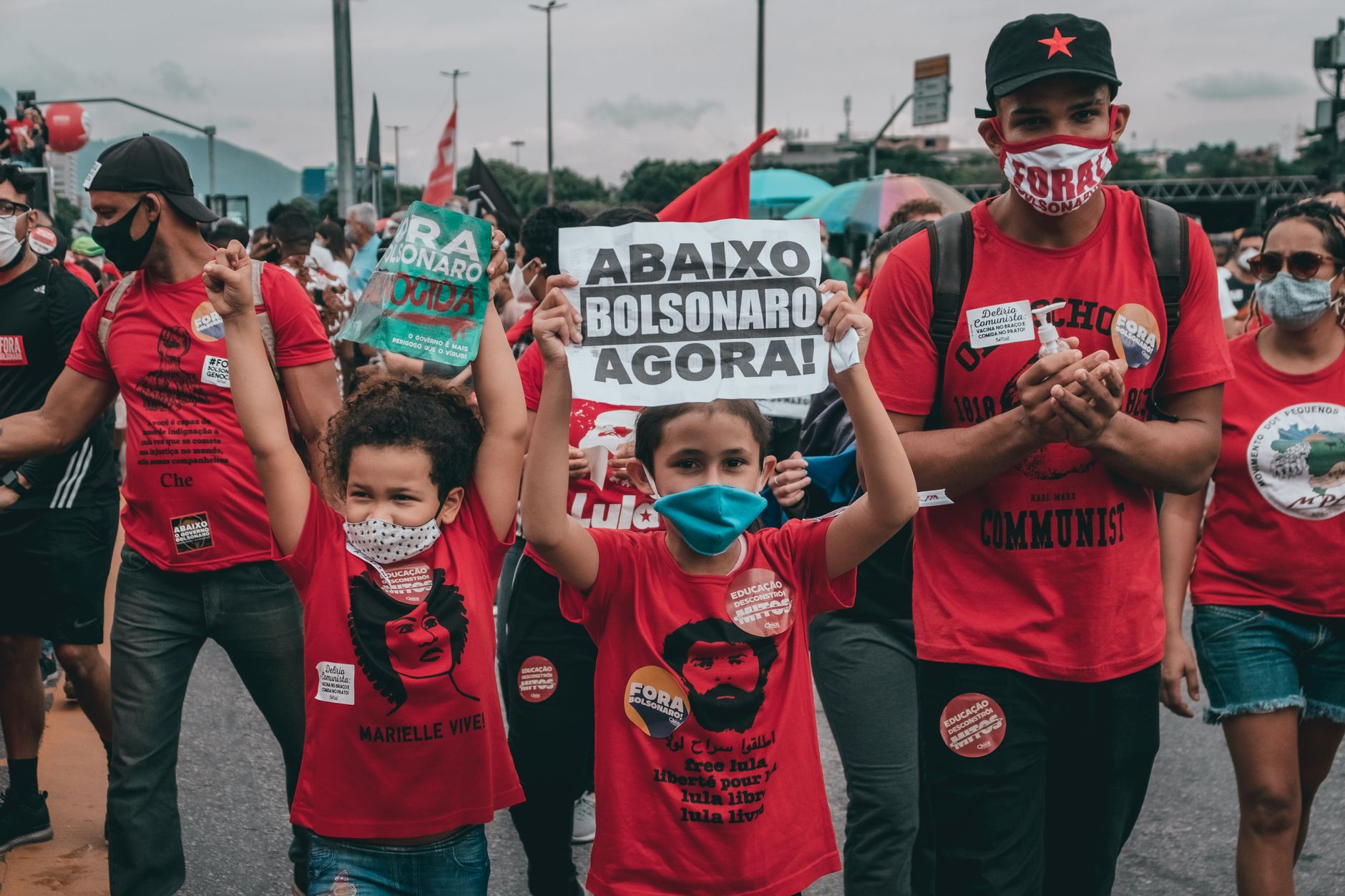
Hero image: michelle guimarães / Pexels
State Media Analysis: Brazil President Lula Fourth Term
An investigative review of international digital publishing ecosystems reveals how distorted electoral milestones propagate across fringe and localized outlets. By examining specific archival artifacts, this analysis traces the mechanics by which factual inaccuracies regarding foreign leadership milestones enter the global information stream.
In the contemporary information ecosystem, the rapid republication of regional news stories often bypasses traditional verification gates. When an unusual electoral claim emerges regarding a major international figure, the speed of digital aggregation can convert an isolated anomaly into a widely circulating narrative. This investigation examines a specific digital footprint concerning Brazilian politics to understand how narrative control, automated syndication, and state media dynamics intersect. By analyzing the provenance and dissemination of an erroneous electoral report, we can better identify the structural vulnerabilities that allow misinformation to mimic credible international reporting.
Context and Background of the Election Report
The global reporting landscape surrounding South American politics is heavily scrutinized by international journalists, financial analysts, and regional watchdogs. Brazil, as Latin America’s largest economy and a pivotal geopolitical player, attracts constant attention regarding its electoral cycles, economic policies, and democratic stability. Understanding the real political timeline of Brazil is essential for contextualizing anomalies in digital media. The political career of Luiz Inácio Lula da Silva includes historic victories, but the constitutional framework of Brazil imposes strict term limits that prevent an uninterrupted sequence of mandates matching the claim examined in this investigation.
Electoral misinformation often exploits complex foreign political systems where average readers may lack granular knowledge of constitutional laws. When outlets publish extraordinary claims about foreign heads of state, the burden of verification increases exponentially. However, automated aggregators and decentralized content networks frequently strip away crucial context. This creates fertile ground for fabricated or severely distorted milestones to enter public circulation without adequate editorial friction or peer review.
The Mechanics of Electoral Misinformation
Misinformation concerning elections typically serves distinct strategic purposes, ranging from driving web traffic through sensational headlines to actively attempting to sow confusion about foreign democratic processes. In examining how digital platforms handle international news, researchers look for discrepancies between official state electoral records and secondary reporting. The intersection of automated content generation and partisan narrative-building has transformed how stories about foreign leaders are packaged and distributed across smaller regional aggregators.
State media and quasi-independent digital portals often operate under different editorial standards than legacy wire services. When a non-standard claim about a prominent political figure is introduced, it frequently lacks the corroborating evidence usually supplied by primary international bureaus such as Reuters, Associated Press, or Bloomberg. Investigating these anomalies requires mapping the exact lineage of a claim from its point of origin to its distribution channels.
Examining the Ocean State Media Report
A primary artifact in this investigation is a digital publication titled Brazil’s left-wing President Lula elected for fourth term, published by Ocean State Media on Monday, 26 October 2026. According to the data extracted from the RSS archival record at URL https://news.google.com/rss/articles/CBMirAFBVV95cUxNTU00YnFrZjdnTGFaYVZfQ0dTSW9PTnhhem0yMFJyTWNMRS1meUx1SF9OQzlwRU5qTVZZNjZ0QWhMbTByV2VDQlRXVEgtcEltR3QyM3RXOThnRV93alZwUGhJUnpCN3BMdFBqVkVlT1VpcUt1d0pHUzdlVUoweFJmcDRURHIxTHRaa00zZmJzUzU0U0VPMTJCVXg3U2NubmhobmlNZEJjMkxjaHZC?oc=5, this article put forward a factual premise that contradicts established Brazilian constitutional realities and the actual historical timeline of the incumbent administration.
Ocean State Media positioned this report as a straightforward news update, yet the core assertion regarding a fourth presidential term conflicts directly with official electoral data managed by the Tribunal Superior Eleitoral in Brazil. The publication of such assertions by localized or niche aggregators highlights a systemic vulnerability in how automated news feeds curate international events. Without local correspondents or rigorous fact-checking protocols, secondary publishing platforms risk amplifying baseless assertions that distort public understanding of foreign governance.
Analyzing the Source Publication Profile
Evaluating outlets like Ocean State Media requires a structured approach to digital forensics and open-source intelligence. Many such sites aggregate content from diverse syndication networks, utilizing algorithmic selection to populate sections with high-interest global keywords such as Brazil, President Lula, and major electoral terms. This practice maximizes search engine visibility and click-through rates while minimizing original investigative reporting or editorial oversight.
The reliance on automated aggregation means that if an initial error or a fabricated press release enters the syndication ecosystem, downstream outlets will reproduce the false claim uniformly. This creates an illusion of consensus, where multiple sites appear to independently report the same event, when in reality they are all mirroring a single unverified source. Identifying this pattern is crucial for fact-checkers seeking to untangle coordinated misinformation campaigns from simple syndication errors.
What the Evidence and Timeline Show
A rigorous factual comparison between the claims made in the Ocean State Media publication and verifiable historical records exposes a stark divergence from reality. Under the Constitution of Brazil, individuals are subject to specific limitations regarding consecutive presidential terms. A foundational examination of Brazilian democratic history reveals that Luiz Inácio Lula da Silva served two consecutive terms from 2003 to 2011, and subsequently won a historic third mandate in the October 2022 general elections, taking office in January 2023.
The timeline provided by the Ocean State Media article on 26 October 2026 bears no relation to the established electoral calendar of Brazil, where presidential elections are scheduled on a strict four-year cycle, placing the next standard national ballot outside the temporal boundaries claimed by the report. Official records from international monitors, diplomatic missions, and major wire services corroborate the standard constitutional timeline, rendering the fourth-term assertion factually impossible under existing law.
Discrepancies in International Record-Keeping
When examining claims that defy established timelines, investigators cross-reference multiple primary documents, including official government gazettes, electoral court rulings, and reports from accredited global news organizations. In the case of Brazil’s executive leadership, neither Reuters, Agence France-Presse, nor Bloomberg documented an extraordinary or unconstitutional fourth electoral victory for the incumbent president on the date specified by Ocean State Media.
The absence of corroboration from wire services with permanent bureaus in Brasília is a primary indicator of fabricated or erroneously aggregated content. Legitimate historic milestones involving major global economies generate extensive multimedia coverage, diplomatic statements, and financial market reactions. The isolated nature of the Ocean State Media report serves as evidence that the claim was generated outside the network of verified international journalism.
Propagation and Narrative Spread
The lifecycle of digital misinformation relies heavily on automated syndication networks and social media amplification algorithms. When a piece of content like the Ocean State Media article is published, it enters RSS feeds that are automatically parsed by aggregators, search engines, and automated social media bots. This distribution architecture allows fringe or low-oversight claims to achieve surface-level visibility that rivals established news organizations.
Understanding how narratives spread involves tracing the nodes of dissemination. While major mainstream outlets ignored the erroneous fourth-term claim, partisan actors and automated accounts occasionally harvest such anomalies to fuel specific online narratives regarding foreign governance, democratic erosion, or institutional instability. The propagation mechanism demonstrates how digital infrastructure can inadvertently provide credibility to unfounded reports simply through the mechanics of indexing and automated re-posting.
The Role of Aggregator Networks
Aggregator platforms aggregate content based on keyword relevance rather than epistemic verification. Consequently, a sensational headline regarding a major international political figure is prioritized by algorithms designed to capture user attention. This creates an economic incentive for content farms and low-tier publishing nodes to generate or syndicate sensationalized claims about foreign elections.
The structural reliance on programmatic advertising further exacerbates this issue. Outlets that prioritize volume and velocity over accuracy can monetize the traffic generated by misleading headlines about global leaders. As a result, the spread of inaccurate international news is not merely an informational failure, but a financially sustained phenomenon embedded within modern digital publishing business models.
Evaluating Institutional and State Media Claims
Evaluating state media and international reporting requires examining the institutional incentives behind narrative control. Governments, political factions, and partisan media operations frequently utilize strategic communications to shape domestic and international perceptions of foreign elections. In the context of Brazilian politics, international coverage is often weaponized by domestic factions seeking to validate specific political ideologies or undermine opponents.
When fringe outlets publish inaccurate electoral data, it can be deliberately amplified by state-backed or aligned media apparatuses in other countries to foster distrust in democratic institutions globally. This investigation underscores the necessity of maintaining rigorous institutional skepticism when encountering reports from outlets that lack transparent editorial boards, verifiable physical addresses, or formal affiliations with recognized journalistic standards bodies.
Comparative Analysis of Claims vs. Evidence
| Source Claim | Verifiable Evidence & Reality | Fact-Checking Assessment |
|---|---|---|
| President Lula elected for a fourth term in October 2026 (Ocean State Media) | Brazilian constitutional law and official Tribunal Superior Eleitoral records establish a different electoral timeline and term limit structure. | False / Fabricated timeline unsupported by primary electoral data or major wire services. |
| Independent confirmation by international wire services | Major agencies (Reuters, Bloomberg, AP) published no reports regarding a fourth term victory on the stated date. | Uncorroborated anomaly confined to automated aggregators and peripheral digital sites. |
| Standard syndication and editorial review | Article exhibits characteristics of programmatic aggregation without human journalistic oversight or fact-checking. | High risk of automated content generation designed for algorithmic visibility. |
Red Flags Checklist
To assist researchers, journalists, and media consumers in identifying similar instances of digital deception and unverified state or media reporting, this investigation provides an actionable checklist of warning signs derived from the Ocean State Media case study:
- Absence of Primary Attribution: The report fails to cite official electoral bodies, primary government documents, or recognized international news agencies.
- Contradiction of Constitutional Reality: The core claim violates known legal structures, term limits, or electoral calendars of the subject country.
- Isolated Distribution: The story appears exclusively on peripheral aggregators and low-tier digital portals without echo in mainstream legacy media.
- Algorithmic Headline Optimization: The title pairs high-search-volume global political figures with sensational or unprecedented outcomes designed for click-through generation.
- Opaque Editorial Governance: The publishing entity lacks transparent mastheads, verifiable physical editorial offices, or corrections policies.
Analytical Takeaways on International Coverage
The propagation of the erroneous report concerning Brazil highlights systemic vulnerabilities in the international information architecture. As digital publishing becomes increasingly automated, the barrier to entry for spreading misleading geopolitical narratives has dropped significantly. Readers and researchers must rely on multi-source verification, primary government archives, and established wire services rather than accepting decentralized digital publications at face value.
Furthermore, this case demonstrates that misinformation is not always a product of sophisticated state-sponsored operations; it frequently manifests as automated syndication errors amplified by programmatic algorithms. Addressing this challenge requires continuous monitoring of digital aggregator ecosystems and the implementation of rigorous fact-checking standards across all tiers of online publishing. By maintaining an evidence-first approach, investigators can neutralize the influence of unsubstantiated reports and protect the integrity of public discourse.
Frequently Asked Questions
What specific claim did Ocean State Media publish regarding Brazil?
Ocean State Media published an article titled Brazil’s left-wing President Lula elected for fourth term on October 26, 2026, which asserted an electoral milestone that contradicts the constitutional framework and actual historical timeline of Brazil’s executive leadership.
Why is the claim of a fourth term factually incorrect?
Under the Brazilian Constitution and official electoral records maintained by the Tribunal Superior Eleitoral, the political timeline and term structures do not support the occurrence of an unconstitutional or extraordinary fourth presidential mandate as described in the report.
Did major international wire services corroborate this report?
No. Established international news agencies with permanent bureaus in Brazil, such as Reuters, Bloomberg, and the Associated Press, published no reporting or confirmation supporting the claims made in the Ocean State Media article.
What role do automated aggregators play in spreading such reports?
Automated aggregators parse RSS feeds and prioritize content based on high-interest search keywords rather than editorial fact-checking, allowing unverified or erroneous claims to spread rapidly across peripheral digital publishing platforms.
How can readers identify unverified international news claims?
Readers should check for primary source attribution from official government bodies, verify the claims against established constitutional laws, and look for corroborating reports from recognized, legacy international news organizations before accepting a story as factual.