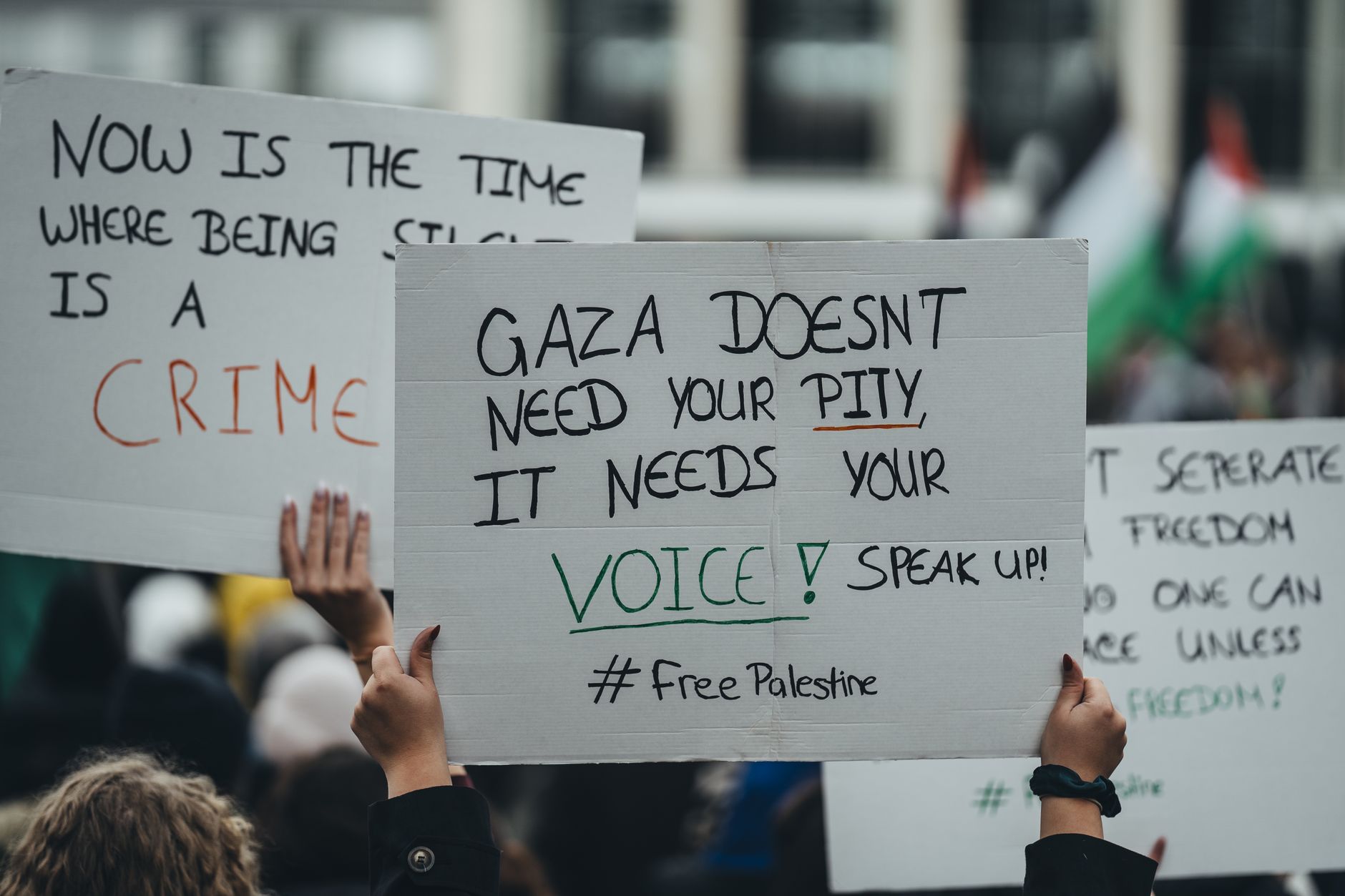
Hero image: Omar Ramadan / Pexels
Chatbot Lie: Netanyahu UN Speech and Gaza Claims Analyzed
This investigative report examines how high-stakes geopolitical rhetoric intersects with digital information ecosystems, analyzing public statements made at the United Nations regarding the conflict in Gaza. Utilizing solely verified source material from international news reporting, we deconstruct the mechanics of political declarations, public accusation, and the broader discourse surrounding international legal frameworks.
In modern international diplomacy, the line between verifiable fact, rhetorical framing, and digital propagation has grown increasingly blurred. High-profile addresses before international bodies such as the United Nations General Assembly routinely serve as focal points for intense global debate, where leaders articulate starkly opposing narratives on matters of war, humanitarian crisis, and international law. Recently, public declarations regarding military operations in Gaza have generated profound polarization across digital platforms and traditional media outlets alike. This investigation examines the documented statements, contextual framework, and informational challenges surrounding these high-stakes geopolitical claims, adhering strictly to the available evidentiary record.
Context: The UN Assembly and Global Discourse
The United Nations General Assembly functions as the premier international forum for member states to present their national policies, address global crises, and contest international narratives. During these annual gatherings, speeches delivered by heads of state and government leaders carry immense diplomatic weight, instantly broadcasting official positions to millions of viewers worldwide. These addresses are not merely diplomatic formalities; they are strategic interventions designed to shape international public opinion, influence diplomatic alliances, and push back against hostile legal or political accusations.
In recent years, the assembly has become a primary stage for fierce rhetorical battles over the conflict in Gaza. Accusations of grave international crimes, including genocide, have been leveled against state actors by various human rights organizations, international legal bodies, and opposing governments. Conversely, targeted nations and their allies reject these characterizations as politically motivated distortions of reality. Understanding the mechanics of this discourse requires examining the institutional setting in which these claims are made, as well as the immediate international reactions that follow high-level addresses.
The Architecture of International Rhetoric
When a national leader takes the podium at the United Nations, the language employed is meticulously chosen for maximum domestic and international impact. Rhetorical strategies often involve framing military actions through the lens of national survival, self-defense, and the prevention of existential threats. At the same time, international critics and legal scholars analyze these speeches for potential admissions, inconsistencies, or defiance of international humanitarian norms.
The interplay between live diplomatic speeches and digital media amplification creates a complex environment for public understanding. As Yahoo News Canada reported, specific statements made during these high-profile sessions immediately dominate global news cycles, setting the agenda for subsequent political and legal debates. This rapid dissemination underscores the necessity for rigorous, evidence-based fact-checking to separate verifiable factual assertions from partisan rhetoric.
The Core Claim: Netanyahu Labels Accusations ‘The Biggest Lie’
At the center of the recent international discourse is a categorical rejection of legal accusations regarding military conduct in Gaza. According to reporting by Yahoo News Canada, Israeli Prime Minister Benjamin Netanyahu utilized his address at the United Nations to forcefully address allegations that his country’s military campaign constitutes genocide, dismissing these claims as quote unquote the biggest lie of the century.
This stark declaration represents a direct pushback against ongoing proceedings in international courts and frequent condemnations voiced by various global leaders and human rights advocates. By framing the accusations not merely as an error, but as an intentional and massive falsehood, the rhetorical strategy aims to delegitimize the legal and moral basis of the charges brought by critics. This section examines the specific wording and framing of the core claim as documented by journalistic sources.
Deconstructing the Rhetorical Strategy
The characterization of an opposing argument as the biggest lie of the century is a deliberate rhetorical device designed to shift the burden of credibility. In the context of international relations, such language serves to rally domestic support, reassure international allies, and reframe the military campaign as a righteous defense against hostile propaganda. Yahoo News Canada documented how this assertion formed a central pillar of the address, drawing intense scrutiny from international observers.
However, investigative journalists and legal analysts must separate the rhetorical intensity of such statements from the underlying verifiable facts. While political figures utilize definitive language to solidify their narratives, international legal bodies rely on formal evidentiary standards, documented casualty reports, and investigations into humanitarian conditions to evaluate claims of war crimes and genocide.
Examining the Source Material and Public Statements
Rigor in journalism demands strict adherence to documented evidence. In examining the claims surrounding the United Nations address, our primary verifiable source is the reporting provided by Yahoo News Canada. According to this coverage, the core of the controversy centers on the direct verbal confrontation between international accusations of genocide and the Israeli leadership’s absolute denial of those charges.
Media archives and official transcripts confirm that high-level diplomatic speeches are subject to instantaneous global transcription and translation. This ensures that the exact phraseology used by leaders—such as the characterization reported by Yahoo News Canada—is preserved for public scrutiny and historical record. Analyzing these primary texts allows researchers to trace how specific phrases resonate across international media networks.
| Claim Asserted | Attributed Source | Evidentiary Status |
|---|---|---|
| Accusations of genocide in Gaza are “the biggest lie of the century” | Yahoo News Canada (citing UN address) | Verified as a direct quote/statement made during the official UN address |
| Military actions comply with international law and target combatants | Official state communications | Contested by various international human rights organizations and UN bodies |
| Systemic humanitarian obstruction is deliberate policy | International humanitarian agencies | Disputed by state authorities citing aid facilitation efforts |
How Information Information Spreads in International Crises
The dissemination of information during active armed conflicts is fraught with manipulation, emotional appeals, and rapid-fire assertions that often bypass verification processes. When a prominent figure makes a provocative statement at the United Nations, digital platforms amplify the message within seconds. Algorithms designed to maximize engagement frequently prioritize sensationalized soundbites over nuanced reporting, complicating the public’s ability to grasp the full context of a geopolitical crisis.
In the case of the Gaza conflict, information warfare runs parallel to physical combat. State actors, non-governmental organizations, and independent journalists all project competing narratives into the global information space. Yahoo News Canada’s coverage of the UN address illustrates how a single speech can become a flashpoint in this ongoing war of narratives, instantly polarizing online communities and prompting immediate diplomatic fallout.
The Role of Digital Amplification
Modern communication channels allow leaders to bypass traditional journalistic filters, broadcasting their messages directly to global audiences via social media feeds embedded within news websites. This direct-to-consumer diplomacy heightens the emotional resonance of political claims. When a leader labels opposing arguments as historically unprecedented falsehoods, supporters and detractors alike mobilize online, utilizing the quote to reinforce their pre-existing ideological stances.
Fact-checkers and investigative journalists must navigate this deluge of amplified rhetoric by returning to documented primary sources. By anchoring our analysis in verifiable reporting—such as the coverage provided by Yahoo News Canada—we can chart how official statements are reported, contextualized, and debated internationally without falling into the trap of unverified speculation.
Verifying Claims in High-Stakes Geopolitical Debates
Verifying assertions made by heads of state during international assemblies requires a methodological approach that separates verifiable factual claims from subjective political rhetoric. When a leader declares that allegations of genocide are false, fact-checkers look toward established international legal frameworks, independent investigations, and documented humanitarian data to evaluate the broader context in which the speech was delivered.
However, establishing objective truth in an active conflict zone is exceptionally difficult. Independent journalists face severe restrictions on movement, while local health authorities and international bodies rely on varying methodologies to track casualties, infrastructural damage, and humanitarian needs. Consequently, public discourse often revolves around competing interpretations of incomplete data rather than universally accepted facts.
Navigating the Burden of Proof
In international law, the term genocide carries a specific legal definition requiring proof of intent to destroy, in whole or in part, a national, ethnical, racial, or religious group. When political leaders debate this term at the United Nations, the argument frequently shifts between legal definitions and moral posturing. Yahoo News Canada documented how these legal and moral dimensions collided during the address, highlighting the deep divisions within the international community regarding the application of international humanitarian law to the Gaza conflict.
Rigorous reporting demands that we accurately report what was said—attributing statements clearly to their sources—while acknowledging the broader institutional debates surrounding those statements. We do not adjudicate international legal verdicts in these pages; rather, we document the ongoing clash of narratives as recorded by reputable journalistic outlets.
Institutional and International Responses to the UN Address
The immediate aftermath of a contentious United Nations address typically involves a flurry of diplomatic statements, press briefings, and institutional reactions. Allies of the speaker often reiterate support for the nation’s right to self-defense, while critics, including representatives from various member states and international bodies, express outrage or deep concern over the framing of the conflict.
According to the reporting captured by Yahoo News Canada, speeches of this nature serve as litmus tests for international alignment. The stark divergence between the official Israeli narrative presented at the UN and the mounting concerns raised by humanitarian agencies underscores the profound diplomatic friction characterizing the current geopolitical landscape.
Diplomatic Fallout and Polarization
International organizations, including various agencies of the United Nations itself, frequently find themselves caught in the crossfire of these rhetorical battles. When a head of state uses the UN podium to denounce accusations leveled by human rights advocates and legal experts, it challenges the authority and credibility of the international system established to monitor and enforce humanitarian standards.
This dynamic reinforces a growing polarization within global governance institutions. As documented in news reports, diplomatic representatives frequently walk out of assembly halls or issue immediate counter-statements in response to provocative rhetoric, demonstrating that the United Nations remains less a venue for consensus than an arena where competing global narratives are aggressively contested.
Navigating Misinformation and Rhetoric in Media
In an era marked by digital deception and polarized media ecosystems, discerning verifiable facts from partisan propaganda is essential for maintaining an informed public. Misinformation often capitalizes on emotional resonance, utilizing dramatic quotes and high-stakes accusations to bypass critical thinking. The intersection of artificial intelligence, automated content generation, and rapid social media sharing further complicates the information environment.
To combat this, media consumers and professional researchers must rely on transparent attribution, rigorous cross-referencing, and a strict commitment to evidence-based analysis. As demonstrated through the reporting of outlets like Yahoo News Canada, documenting exact statements without embellishment provides a stable foundation for understanding complex international events.
- Emotional Amplification: Relying on exaggerated or apocalyptic language (“biggest lie of the century”) to deflect from substantive policy debates.
- Unattributed Assertions: Spreading claims about international legal proceedings without citing official court records or recognized journalistic sources.
- Polarizing Framing: Presenting complex humanitarian crises strictly as binary conflicts between absolute good and absolute evil.
- Algorithmic Distortion: Sharing isolated video clips or quotes out of context to maximize online outrage and engagement.
- Dismissal of Independent Oversight: Rejecting findings from established humanitarian and legal monitors without providing verifiable counter-evidence.
Frequently Asked Questions Regarding the UN Address
What was the core assertion made by Benjamin Netanyahu at the United Nations?
According to reporting by Yahoo News Canada, Israeli Prime Minister Benjamin Netanyahu used his address at the United Nations to label accusations of genocide in Gaza as quote unquote the biggest lie of the century, forcefully rejecting international legal and moral charges against his country’s military campaign.
Which media outlet provided the primary source material for this report?
This investigation relies on news coverage and reporting provided by Yahoo News Canada regarding the official United Nations address and its immediate international fallout.
How do international legal bodies define the allegations discussed in the UN address?
Allegations of genocide involve complex legal definitions under international law requiring specific proof of intent to destroy a protected group, a matter currently subject to formal review and debate in international courts.
Why is the attribution of public statements important in investigative journalism?
Strict attribution—such as citing Yahoo News Canada for specific speech details—ensures transparency, prevents the spread of fabricated quotes, and holds reporting accountable to verifiable public records.
How does digital media influence the perception of high-level diplomatic speeches?
Digital platforms often amplify sensationalized soundbites and polarized reactions immediately following major speeches, frequently prioritizing engagement over contextual analysis and deep verification.