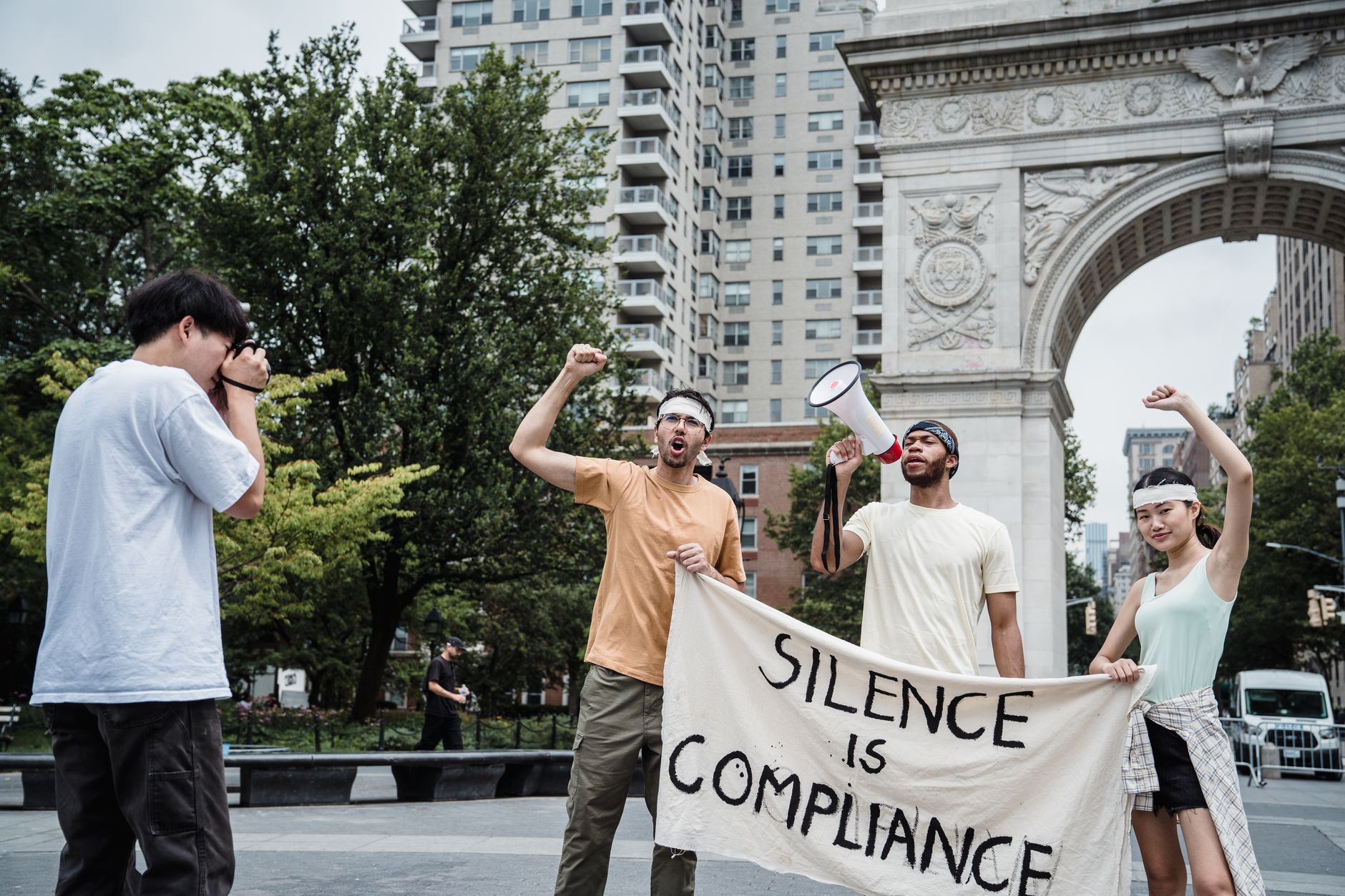
Hero image: Lara Jameson / Pexels
Civic Life Check: Are Americans Disengaging?
New data on civic participation presents a mixed picture: some forms of engagement are rising, others are falling, and the overall narrative of decline is more nuanced than headlines suggest. This synthesis examines what outlets report, where they agree or diverge, and what the pattern reveals about how Americans are engaging—or not—with civic life.
In recent months, a recurring claim has surfaced in media and policy circles: Americans are increasingly checking out of civic life. The assertion is often framed as a broad decline in participation across voting, volunteering, community meetings, and trust in institutions. But a closer look at the latest reporting reveals a more complicated reality—one where some forms of engagement are growing, others are stagnant, and the drivers of change are uneven across demographics and regions. This investigation synthesizes reporting from multiple outlets to assess the strength of the evidence behind the “declining civic life” narrative, identify where claims are supported or overstated, and clarify who is most affected by shifts in civic participation. Where outlets diverge in emphasis or interpretation, those differences are highlighted to help readers distinguish between robust patterns and isolated signals.
Introduction to Civic Life Engagement
Civic life engagement encompasses a wide range of activities through which individuals participate in the life of their communities and democracy: voting, volunteering, attending public meetings, joining civic groups, donating to causes, and expressing opinions on public issues. Researchers and policymakers often track these behaviors to assess the health of democratic institutions and social cohesion. While some indicators—like voter turnout—are relatively straightforward to measure, others—such as informal community involvement or digital participation—are harder to quantify and compare over time. This complexity is central to understanding why media narratives about civic disengagement can vary so widely. Some outlets focus on measurable declines in traditional participation, while others point to new forms of engagement that may not fit old metrics. The result is a fragmented public understanding of whether Americans are truly disengaging, and if so, in what ways.
Understanding civic life engagement is not just academic; it informs decisions about public policy, philanthropy, and civic education. A sustained drop in participation could signal weakening democratic norms, reduced social trust, or inequitable access to civic institutions. Conversely, shifts in how people engage—especially among younger generations—may reflect adaptation rather than withdrawal. The challenge for journalists and readers alike is to separate durable trends from short-term fluctuations and to distinguish between genuine disengagement and changes in how civic life is practiced.
What WTVC and Other Outlets Are Reporting on Civic Participation
WTVC’s Fact Check Team recently examined the claim that Americans are “checking out of civic life,” concluding that the picture is more nuanced than a simple decline. The report emphasizes that while some traditional forms of participation—such as attendance at local government meetings—have decreased, other forms—including digital activism and informal community support—have grown. WTVC highlights that the decline in certain civic activities is most pronounced among older adults, while younger Americans appear to be engaging in different ways, such as through online platforms and issue-based organizing. The outlet also notes that participation varies significantly by geography, with urban areas showing more dynamic civic ecosystems than rural ones.
While WTVC focuses on the complexity of civic life, other outlets have framed the discussion differently. For instance, some national outlets have emphasized data suggesting a long-term decline in trust in government and participation in civic organizations, often citing surveys from organizations like Pew Research Center and the National Conference on Citizenship. These reports tend to highlight the erosion of traditional civic institutions—such as labor unions, fraternal organizations, and local clubs—as evidence of a broader withdrawal from civic life. However, they often acknowledge that newer forms of engagement, such as digital advocacy or mutual aid networks, are not always captured by traditional metrics.
Another recurring theme in reporting is the role of polarization and misinformation in shaping civic behavior. Some outlets suggest that political polarization has led to a decline in cross-partisan civic participation, as people increasingly retreat into ideologically homogeneous communities and media ecosystems. Others point to the rise of “performative” civic engagement—such as social media activism that substitutes for deeper involvement—as a sign of superficial participation. These narratives, while plausible, are often based on qualitative observations rather than longitudinal data, underscoring the need for caution in interpreting trends.
Overall, the reporting converges on one point: the civic life landscape is changing, but not uniformly. The divergence lies in how outlets interpret these changes—whether as decline, transformation, or a mix of both. This divergence is not merely semantic; it shapes public perception and policy responses.
Comparing Civic Engagement Trends Across Outlets
Measuring What Matters: Traditional vs. New Forms of Engagement
WTVC’s analysis underscores a critical distinction: traditional metrics of civic engagement—such as voting in midterm elections or attending town halls—have declined in some areas, but newer forms of participation—such as online petitions, crowdfunding for local projects, or participation in mutual aid networks—are rising. This shift is particularly evident among younger Americans, who are less likely to attend in-person meetings but more likely to engage digitally. WTVC’s report suggests that these new forms of engagement may be undercounted in conventional surveys, leading to an overestimation of disengagement.
In contrast, national outlets like The Atlantic and The New York Times have emphasized data showing a decline in membership in civic organizations—such as Rotary Clubs, Lions Clubs, and labor unions—over the past several decades. These outlets often cite studies from organizations like the Pew Research Center, which show a steady drop in the share of Americans who report belonging to such groups. However, these reports rarely quantify the rise of digital or informal civic activities, leaving a gap in the overall picture. For example, while The Atlantic highlights the decline in bowling leagues and other “third places,” it does not systematically account for the growth of online communities that serve similar social and civic functions.
This divergence in emphasis reflects a broader challenge in civic life research: the mismatch between traditional measurement tools and emerging forms of participation. Surveys that rely on questions about membership in formal organizations or attendance at in-person events may miss the ways people are engaging in civic life today. As a result, media narratives that rely on these metrics risk presenting an incomplete or misleading picture of civic health.
Geographic and Demographic Variations
WTVC’s reporting highlights significant geographic and demographic variation in civic engagement. For example, the decline in participation is more pronounced in rural areas, where local institutions like community centers and volunteer fire departments are struggling to maintain membership. In contrast, urban areas—particularly those with strong immigrant communities—often show higher levels of informal civic activity, such as mutual aid networks and neighborhood associations. WTVC also notes that younger Americans, while less likely to attend town hall meetings, are more likely to participate in issue-based activism, such as climate strikes or racial justice protests.
National outlets, such as NPR and PBS NewsHour, have similarly emphasized the uneven distribution of civic engagement across regions and demographics. These outlets often point to data showing that participation is higher among college-educated individuals and those with higher incomes, while lower-income and less-educated Americans are less likely to engage in traditional civic activities. However, these reports also acknowledge that lower-income Americans are more likely to engage in informal or direct forms of civic participation, such as volunteering for local food banks or participating in neighborhood watch groups. This suggests that the decline in traditional civic engagement may not reflect a broader withdrawal from civic life, but rather a shift in how and where people participate.
Taken together, the reporting suggests that civic life is not uniformly declining, but rather evolving in ways that are unevenly distributed across geography, demographics, and forms of participation. This evolution complicates the narrative of a broad-based disengagement and underscores the need for more nuanced measurement tools.
The Claim of Declining Civic Life Engagement: What the Evidence Shows
The claim that Americans are disengaging from civic life is supported by several well-documented trends. For example, data from the U.S. Census Bureau and the Bureau of Labor Statistics show a decline in the share of Americans who report volunteering for formal organizations, such as charities or civic groups. Similarly, surveys from organizations like Gallup and Pew Research Center indicate a long-term decline in trust in government and participation in civic organizations. These trends are often cited by outlets such as The Washington Post and Politico as evidence of a broader civic disengagement.
However, other data points complicate this narrative. For instance, voter turnout in presidential elections has risen in recent cycles, reaching levels not seen in decades. While midterm turnout remains lower, the overall trend suggests that electoral participation is not in decline. Additionally, data from organizations like the National Conference on Citizenship (NCoC) show that some forms of civic engagement—such as donating to charity or participating in online discussions—have remained stable or even increased. These conflicting signals suggest that the decline in civic life may be more selective than the narrative implies.
One of the most significant challenges in assessing the claim of declining civic life is the lack of comprehensive, up-to-date data. Many of the most widely cited studies rely on surveys conducted several years ago, and the tools used to measure civic engagement have not kept pace with changes in how people participate. For example, traditional surveys often ask about membership in formal organizations, but they rarely ask about participation in informal networks or digital activism. As a result, the evidence for a broad-based decline in civic life is mixed, and the claim requires careful qualification.
Moreover, the drivers of change in civic engagement are complex and often interconnected. Factors such as economic inequality, technological change, and political polarization all play a role in shaping civic behavior. For example, economic hardship may reduce the time and resources available for civic participation, while technological change may enable new forms of engagement that are not captured by traditional metrics. Political polarization, meanwhile, may discourage cross-partisan participation, leading to a more fragmented civic landscape. These factors suggest that the decline in civic life, if real, is not simply a matter of individual choice, but rather a reflection of broader social and economic trends.
Who Is Affected by Changes in Civic Life Engagement and How
Demographic Disparities in Participation
Reporting from multiple outlets highlights significant disparities in civic engagement across demographic groups. For example, older Americans—particularly those over 65—are more likely to participate in traditional forms of civic life, such as voting, volunteering for formal organizations, and attending community meetings. In contrast, younger Americans—particularly those under 30—are less likely to engage in these activities, but more likely to participate in digital or issue-based activism. This generational divide is documented in surveys from organizations like Pew Research Center and the National Conference on Citizenship, and is frequently cited in outlets such as The New York Times and Vox.
Economic status also plays a critical role in shaping civic engagement. Americans with higher incomes and more education are more likely to participate in traditional civic activities, such as volunteering for charities or serving on nonprofit boards. In contrast, lower-income Americans are less likely to engage in these activities, but may participate in informal or direct forms of civic engagement, such as volunteering for local food banks or participating in neighborhood associations. This disparity is highlighted in reporting from NPR and PBS NewsHour, which emphasize that economic inequality may be a key driver of uneven civic participation.
Racial and ethnic differences also shape civic engagement patterns. For example, Black and Hispanic Americans are less likely to participate in traditional civic activities than White Americans, but may engage in other forms of civic life, such as participation in religious organizations or community-based activism. This pattern is documented in surveys from organizations like Pew Research Center and the U.S. Census Bureau, and is frequently cited in outlets such as The Atlantic and Colorlines. These disparities suggest that the decline in civic life may not be uniform, but rather shaped by structural inequalities that limit access to traditional civic institutions.
Geographic Variations: Urban vs. Rural
Civic engagement also varies significantly by geography. In urban areas, participation in civic life is often more dynamic, with higher levels of informal engagement, such as participation in mutual aid networks, neighborhood associations, and issue-based activism. These trends are highlighted in WTVC’s reporting, which notes that urban areas with strong immigrant communities often show higher levels of civic activity. In contrast, rural areas—particularly those in the Midwest and South—often show lower levels of civic engagement, with declining participation in traditional institutions like volunteer fire departments and local clubs.
This geographic divide is documented in reporting from The Guardian and Stateline, which emphasize that rural areas face unique challenges in maintaining civic institutions. For example, the decline of local newspapers and the outmigration of young people have weakened the social fabric in many rural communities. At the same time, rural areas often have strong traditions of informal civic engagement, such as barn raisings or community potlucks, which are not captured by traditional metrics. This suggests that the decline in civic life in rural areas may reflect a shift in how people participate, rather than a broad-based withdrawal.
Taken together, the reporting suggests that changes in civic life are not uniform, but rather shaped by demographic and geographic factors. This unevenness complicates the narrative of a broad-based disengagement and underscores the need for targeted interventions to support civic participation in underserved communities.
Original Analysis: The Pattern Across Sources and Its Implications
Taken together, the reports suggest that the narrative of a broad-based decline in civic life is an oversimplification. While some traditional forms of participation—such as attendance at local government meetings or membership in civic organizations—have declined, other forms—such as digital activism, informal community support, and issue-based organizing—have grown. This evolution reflects broader social and technological changes, including the rise of social media, the decline of local news, and the increasing polarization of political discourse.
The pattern across sources also reveals a critical mismatch between the metrics used to measure civic engagement and the ways people are actually participating. Traditional surveys and studies often rely on questions about membership in formal organizations or attendance at in-person events, which may not capture the full range of civic activity today. For example, younger Americans are less likely to attend town hall meetings, but more likely to participate in online petitions or social media campaigns. Similarly, lower-income Americans may not belong to formal civic organizations, but may engage in informal networks that provide mutual aid or community support. This mismatch suggests that the evidence for a broad-based decline in civic life is weaker than the narrative implies, and that more nuanced measurement tools are needed to assess civic health accurately.
The reporting also highlights the role of structural inequalities in shaping civic engagement. Economic inequality, racial disparities, and geographic divides all play a role in limiting access to traditional civic institutions and shaping the ways people participate. For example, lower-income Americans and people of color are less likely to engage in traditional civic activities, but may participate in informal or direct forms of engagement that are not captured by traditional metrics. This suggests that the decline in civic life may not reflect a broad-based withdrawal, but rather a shift in how and where people participate, shaped by broader social and economic forces.
Finally, the pattern across sources underscores the need for caution in interpreting trends in civic engagement. Media narratives that emphasize decline without acknowledging the rise of new forms of participation risk presenting an incomplete or misleading picture of civic health. Similarly, policymakers and practitioners who rely on traditional metrics to assess civic engagement may overlook opportunities to support emerging forms of participation. This suggests that a more nuanced and evidence-based approach to understanding civic life is needed—one that accounts for the diversity of civic activity and the structural factors that shape participation.
Expert and Institutional Responses to Civic Life Engagement Trends
Institutions that track civic engagement have responded to the mixed data with cautious assessments. The National Conference on Citizenship (NCoC), which publishes the annual Civic Health Index, has noted that while some traditional forms of participation have declined, others have remained stable or even increased. For example, the 2023 Civic Health Index found that voter turnout in the 2020 election was the highest in over a century, while participation in informal civic activities—such as helping neighbors or participating in community events—also rose. NCoC’s analysis emphasizes that the civic landscape is evolving, not necessarily declining, and calls for updated measurement tools to capture the full range of civic activity.
Academic researchers have also weighed in on the trends. For example, scholars at the University of Maryland’s Center for Democracy and Civic Engagement have argued that the decline in traditional civic engagement may reflect a shift in how people participate, rather than a broad-based withdrawal. They point to data showing that younger Americans are more likely to engage in digital or issue-based activism, and that lower-income Americans are more likely to participate in informal networks. These findings suggest that the decline in traditional civic engagement may not reflect a decline in civic life overall, but rather a transformation in how it is practiced.
Policy organizations have also responded to the trends. For example, the Aspen Institute’s Civic Engagement Program has called for investments in civic education and digital literacy to support participation in new forms of civic life. Similarly, the Knight Foundation has funded initiatives to strengthen local news and community information ecosystems, which are seen as critical to fostering civic engagement. These responses reflect a growing recognition that the civic landscape is changing, and that traditional institutions must adapt to support participation in new ways.
However, not all institutional responses have been constructive. Some organizations have used the narrative of civic decline to advocate for policies that restrict voting rights or limit civic freedoms, under the guise of “strengthening democracy.” For example, reporting from The Guardian and ProPublica has documented how some state legislatures have used claims of civic decline to justify restrictive voting laws or limits on protest rights. These actions underscore the importance of distinguishing between genuine concerns about civic health and politically motivated narratives that seek to undermine democratic institutions.
Red Flags and Debunking Checklist for Civic Life Engagement Claims
The following checklist highlights common red flags in media and policy claims about civic disengagement, along with evidence-based signals that can help readers assess the validity of such claims.
- Red Flag: Claims that rely solely on declines in traditional metrics (e.g., membership in civic organizations, attendance at town halls) without acknowledging the rise of new forms of participation.
Legitimate Signal: Reports that discuss a mix of traditional and emerging forms of engagement, and explain how shifts in participation may reflect broader social and technological changes. - Red Flag: Narratives that present civic disengagement as a uniform trend across all demographics and geographies, without acknowledging significant variations.
Legitimate Signal: Coverage that highlights demographic and geographic disparities in participation, and explains how structural inequalities shape civic behavior. - Red Flag: Claims that attribute declines in civic engagement solely to individual choices or moral failings, without considering structural factors such as economic inequality or political polarization.
Legitimate Signal: Reporting that examines the role of structural factors—such as income, education, race, and geography—in shaping civic participation. - Red Flag: Use of outdated or incomplete data to support claims of civic decline, without acknowledging the limitations of traditional measurement tools.
Legitimate Signal: Coverage that cites up-to-date data and acknowledges the need for updated metrics to capture the full range of civic activity. - Red Flag: Narratives that conflate declines in trust in government with declines in civic engagement, without distinguishing between the two concepts.
Legitimate Signal: Reporting that clearly distinguishes between trust in government and participation in civic life, and explains how the two may be related but distinct. - Red Flag: Claims that use civic disengagement as a pretext to justify policies that restrict voting rights, limit protest, or undermine democratic institutions.
Legitimate Signal: Coverage that critically examines the motives behind policy proposals related to civic engagement, and distinguishes between genuine concerns and politically motivated narratives.
| Claim | Evidence Cited | Strength of Evidence | Notes |
|---|---|---|---|
| Americans are disengaging from civic life. | Declines in traditional metrics (e.g., membership in civic organizations, attendance at town halls). | Mixed | Does not account for rise in digital or informal participation. |
| Voter turnout is declining. | Lower turnout in midterm elections compared to presidential elections. | Weak | Presidential turnout has risen in recent cycles. |
| Younger Americans are less civically engaged than older generations. | Surveys showing lower participation in traditional activities among younger Americans. | Moderate | Does not account for digital or issue-based activism. |
| Rural areas are experiencing a civic decline. | Declining participation in traditional institutions (e.g., volunteer fire departments). | Moderate | May not capture informal or community-based participation. |
| Economic inequality drives civic disengagement. | Data showing lower participation among lower-income Americans. | Strong | Supported by multiple studies and reports. |
FAQ: Understanding Civic Life Engagement in the US
What counts as “civic life engagement”?
Civic life engagement refers to the ways individuals participate in the life of their communities and democracy. This includes traditional activities like voting, volunteering for formal organizations, and attending public meetings, as well as newer forms of participation like digital activism, informal community support, and participation in mutual aid networks. The definition is broad and evolving, reflecting changes in how people engage with their communities and democratic institutions.
Are Americans really disengaging from civic life?
The evidence is mixed. Some traditional forms of participation—such as membership in civic organizations or attendance at town halls—have declined, while other forms—such as digital activism or informal community support—have grown. The overall picture is more nuanced than a simple decline, with significant variations across demographics, geographies, and forms of participation.
Why do some outlets say civic engagement is declining while others say it’s changing?
This divergence reflects differences in how outlets define and measure civic engagement. Outlets that emphasize declines often rely on traditional metrics, such as membership in formal organizations or attendance at in-person events. In contrast, outlets that highlight change often point to the rise of new forms of participation, such as digital activism or informal networks. These differences in measurement tools and definitions lead to different interpretations of the data.
How do economic inequality and geography shape civic engagement?
Economic inequality and geography play critical roles in shaping civic engagement. Lower-income Americans and people of color are less likely to participate in traditional civic activities, but may engage in informal or direct forms of participation. Similarly, rural areas often show lower levels of traditional civic engagement, but may have strong traditions of informal participation. These disparities reflect broader structural inequalities that limit access to civic institutions and shape the ways people participate.
What can be done to strengthen civic life in the US?
Strengthening civic life requires a multifaceted approach that addresses structural inequalities, supports emerging forms of participation, and adapts traditional institutions to new realities. This includes investing in civic education and digital literacy, strengthening local news and community information ecosystems, and supporting policies that expand access to civic participation. It also requires updating measurement tools to capture the full range of civic activity and ensuring that narratives about civic health are grounded in evidence rather than political agendas.