Hero image: RDNE Stock project / Pexels
Fact Check: Minnesota Mayor Pictured with Poll Worker
Recent social media activity surrounding a photographic post falsely associated a Minnesota mayor with partisan election interference. Rigorous fact-checking protocols deployed by news organizations demonstrate that the individual in question was not a candidate on the ballot, rendering foundational assumptions of the viral claim entirely false.
The rapid circulation of unverified visual media during electoral cycles presents an ongoing challenge for information integrity. When photographs are decoupled from their original context, malicious actors can easily repurpose them to manufacture narratives of institutional corruption or administrative bias. A prominent example of this phenomenon involved an image featuring a Minnesota mayor and a local poll worker, which quickly accumulated thousands of shares across multiple social media platforms. By examining the mechanics of this viral claim through established verification standards, investigators can deconstruct how misleading visual narratives gain traction and learn to separate digital fabrication from verifiable reality.
Context of the Viral Image and Election Claims
During heightened periods of civic engagement, such as municipal and national elections, public attention naturally gravitates toward the administration of voting precincts. This intense focus creates an environment where routine administrative procedures can be misconstrued if documented without adequate explanation. In the case involving the Minnesota municipal official, a standard community interaction was captured on camera and subsequently uploaded to digital platforms by users seeking to question the fairness of local voting operations.
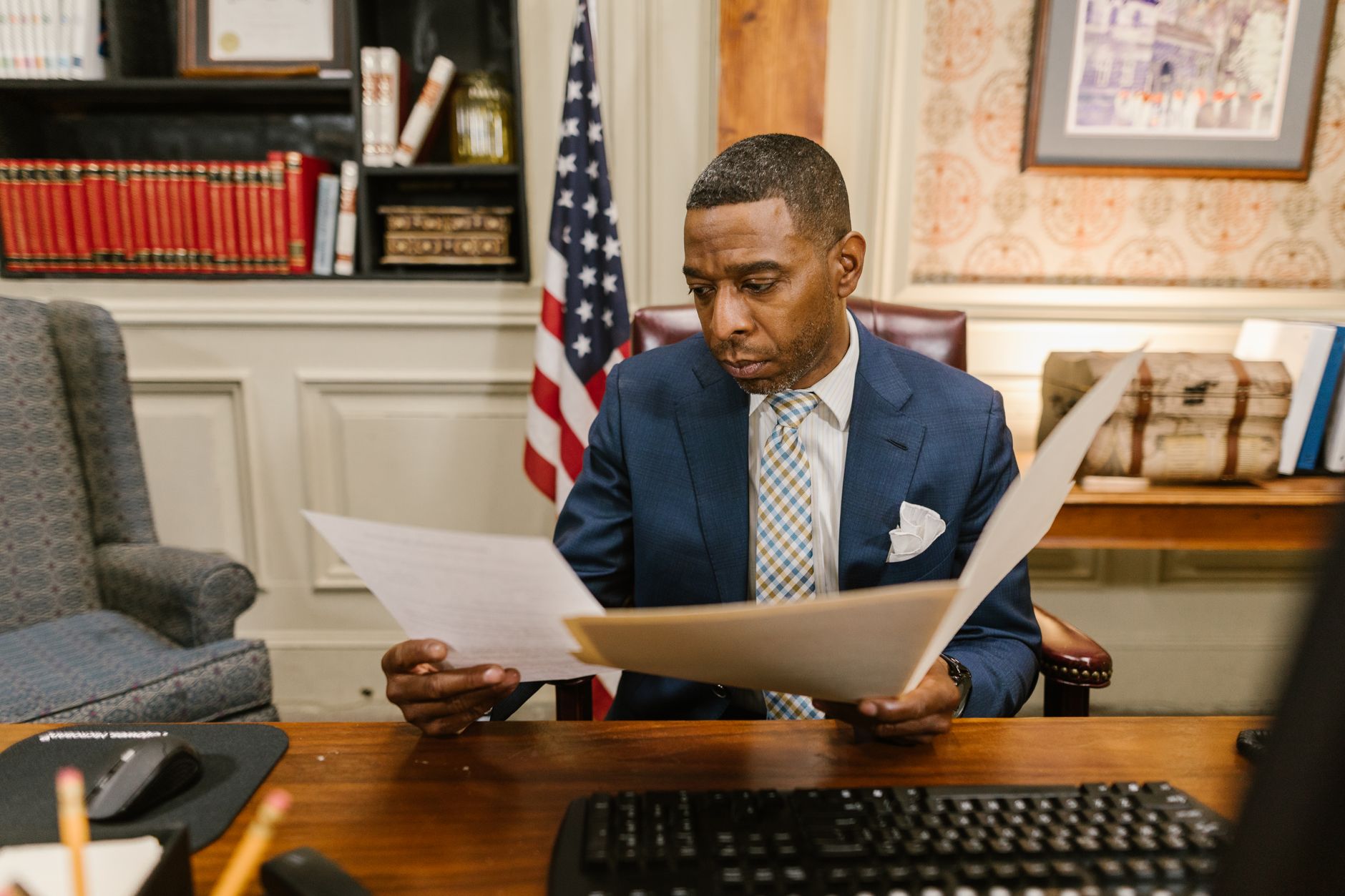
As documented by Reuters, the image began circulating widely on social platforms shortly after voting commenced. The visual asset showed a local mayor standing alongside an individual identified as a poll worker. Within hours of its initial publication, online commentators began attaching speculative captions to the photograph, suggesting that the presence of the mayor inside or adjacent to the polling station constituted an unfair political advantage or a direct violation of election integrity rules.
The Anatomy of Viral Miscontext
The transition of a harmless photograph into a viral misinformation vector typically follows a predictable trajectory. First, a real photograph is captured in a public setting or a municipal building. Second, an online user publishes the image with an assertive, unverified caption that assigns a nefarious motive to the subjects. Finally, algorithms on major social media networks amplify the content due to high user engagement driven by outrage or partisan alignment. In this instance, the photograph documented a routine civic appearance, but the accompanying text transformed it into an alleged piece of electoral malfeasance.
Understanding this trajectory requires looking closely at how municipal officials routinely interact with election workers. Mayors and local representatives often visit polling locations to thank poll workers for their service, monitor administrative readiness, or cast their own ballots as ordinary citizens. These visits are standard protocol and are carefully regulated by state election laws. However, when these moments are photographed by onlookers and published online without context, they become vulnerable to opportunistic distortion.
The Claim: What Online Narratives Alleged About the Photograph
The specific narratives attached to the viral photograph went far beyond a simple observation of a political figure visiting a public building. Social media posts across platforms like X, Facebook, and Instagram alleged that the Minnesota mayor depicted in the image was actively attempting to influence the outcome of an ongoing election. Some commentators went further, claiming the mayor was a candidate on the active ballot and was utilizing their official status to pressure election workers or gain unauthorized access to restricted areas of the polling facility.
These allegations tapped into existing public anxieties regarding institutional trust and election administration. By framing a routine municipal presence as an active breach of protocol, the propagators of the claim sought to evoke strong emotional responses. Users interacting with the posts frequently expressed outrage, calling for investigations, legal penalties, or the immediate invalidation of local voting results, despite the complete absence of verifiable evidence supporting any wrongdoing.
Escalation Through Partisan Framing
The amplification of the claim was accelerated by partisan accounts that utilized the image to advance broader narratives about systemic corruption. According to reporting by Reuters, the narrative was explicitly designed to cast doubt on the neutrality of local election workers. By pairing the photograph of the mayor with inflammatory textual commentary, the posters attempted to blur the lines between legitimate administrative oversight and illicit political interference.
This rhetorical strategy relies heavily on confirmation bias. Individuals who are already skeptical of electoral processes are primed to accept unverified visual claims that align with their preexisting worldviews. When a recognized political figure is photographed near a poll worker, skeptical audiences readily accept the premise that something improper is occurring, bypassing the critical step of verifying whether the mayor was actually a candidate or whether any election laws were broken.
What the Evidence Actually Shows According to Reuters
A thorough factual investigation conducted by Reuters dismantled the core assertions made in the viral social media posts. Through direct inquiry, public record verification, and analysis of municipal election filings, investigators established that the claims surrounding the photograph were factually incorrect in every significant detail.
Most importantly, Reuters reported that the Minnesota mayor pictured with the poll worker was not a candidate on the ballot during the election cycle in question. Because the individual held an active mayoral office but was not running for re-election or seeking another elected position at that time, the foundational premise that the mayor had a personal stake in the immediate electoral outcome was completely false. Consequently, accusations regarding a candidate attempting to influence poll workers or manipulate voting procedures lacked any factual basis.
| Claim Made Online | Fact-Checked Reality | Source Evidence |
|---|---|---|
| The Minnesota mayor was a candidate on the active ballot. | The mayor was not running for any office during this election cycle. | Reuters verification of candidate filing records. |
| The photograph proved improper political interference at a polling station. | The image captured a routine public appearance with no rules violated. | Reuters reporting on municipal and election official statements. |
| The mayor was pressuring poll workers for unauthorized access. | No evidence of coercion, unauthorized access, or policy breaches existed. | Reuters investigative findings and local election authority logs. |
Furthermore, local election authorities and municipal representatives confirmed that the interaction between the mayor and the poll worker adhered strictly to established legal guidelines. There were no reports of intimidation, procedural violations, or improper communications filed by election judges or administrative staff on duty at the facility. The evidence compiled by Reuters demonstrated conclusively that a standard, benign civic moment had been weaponized into a false narrative of administrative corruption.
How Misinformation Spreads During Electoral Cycles
Electoral periods create a high-velocity information ecosystem where unverified claims propagate faster than fact-checkers can systematically dismantle them. This speed is driven by platform architectures that reward emotional engagement, outrage, and sensationalism. When a photograph involving public officials and election workers is uploaded without context, it enters a volatile network of partisan amplifiers who repackage the image to serve specific political narratives.
The mechanism of spread often involves coordinated sharing across multiple platforms simultaneously. Automated accounts, or bots, frequently amplify these posts to artificially inflate their visibility, making the claims appear more widespread and urgent than they are in reality. By the time professional journalists and fact-checkers like Reuters investigate the underlying facts, the misleading image has often reached millions of users, cementing a false impression in the public consciousness that is notoriously difficult to correct.
The Psychology of Visual Credulity
Human psychology plays a critical role in the dissemination of visual misinformation. Viewers possess a cognitive bias known as pictorial superiority, which causes them to remember and trust images much more readily than plain text. When an individual sees a photograph of a real person—such as a known mayor standing inside a recognizable building—their brain immediately accepts the visual data as authentic proof of an event.
Bad actors exploit this psychological shortcut by presenting a real photograph while entirely fabricating the narrative surrounding it. Because the image itself is not manipulated or deepfaked, viewers lower their critical defenses. They assume that because the photo is real, the accompanying story must also be true. Overcoming this cognitive vulnerability requires deliberate mental friction: pausing to question the source, examining the metadata, and waiting for verified reporting from established news organizations before drawing conclusions.
Key Verification Steps for Identifying Digital Misinformation
Combating visual misinformation requires a disciplined, step-by-step verification methodology. Investigative journalists and fact-checkers rely on standardized protocols to authenticate images and contextualize claims before they cause widespread public confusion. Applying these same principles can help media consumers evaluate suspicious content encountered on social networks.
- Reverse Image Search: Upload the suspicious photograph to search engines or forensic tools to determine when and where the image first appeared online, checking for previous contexts that predate the current claim.
- Examine Official Records: Cross-reference claims about candidates, public officials, and electoral participation against official municipal filings, candidate lists, and state election boards.
- Consult Credible Reporting: Look for coverage from established news outlets such as Reuters, Associated Press, or local newspapers that maintain journalistic standards and verify facts directly with primary sources.
- Evaluate Source Credibility: Assess the social media profile or website sharing the image. Check for anonymous accounts, a lack of editorial oversight, or a history of publishing inflammatory, unverified content.
By executing these verification steps, researchers can quickly identify discrepancies between viral social media claims and verifiable reality. In the case of the Minnesota mayor, performing a simple check of candidate filing records immediately revealed the falsehood at the heart of the viral narrative.
Institutional and Editorial Response to the False Claim
When false claims regarding election integrity gain significant traction online, institutional responses from municipal governments, election offices, and professional newsrooms become essential for safeguarding public trust. Local election authorities often must divert valuable time and resources away from administering voting procedures to publicly address and debunk viral rumors.
In response to the viral photograph, municipal representatives and election officials issued clarifications outlining the rules governing public officials at polling sites. These statements emphasized that public figures retain the right to visit or vote at polling locations provided they adhere strictly to the same behavioral codes as any other citizen. Concurrently, independent news agencies like Reuters stepped in to provide formal fact-checks, ensuring that accurate, evidence-based reporting was accessible to the broader public.
The Role of Independent Fact-Checking
Professional fact-checking operations serve as a vital counterweight to digital misinformation. By conducting rigorous, transparent investigations grounded in verifiable data, outlets like Reuters provide the public with definitive clarity. Their editorial processes involve contacting primary sources, reviewing official documentation, and publishing detailed findings that trace the origin of a falsehood and explain precisely why it fails the evidentiary test.
However, the effectiveness of fact-checking depends heavily on platform distribution and user willingness to consume corrective information. Because individuals trapped in ideological echo chambers often reject corrections that contradict their beliefs, institutional responses must be accompanied by proactive media literacy efforts. Educating the public on how to recognize and resist unverified claims remains the most sustainable defense against electoral misinformation.
Evaluating the Impact of Unverified Photographic Claims
The circulation of unverified and false photographic claims carries tangible consequences for democratic institutions. Even when a rumor is thoroughly debunked by credible reporting, the initial wave of misinformation frequently leaves a lasting residue of distrust among members of the public. This erosion of confidence can lead to unwarranted skepticism regarding the integrity of local elections and the dedication of public servants.
Furthermore, the individuals unfairly targeted by these viral narratives—such as the Minnesota mayor and the poll workers captured in the photograph—often face unwarranted public scrutiny, harassment, or reputational damage. When routine civic participation is distorted into an alleged conspiracy, it discourages qualified citizens from serving as poll workers or running for local office, ultimately weakening the foundational infrastructure of local democracy.
Long-Term Challenges for Information Integrity
As digital communication platforms continue to evolve, the challenge of securing information integrity during election cycles will intensify. The proliferation of rapid-sharing networks combined with sophisticated narrative framing means that false claims can be manufactured and distributed at unprecedented speeds. Addressing this challenge requires a coordinated, multi-layered approach involving platform accountability, robust journalistic fact-checking, and enhanced public media literacy.
Ultimately, the factual resolution of the Minnesota mayor photograph demonstrates both the vulnerability of our information ecosystem and the resilience of rigorous investigative journalism. By relying on verifiable evidence, consulting primary sources, and refusing to amplify sensationalist speculation, fact-checkers can successfully dismantle misleading narratives and uphold the standards of truth required for an informed citizenry.
Red Flags Checklist: Identifying Manipulated Election Narratives
- High-Emotion Captions: Posts that use aggressive, alarming, or sensational language designed to provoke immediate anger or indignation.
- Vague Attribution: Claims that cite anonymous sources, insider knowledge, or vague references like “everyone is saying” without providing verifiable proof.
- Out-of-Context Visuals: Real photographs or videos ripped from past events, routine public visits, or unrelated locations and repurposed to fit a new, controversial narrative.
- Partisan Amplification: Rapid dissemination of a story primarily by partisan accounts with a history of pushing divisive or unverified claims.
- Absence of Mainstream Coverage: A sensational story that fails to appear in any established, reputable news outlets known for rigorous fact-checking standards.
Frequently Asked Questions Regarding the Minnesota Mayor Fact Check
What was the core claim made about the Minnesota mayor in the viral post?
Online narratives alleged that the mayor was a candidate on the active ballot who was visiting a polling station to exert improper influence over poll workers and manipulate the voting process.
Did Reuters confirm that the mayor was a candidate on the ballot?
No. According to Reuters, candidate filing records confirmed that the Minnesota mayor pictured with the poll worker was not a candidate in that election cycle.
Were any election laws or administrative rules violated in the photograph?
No. Local election authorities and investigative reporting confirmed that the interaction was entirely routine, and no rules regarding polling place conduct were broken.
Why do people share unverified photographs during elections?
Users often share unverified images to generate political outrage, confirm existing biases, or cast doubt on the legitimacy of election administration processes.
How can everyday citizens verify whether a viral election photo is misleading?
Citizens can perform reverse image searches, consult official candidate lists and municipal records, and verify the story through trusted, evidence-based news organizations before sharing content online.