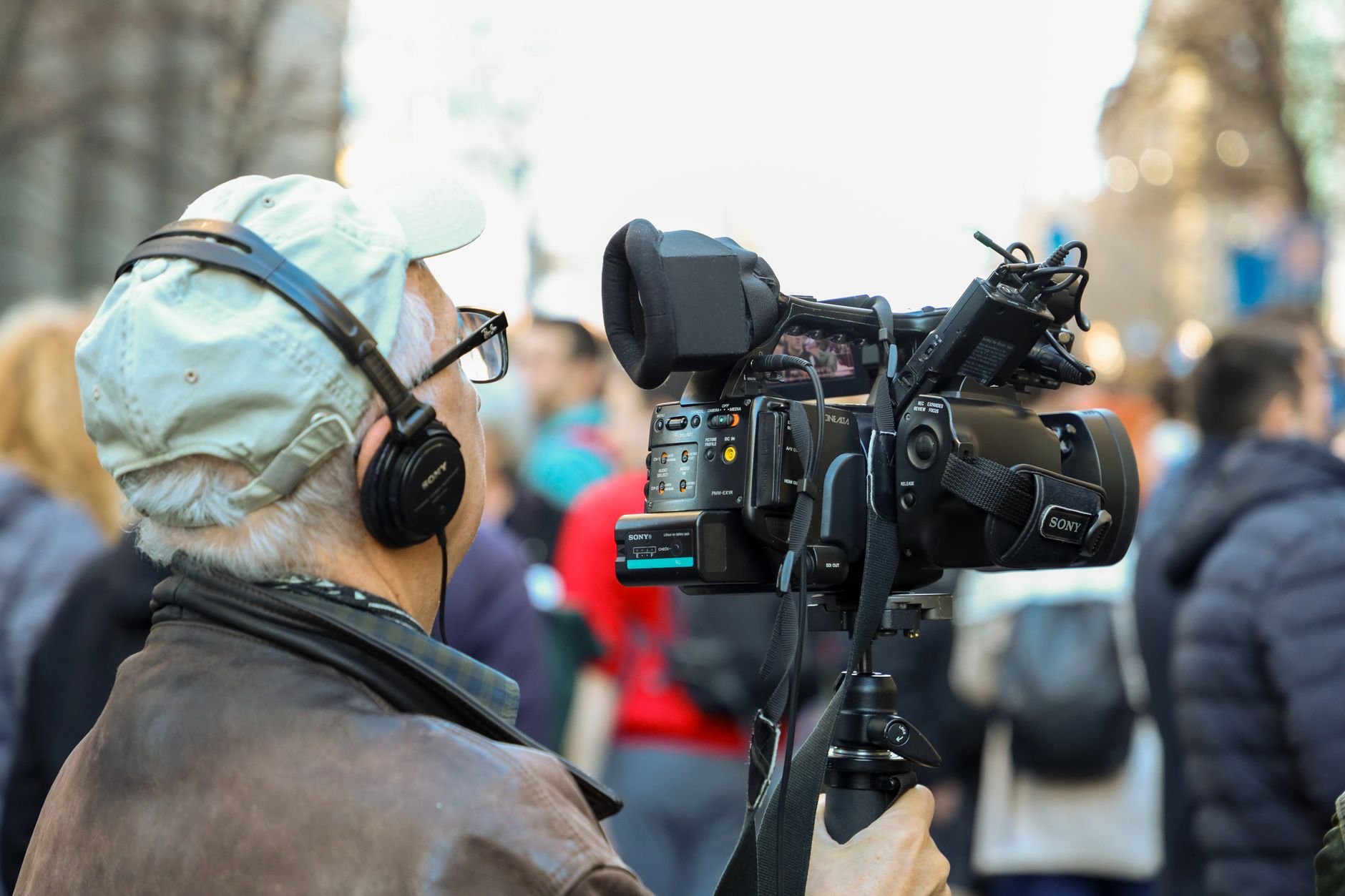
Hero image: Boris Hamer / Pexels
Debunking Israel’s List of Gaza Journalists | +972 Magazine
An investigative analysis of the allegations brought against Palestinian reporters in Gaza reveals systemic inconsistencies, institutional biases, and a lack of verifiable proof in official military listings. By examining the methodology behind these terror designations, evidence-based reporting unpacks the mechanics of modern information warfare.
In conflict zones, the control of narrative often runs parallel to kinetic military operations, making the status of frontline reporters a matter of intense geopolitical and humanitarian contestation. Recently, official listings released by state and military authorities have attempted to categorize specific Palestinian journalists operating inside the Gaza Strip as operatives affiliated with militant organizations. As these lists circulate widely across international digital ecosystems, scrutiny by independent investigative outlets has become essential to separate verified intelligence from administrative propaganda. This report examines the origins, claims, and structural inconsistencies surrounding these designations, relying strictly on documented source material to evaluate the integrity of the accusations.
Context and Background of the Allegations
The operational environment for media workers in the Gaza Strip has deteriorated catastrophically since the escalation of hostilities, with local reporters serving as the primary window for international audiences witnessing the humanitarian crisis. As independent reporting from foreign journalists has been heavily restricted by military blockades on entry, domestic Palestinian reporters have borne the burden of documenting daily conditions on the ground. In response to the extensive visual and written documentation produced by these individuals, military authorities have periodically published lists alleging that specific members of the press maintain active dual roles as combatants or intelligence operatives for militant factions.
These allegations function within a broader strategic framework designed to preemptively delegitimize critical reporting coming out of the besieged enclave. By casting doubt on the professional credentials of civilian journalists, accusing entities attempt to shift public discourse from the substance of wartime documentation to the identity of the documentarians. According to reporting and analysis published by +972 Magazine, the dissemination of these lists typically coincides with heightened scrutiny of military actions or following the publication of damaging visual evidence regarding civilian infrastructure destruction.
Understanding the historical context requires examining how administrative designations are generated during active combat phases. Military intelligence apparatuses often rely on fragmented digital footprints, social media activity, or captured equipment to build dossiers on individuals. However, +972 Magazine noted that these institutional processes routinely conflate civilian professional associations, personal social media engagement, and public information-gathering with formal military integration, creating a broad-brush categorization that collapses essential distinctions under international humanitarian law.
Examining the Specific Claims Made Against Gaza Journalists
The Nature of the Accusations
The specific claims levied against journalists on these official lists generally center on alleged membership in military wings or political bureaus, possession of communication devices purportedly linked to militant operations, or historical associations predating the current escalation. In various cases highlighted by +972 Magazine, the accusations assert that routine journalistic reporting tasks—such as filming near border areas, tracking troop movements, or communicating with local governance bodies—constitute active participation in hostilities.
Reliance on Digital Footprints
A recurring feature of the evidence presented by accusing authorities involves the citation of historical social media posts, group chat memberships, or public congratulatory messages shared years prior to the events in question. +972 Magazine observed that these digital artifacts are frequently interpreted through a securitized lens, where standard expressions of community solidarity, local mourning, or routine journalistic access are recontextualized as indicators of militant affiliation without providing verifiable chain-of-custody proof for physical operational integration.
The Scope of Affected Personnel
The rosters of accused individuals encompass a wide range of media workers, including veteran photojournalists, freelance contributors to international wire services, and local broadcast anchors. By targeting individuals across diverse media institutions, the claims attempt to establish a systemic pattern of infiltration rather than addressing isolated incidents. As detailed by +972 Magazine, this sweeping approach ensures that major journalistic entities whose personnel are targeted face immediate reputational challenges and operational paralysis.
What the Available Evidence Actually Shows
When investigative journalists and legal analysts subject the published lists to rigorous cross-examination, a stark gap emerges between the gravity of the accusations and the substantiating evidence provided. Publicly released military dossiers frequently lack verifiable documentation, independent forensic audits, or verifiable intelligence that can withstand objective scrutiny. +972 Magazine reported that fundamental evidentiary standards—such as verifiable employment records, forensic analysis of seized hardware, or independent corroboration from neutral human rights monitors—are consistently absent from the dossiers.
Furthermore, international press freedom organizations and humanitarian law experts emphasize that the protections afforded to journalists under the Geneva Conventions do not evaporate simply because an individual operates in a territory governed by a de facto authority. Under international humanitarian law, journalists are civilians unless they take a direct part in hostilities. +972 Magazine highlighted that the evidence provided in these lists routinely fails to demonstrate direct participation in combat, relying instead on circumstantial associations, familial connections, or professional contacts that are standard for any reporter working within a functioning municipal jurisdiction.
In numerous instances, independent verification efforts have confirmed that individuals labeled as combatants were actively engaged in frontline reporting at the exact timestamps and locations cited as evidence of militant activity. This direct temporal and spatial contradiction undermines the credibility of the military logs. +972 Magazine documented how basic fact-checking of published employment histories and publication records disproves the core timeline narratives advanced by the accusing authorities.
How the Claims Spread Across Media Channels
The propagation of unverified terror designations relies on a coordinated multi-channel distribution network designed to maximize reach and bypass editorial gatekeepers. The lifecycle of these claims typically follows a predictable trajectory across digital ecosystems:
- Initial publication on official military blogs, government social media channels, or state-aligned Telegram networks.
- Rapid amplification by partisan think tanks, advocacy groups, and coordinated digital amplification networks seeking to shift the media narrative.
- Pick-up by mainstream commercial outlets that treat official state or military designations as verified intelligence without conducting independent investigative verification.
- Secondary recirculation on social media platforms where algorithmic engagement loops reward sensationalist security claims, cementing the unverified status of the journalists in the public consciousness.
As documented by +972 Magazine, this amplification pipeline creates an illusion of consensus. When multiple secondary sources echo an initial unverified claim, casual observers may mistake repetition for independent corroboration. This informational mechanism obscures the singular, unverified origin of the data, insulating the original allegations from immediate accountability and severely impacting the safety and professional standing of the targeted reporters.
Red Flags and Inconsistencies in the List
A systematic review of the administrative rosters reveals several glaring methodological flaws and structural inconsistencies that undermine their evidentiary value. Analysts examining the data have identified multiple warning signs indicating a lack of rigorous vetting:
- Vague Categorizations: The use of overly broad terminology that fails to distinguish between administrative roles, political affiliations, and active military combatant status.
- Contradictory Timelines: Citing individuals as active participants in events occurring during periods when verifiable travel logs, hospital records, or bylines show them working in entirely different locations.
- Circular Referencing: Relying on self-referential military intelligence summaries rather than verifiable external evidence or independent judicial findings.
- Absence of Due Process: Releasing lists publicly to media outlets and social platforms without providing the accused individuals or their employing organizations an opportunity to review or contest the underlying data.
- Targeting Retaliation Patterns: A clear correlation between the timing of list releases and the publication of high-impact investigative journalism or visual documentation exposing military conduct.
These red flags, as cataloged in analysis by +972 Magazine, demonstrate that the primary function of the lists is often political and narrative management rather than objective law enforcement or counter-terrorism operations.
Institutional and Editorial Responses
International media organizations, news agencies, and press freedom watchdogs have faced immense pressure following the publication of these lists. Major newsrooms employing targeted freelancers or local correspondents have conducted internal reviews to assess the credibility of the allegations. According to reporting by +972 Magazine, these editorial bodies have repeatedly found that the accusations lack substantive proof, leading numerous international outlets to stand by their local reporting staff and reaffirm their commitment to on-the-ground coverage.
Press freedom coalitions, including committees protecting journalists and international journalism federations, have issued formal statements condemning the designation of reporters as legitimate military targets. These institutions argue that labeling journalists as combatants without due process endangers media workers globally by eroding the protected status enshrined in international law. +972 Magazine noted that these institutional responses emphasize the vital necessity of independent verification, warning that uncritical acceptance of military dossiers threatens the foundational safety mechanisms protecting reporters operating in conflict zones.
Conclusion and Analytical Takeaways
The systematic evaluation of recent military listings targeting Gaza journalists reveals a concerning pattern where administrative convenience and narrative control override evidentiary rigor. As demonstrated through the investigative findings of +972 Magazine, the allegations rely heavily on circumstantial digital footprints, ambiguous associations, and unverified intelligence summaries that fail to meet basic legal or journalistic standards of proof. The propagation of these claims through coordinated digital channels further highlights the vulnerabilities of modern information ecosystems to state-driven propaganda.
Ultimately, the attempt to rebrand civilian journalists as combatants serves a dual purpose: it seeks to shield military operations from independent visual documentation while chilling the broader climate of international journalism. Maintaining journalistic integrity requires a steadfast commitment to evidence-based analysis, skepticism toward unverified state designations, and active defense of the frontline reporters who risk their lives to bring documentation out of conflict zones. Navigating this landscape demands rigorous verification and an unwavering refusal to accept administrative assertions in place of verified facts.
Frequently Asked Questions
What is the core allegation behind Israel’s lists of Gaza journalists?
The core allegation asserts that specific Palestinian reporters operating inside the Gaza Strip maintain dual roles as active combatants or operatives for militant organizations, thereby losing their protected civilian status under international law.
How have independent outlets like +972 Magazine evaluated these claims?
Independent investigative reporting has found that these lists consistently lack verifiable evidence, forensic audits, or due process, often conflating standard reporting tasks, professional associations, and historical digital footprints with military integration.
What are the primary red flags identified in the published lists?
Key red flags include contradictory operational timelines, vague categorization criteria, circular referencing of unverified intelligence, and a suspicious correlation between the release of the lists and the publication of critical journalism.
How do unverified terror designations spread across media channels?
Claims typically originate on official military platforms, are amplified by partisan digital networks, and are subsequently picked up by commercial media outlets that mistake unverified state assertions for independently corroborated intelligence.
What protections do journalists have under international law in conflict zones?
Under international humanitarian law and the Geneva Conventions, journalists are classified as civilians and are protected from targeted attack unless they take a direct, verifiable part in hostilities, a standard that accusing dossiers consistently fail to substantiate.