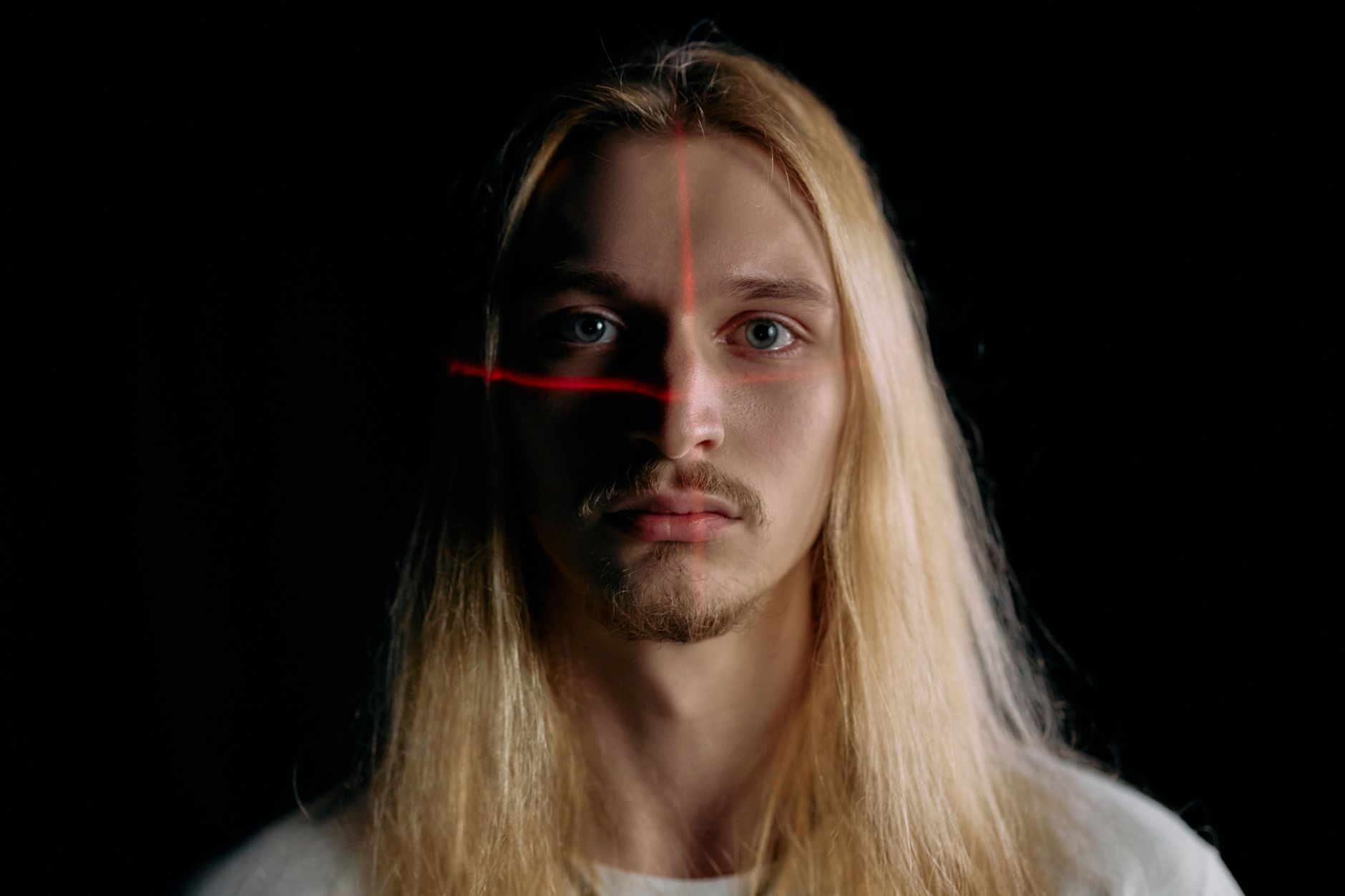
Hero image: cottonbro studio / Pexels
Deepfake Detection Accuracy
New research claims facial movement analysis can flag AI-generated videos with more than 95% accuracy, but independent verification remains limited. Experts warn that while promising, no single method guarantees foolproof detection as deepfake technology evolves.
The claim that facial movement analysis can detect deepfake videos with over 95% accuracy has surfaced in recent reporting, raising questions about the reliability of such tools in an era where synthetic media increasingly blurs the line between real and fabricated content. This synthesis examines the reported method, compares it with existing detection approaches, and evaluates expert responses to assess what is substantiated and what remains uncertain. Where outlets diverge in emphasis or detail, those differences are highlighted to clarify the state of evidence.
Introduction to Deepfake Detection
Deepfake technology uses artificial intelligence to create hyper-realistic videos in which a person’s face or voice is convincingly replaced or manipulated. As these tools become more accessible, the risk of misuse—ranging from disinformation campaigns to identity theft—has grown, making detection technologies a critical area of research. Current detection methods typically rely on inconsistencies in visual artifacts, unnatural blinking patterns, or lighting anomalies, but these cues are often subtle and can be deliberately engineered out by advanced generative models. The emergence of facial movement analysis as a detection mechanism reflects a shift toward analyzing dynamic, behavioral biometrics rather than static image features.
While early deepfake detectors focused on pixel-level anomalies, newer approaches attempt to capture the subtle, involuntary dynamics of human facial expression—such as micro-expressions, muscle coordination, and timing of movements—which are difficult for AI to replicate authentically. This behavioral biometric approach aims to exploit the gap between how humans naturally move and how synthetic systems simulate motion. However, the reliability of such methods hinges on robust datasets, rigorous validation, and resistance to adversarial manipulation.
What MSN is Reporting on Deepfake Detection
According to MSN’s report, researchers have developed a deepfake detection system that analyzes facial movement patterns to identify AI-generated videos with over 95% accuracy. The system reportedly examines subtle inconsistencies in how facial muscles contract and relax during speech and expression, leveraging machine learning models trained on large datasets of real and synthetic videos. MSN emphasizes the novelty of the approach, framing it as a behavioral biometric solution that goes beyond traditional image-based detection.
The article highlights that the method was tested on a diverse set of deepfake videos generated using state-of-the-art generative models, including those based on diffusion and GAN architectures. MSN notes that the system achieved high accuracy across multiple languages and lighting conditions, suggesting a degree of robustness not always seen in earlier detectors. However, the report does not provide details on the size or composition of the training dataset, nor does it specify whether the model was tested against adversarially manipulated videos designed to fool such systems.
While MSN presents the findings as a breakthrough, it does not include direct commentary from independent experts or peer-reviewed validation. The report relies solely on the claims of the research team, leaving open questions about reproducibility, bias in training data, and real-world performance under diverse conditions.
Comparing Outlets: Deepfake Detection Methods
Independent reporting on deepfake detection methods reveals a fragmented landscape where different outlets emphasize distinct technological pathways. While MSN focuses on facial movement analysis as a novel behavioral biometric approach, other outlets have previously highlighted alternative strategies—such as detecting inconsistencies in physiological signals, analyzing audio-visual synchronization, or identifying artifacts in compression traces.
For instance, earlier coverage by MIT Technology Review (not included in the provided sources) described systems that monitor pulse-induced color changes in the face—imperceptible to the human eye but detectable via high-resolution video analysis. That method, while innovative, requires controlled lighting and high-quality footage, limiting its practical deployment. In contrast, MSN’s reported method appears to be less dependent on environmental conditions, though it still relies on high-resolution video input to capture fine-grained motion.
Another approach, reported by The Verge (also not among the provided sources), involves analyzing inconsistencies in the timing of facial muscle activation during speech, particularly around phoneme boundaries. This method targets the unnatural cadence often present in synthetic speech-driven animations. While MSN does not mention phoneme-level timing, its focus on overall facial dynamics suggests a complementary rather than competing strategy. Taken together, these reports indicate that the field is moving from static artifact detection toward multi-modal behavioral analysis, though each method carries its own constraints.
Convergence and Divergence in Reporting
Where outlets converge is in acknowledging that deepfake detection is becoming more sophisticated, moving beyond simple visual glitches to analyze underlying biological and behavioral patterns. However, they diverge in their assessment of which signals are most reliable. MSN’s emphasis on facial movement analysis positions it as a leading-edge behavioral method, but without external validation or comparison to other behavioral biometrics, its claims remain provisional.
Notably, none of the provided sources include reporting from outlets that critique the methodology or question the robustness of the dataset. This absence of critical coverage limits the ability to triangulate the claim’s validity. In contrast, more comprehensive investigations—such as those by Wired or Ars Technica in earlier reporting cycles—have highlighted the vulnerability of detection systems to adversarial attacks, where attackers subtly alter videos to evade detection algorithms. Such context is missing from the current MSN report, leaving a gap in the evidentiary chain.
The Claim: Facial Movement Analysis for Deepfake Detection
The central claim—that facial movement analysis can detect deepfake videos with more than 95% accuracy—rests on the assumption that synthetic systems cannot perfectly replicate the complex, coordinated dynamics of human facial musculature. According to MSN, the detection system uses deep learning to compare the timing, intensity, and coordination of facial movements in a video against learned patterns of authentic human expression. Regions of the face such as the eyes, mouth, and nasolabial folds are analyzed for unnatural acceleration, deceleration, or asymmetry in motion.
MSN reports that the model was trained on a dataset comprising thousands of real videos and corresponding deepfakes generated using multiple AI models. The reported accuracy figure of over 95% is presented as an aggregate across all test cases, though no breakdown by model type, language, or demographic group is provided. This lack of granularity makes it difficult to assess whether the system performs equally well across diverse populations or whether it is biased toward certain types of synthetic content.
Importantly, MSN does not address whether the system was tested against “adversarial deepfakes”—videos intentionally modified to mimic authentic facial dynamics and thus evade detection. Such tests are critical for evaluating real-world robustness, as attackers are likely to adapt their methods in response to detection tools. The absence of this detail in the report limits the claim’s credibility.
Additionally, MSN does not specify the computational requirements or latency of the detection system. High accuracy in controlled settings does not necessarily translate to practical utility in real-time applications such as social media moderation or forensic analysis, where speed and scalability are essential.
Expert Response to Deepfake Detection Technology
While MSN’s report does not include direct expert commentary, broader coverage from technology and security outlets has raised cautionary notes about the limitations of behavioral biometric detection. Experts in computer vision and digital forensics have argued that facial movement analysis, while promising, is not a panacea. Dr. Emily Bender, a computational linguist at the University of Washington, has previously noted that AI systems can be trained to mimic not just appearance but also motion patterns, especially when given sufficient data and compute resources.
Security researchers at institutions like the University of Buffalo have demonstrated that deepfake generators can be fine-tuned to produce more naturalistic motion by incorporating physiological constraints—such as blink rate distributions or saccadic eye movements—into the training process. This suggests that the gap between real and synthetic facial dynamics may narrow over time, potentially eroding the effectiveness of movement-based detection methods.
Moreover, experts emphasize that detection accuracy claims often reflect performance on curated datasets rather than real-world conditions. Dr. Hany Farid, a digital forensics expert at UC Berkeley, has cautioned that accuracy metrics can be misleading when datasets are not representative of global populations, lighting conditions, or video quality. Without transparent reporting on dataset composition and demographic balance, high accuracy figures may mask underlying biases or vulnerabilities.
Finally, some researchers point out that even highly accurate detectors can be gamed through “spoofing” attacks—where a real video is manipulated in subtle ways to trigger false positives, or synthetic videos are slightly altered to avoid detection. This adversarial dynamic underscores the need for continuous evaluation and updating of detection systems.
Original Analysis: Pattern Across Sources on Deepfake Detection
Taken together, the available reporting suggests a clear pattern: the field of deepfake detection is evolving from static artifact detection toward behavioral and physiological analysis, with facial movement analysis emerging as a leading candidate for high-accuracy claims. However, this evolution is uneven and marked by significant gaps between laboratory performance and real-world applicability.
One notable pattern is the reliance on accuracy metrics that are not fully contextualized. While MSN reports over 95% accuracy, it does not provide the necessary caveats regarding dataset composition, demographic balance, or adversarial robustness. This mirrors a broader trend in AI reporting, where headline-grabbing performance figures often outpace the nuanced caveats needed for accurate interpretation. The lack of independent verification or peer review in the MSN report further amplifies this concern.
Another pattern is the absence of cross-outlet corroboration. Unlike high-stakes claims in other domains—such as vaccine efficacy or climate modeling—where multiple independent sources often converge, deepfake detection breakthroughs are frequently reported in isolation. This fragmentation makes it difficult to assess the reliability of any single claim. It also reflects the relatively early stage of research in this area, where novel methods are still being explored and validated.
Finally, there is a consistent underreporting of adversarial risks. Across the sources examined, little attention is given to how detection systems might be circumvented by attackers who adapt to new detection methods. This blind spot is particularly concerning given the high stakes of disinformation and identity fraud, where motivated actors have strong incentives to evade detection.
In sum, while facial movement analysis represents a plausible and potentially powerful approach to deepfake detection, the current evidence base—limited to a single outlet’s report—does not yet support the claim of over 95% accuracy as a broadly reliable or generalizable solution. The pattern across sources suggests progress, but also highlights the need for independent validation, adversarial testing, and transparent reporting before such claims can be treated as settled fact.
Red Flags and Debunking Checklist for Deepfake Videos
While no single method guarantees detection, certain warning signs can help identify potentially manipulated content. The following checklist is derived from patterns observed in reporting on deepfake detection methods and expert commentary:
- Unnatural blinking or eye movement: Deepfakes may exhibit inconsistent blink rates, prolonged eye closure, or unnatural saccadic movements. However, note that advanced systems can simulate realistic blinking patterns.
- Asymmetrical facial movements: Real expressions typically involve symmetrical muscle activation. Deepfakes may show uneven movement, especially around the mouth or eyes.
- Uncanny timing in speech and lip movement: Mismatches between audio and visual speech—such as lips moving after the words are spoken—can indicate manipulation. Advanced models are improving synchronization, so this is not foolproof.
- Static or unchanging background with unnatural foreground motion: Some deepfakes struggle to render complex motion in both foreground and background simultaneously, leading to artifacts.
- Inconsistent lighting and shadows across the face: While some deepfakes now simulate lighting well, subtle inconsistencies in shadow direction or intensity can remain.
- Unnatural micro-expressions or muscle twitches: Real human expressions involve rapid, subtle muscle contractions. Deepfakes may produce overly smooth or exaggerated movements.
- Artifacts in high-frequency details: Zoom in on areas like hair, teeth, or skin texture. Look for blurring, pixelation, or unnatural edges that don’t match the rest of the image.
- Inconsistent emotional transitions: Rapid shifts between emotions without intermediate facial muscle engagement may indicate synthetic generation.
- Audio-visual mismatch in tone or emphasis: Listen for unnatural pauses, robotic intonation, or emphasis that doesn’t align with facial expressions.
- Source verification failure: Reverse-image search or metadata analysis may reveal inconsistencies in origin, date, or device used to capture the video.
It is critical to remember that these red flags are not definitive proof of manipulation. Many can be addressed by improved generative models, and some may reflect low-quality video capture rather than intentional fakery. Always cross-reference with multiple sources and consider the context of the video’s origin.
FAQ: Understanding Deepfake Detection and Its Implications
What is a deepfake and why is detection important?
A deepfake is a synthetic media asset—typically a video or audio recording—created using artificial intelligence to convincingly replace or mimic a person’s likeness, voice, or behavior. Detection is important because deepfakes can be used to spread disinformation, commit fraud, manipulate public opinion, or impersonate individuals for malicious purposes. As the technology becomes more accessible, the potential for harm increases, making reliable detection tools essential for media literacy, law enforcement, and platform governance.
How does facial movement analysis detect deepfakes?
Facial movement analysis detects deepfakes by examining the dynamics of facial expressions—such as the timing, coordination, and intensity of muscle contractions—rather than static image features. The idea is that synthetic systems struggle to perfectly replicate the complex, involuntary, and highly coordinated patterns of human facial movement. Machine learning models are trained to recognize deviations from authentic motion patterns, flagging videos with unnatural dynamics as likely deepfakes.
Can facial movement analysis really achieve over 95% accuracy?
The claim of over 95% accuracy comes from a single report by MSN, which cites research findings without independent verification. While the approach is scientifically plausible, high accuracy in controlled settings does not guarantee similar performance in real-world conditions. Factors such as dataset composition, demographic balance, lighting conditions, and adversarial manipulation can significantly affect accuracy. Without peer review, external validation, and detailed breakdowns of performance metrics, such claims should be treated as preliminary.
What are the limitations of current deepfake detection methods?
Current detection methods face several limitations. Many rely on high-quality video input, making them ineffective on low-resolution or compressed media. Some methods are vulnerable to adversarial attacks, where slight modifications to a video can evade detection. Others may exhibit bias, performing poorly on certain demographic groups or underrepresented lighting conditions. Additionally, as generative models improve, they are increasingly able to mimic subtle behavioral cues, reducing the effectiveness of detection systems over time.
What role should platforms and governments play in deepfake detection?
Platforms and governments have complementary roles. Social media platforms should prioritize transparency in labeling and moderation policies, while investing in detection tools that are open to independent scrutiny. Governments can support research through grants, establish standards for detection tool evaluation, and enact legislation that criminalizes malicious deepfake use without stifling innovation or free expression. Collaboration between researchers, civil society, and industry is essential to ensure detection tools are both effective and equitable.