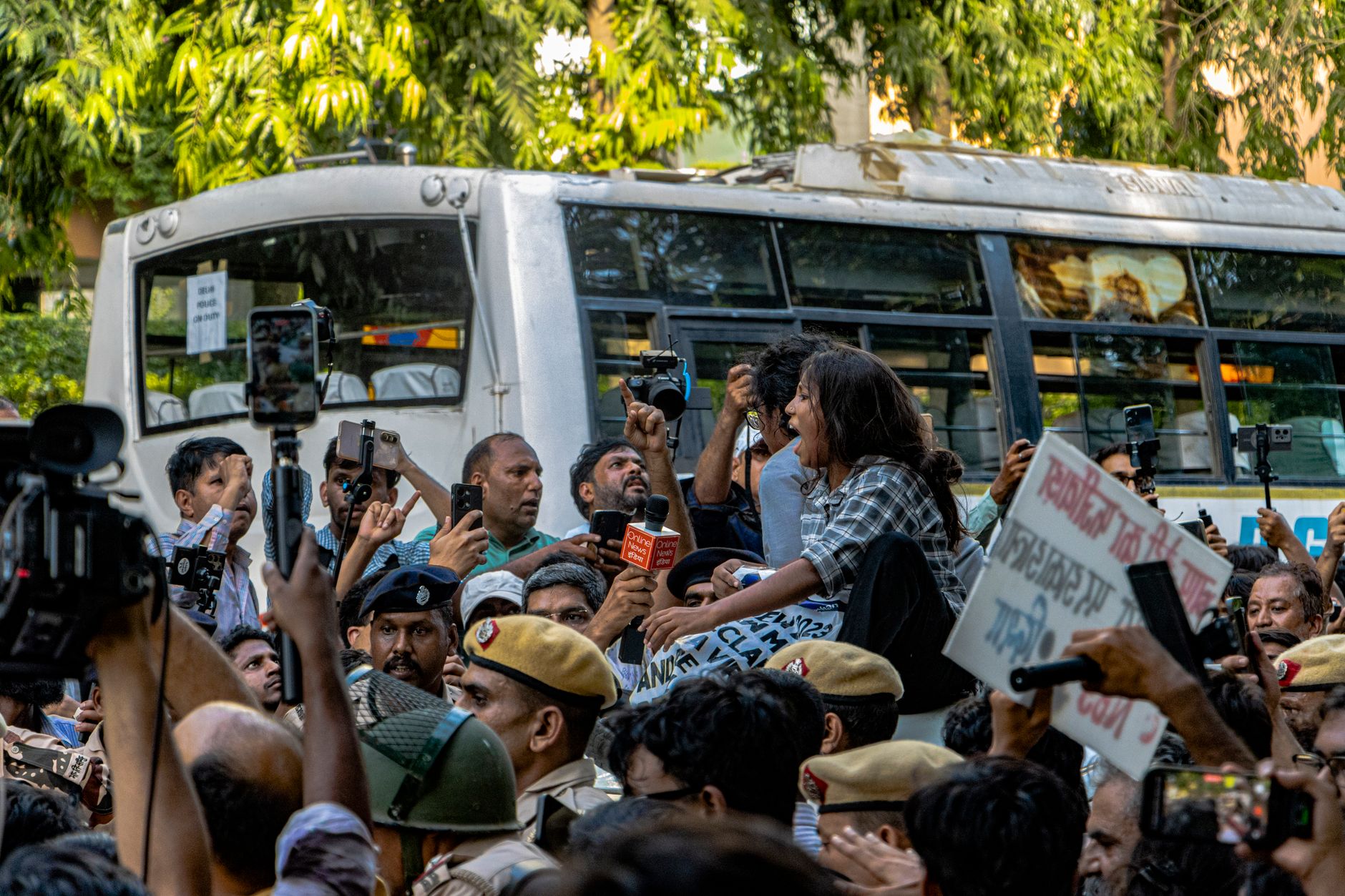
Hero image: Shantum Singh / Pexels
Delhi CJP Protests EXPOSED: Digital Manipulation & Narratives
An evidence-based examination of the complex digital landscapes, international narrative shaping, and manipulation techniques surrounding the Delhi CJP protests. This investigation breaks down the findings reported by News18 to understand how information ecosystems are leveraged during sensitive public events.
The intersection of digital technology, public demonstration, and international commentary has created a fertile ground for information distortion. As public protests unfold in metropolitan centers, the digital echo chamber often amplifies fringe narratives, distorts on-the-ground realities, and leverages cross-border networks to manufacture specific geopolitical or social pressure points. This investigative report examines the mechanics behind these phenomena, focusing specifically on the digital manipulation and international narrative framing surrounding the Delhi CJP protests as analyzed and reported by News18. By dissecting the structural anatomy of these online campaigns, we aim to provide a clear, evidence-based picture of how modern information operations attempt to influence public perception.
Context and Background of the Delhi CJP Protests
Public demonstrations involving judicial and administrative bodies carry immense weight in urban centers like Delhi. The Delhi CJP protests emerged from a specific nexus of legal, political, and social grievances, drawing significant public attention across both domestic and international platforms. Understanding the baseline reality of these protests requires separating physical events from their subsequent digital amplification. When complex institutional matters transition into public squares, the friction points naturally generate intense debate, making them primary targets for coordinated information operations and narrative engineering.
Historically, protests centered on judicial or governmental institutions become flashpoints because they challenge the perceived stability of state mechanisms. In the case of the Delhi CJP demonstrations, the convergence of diverse activist groups, legal professionals, and concerned citizens created a multifaceted environment. News18 documented how these gatherings quickly transcended local geographic boundaries, finding immediate resonance on social media channels where users from various jurisdictions began weighing in on the legitimacy and motivations behind the demonstrations.
The transition of a localized physical protest into a globalized digital conversation alters the stakes considerably. Physical demonstrations are constrained by logistics, local laws, and immediate police perimeters. Digital protests, by contrast, operate without physical borders, allowing external actors to inject narratives, repurpose archival imagery, and shape public sentiment from thousands of miles away. This structural shift forms the core context within which digital manipulation tactics can be successfully deployed and sustained.
The Claims of Digital Manipulation and Narrative Shaping
According to reporting by News18, the digital footprint of the Delhi CJP protests was marked by intense manipulation designed to skew public perception. Information operations in modern digital environments rarely rely on outright fabrication alone; instead, they utilize a sophisticated blend of out-of-context media, hyper-targeted algorithmic amplification, and emotionally charged rhetoric. These techniques are deployed to polarize audiences and create an artificial sense of crisis or widespread outrage.
One primary claim highlighted in the coverage involves the deliberate curation of visual content to misrepresent the scale and intensity of the protests. News18 detailed instances where older footage from entirely different demonstrations or geographic locations was recycled and tagged with current keywords related to the Delhi CJP events. This practice exploits the fast-paced nature of social media consumption, where users frequently share content based on emotional resonance rather than verified provenance.
Beyond visual misrepresentation, narrative shaping efforts focused on polarizing linguistic frameworks. Digital monitors observed coordinated networks pushing specific talking points that framed administrative actions as systemic oppression while simultaneously painting protesters through highly generalized, often extreme lenses. This binary framing is a hallmark of sophisticated influence operations, designed to eliminate moderate viewpoints, suppress nuance, and force digital participants to choose opposing sides in a manufactured ideological conflict.
Examining the Evidence Provided by News18
Evaluating digital manipulation claims requires rigorous scrutiny of the evidence presented by investigative journalists and media outlets. News18 provided a detailed breakdown of the digital artifacts associated with the Delhi CJP protests, utilizing metadata analysis, reverse image searches, and network mapping to substantiate their findings regarding coordinated inauthentic behavior.
The investigation utilized technical markers to trace the origin and velocity of specific viral posts. By examining timestamps, user engagement patterns, and amplification spikes, News18 demonstrated how a small cluster of highly active accounts could artificially propel a fringe narrative into trending topics. This mechanism, often referred to as artificial astroturfing, creates the illusion of grassroots momentum where none genuinely exists.
Methodology of Media Verification
To substantiate claims of digital tampering, the reporting relied on several key verification steps:
- Reverse image and video searches to identify the original publication date and context of shared media assets.
- Network analysis of interacting accounts to identify coordinated posting schedules indicative of automated botnets or coordinated inauthentic behavior.
- Content analysis of linguistic patterns to detect repetitive messaging and synchronized hashtag deployment.
This empirical approach allows researchers to move beyond speculation and point directly to the structural mechanics of a disinformation campaign. By laying out the specific digital footprints left by bad actors, the reporting by News18 offers a transparent look at how modern narrative engineering functions in real time.
International Dimensions and Cross-Border Narrative Spread
A notable aspect of the digital discourse surrounding the Delhi CJP protests was the rapid cross-border dissemination of narratives. News18 highlighted how international commentators, diaspora groups, and foreign digital actors injected themselves into the domestic conversation, often amplifying polarized viewpoints without possessing a full understanding of local context.
Cross-border narrative spread is frequently utilized to internationalize domestic disputes, applying external diplomatic or reputational pressure on state institutions. In the digital age, this process is frictionless. Foreign accounts can utilize localized hashtags, coordinate with domestic ideological factions, and leverage algorithmic biases that favor high-engagement outrage to push specific geopolitical agendas.
The involvement of international networks complicates the task of domestic fact-checkers and digital watchdogs. When narratives are backed by transnational amplifiers, the volume of misinformation can quickly overwhelm local debunking efforts. News18 noted that these international dimensions often relied on appealing to broader global human rights or governance tropes, abstracting the specific legal and administrative details of the Delhi CJP events into generalized templates of grievance.
Red Flags in Online Disinformation Campaigns
Identifying digital manipulation requires recognizing recurring patterns and structural anomalies in online content. Based on the analysis of the Delhi CJP protests, several distinct warning signs characterize coordinated influence operations and inauthentic narrative shaping.
- Asynchronous Visuals: The use of photographs or video clips from past events, different cities, or entirely different countries to illustrate ongoing protests.
- Coordinated Amplification Spikes: Sudden, massive surges in post volume and hashtag usage originating from accounts with minimal historical activity or generic profile details.
- Emotional Hyperbole: Headlines and captions designed strictly to provoke immediate anger, fear, or moral outrage rather than convey factual information.
- Lack of Local Nuance: Content produced by external or international accounts that completely misrepresents or ignores the intricate domestic legal and institutional frameworks governing the issue.
- Echo Chamber Reinforcement: Cross-posting of identical talking points across multiple ideologically disparate platforms to create the false impression of universal consensus.
Institutional and Editorial Responses
The proliferation of digital manipulation during events like the Delhi CJP protests places immense pressure on institutional communicators, regulatory bodies, and news organizations. News18 examined how various stakeholders attempted to counter misinformation and restore factual integrity to the public discourse.
Traditional media outlets faced the dual challenge of covering the physical protests while simultaneously debunking the digital falsehoods surrounding them. Editorial desks had to implement rigorous verification protocols to avoid inadvertently amplifying manipulated media. This necessitated a shift toward real-time fact-checking and transparent sourcing, where reporters explicitly detailed how visual evidence was authenticated.
On the institutional side, government bodies and legal organizations struggled with communication lag. While digital influencers and coordinated networks could deploy narratives within minutes, official channels often required hours or days to verify facts, draft responses, and secure approvals. This structural asymmetry in response time remains one of the greatest vulnerabilities in modern information ecosystems, highlighting the urgent need for agile, evidence-based institutional communication strategies.
Analytical Conclusions on Digital Manipulation
The digital landscape surrounding the Delhi CJP protests serves as a case study in the complexities of modern information warfare and narrative shaping. As detailed by News18, the exploitation of public demonstrations by coordinated digital actors demonstrates that physical protests are increasingly viewed by manipulators merely as raw material for online influence campaigns.
Ultimately, the resilience of a democratic information ecosystem depends on critical digital literacy and rigorous, evidence-based journalism. When media outlets systematically dissect the mechanisms of digital deception—identifying recycled media, astroturfed trends, and cross-border amplification—they empower the public to distinguish between authentic public grievance and manufactured outrage. The lessons from the Delhi CJP digital landscape underscore that combating manipulation requires constant vigilance, technical transparency, and a steadfast commitment to verifiable facts.
Frequently Asked Questions
What were the Delhi CJP protests?
The Delhi CJP protests refer to public demonstrations centered around specific legal, administrative, and judicial grievances in the capital, which subsequently became subjects of intense digital debate and media analysis.
What did News18 report regarding digital manipulation?
News18 reported that the protests were subjected to coordinated digital manipulation, including the use of out-of-context or recycled historical media, astroturfed hashtag campaigns, and polarized narrative framing designed to skew public perception.
How do international dimensions affect domestic protests online?
International dimensions involve foreign digital actors and diaspora groups injecting themselves into domestic conversations, utilizing cross-border networks to amplify polarized narratives and apply external pressure on local institutions.
What are the primary red flags of online disinformation?
Key red flags include asynchronous or recycled visuals, sudden spikes in engagement from unverified accounts, emotionally hyperbolic language, a lack of local institutional context, and synchronized cross-platform posting.
Why is editorial verification crucial during public protests?
Editorial verification prevents news organizations from inadvertently amplifying manipulated media, ensuring that the public receives accurate, sourced information rather than manufactured outrage designed to polarize society.