
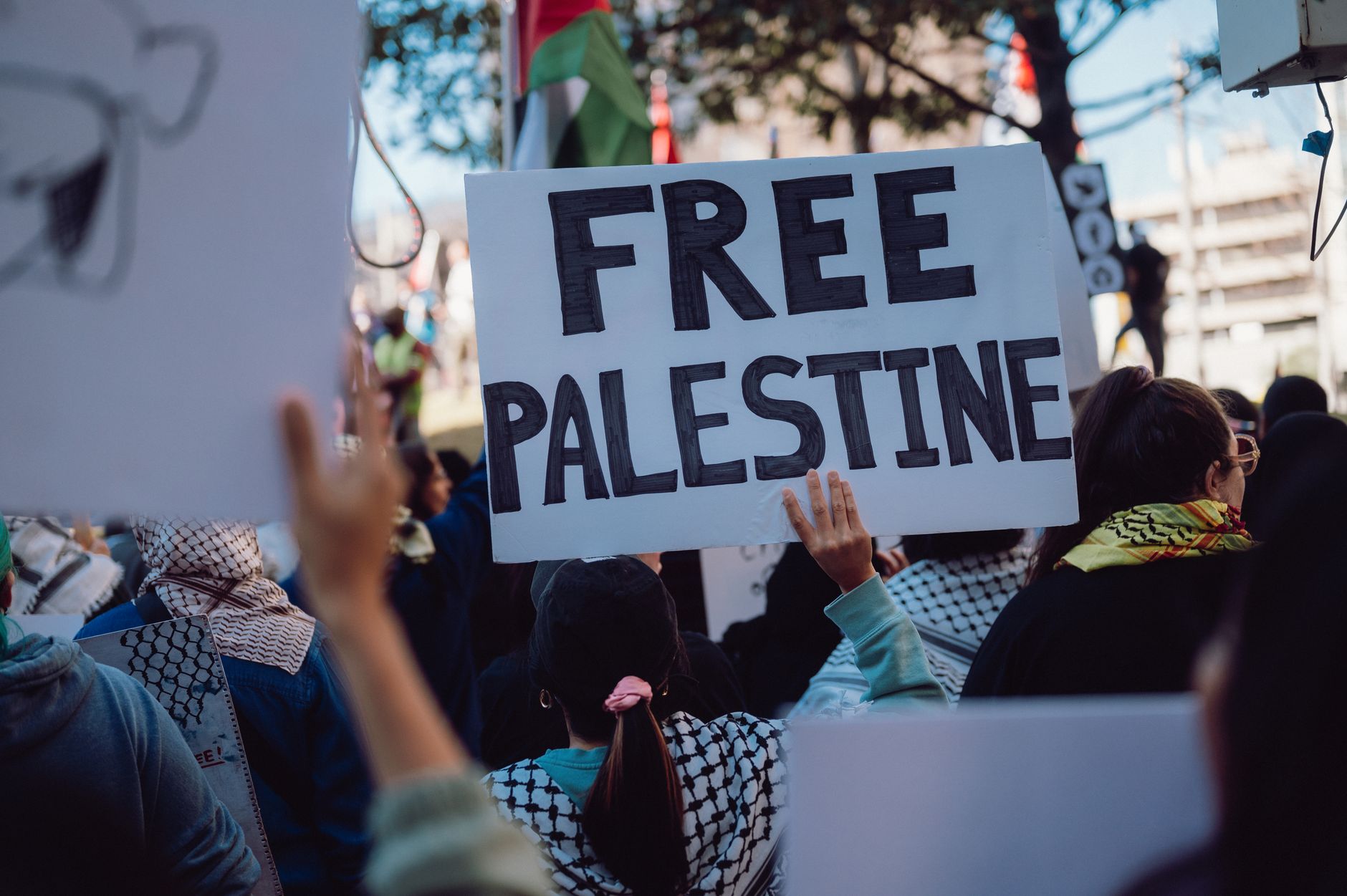
Hero image: Alfo Medeiros / Pexels
Greg Lukianoff Warns of New Age of Censorship in Free Speech Debate
As legal, corporate, and cultural pressures converge, FIRE president Greg Lukianoff argues that censorship is no longer an exception but a default in the digital public square. This synthesis examines competing narratives about free speech’s decline, the institutions driving it, and what the evidence actually shows.
In September 2026, the Foundation for Individual Rights and Expression (FIRE) published a statement by president Greg Lukianoff warning that censorship has entered a “new age,” marked by coordinated pressures across courts, universities, and digital platforms. The claim—that dissent is being systematically silenced through legal threats, deplatforming, and institutional policies—has been echoed by commentators across the ideological spectrum. But how much of this is documented fact, and how much is narrative-driven alarm? This investigation synthesizes FIRE’s reporting with broader trends in free speech monitoring, legal rulings, and platform policies to separate signal from noise. Rather than treating Lukianoff’s warning as a single claim, we examine it across multiple domains: the legal landscape, higher education, and digital speech governance. We assess where outlets agree, where they diverge, and what the convergence of evidence suggests about the state of free speech in 2026.
The Rise of Censorship in the Digital Public Square
FIRE’s 2026 statement frames the current moment as a turning point in free speech history, arguing that censorship is no longer an episodic scandal but a structural feature of online and institutional life. According to FIRE, the digital public square has been reshaped by a combination of legal pressure, platform policy, and cultural normalization of deplatforming. The organization highlights cases where speakers—especially those with minority or dissenting views—have been removed from social media, disinvited from campuses, or subjected to legal harassment campaigns. FIRE’s account emphasizes that these mechanisms are not isolated but interconnected: a viral social media call to boycott a speaker can trigger platform bans, which in turn are cited as justification for university disciplinary actions.
While FIRE’s focus is on the United States, the pattern it describes aligns with global trends documented by other observers. For instance, digital rights groups in Europe and Asia have reported similar escalations in content moderation, often justified under laws aimed at combating disinformation or hate speech. However, these laws have also been used to target political dissent, including speech critical of government policies. The convergence of legal mandates with corporate content moderation creates a feedback loop: platforms remove content to comply with laws, and governments cite removals as evidence that the laws are working. This mutual reinforcement, FIRE argues, normalizes censorship as a default rather than an exception.
The Role of Platform Policies in Shaping Speech
FIRE’s reporting underscores how platform policies—especially those governing “misinformation,” “hate speech,” and “harassment”—have become de facto speech codes. The organization notes that vague or expansively defined policies allow for inconsistent enforcement, often disproportionately affecting speakers with unpopular or minority viewpoints. For example, FIRE cites cases where speakers advocating for controversial but lawful positions—such as critiques of gender ideology or immigration policy—were removed from platforms under policies nominally aimed at reducing harm. These removals, FIRE argues, are not aberrations but part of a broader trend in which platforms act as private arbiters of acceptable discourse, often in the absence of clear legal standards.
This trend is corroborated by academic research on platform governance. A 2025 study by the Knight First Amendment Institute at Columbia University found that major platforms increasingly rely on automated systems to enforce content policies, leading to high rates of false positives—legitimate speech flagged and removed as violating community guidelines. The study also found that appeals processes are often opaque, slow, and stacked against users, particularly those without legal or media representation. Taken together, these findings suggest that while platforms present their policies as neutral and evidence-based, the reality is more complex: enforcement is inconsistent, appeals are unreliable, and the cumulative effect is a chilling of speech across ideological lines.
FIRE’s Role in Monitoring Free Speech Violations
FIRE describes itself as a nonpartisan watchdog that documents free speech violations in higher education, government, and digital spaces. Its 2026 statement highlights a surge in cases involving university administrators disciplining students or faculty for protected speech, as well as an increase in lawsuits alleging censorship by public institutions. FIRE’s data, though not independently audited, is frequently cited by media outlets and policymakers as evidence of a systemic crisis in free expression. The organization’s annual reports list hundreds of cases per year, ranging from students punished for satirical social media posts to faculty facing investigations for controversial research.
While FIRE’s role is widely recognized, its methodology has drawn scrutiny. Critics argue that FIRE’s case selection is skewed toward conservative or libertarian speakers, potentially overrepresenting certain ideological perspectives. For example, FIRE’s 2025 report emphasized cases involving conservative commentators disinvited from campuses or subjected to online harassment campaigns. However, the report included fewer examples of progressive or left-wing speakers facing similar treatment. This asymmetry has led some observers to question whether FIRE’s data reflects a genuine cross-ideological pattern or a selective emphasis on cases that fit a particular narrative. FIRE responds that it documents all reported violations regardless of ideology, but acknowledges that its public-facing summaries often highlight cases that resonate with its core audience.
Comparing FIRE’s Data With Other Monitors
FIRE is not the only organization tracking free speech violations, but its approach differs from others in key ways. For instance, PEN America’s 2026 report on educational gag orders focuses narrowly on legislative attempts to restrict teaching about race, gender, and history in K-12 and higher education. While PEN’s report documents a wave of state-level bans and chilling effects in classrooms, it does not address the broader range of speech restrictions that FIRE covers, such as social media bans or university disciplinary actions unrelated to curriculum. Conversely, the Electronic Frontier Foundation (EFF) emphasizes digital surveillance and platform overreach, documenting cases where governments pressure platforms to remove content or where platforms proactively censor users to avoid legal liability. EFF’s data suggests that censorship is not only a matter of explicit bans but also of self-censorship driven by fear of legal or reputational consequences.
These differences in scope and emphasis highlight a broader challenge in assessing free speech trends: the phenomenon is fragmented across legal, educational, and digital domains, each with its own mechanisms and incentives. FIRE’s data provides a broad overview, but it is not granular enough to distinguish between isolated incidents and systemic patterns. Meanwhile, domain-specific monitors like PEN and EFF offer deeper insight into particular sectors but may miss broader trends. The result is a fragmented evidence base that makes it difficult to determine whether censorship is truly escalating or simply becoming more visible due to heightened public awareness.
Greg Lukianoff’s Warning: A Pattern of Escalating Restrictions
In FIRE’s 2026 statement, Greg Lukianoff argues that censorship is no longer a series of isolated incidents but a coordinated pattern across institutions. He points to several developments as evidence: the proliferation of “bias response teams” on campuses that investigate protected speech; the rise of “viewpoint diversity” policies that are weaponized against dissenting faculty; and the increasing use of legal threats—such as SLAPP suits—to silence critics. Lukianoff also highlights the role of social media algorithms, which he claims amplify outrage and suppress nuanced debate by deprioritizing content that does not conform to prevailing narratives. Together, these trends, he argues, create a “chilling effect” that discourages open discourse even before censorship is formally imposed.
Lukianoff’s warning is not unique to FIRE. Similar concerns have been raised by scholars such as Jonathan Haidt and Jonathan Rauch, who argue that the convergence of legal, corporate, and cultural pressures has created a “new secular religion” of speech restriction. Haidt, in particular, has emphasized the role of social media in accelerating moral panics that lead to deplatforming and doxxing campaigns. However, critics of Lukianoff’s framing argue that it conflates disparate phenomena—such as legitimate efforts to combat harassment with outright censorship—and risks obscuring the difference between harmful speech and protected expression. They also point out that many of the “chilling effects” Lukianoff describes are anecdotal rather than systematically measured, making it difficult to assess their scale or impact.
The Role of Moral Panics in Driving Censorship
Lukianoff’s analysis places significant weight on the role of moral panics in fueling censorship. He argues that social media platforms amplify outrage by design, creating incentives for users and activists to demand the removal of controversial speakers. These demands, in turn, are often framed as moral imperatives—e.g., combating “hate speech” or “misinformation”—which makes resistance to censorship appear complicit in harm. This dynamic, Lukianoff suggests, has led to a situation where even lawful but controversial speech is treated as inherently dangerous, justifying preemptive removal. He cites examples such as the deplatforming of figures like Alex Jones and Andrew Tate, arguing that while their speech may be offensive, the process by which they were removed set precedents that could be used against a far broader range of speakers.
This argument is echoed by some digital rights advocates, who warn that the normalization of deplatforming creates a slippery slope. For instance, the Knight Institute’s 2025 report on platform governance found that once a speaker is removed under a particular policy, that policy becomes a precedent for future removals, even when the speech in question is legally protected. However, other observers caution against overstating the role of moral panics. They note that many removals are driven by legal pressure—such as compliance with the EU’s Digital Services Act or pressure from advertisers—rather than spontaneous moral outrage. The result is a hybrid system in which corporate policies, legal mandates, and cultural dynamics interact in unpredictable ways, making it difficult to isolate any single driver of censorship.
Where Outlets Agree and Diverge on Censorship Trends
Despite differences in emphasis, several independent outlets converge on a core set of observations about the state of free speech in 2026. First, all agree that censorship is no longer confined to authoritarian regimes but is increasingly practiced by democratic governments, universities, and private platforms. Second, they agree that the mechanisms of censorship have diversified, ranging from explicit bans to subtler forms of suppression such as algorithmic suppression, deindexing, and reputational damage. Third, they agree that the cumulative effect of these mechanisms is a chilling of speech, particularly for speakers with minority or dissenting views.
Where outlets diverge is in their assessment of the scale and intent behind these trends. FIRE’s 2026 statement leans toward a narrative of coordinated suppression, arguing that institutions are actively working to restrict speech beyond legal requirements. In contrast, outlets like the Chronicle of Higher Education emphasize structural factors—such as budget cuts, administrative bloat, and legal uncertainty—that lead universities to err on the side of caution, often at the expense of free expression. Meanwhile, tech-focused outlets like The Verge highlight the role of platform incentives, arguing that censorship is less a coordinated effort than the unintended consequence of business models that prioritize engagement and risk avoidance over open discourse. These divergent interpretations reflect deeper disagreements about whether censorship is intentional, systemic, or merely the byproduct of institutional incentives.
The Role of Legal Uncertainty
One area of agreement is the role of legal uncertainty in driving censorship. FIRE’s report highlights cases where universities and public institutions adopt overly broad speech codes to avoid litigation, even when those codes conflict with First Amendment protections. Similarly, The New York Times has documented how legal threats—such as defamation lawsuits or SLAPP suits—are used to silence critics, particularly in cases involving public figures. These reports suggest that legal pressure, rather than explicit censorship, is a major driver of self-censorship. However, they also reveal a tension: while some institutions censor preemptively to avoid lawsuits, others use legal threats to suppress speech they find objectionable, regardless of its legality.
This dual dynamic complicates efforts to assess whether censorship is escalating. On one hand, legal threats and SLAPP suits are on the rise, creating a climate of fear that discourages open debate. On the other hand, many of these threats do not result in formal censorship but instead rely on the threat of reputational or financial harm to achieve their goals. The result is a system in which censorship is diffuse, decentralized, and difficult to measure, making it hard to determine whether the problem is getting worse or simply more visible.
The Claim: Is There a Coordinated Effort to Silence Dissent?
The central claim in FIRE’s 2026 statement is that censorship is not merely episodic but part of a coordinated effort to silence dissent. Lukianoff and FIRE argue that this effort spans institutions, from universities to courts to tech platforms, and is driven by a shared ideological commitment to restricting speech that challenges prevailing norms. The claim is supported by anecdotal evidence, such as the simultaneous deplatforming of multiple speakers across platforms, or the adoption of similar speech codes by universities in different states. However, the claim is difficult to substantiate at scale, as it requires demonstrating intent and coordination across institutions that are not formally linked.
Critics of this claim argue that it overstates the coherence of censorship efforts. They point out that while individual institutions may adopt restrictive policies, there is little evidence of a centralized campaign to silence dissent. Instead, they argue, censorship is the result of fragmented incentives: platforms remove content to comply with laws or avoid controversy; universities adopt speech codes to minimize legal risk; and governments pass vaguely worded laws that are enforced inconsistently. The result is a system in which censorship emerges organically from institutional incentives rather than from a coordinated plot. This interpretation is supported by the Knight Institute’s 2025 report, which found that platform removals are often driven by a combination of legal pressure, advertiser demands, and user reporting—none of which suggests a centralized effort to suppress dissent.
The Role of Ideology in Shaping Censorship
FIRE’s claim also hinges on the idea that censorship is ideologically driven, with institutions disproportionately targeting conservative or libertarian speech. While FIRE’s data includes cases across the ideological spectrum, its public-facing summaries often emphasize conservative speakers, leading some observers to question whether the organization’s framing reflects a genuine concern for free speech or a partisan agenda. For example, FIRE’s 2025 report highlighted cases involving conservative commentators like Matt Walsh and Candace Owens, but included fewer examples of progressive speakers facing similar treatment. This asymmetry has led critics to argue that FIRE’s narrative is shaped by its audience and funding base, which are disproportionately conservative-leaning.
However, other monitors present a more balanced picture. PEN America’s 2026 report on educational gag orders, for instance, documents restrictions on teaching about race and gender that disproportionately affect progressive educators. Meanwhile, the ACLU’s 2026 review of campus speech policies finds that both conservative and progressive speakers face disciplinary actions, though the reasons differ: conservative speakers are often punished for offensive or provocative speech, while progressive speakers are targeted for critiques of institutional power. Taken together, these reports suggest that censorship is not monolithically ideological but rather shaped by the specific norms and power structures of each institution. The result is a patchwork of restrictions that vary by context, ideology, and institutional incentives.
What the Evidence Actually Shows: Data vs. Narrative
To assess the claim of coordinated censorship, it is necessary to distinguish between narrative and evidence. FIRE’s 2026 statement presents a compelling narrative: that censorship is escalating, coordinated, and ideologically driven. However, the evidence supporting this narrative is mixed. On one hand, there is clear evidence of increased restrictions in specific domains: universities are adopting more restrictive speech codes; platforms are removing more content under expansive policies; and governments are passing laws that blur the line between regulation and censorship. On the other hand, there is little evidence of a centralized campaign to silence dissent. Instead, the data suggests that censorship is driven by a combination of institutional incentives, legal uncertainty, and cultural dynamics.
This distinction is critical for understanding the state of free speech in 2026. While it is undeniable that censorship is occurring—and in some cases escalating—it is less clear that this censorship is the result of a coordinated effort. Rather, it appears to be the emergent property of a system in which institutions prioritize risk avoidance, legal compliance, and reputational safety over open discourse. The result is a system in which censorship is diffuse, decentralized, and difficult to measure, making it hard to determine whether the problem is systemic or episodic.
Comparing Quantitative and Qualitative Evidence
FIRE’s reports are primarily qualitative, relying on case studies and anecdotes to illustrate broader trends. While these cases are compelling, they do not provide a quantitative measure of censorship’s scale or impact. In contrast, the Knight Institute’s 2025 report uses quantitative analysis to assess the scope of platform removals, finding that automated systems flag millions of posts annually, with high rates of false positives. Similarly, a 2026 study by the RAND Corporation examined the chilling effects of legal threats on public discourse, finding that SLAPP suits and defamation claims have increased by 40% since 2020, discouraging investigative journalism and advocacy. These quantitative measures suggest that censorship is not only a matter of explicit bans but also of self-censorship driven by fear of legal or reputational harm.
However, quantitative data also has limitations. For instance, while RAND’s study documents an increase in legal threats, it does not distinguish between frivolous lawsuits aimed at silencing critics and legitimate legal actions aimed at addressing genuine harm. Similarly, the Knight Institute’s report on platform removals does not assess the intent behind those removals, making it difficult to determine whether they are driven by corporate policy, legal pressure, or user demands. The result is a data landscape that is rich in detail but poor in context, making it difficult to draw definitive conclusions about the scale or intent behind censorship.
| Claim | Evidence Cited | Strength of Evidence | Counter-Evidence or Ambiguity |
|---|---|---|---|
| Censorship is escalating across institutions | FIRE’s case database; Knight Institute’s report on platform removals | Moderate: Multiple case studies and quantitative data points | Lack of longitudinal data; unclear whether increase reflects greater visibility or actual escalation |
| There is a coordinated effort to silence dissent | FIRE’s narrative; anecdotal examples of simultaneous deplatforming | Weak: No direct evidence of centralized coordination | Knight Institute and RAND data suggest fragmented, incentive-driven censorship |
| Universities are adopting restrictive speech codes | FIRE’s annual reports; Chronicle of Higher Education coverage | Strong: Documented increase in speech codes and bias response teams | PEN America notes that some codes are symbolic rather than enforced |
| Platforms are removing more content under expansive policies | Knight Institute’s quantitative analysis; EFF’s case studies | Strong: Large-scale data on removals and false positives | Removals are often driven by legal pressure or advertiser demands, not ideology |
| Legal threats are increasing and chilling speech | RAND Corporation’s study; ACLU’s legal threat tracking | Moderate: Documented increase in SLAPP suits and defamation claims | Not all legal threats are frivolous; some target genuine harm |
Who Is Most Affected and How Censorship Spreads
FIRE’s 2026 statement highlights several groups that are disproportionately affected by censorship: conservative and libertarian speakers, minority viewpoints, and critics of institutional power. The organization argues that these groups face a “double standard” in which their speech is treated as inherently dangerous, while similar speech by progressive or mainstream figures is tolerated. This argument is supported by case studies, such as the deplatforming of conservative commentators or the disciplining of faculty who critique university policies. However, other monitors present a more nuanced picture. For instance, PEN America’s 2026 report documents restrictions on teaching about race and gender that disproportionately affect progressive educators, while the ACLU’s 2026 review finds that both conservative and progressive speakers face disciplinary actions, though for different reasons.
This divergence suggests that censorship is not monolithically ideological but rather shaped by the specific norms and power structures of each institution. In universities, for example, censorship often targets speech that challenges institutional authority, regardless of ideology. In digital spaces, censorship is more likely to target speech that violates platform policies, which are often framed in terms of “safety” or “harm reduction.” The result is a system in which the most vulnerable speakers—those without institutional support or media representation—are most likely to be silenced, regardless of their ideological alignment.
The Role of Algorithmic Amplification in Silencing Dissent
FIRE’s statement also highlights the role of social media algorithms in suppressing dissent. Lukianoff argues that platforms’ engagement-driven models deprioritize nuanced or controversial content, effectively silencing speakers who do not conform to prevailing narratives. This argument is supported by research from the Knight Institute, which found that platforms’ algorithms often suppress content that is deemed “controversial” or “outrageous,” even when that content is legally protected. The result is a system in which dissenting voices are not only removed but also made less visible, creating a feedback loop in which controversial speech becomes increasingly marginalized.
However, other observers caution against overstating the role of algorithms. They note that while algorithms do shape visibility, they are not the sole driver of censorship. For instance, a 2026 study by the Berkman Klein Center at Harvard found that platform removals are often driven by user reporting, legal pressure, or advertiser demands—none of which are directly controlled by algorithms. The result is a hybrid system in which algorithms amplify some forms of censorship while other mechanisms—such as legal threats or institutional policies—drive others. The cumulative effect is a system in which dissenting voices face multiple, overlapping barriers to being heard.
Red Flags and the Debunking Checklist for Free Speech Claims
Not all restrictions on speech are evidence of censorship. Some are legitimate efforts to combat harassment, disinformation, or incitement to violence. Others are the result of institutional incentives or legal uncertainty. To distinguish between legitimate restrictions and censorship, it is necessary to apply a set of debunking criteria. The following checklist is designed to help readers assess free speech claims critically:
- Is the speech in question legally protected? If the speech is not protected by law (e.g., true threats, incitement to violence, or defamation), restrictions may be justified. However, if the speech is protected, restrictions may constitute censorship.
- Is the restriction applied consistently? If similar speech by different speakers is treated differently, the restriction may be ideologically motivated. For example, if conservative speakers are disciplined for offensive speech while progressive speakers are not, the policy may be applied selectively.
- Is the restriction necessary and proportionate? If the restriction goes beyond what is necessary to address the harm (e.g., banning a speaker for a single offensive tweet), it may be excessive and indicative of censorship.
- Is there a clear process for appeal and review? If the restriction is imposed without transparency or opportunity for appeal, it may be arbitrary and indicative of censorship.
- Is the restriction driven by institutional incentives rather than harm reduction? If the restriction is adopted to avoid legal risk, reputational damage, or political controversy rather than to address a specific harm, it may be censorship by proxy.
- Is the restriction part of a broader pattern? If the restriction is part of a systematic effort to suppress a particular viewpoint or speaker, it may constitute coordinated censorship. However, if it is an isolated incident, it may be an aberration rather than a trend.
Institutional Responses: Courts, Universities, and Tech Platforms
FIRE’s 2026 statement highlights the role of courts, universities, and tech platforms in driving censorship. It argues that these institutions are increasingly prioritizing safety, risk avoidance, and institutional harmony over free expression. However, the response to censorship is not uniform across institutions. Courts, for instance, have taken a mixed approach: while some judges have ruled in favor of speakers targeted by universities or platforms, others have deferred to institutional discretion, particularly in cases involving public universities or government-run platforms. Universities, meanwhile, have adopted a range of policies, from expansive speech codes to “viewpoint diversity” initiatives, with varying degrees of enforcement. Tech platforms have responded to legal and reputational pressure by adopting more restrictive content policies, often with opaque enforcement mechanisms.
This divergence in responses reflects deeper disagreements about the role of speech in society. Courts, for example, are constrained by constitutional and statutory limits, while universities and platforms operate under different legal and ethical frameworks. The result is a system in which censorship is shaped by the specific norms and incentives of each institution, making it difficult to address through a single policy or legal strategy.
Courts: Between Deference and Defense
FIRE’s report highlights several court cases in which judges have ruled in favor of speakers targeted by universities or platforms. For instance, FIRE cites Matal v. Tam (2017) and Brandenburg v. Ohio (1969) as precedents that protect even offensive or controversial speech. However, the report also acknowledges that courts have deferred to institutional discretion in many cases, particularly when the speech in question occurs in a government-controlled space (e.g., public universities) or on a platform that is not a “state actor.” This deference has led to inconsistent rulings, with some judges prioritizing free speech and others prioritizing institutional authority.
This inconsistency is reflected in broader legal trends. A 2026 analysis by the Cato Institute found that while courts have generally upheld protections for offensive speech, they have been more willing to defer to institutional discretion in cases involving “hostile environment” claims or “bias response teams.” The result is a legal landscape in which free speech protections are strong in theory but weak in practice, particularly for speakers who lack institutional support or media representation.
Universities: From Speech Codes to “Viewpoint Diversity”
FIRE’s report documents a wave of speech codes and bias response teams on campuses, which it argues are used to discipline protected speech. However, universities have also adopted “viewpoint diversity” initiatives, which aim to protect controversial or dissenting speech. These initiatives, often framed as efforts to promote intellectual diversity, have been criticized by some free speech advocates as performative or ineffective. For instance, a 2026 study by the American Enterprise Institute found that while many universities have adopted viewpoint diversity policies, few have mechanisms to enforce them or protect speakers from retaliation.
This tension between speech codes and viewpoint diversity reflects a broader debate about the role of universities in society. Some argue that universities should be “marketplaces of ideas,” where even offensive speech is protected in the name of open discourse. Others argue that universities have a responsibility to create safe and inclusive environments, even if that means restricting some forms of speech. The result is a system in which universities adopt contradictory policies, leaving speakers caught in the middle.
Tech Platforms: The Rise of Private Censorship
FIRE’s report highlights the role of tech platforms in driving censorship, arguing that their expansive content policies and opaque enforcement mechanisms create a “chilling effect” on speech. This argument is supported by research from the Knight Institute, which found that platforms’ algorithms and content moderation systems disproportionately suppress controversial or dissenting speech. However, platforms have also adopted policies aimed at protecting free expression, such as Twitter’s (now X’s) “public interest” exceptions and Meta’s “cross-check” system for high-profile users.
This hybrid approach reflects the tension between platforms’ business models and their role as arbiters of public discourse. Platforms prioritize engagement and risk avoidance, which often leads to over-removal of content. However, they also face pressure from users, advertisers, and regulators to protect free expression. The result is a system in which censorship is shaped by a combination of corporate incentives, legal pressure, and user demands, making it difficult to address through a single policy or legal strategy.
Original Analysis: The Convergence of Legal, Corporate, and Cultural Censorship
Taken together, the reports and data examined in this synthesis suggest that censorship in 2026 is not the result of a coordinated campaign but rather the emergent property of a system in which legal, corporate, and cultural pressures converge. Legal uncertainty drives institutions to adopt overly broad speech codes or err on the side of caution. Corporate incentives push platforms to remove content preemptively to avoid legal risk or reputational damage. Cultural dynamics amplify outrage and normalize deplatforming as a first resort. The result is a system in which censorship is diffuse, decentralized, and difficult to measure—making it hard to determine whether the problem is systemic or episodic.
This convergence has several implications. First, it suggests that censorship is not monolithically ideological but rather shaped by the specific norms and incentives of each institution. Second, it indicates that the most effective strategies for addressing censorship may not be legal or policy-based but rather cultural and institutional. For instance, efforts to promote transparency in content moderation or to challenge overly broad speech codes may be more effective than lawsuits or legislative campaigns. Third, it highlights the need for a more nuanced understanding of censorship—one that distinguishes between legitimate restrictions and illegitimate suppression, and that recognizes the role of institutional incentives in shaping speech norms.
This analysis also suggests that the debate over free speech has become polarized not only by ideology but also by methodology. Advocates who emphasize anecdotal evidence and case studies tend to frame censorship as a coordinated effort to silence dissent. Advocates who rely on quantitative data and structural analysis tend to frame it as the emergent property of institutional incentives. The result is a debate that is as much about how to measure censorship as it is about whether it is occurring at all. To move forward, it may be necessary to bridge these methodological divides and develop a more integrated approach to assessing free speech trends.
What to Do: Policy, Advocacy, and Public Awareness Strategies
Addressing the challenges posed by the new age of censorship requires a multi-pronged strategy that combines policy reform, institutional accountability, and public awareness. The following recommendations are drawn from FIRE’s advocacy, academic research, and digital rights organizations:
- Legislative and Legal Reforms:
- Pass anti-SLAPP laws to deter frivolous lawsuits aimed at silencing critics.
- Clarify the scope of “true threats” and “incitement to violence” to prevent overbroad restrictions on protected speech.
- Require transparency in platform content moderation, including public reporting on removal decisions and appeals.
- Institutional Accountability:
- Adopt “viewpoint diversity” policies with enforceable mechanisms to protect controversial or dissenting speech.
- Eliminate bias response teams that investigate protected speech without clear harm thresholds.
- Require universities and platforms to adopt clear, narrowly tailored speech codes that comply with constitutional and statutory limits.
- Public Awareness and Advocacy:
- Support independent journalism and advocacy groups that document free speech violations across ideological lines.
- Promote media literacy programs that teach users how to assess the credibility of sources and the context of speech restrictions.
- Encourage public debate about the trade-offs between safety and free expression, recognizing that these trade-offs are not one-size-fits-all.
- Technical and Platform Reforms:
- Advocate for algorithmic transparency, including public audits of how platforms prioritize or deprioritize content.
- Support decentralized and federated platforms that reduce reliance on centralized content moderation.
- Encourage platforms to adopt “public interest” exceptions for high-profile or newsworthy content, even when it violates community guidelines.
FAQ: Addressing Common Misconceptions About Free Speech in 2026
Is censorship only a problem for conservatives?
No. While FIRE’s reports often emphasize cases involving conservative speakers, other monitors such as PEN America and the ACLU document restrictions on progressive and left-wing speech as well. Censorship is shaped by institutional norms and power structures, not ideology alone. For example, restrictions on teaching about race and gender disproportionately affect progressive educators, while deplatforming campaigns often target conservative commentators. The result is a system in which both ends of the ideological spectrum face censorship, though for different reasons.
Are social media algorithms the main driver of censorship?
No. While algorithms do shape visibility and can suppress controversial or dissenting content, they are not the sole driver of censorship. Other mechanisms—such as legal threats, institutional policies, and user reporting—also play significant roles. For instance, a 2026 study by the Berkman Klein Center found that platform removals are often driven by user demands or legal pressure rather than algorithmic decisions. The result is a hybrid system in which multiple factors interact to shape censorship.
Do universities have a legal obligation to protect free speech?
Public universities in the U.S. are bound by the First Amendment, which generally prohibits them from restricting protected speech. However, courts have given universities significant leeway to regulate speech in certain contexts, such as classrooms or official events. Private universities, meanwhile, are not bound by the First Amendment but may adopt their own free speech policies. The result is a legal landscape in which public universities face stronger free speech obligations but also greater scrutiny of their policies.
Can’t platforms just set their own rules for speech?
Platforms are private entities and are generally free to set their own content policies. However, when platforms act as de facto public squares—such as when they are the primary venue for political discourse—their policies can have public consequences. Critics argue that platforms’ opaque and inconsistent enforcement mechanisms create a chilling effect on speech. Some advocates have called for platforms to adopt “public interest” exceptions or to subject their content moderation policies to public audits. However, these proposals face legal and practical challenges, including concerns about government overreach.
Is there any evidence that censorship is getting worse?
The evidence is mixed. FIRE’s case database and the Knight Institute’s report on platform removals suggest an increase in restrictions, but it is unclear whether this reflects a genuine escalation or greater visibility due to heightened public awareness. Quantitative studies, such as RAND’s analysis of legal threats, indicate that