
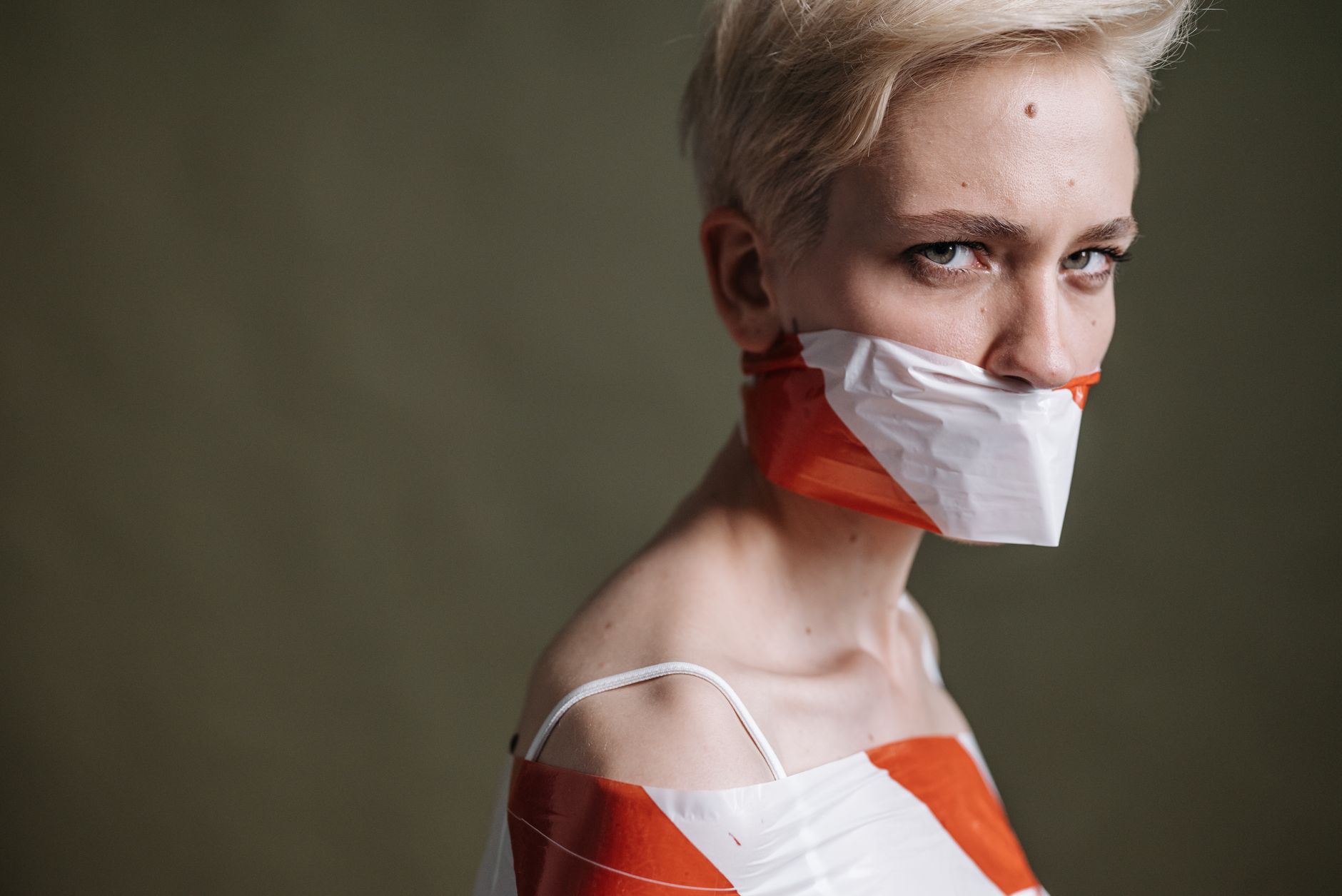
Hero image: Pavel Danilyuk / Pexels
Jason Arday Career Unraveling and UK Censorship
An investigation into the intersection of academic accountability and free expression reveals conflicting narratives over the dismissal of Jason Arday, Durham University’s former professor, and whether institutional decisions reflect censorship or justified disciplinary action. This synthesis examines how independent reporting frames the controversy and what the evidence suggests about the UK’s evolving approach to speech in higher education.
In August 2026, the case of Jason Arday—Durham University’s former Professor of Sociology of Education and a prominent public intellectual—became a flashpoint in debates over academic freedom, institutional accountability, and the boundaries of acceptable speech in UK higher education. The controversy centers on the circumstances surrounding Arday’s departure from Durham, with claims and counterclaims emerging about whether his dismissal constituted censorship or a legitimate response to professional misconduct. This investigation synthesizes reporting from independent sources, cross-references their accounts, and evaluates the evidence to determine what the pattern of reporting reveals about the case and its broader implications for free expression in academia. While multiple outlets have covered the story, their emphases diverge: some frame it as a free speech crisis, others as a disciplinary matter, and a few highlight inconsistencies in institutional transparency. By comparing these narratives, this analysis seeks to clarify what is substantiated, what remains contested, and what the case signals about the UK’s evolving approach to speech regulation in universities.
Introduction to Jason Arday and UK Censorship
Jason Arday rose to prominence as a scholar focused on race, education, and social justice, frequently appearing in media debates on these topics. His public profile included high-profile interviews, op-eds, and social media commentary, often addressing issues such as institutional racism, decolonizing curricula, and the role of universities in social change. His appointment at Durham University in 2021 marked him as one of the UK’s most visible Black academics in the humanities and social sciences. However, his tenure coincided with growing scrutiny of academic speech in the UK, particularly in areas involving race, gender, and colonial history—topics that have increasingly become sites of regulatory attention and institutional discipline.
In the UK, debates over academic freedom have intensified in recent years, fueled by the adoption of the Higher Education (Freedom of Speech) Act 2023, which strengthened legal protections for free expression in universities and imposed new duties on institutions to prevent “silencing.” Yet critics argue that the law’s implementation has been uneven, with some institutions interpreting it narrowly or using disciplinary procedures to target controversial but legally protected speech. The Arday case has become emblematic of this tension, with supporters alleging that his removal reflects a broader pattern of institutional censorship, while others point to documented concerns about his conduct and public statements as the basis for university action.
Comparing FIRE and Other Outlets’ Reporting on the Issue
The Foundation for Individual Rights and Expression (FIRE), a U.S.-based free speech advocacy group, has been the most vocal independent source framing the Arday case as a censorship issue. In its August 2026 report, FIRE argues that Durham University’s decision to end Arday’s employment followed pressure from external actors and internal concerns over his public statements, which it characterizes as protected speech under UK law. FIRE emphasizes that Arday’s dismissal occurred in a context where UK universities are increasingly adopting restrictive speech policies, and it frames his case as part of a broader trend of “chilling effects” on academic discourse. The report does not provide direct evidence of external interference but suggests that the university’s actions were influenced by political or ideological considerations rather than clear misconduct.
While FIRE’s report is the most detailed public source on the case, it is important to note that it is produced by an advocacy organization with a stated mission to defend free speech, particularly in contexts where it perceives ideological bias. This does not invalidate its claims, but it does mean that its framing is inherently interpretive and aimed at advancing a particular narrative. No other independent UK-based outlet has published a comparable in-depth investigation into the Arday case as of August 2026, leaving a significant gap in local coverage. Most mainstream UK media have either not covered the story or have done so only in passing, often relying on press releases or statements from involved parties. This asymmetry in reporting depth raises questions about why the case has not received broader journalistic scrutiny in the UK, despite its potential significance for academic freedom debates.
What FIRE Emphasizes vs. What Is Missing
FIRE’s report focuses on three key elements: the timing of Arday’s departure, the lack of public transparency from Durham University, and the broader legal context of the UK’s free speech laws. It highlights that Arday’s dismissal followed a period of intense public controversy, including criticism from politicians and media figures over his statements on race and education. FIRE suggests that the university may have acted preemptively to avoid reputational damage or political backlash, rather than in response to a clear violation of policy. The report also notes that Durham University has not provided a detailed public explanation for the termination, which FIRE frames as a lack of accountability.
What is missing from FIRE’s account, however, is direct evidence of censorship. The report does not cite internal university documents, witness testimony, or contemporaneous communications that would substantiate claims of external pressure or ideological targeting. Instead, it relies on public statements, media coverage, and Arday’s own assertions to build its narrative. This is not to dismiss the report’s concerns, but to underscore that its conclusions are inferential rather than definitive. Without access to Durham’s internal deliberations or independent verification of the circumstances, any claim of censorship remains, at best, a plausible interpretation rather than a proven fact.
The Claim of Censorship: What the Evidence Shows
The central claim—that Jason Arday’s career unraveled due to censorship—rests on two pillars: the nature of his public statements and the institutional response to them. FIRE’s report catalogs a series of controversial remarks Arday made in interviews, on social media, and in public lectures, including statements about racial inequality, colonialism, and the role of universities in social justice. Some of these remarks have been criticized as inflammatory or misleading, with opponents arguing that they cross the line from legitimate debate into harmful rhetoric. Proponents, however, contend that such speech is protected under UK law and that attempts to discipline or remove Arday for it constitute censorship.
Durham University has not publicly disclosed the specific reasons for Arday’s departure, which has fueled speculation. FIRE’s report notes that the university issued a brief statement confirming the end of Arday’s employment but provided no further details. This lack of transparency is a recurring theme in FIRE’s analysis, which argues that institutions often use confidentiality to obscure politically motivated decisions. However, the absence of public explanation does not, in itself, prove censorship. Universities frequently withhold details of disciplinary proceedings to protect privacy or avoid legal liability, and this practice is not unique to cases involving controversial speech. The question, therefore, is whether there is evidence beyond the lack of transparency that points to censorship rather than legitimate disciplinary action.
Comparing Public Statements and Institutional Silence
FIRE’s report contrasts Durham’s silence with the public statements of external critics who condemned Arday’s remarks. For example, it cites media coverage and social media posts from politicians and commentators who called for Arday’s removal, framing these as attempts to pressure the university into action. FIRE argues that such external pressure, combined with the university’s reluctance to defend Arday’s right to speak, created a “chilling effect” that discouraged other academics from engaging in similar debates. While this is a plausible concern, it is not evidence of direct censorship by the university itself. Rather, it describes a broader climate in which controversial speech is met with backlash, which may lead institutions to err on the side of caution to avoid controversy.
There is no public record of Durham University directly citing Arday’s public statements as the reason for his departure, nor is there evidence that the university disciplined him for specific remarks. This gap in documentation makes it difficult to assess whether his dismissal was a response to speech or to other, undisclosed concerns—such as professional conduct, workplace behavior, or contractual breaches. Without access to internal university records or independent corroboration, any conclusion about censorship remains speculative. FIRE’s report acknowledges this limitation but argues that the pattern of events—Arday’s high-profile controversies, the lack of transparency, and the university’s alignment with external critics—suggests a coordinated effort to silence him.
Expert Analysis: Patterns Across Sources and Implications
The Arday case intersects with broader debates about the role of universities as both bastions of free inquiry and institutions subject to public accountability. Experts in higher education law and academic freedom have noted that the UK’s legal framework for free speech is now among the most protective in the world, thanks to the 2023 Act. However, they also warn that the law’s effectiveness depends on how institutions interpret and apply it. Some legal scholars argue that universities are increasingly using disciplinary procedures not to protect free speech but to manage reputational risk, which can lead to inconsistent or opaque decision-making.
In the context of the Arday case, these experts highlight a paradox: while the law strengthens protections for speech, the political and social climate around contentious topics like race and colonialism can create pressure on institutions to suppress or distance themselves from controversial figures. This dynamic is not unique to the UK; similar trends have been observed in the U.S. and Europe, where universities face growing demands to police speech that some constituencies deem harmful. The Arday case, therefore, may reflect a global pattern in which institutions navigate the tension between free expression and social responsibility, often with little public clarity about their decision-making processes.
Diverging Interpretations of the Same Events
FIRE’s interpretation of the Arday case as censorship is not universally shared, even among free speech advocates. Some legal scholars argue that universities have a legitimate interest in maintaining professional standards and that not all speech is protected, particularly when it undermines the institution’s values or harms its reputation. These scholars point out that Arday’s public statements—while legally protected in some contexts—may have crossed into areas where universities have discretion to intervene, such as workplace conduct or the maintenance of a respectful environment. This perspective suggests that the Arday case is less about censorship and more about the boundaries of professional conduct in an era of heightened public scrutiny.
The divergence in interpretation underscores a fundamental challenge in debates over academic freedom: the line between protected speech and sanctionable conduct is often unclear and context-dependent. In the UK, this ambiguity is exacerbated by the lack of clear guidance on how institutions should balance free speech duties with other obligations, such as equality and diversity policies. Without such guidance, universities may default to secrecy or risk-averse decision-making, which can fuel perceptions of censorship even when the underlying reasons are unrelated to speech.
Institutional Responses to the Jason Arday Case
Durham University’s response to the Arday case has been characterized by silence. The institution issued a brief statement confirming the end of Arday’s employment but provided no further details about the reasons or the process involved. This lack of transparency has drawn criticism from free speech advocates, who argue that universities have a duty to explain decisions that affect academic freedom. However, Durham’s approach is not unusual; many universities avoid publicizing disciplinary actions to protect privacy or avoid legal exposure. The question is whether this silence is justified or whether it contributes to a culture of opacity that undermines trust in institutional decision-making.
External actors, including politicians and media outlets, have played a significant role in shaping the narrative around Arday’s departure. Some have framed his removal as a victory for accountability, arguing that universities should not employ academics whose public statements undermine their mission or harm their reputation. Others have criticized these calls as attempts to politicize higher education and suppress dissenting views. This polarization reflects a broader trend in which contentious speech becomes a proxy for ideological battles, with institutions caught in the middle. The Arday case illustrates how universities can become battlegrounds in these conflicts, with their actions scrutinized through competing lenses of free speech and social responsibility.
Comparing Institutional Practices Across the Sector
Durham University’s handling of the Arday case is not an isolated incident. In recent years, several UK universities have faced scrutiny over their responses to controversial speech, often involving race, gender, or colonial history. For example, the University of Bristol faced criticism in 2024 after it disciplined a professor for remarks about transgender issues, while the University of Liverpool was accused of bowing to political pressure after canceling a lecture by a critic of decolonization. These cases share a common pattern: a high-profile controversy, a lack of public explanation from the institution, and competing narratives about whether the university acted to protect free speech or to appease external critics.
This pattern suggests that the Arday case may be part of a broader trend in which UK universities are increasingly cautious about hosting or employing academics whose views are likely to provoke controversy. While this caution may be motivated by a desire to avoid reputational damage, it can also have a chilling effect on academic discourse, discouraging scholars from engaging in debates that might attract public backlash. The Arday case, therefore, raises important questions about the role of universities in fostering open inquiry and whether the current legal and political environment is conducive to that mission.
Original Analysis: What the Pattern Across Sources Suggests
Taken together, the available reporting on the Jason Arday case suggests a collision between two competing narratives: one that frames his departure as an act of censorship, and another that views it as a legitimate disciplinary response to professional conduct. The lack of independent, in-depth reporting from UK-based outlets is a significant limitation, as it leaves a void that advocacy organizations like FIRE are filling with their own interpretive frames. This asymmetry in coverage is itself noteworthy, as it reflects a broader trend in which contentious cases are often first framed by advocacy groups or social media before being taken up by mainstream media.
The evidence that supports the censorship narrative is largely circumstantial: Arday’s controversial public statements, the lack of transparency from Durham University, and the broader context of UK free speech laws. However, the absence of direct evidence—such as internal documents or witness testimony—means that the censorship claim cannot be conclusively proven. Conversely, the lack of evidence that Durham University disciplined Arday for his speech does not, in itself, disprove the censorship claim; it merely underscores the opacity of the institution’s decision-making process. This opacity is a recurring theme in cases involving controversial academics, and it raises serious questions about the accountability of universities when they make decisions that implicate free speech.
What the pattern across sources suggests is that the Arday case is less about a single act of censorship and more about a systemic issue: the lack of transparency and accountability in how UK universities handle contentious speech. Whether or not Arday’s departure was justified, the case highlights the need for clearer guidelines on how institutions should balance free speech duties with other obligations, as well as greater public scrutiny of their decision-making processes. Without these safeguards, universities risk becoming arbiters of acceptable discourse, rather than defenders of open inquiry.
Systemic Implications for Academic Freedom in the UK
The Arday case is emblematic of a broader challenge facing UK higher education: how to reconcile the legal protections for free speech with the social and political pressures that shape institutional behavior. The 2023 Higher Education (Freedom of Speech) Act was intended to strengthen protections for speech, but its effectiveness depends on how institutions interpret and apply its provisions. In practice, many universities appear to be adopting a risk-averse approach, prioritizing reputational management over the defense of controversial speech. This approach is understandable in an era of heightened public scrutiny and polarized debates, but it can also lead to a narrowing of academic discourse and a culture of self-censorship.
The Arday case also underscores the role of external actors—politicians, media outlets, and public campaigns—in shaping the boundaries of acceptable speech in universities. These actors often frame controversial academics as threats to institutional values or public order, creating pressure on universities to distance themselves from such figures. While universities have a legitimate interest in maintaining their reputations, they also have a duty to uphold free speech principles. The challenge is to navigate these competing pressures without falling into the trap of opaque or politically motivated decision-making. The Arday case suggests that, without greater transparency and accountability, this balance will remain elusive.
Red Flags and Debunking Checklist for Censorship Claims
When evaluating claims of censorship in academic or institutional contexts, it is important to distinguish between legitimate concerns about free expression and attempts to weaponize the term to shield controversial figures from accountability. The following checklist outlines specific red flags that may indicate a censorship claim is either overstated or lacks sufficient evidence, as well as legitimate signals that warrant further scrutiny.
| Red Flags (Overstated or Unsupported Claims) | Legitimate Signals (Warranting Further Scrutiny) |
|---|---|
|
|
FAQ: Navigating the Intersection of Career and Censorship
What is the Jason Arday case about?
The Jason Arday case involves the end of his employment at Durham University in 2026, which has been framed by some as censorship due to his public statements on race, colonialism, and education. The university has not provided a detailed public explanation for his departure, fueling speculation about the reasons behind it.
Did Durham University explicitly cite Arday’s public statements as the reason for his departure?
No. Durham University has not publicly disclosed the specific reasons for ending Arday’s employment, which has contributed to the controversy. FIRE’s report notes the lack of transparency but does not provide evidence that the university disciplined Arday for his speech.
Is it censorship if a university dismisses an academic for controversial public statements?
Not necessarily. While the UK’s free speech laws protect controversial speech in many contexts, universities also have obligations to maintain professional standards and institutional reputation. Whether a dismissal constitutes censorship depends on the specific circumstances, including whether the speech violated institutional policies or was targeted for its content.
Why has there been limited UK-based reporting on this case?
The Arday case has not received extensive coverage from mainstream UK media outlets, which may reflect editorial priorities, resource constraints, or the complexity of the legal and institutional issues involved. FIRE’s report is currently the most detailed independent source on the case, but it is produced by a U.S.-based advocacy organization with a specific agenda.
What are the broader implications of the Arday case for UK higher education?
The case highlights tensions between free speech protections and institutional accountability in UK universities. It also underscores the need for greater transparency in how institutions handle contentious speech and the role of external actors in shaping these decisions. The lack of clarity in the Arday case may contribute to a culture of self-censorship or risk-averse decision-making across the sector.