
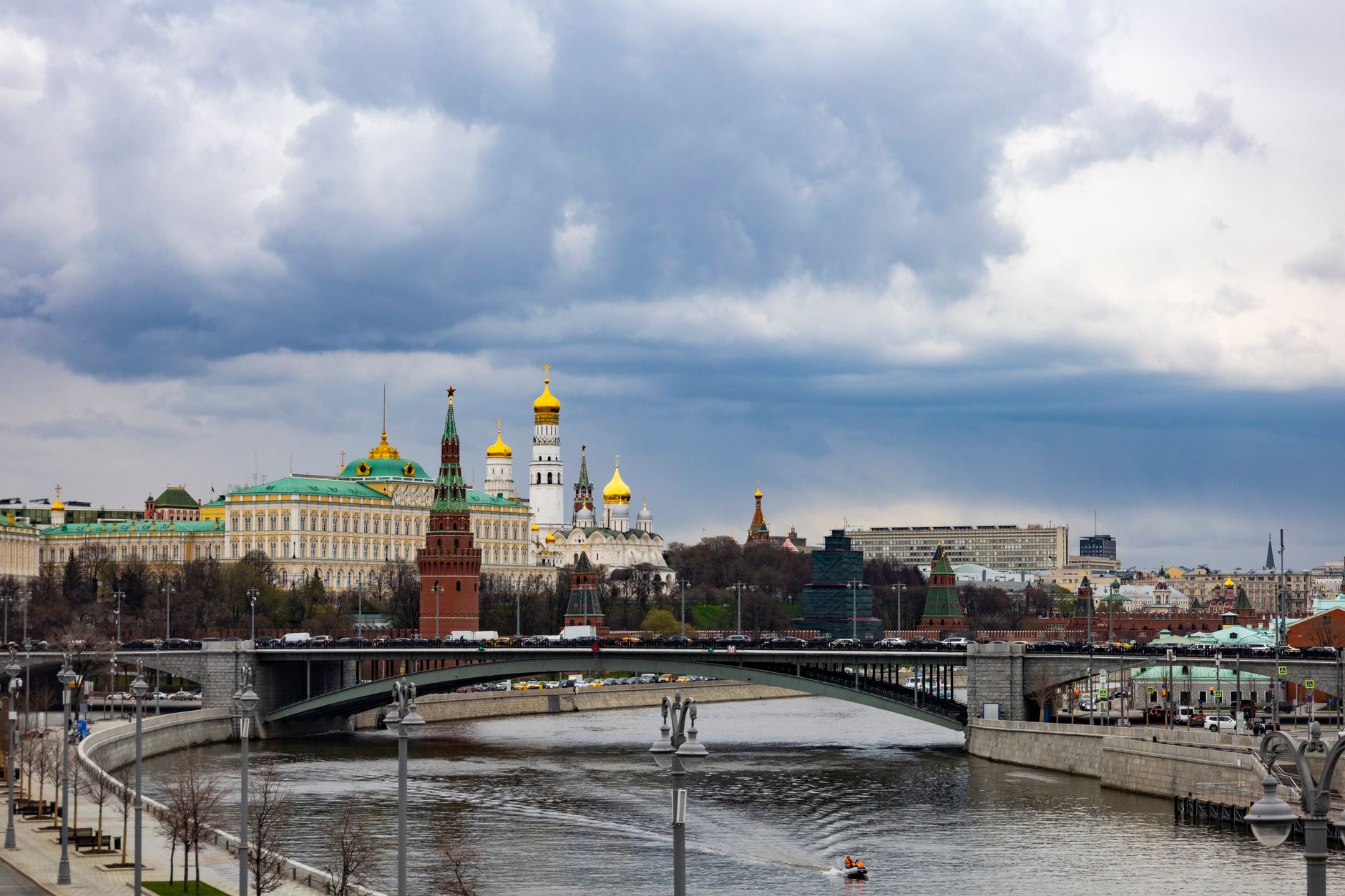
Hero image: Serg Alesenko / Pexels
Kaliningrad Kremlin Propaganda Address
EUvsDisinfo’s latest investigation traces how the Russian exclave of Kaliningrad has become a staging ground for targeted Kremlin narratives, blending local grievances with broader disinformation campaigns. The report highlights how geographic isolation and media control amplify the reach of pro-war and anti-Western messaging in the region.
Since the full-scale invasion of Ukraine began in 2022, the Russian government has systematically leveraged Kaliningrad—a militarized exclave bordering NATO members Poland and Lithuania—as a laboratory for propaganda aimed at both domestic and international audiences. EUvsDisinfo’s July 2026 report, “My home is not my castle: Kaliningrad as an address for Kremlin propaganda. Part 2,” examines how historical narratives, economic grievances, and military messaging are fused into coherent disinformation campaigns. This synthesis evaluates the report’s findings and contextualizes them within broader patterns of Russian influence operations in the Baltic region. It also assesses what corroborating evidence exists and where gaps remain in public documentation.
—
Introduction to Kremlin Propaganda in Kaliningrad
The Kaliningrad region, a Russian federal subject sandwiched between Poland and Lithuania, has long served as a strategic military outpost. Since 2016, Russia has stationed nuclear-capable missiles there, escalating tensions with NATO. Amid this militarization, EUvsDisinfo argues, Kaliningrad has also become a focal point for Kremlin-led propaganda designed to justify military buildup, delegitimize Western sanctions, and stoke anti-NATO sentiment. The region’s physical isolation from mainland Russia—accessible only by air or sea—makes it particularly dependent on state-controlled media, creating fertile ground for narrative control.
Kremlin propaganda in Kaliningrad operates through a mix of state television, regional news outlets, and social media amplification. EUvsDisinfo’s investigation highlights how local grievances—such as economic hardship and perceived NATO encirclement—are repackaged into national security narratives that reinforce support for the war in Ukraine and distrust of Western institutions. This approach is not unique to Kaliningrad but reflects a broader strategy observed in other Russian border regions, including Crimea and Donbas.
—
EUvsDisinfo Reporting on Kaliningrad Propaganda
EUvsDisinfo, the European Union’s East StratCom Task Force’s flagship platform, has documented over 200 cases of disinformation linked to Kaliningrad since 2022. In its July 2026 report, the outlet identifies three core narrative clusters: the “besieged fortress” myth, the “sanctions as Western aggression” frame, and the “NATO threat” narrative. These narratives are disseminated through outlets such as Kaliningradskaya Pravda, regional television channels, and Telegram channels with tens of thousands of subscribers.
According to EUvsDisinfo, one recurring theme is the portrayal of Kaliningrad as a “target of Western encirclement,” with maps and infographics suggesting imminent NATO invasion. These visuals are often shared without context, conflating routine military exercises with preparations for war. The report also notes the use of historical revisionism, including the rehabilitation of Soviet-era victories and the downplaying of wartime atrocities, to foster a sense of continuity between past and present conflicts.
EUvsDisinfo further observes that local influencers and veterans’ groups are co-opted into amplifying these narratives, lending them an air of authenticity. Social media posts frequently feature veterans’ testimonials about “protecting the motherland” from NATO, while economic content emphasizes the region’s dependence on Russian subsidies and the harm caused by Western sanctions. The report concludes that this coordinated messaging aims to consolidate public support for the war and reduce skepticism toward state policies.
—
Comparing Outlets on Kremlin Influence in Kaliningrad
EUvsDisinfo’s Focus on Narrative Coordination
EUvsDisinfo’s investigation stands out for its systematic cataloging of disinformation themes and their propagation channels. Unlike general news reports that might mention Kaliningrad in passing, EUvsDisinfo isolates specific narratives—such as the “besieged fortress” myth—and traces their evolution across multiple platforms. The report emphasizes the role of state-aligned media in Kaliningrad, noting that regional outlets often echo federal narratives with minimal adaptation. This top-down coordination is a hallmark of Kremlin influence operations, where local media act as amplifiers rather than originators of propaganda.
The report also highlights the use of Telegram as a primary vector for rapid dissemination. Unlike traditional media, Telegram channels allow for near-instant sharing of content, often with minimal fact-checking or editorial oversight. EUvsDisinfo documents how viral posts—such as claims that NATO was preparing to blockade Kaliningrad’s ports—are amplified by bots and coordinated networks, creating the illusion of widespread public concern.
Contextualizing EUvsDisinfo Within Broader Coverage
While EUvsDisinfo provides the most granular analysis of Kaliningrad-specific propaganda, broader international reporting has framed the region primarily as a geopolitical flashpoint rather than a propaganda hub. For example, Reuters and BBC Monitoring have covered Kaliningrad’s military buildup and its implications for NATO-Russia tensions, but they have devoted less attention to the internal messaging ecosystem. Reuters, in particular, has focused on the deployment of hypersonic missiles and the region’s role in Russia’s nuclear deterrence strategy, while BBC Monitoring has analyzed how Russian state media frames NATO exercises near Kaliningrad as “provocations.”
This divergence reflects a broader pattern in Western media: coverage tends to prioritize visible military or diplomatic developments over the subtler, long-term work of narrative control. EUvsDisinfo’s work fills this gap by documenting the content, channels, and audiences of Kaliningrad’s propaganda ecosystem. However, it does not provide quantitative data on audience reach or behavioral impact, leaving open questions about how many residents actually consume or believe these narratives.
—
The Claim of Kremlin Propaganda in Kaliningrad: What the Evidence Shows
The central claim—that the Kremlin is using Kaliningrad as a hub for targeted propaganda—is supported by EUvsDisinfo’s detailed case studies. The report presents multiple examples of disinformation, including:
- A fabricated story claiming that Poland was planning to seize the Suwałki Gap, a strategic land corridor connecting Kaliningrad to Belarus.
- A social media campaign alleging that Western sanctions had caused food shortages in Kaliningrad, despite official Russian data showing stable supply chains.
- A Telegram post featuring a doctored map purporting to show NATO troop movements near the Polish-Lithuanian border.
EUvsDisinfo also identifies recurring linguistic patterns, such as the use of terms like “fascists” to describe Ukrainian forces and “Russophobia” to characterize Western policies. These terms are not unique to Kaliningrad but are consistently deployed across Russian state media and aligned outlets in the region.
However, while EUvsDisinfo’s evidence is compelling, it is largely qualitative. The report does not provide audience metrics, engagement data, or psychological studies to assess the effectiveness of these narratives. This limitation is acknowledged in the report itself, which notes that further research is needed to determine how these messages influence public opinion or behavior in Kaliningrad. Without such data, it is difficult to quantify the scale of the phenomenon or its direct impact on regional stability.
—
Expert Response to Kremlin Propaganda in Kaliningrad
Independent analysts and regional experts have offered nuanced responses to EUvsDisinfo’s findings. Dr. Anna Matveeva, a senior research fellow at the University of Oxford’s Russia and Eurasia Programme, told EUvsDisinfo that Kaliningrad’s propaganda ecosystem is “a microcosm of broader Kremlin strategies,” where local narratives are tailored to exploit preexisting grievances. She noted that economic dissatisfaction—stemming from Kaliningrad’s reliance on federal subsidies and its exclusion from certain Russian markets—makes residents more receptive to messages that blame external actors for their woes.
Other experts, such as Dr. Margarita Zavadskaya of the Finnish Institute of International Affairs, have cautioned against overestimating the reach of these narratives. In a 2025 interview with Euronews, Zavadskaya argued that while propaganda is pervasive, its effects are uneven. “Many residents in Kaliningrad are more concerned with practical issues like inflation or healthcare than with geopolitical narratives,” she said. “The propaganda may reinforce existing beliefs but is less likely to convert skeptics.”
These expert perspectives underscore a key tension in assessing Kremlin propaganda: while the narratives are clearly present and coordinated, their actual impact on public opinion remains understudied. EUvsDisinfo’s report provides a strong foundation for further investigation but does not resolve this uncertainty.
—
Original Analysis: Patterns and Implications of Kremlin Propaganda
Taken together, EUvsDisinfo’s reporting and expert commentary suggest that Kaliningrad functions as a propaganda node—a localized hub where national narratives are adapted and amplified to serve strategic goals. This model is not unique to Kaliningrad but reflects a broader pattern observed in other Russian-controlled territories, including Crimea and the occupied regions of Ukraine. What distinguishes Kaliningrad, however, is its geographic and political liminality: it is both a Russian exclave and a potential flashpoint with NATO, making it a high-value target for influence operations.
One notable pattern is the blending of historical and contemporary grievances. EUvsDisinfo’s report highlights how Soviet-era victories are invoked to justify current military actions, while economic hardship is framed as a consequence of Western aggression rather than domestic mismanagement. This dual strategy serves to legitimize both past and present policies, creating a sense of historical inevitability around Russia’s actions. The use of veterans as messengers further enhances credibility, as their testimonials are difficult to dismiss as mere propaganda.
Another key insight is the role of digital platforms in accelerating disinformation. Telegram, in particular, has become a primary channel for propaganda in Kaliningrad, enabling rapid, low-cost dissemination of narratives. Unlike traditional media, Telegram allows for the creation of echo chambers where dissenting voices are marginalized. This is particularly effective in Kaliningrad, where internet penetration is high but independent journalism is scarce.
The implications of this propaganda ecosystem are twofold. First, it reinforces the Kremlin’s control over public discourse in the region, making it easier to mobilize support for military and political initiatives. Second, it exacerbates tensions with neighboring NATO states, as anti-Western narratives contribute to a climate of mistrust and hostility. While the direct impact on regional stability remains unclear, the potential for escalation—whether through miscalculation or deliberate provocation—cannot be ignored.
Finally, the Kaliningrad case underscores the need for targeted countermeasures. Unlike broader sanctions or diplomatic pressure, which often have limited effect in isolated regions, interventions that focus on media literacy, support for independent journalism, and engagement with local influencers may prove more effective. However, such efforts require sustained investment and coordination, which are often lacking in Western policy responses.
—
Red Flags and Debunking Checklist for Kremlin Propaganda
The following checklist is designed to help journalists, policymakers, and the public identify and critically assess Kremlin-aligned propaganda in Kaliningrad and similar contexts. These red flags are derived from EUvsDisinfo’s reporting and corroborated by expert analysis.
- Geographic Scaremongering: Claims that your region is under imminent threat from neighboring countries (e.g., “Poland plans to seize the Suwałki Gap”) without verifiable evidence or official confirmation. EUvsDisinfo notes that such narratives often rely on maps or infographics that distort reality.
- Sanctions Blame Game: Repeated assertions that Western sanctions—not domestic policies—are responsible for economic hardship, such as food shortages or price hikes. EUvsDisinfo documents how these claims are amplified despite official data showing stable supply chains.
- Historical Revisionism: The selective use of history to justify current actions, such as invoking Soviet victories to legitimize the war in Ukraine. This tactic is a hallmark of Kremlin-aligned narratives in Kaliningrad, according to EUvsDisinfo.
- Veteran Testimonials as Propaganda: The use of veterans’ voices to lend credibility to pro-war or anti-Western messages, often without critical context. EUvsDisinfo highlights how these testimonials are frequently shared on Telegram and regional media.
- Doctored Maps and Visuals: The circulation of altered maps or images purporting to show NATO troop movements, military exercises, or territorial claims. These visuals are often shared without disclaimers or source verification.
- Conspiracy Framing: The portrayal of Western institutions (e.g., NATO, the EU) as inherently hostile or “Russophobic,” often using loaded terms like “fascists” or “aggressors.” EUvsDisinfo identifies this as a recurring theme in Kaliningrad’s propaganda ecosystem.
- Platform Gaps in Local Media: The absence of independent or critical local journalism, leaving state-aligned outlets as the primary source of news. This creates an information vacuum that propaganda fills.
- Rapid Social Media Amplification: The use of Telegram, VKontakte, or other platforms to spread narratives quickly, often through coordinated networks or bots. EUvsDisinfo emphasizes the role of Telegram in Kaliningrad’s propaganda ecosystem.
—
Frequently Asked Questions about Kremlin Propaganda in Kaliningrad
Why is Kaliningrad a target for Kremlin propaganda?
Kaliningrad’s strategic importance—both as a military outpost and a potential flashpoint with NATO—makes it a high-value target for propaganda. The region’s isolation from mainland Russia and dependence on state-controlled media create an environment where narratives can be tightly controlled and amplified. EUvsDisinfo’s report highlights how local grievances, such as economic hardship and perceived encirclement, are repackaged into national security justifications for the war in Ukraine.
How does Kremlin propaganda in Kaliningrad differ from propaganda in other Russian regions?
While propaganda in regions like Crimea or Donbas often focuses on territorial claims and separatist narratives, Kaliningrad’s messaging is more explicitly tied to NATO-Russia tensions and the broader war in Ukraine. EUvsDisinfo notes that Kaliningrad’s narratives emphasize the region’s role as a “besieged fortress,” blending historical grievances with contemporary military threats. This reflects Kaliningrad’s unique geopolitical position.
Are there any independent media outlets in Kaliningrad that counter Kremlin narratives?
Independent journalism in Kaliningrad is extremely limited. Most local media outlets are state-aligned or controlled by regional authorities. EUvsDisinfo’s report does not identify any active independent outlets in the region, though some critical voices operate on social media or from abroad. This lack of alternative sources contributes to the effectiveness of propaganda.
How effective is Kremlin propaganda in Kaliningrad?
EUvsDisinfo does not provide quantitative data on audience reach or behavioral impact, but expert commentary suggests that while propaganda is pervasive, its effects are uneven. Dr. Margarita Zavadskaya has argued that many residents are more concerned with practical issues like inflation or healthcare than with geopolitical narratives. However, the narratives likely reinforce existing beliefs and contribute to a climate of mistrust toward the West.
What can be done to counter Kremlin propaganda in Kaliningrad?
Targeted interventions may include media literacy programs, support for independent journalism (even if based outside the region), and engagement with local influencers who can provide alternative perspectives. EUvsDisinfo’s report suggests that countering propaganda requires addressing the underlying grievances—such as economic dissatisfaction—while also providing accurate, accessible information. However, such efforts require sustained investment and coordination.
—