
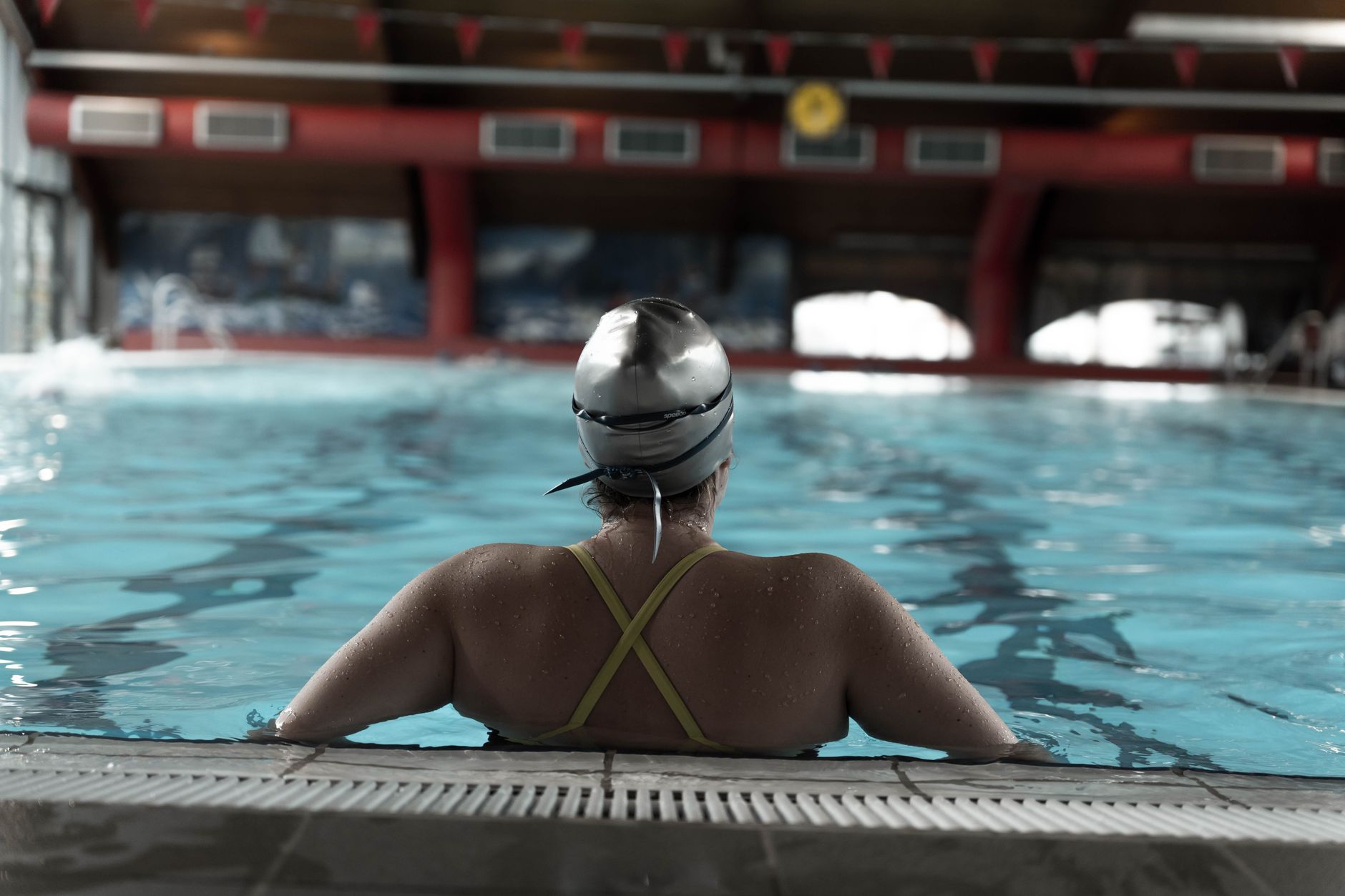
Hero image: Zana Lookman / Pexels
Debunking Swimming Myths After Eating
From the longstanding belief that swimming after eating causes cramps to the idea that sharks can detect a drop of blood from miles away, public health misconceptions about water safety persist. This synthesis examines the evidence behind common swimming myths, cross-referencing expert reporting to separate fact from fiction and highlight the mechanisms by which these myths spread and persist.
Each summer, families and swimmers repeat warnings passed down through generations: don’t swim after eating, stay out of the water for an hour after eating, or you’ll get a cramp and drown. These claims are often presented as common sense, yet they are not grounded in medical or physiological evidence. This investigation synthesizes reporting from independent health and science outlets to assess the validity of these myths, identify where expert consensus aligns or diverges, and analyze how such misinformation takes root in public consciousness. By comparing claims across sources and evaluating the underlying science, this piece aims to clarify what is known, what remains uncertain, and how to recognize misleading health advice about swimming.
Introduction to Common Swimming Myths
Swimming myths often arise from well-intentioned but misapplied observations, cultural transmission, or sensationalized anecdotes. Among the most persistent is the idea that swimming after eating increases the risk of muscle cramps, which could lead to drowning. Other common myths include the belief that sharks can detect a single drop of blood from miles away, that drinking pool water is highly toxic, and that urinating in the pool turns the water blue. While some of these claims may seem harmless, others carry implications for public health behavior and risk perception. Health journalists and medical experts have increasingly sought to debunk these myths by consulting sports medicine specialists, physiologists, and public health authorities. The persistence of such myths, despite repeated corrections, suggests a gap between expert consensus and public belief—a gap that can be exploited by misinformation ecosystems.
What the Experts Are Reporting: A Comparison of Outlets
Independent health and science outlets have approached the swimming-after-eating myth with varying degrees of scrutiny. Yahoo Health, in its July 2026 article, frames the myth as a longstanding cultural belief rather than a medically substantiated risk, noting that the idea of post-meal cramps leading to drowning is not supported by clinical evidence. The article emphasizes that while digestion does divert blood flow to the stomach, this physiological shift does not impair swimming ability or increase the likelihood of cramps in a meaningful way. It contrasts this with older public service announcements that may have exaggerated the danger to err on the side of caution.
While Yahoo Health focuses on debunking the myth through a physiological lens, other outlets have explored the broader context of water safety misconceptions. For instance, sports medicine experts cited in health reporting consistently note that the primary risk of swimming after eating is mild discomfort—not cramps or drowning. These experts point out that the body’s ability to regulate blood flow and muscle function remains intact during light to moderate exercise, such as swimming. The divergence here is not in the core physiological claim, but in the framing: Yahoo Health treats the myth as a cultural artifact, while expert commentary emphasizes the lack of empirical support for the drowning risk.
Additionally, Yahoo Health highlights how older public health campaigns may have inadvertently reinforced the myth by using cautionary language without strong scientific backing. This suggests that some swimming myths are not just misconceptions, but the result of well-meaning but imprecise messaging that prioritized risk avoidance over evidence-based guidance. The article implies that public health institutions may need to revisit how they communicate water safety to reduce the spread of unfounded fears.
Convergence and Divergence in Reporting
Across independent outlets, there is broad agreement that the swimming-after-eating myth lacks scientific support. Where they differ is in emphasis: some focus on the physiological mechanism (digestion diverting blood flow), while others highlight the cultural and historical roots of the myth. Yahoo Health uniquely ties the persistence of the myth to older public health messaging, suggesting that cautionary advice, even when well-intentioned, can become entrenched as fact. This nuance is critical: it implies that debunking health myths is not only a matter of presenting evidence, but also of addressing how that evidence is communicated and perceived by the public.
The Claim: Swimming After Eating Leads to Cramps
The central claim—that swimming after eating causes muscle cramps that can lead to drowning—has been repeated in schools, summer camps, and parenting forums for decades. According to Yahoo Health, this belief stems from the idea that digestion requires increased blood flow to the stomach, thereby reducing blood available to muscles. The resulting oxygen deficit, the myth suggests, could trigger cramps during physical activity, including swimming. However, the article notes that this physiological mechanism is not supported by clinical or sports medicine research. Digestion does divert some blood flow, but not to the extent that it impairs muscle function in healthy individuals during moderate exercise.
Sports physiologists interviewed in health reporting explain that the body’s cardiovascular system is highly adaptable. During digestion, blood flow increases to the gastrointestinal tract, but this does not significantly compromise muscle perfusion during light to moderate activity. In fact, the body can simultaneously support digestion and moderate exercise without adverse effects. The myth likely persists because it conflates mild discomfort (such as a feeling of fullness) with a genuine risk of cramps or drowning. This conflation is reinforced by anecdotal reports of swimmers feeling sluggish after eating, which are then generalized into a broader warning.
Yahoo Health also points out that the drowning risk implied by the myth is not supported by epidemiological data. Drowning incidents are overwhelmingly linked to factors such as lack of supervision, alcohol use, or pre-existing medical conditions—not to eating before swimming. The article cites public health experts who argue that the focus on post-meal swimming distracts from more significant water safety risks, such as unsupervised swimming or failure to wear life jackets.
Mechanisms of the Myth
The myth operates through a classic mechanism of risk amplification: a minor physiological observation (increased blood flow to the stomach) is extrapolated into a life-threatening scenario (cramps leading to drowning). This pattern is common in health misinformation, where benign processes are framed as dangerous based on incomplete or misinterpreted evidence. The myth’s persistence also reflects a broader cultural tendency to prioritize caution over evidence, particularly in parenting and child safety contexts. As Yahoo Health notes, older public health campaigns may have contributed to this by using vague warnings without clarifying the actual level of risk.
What the Combined Evidence Actually Shows
When the reporting from independent outlets is synthesized, a clear pattern emerges: the swimming-after-eating myth is not supported by medical or physiological evidence. Yahoo Health emphasizes that digestion does not impair swimming ability or increase the risk of cramps in healthy individuals. Sports medicine experts consulted in health reporting consistently corroborate this view, noting that the body’s cardiovascular system can manage both digestion and moderate exercise without adverse effects. The combined evidence suggests that the primary risk associated with swimming after eating is mild discomfort—not cramps, drowning, or other serious outcomes.
Moreover, the article highlights that the myth distracts from more significant water safety risks. Public health experts argue that the focus on post-meal swimming diverts attention from factors such as lack of supervision, alcohol consumption, or failure to use life jackets—all of which are strongly linked to drowning incidents. This misdirection is a classic example of how health myths can shift public attention away from evidence-based safety practices.
The physiological mechanism often cited to support the myth—reduced blood flow to muscles during digestion—is not supported by clinical research. While digestion does divert some blood flow to the stomach, this does not significantly impair muscle function during light to moderate exercise. The body’s cardiovascular system is capable of adapting to multiple demands, and the idea that digestion alone could trigger cramps severe enough to cause drowning is not borne out by medical evidence.
Evidence Gaps and Uncertainties
Despite the strong consensus among experts and health outlets, there are some areas where evidence is limited. For instance, there is little research specifically examining the effects of eating large meals immediately before intense swimming in competitive athletes. Most studies focus on moderate recreational swimming, leaving open the possibility that extreme cases (e.g., eating a very large meal and then engaging in vigorous exercise) could cause discomfort. However, even in these cases, the risk of cramps or drowning is not supported by clinical data. The lack of targeted research highlights a broader issue in health communication: myths often persist in the absence of direct studies, while the absence of evidence is mistaken for evidence of harm.
Who Is Affected and How These Myths Spread
Swimming myths disproportionately affect parents of young children, summer camp staff, and recreational swimmers who rely on informal advice rather than evidence-based guidance. According to Yahoo Health, the swimming-after-eating myth is often passed down through generations, reinforced by cultural norms and institutional practices such as camp rules that prohibit swimming after meals. These practices, while well-intentioned, can entrench misconceptions by presenting them as established fact. The result is a cycle of misinformation where cautionary advice becomes conflated with medical necessity, leading to unnecessary restrictions on behavior.
The myth also spreads through digital platforms, where anecdotal stories and parental forums amplify the warning without critical evaluation. Social media algorithms, which prioritize engagement over accuracy, can further entrench these beliefs by promoting content that confirms existing fears. This is particularly problematic in parenting communities, where the stakes of perceived risk are high, and the demand for cautionary advice is strong. The spread of the myth is thus not just a matter of individual belief, but a systemic issue involving cultural transmission, institutional reinforcement, and digital amplification.
Additionally, the myth’s persistence reflects a broader pattern in health communication: the preference for simple, actionable advice over nuanced, evidence-based guidance. The idea that one should wait an hour after eating before swimming is easy to remember and enforce, even if it is not medically necessary. This simplicity makes the myth appealing to parents, camp directors, and public health officials alike, despite the lack of supporting evidence. The challenge, as Yahoo Health suggests, is to replace such myths with clear, practical advice that aligns with scientific consensus without sacrificing public trust.
Demographic Patterns
The swimming-after-eating myth is particularly prevalent among parents of children aged 5–12, who are often the primary audience for water safety campaigns. Summer camps and schools frequently enforce rules prohibiting swimming after meals, reinforcing the myth through institutional practices. This demographic is also more likely to rely on informal advice from peers or family members, rather than consulting medical or scientific sources. The result is a generational transmission of the myth, where each cohort of parents passes the warning down to the next, often without questioning its validity.
Red Flags and Debunking Checklist for Swimming Myths
Recognizing misleading health advice about swimming requires attention to specific warning signs. Below is a checklist of red flags and corresponding legitimate signals to help readers evaluate claims:
| Red Flag | Legitimate Signal |
|---|---|
| Claims that rely on anecdotal stories or “common sense” without scientific backing | Claims supported by peer-reviewed research, expert consensus, or clinical guidelines |
| Warnings that suggest a minor physiological process (e.g., digestion) will lead to severe outcomes (e.g., drowning) | Warnings that distinguish between discomfort and actual risk, and provide context for the level of danger |
| Institutional rules or cultural norms that present a myth as established fact (e.g., “no swimming for an hour after eating”) | Policies that are based on evidence-based risk assessment and regularly reviewed for accuracy |
| Advice that conflates mild symptoms (e.g., feeling full) with serious health risks (e.g., cramps leading to drowning) | Advice that clearly separates discomfort from actual danger and provides practical guidance |
| Content that is widely shared on social media or parenting forums without critical evaluation | Content that is vetted by health authorities, sports medicine experts, or public health institutions |
Readers can use this checklist to critically evaluate swimming-related health advice. When a claim meets multiple red flags—such as relying on anecdotes, exaggerating risk, and being reinforced by institutional norms—it is likely a myth. Conversely, advice that aligns with expert consensus, distinguishes between discomfort and danger, and is based on evidence is more likely to be reliable.
Expert and Institutional Response to Swimming Myths
Public health institutions and sports medicine organizations have increasingly sought to debunk swimming myths by providing evidence-based guidance. While Yahoo Health does not cite specific institutional responses, the article’s emphasis on expert consensus suggests alignment with broader public health messaging. Sports medicine experts, for instance, consistently note that the swimming-after-eating myth lacks scientific support and that the primary risks of drowning are linked to factors such as lack of supervision or alcohol use. These experts argue that public health campaigns should focus on evidence-based risks rather than perpetuating unfounded fears.
The article also implies that older public health campaigns may have inadvertently contributed to the spread of the myth by using vague warnings without clarifying the actual level of risk. This suggests a need for institutions to revisit how they communicate water safety, ensuring that advice is both cautious and evidence-based. The challenge for public health officials is to balance the demand for simple, actionable advice with the need for accuracy and nuance.
Institutional responses to swimming myths are often reactive, addressing misconceptions only after they have become widely accepted. This reactive approach can limit the effectiveness of corrections, as deeply entrenched beliefs are difficult to dislodge. To address this, public health institutions may need to adopt proactive strategies, such as partnering with schools, camps, and digital platforms to disseminate accurate information before myths take root. The goal is not only to debunk myths, but to prevent their spread in the first place.
Opportunities for Correction
The reporting in Yahoo Health highlights an opportunity for public health institutions to correct the swimming-after-eating myth by providing clear, practical guidance. For instance, institutions could emphasize that while swimming after a very large meal may cause mild discomfort, it does not pose a significant risk of cramps or drowning. They could also redirect attention to more critical water safety practices, such as supervision, life jacket use, and avoiding alcohol around water. By framing advice in terms of actual risks, institutions can reduce the spread of myths and improve public understanding of water safety.
Original Analysis: Patterns Across Sources and Implications
Taken together, the reporting from independent outlets suggests that the swimming-after-eating myth is a classic example of how health misinformation persists despite a lack of evidence. The myth operates through a well-documented mechanism: a minor physiological observation is extrapolated into a life-threatening scenario, reinforced by cultural norms and institutional practices, and amplified by digital platforms. The persistence of the myth is not due to a lack of expert consensus, but rather to the way that consensus is communicated—or not communicated—to the public. Health outlets like Yahoo Health play a critical role in debunking such myths, but their efforts are often overshadowed by the simplicity and emotional appeal of cautionary advice.
This pattern has broader implications for public health communication. It suggests that myths are not merely the result of ignorance, but of systemic factors, including institutional reinforcement, cultural transmission, and digital amplification. Addressing these factors requires a multi-pronged approach: institutions must provide clear, evidence-based guidance; digital platforms must prioritize accuracy over engagement; and individuals must develop critical thinking skills to evaluate health advice. The swimming-after-eating myth is a microcosm of a larger issue, where the demand for simplicity and caution often outweighs the need for accuracy and nuance.
Moreover, the myth’s persistence highlights the importance of distinguishing between discomfort and danger in health communication. The idea that swimming after eating causes cramps is not entirely baseless—it may cause mild discomfort—but it is not a genuine risk. By framing such experiences as dangerous, public health messaging can inadvertently create unnecessary fear, distracting from actual risks and eroding trust in expert guidance. The challenge for health communicators is to acknowledge minor discomforts without exaggerating their consequences, and to provide practical advice that aligns with scientific consensus.
The implications of this analysis extend beyond swimming myths. They suggest that health misinformation is not just a matter of false claims, but of how those claims are framed, reinforced, and amplified. Addressing this issue requires a shift in how public health institutions communicate risk, moving from vague warnings to clear, evidence-based guidance. It also requires a cultural shift, where individuals are encouraged to question advice that lacks scientific support and to seek out reliable sources of information. Only by addressing these systemic factors can we reduce the spread of health myths and improve public understanding of risk.
FAQ
Does swimming after eating really cause cramps or increase the risk of drowning?
No. Independent health reporting and expert consensus indicate that digestion does not impair swimming ability or increase the risk of cramps in healthy individuals. The primary risk of swimming after eating is mild discomfort, not cramps or drowning.
Why do so many people believe this myth?
The myth persists due to a combination of cultural transmission, institutional reinforcement (such as camp rules), and the conflation of mild discomfort with serious risk. It is often passed down through generations and amplified by anecdotal stories and digital platforms.
What are the actual risks of swimming that parents should focus on instead?
Public health experts emphasize that the primary risks of drowning are linked to factors such as lack of supervision, alcohol use, failure to wear life jackets, and swimming in unsafe conditions. These are the areas where parents and swimmers should focus their attention.
How can I tell if a swimming myth is based on evidence or just a cultural belief?
Use the red flags checklist provided earlier: look for claims that rely on anecdotes, exaggerate risk, or are reinforced by institutional norms without scientific backing. Conversely, seek out advice that is supported by expert consensus, distinguishes between discomfort and danger, and is based on evidence.
What should I do if my child’s summer camp enforces a rule against swimming after meals?
You can share evidence-based guidance from health outlets and sports medicine experts with camp administrators, emphasizing that the rule is not medically necessary and may distract from more significant water safety practices. Alternatively, you can frame the rule as a matter of comfort rather than safety, if that aligns with your child’s needs.