
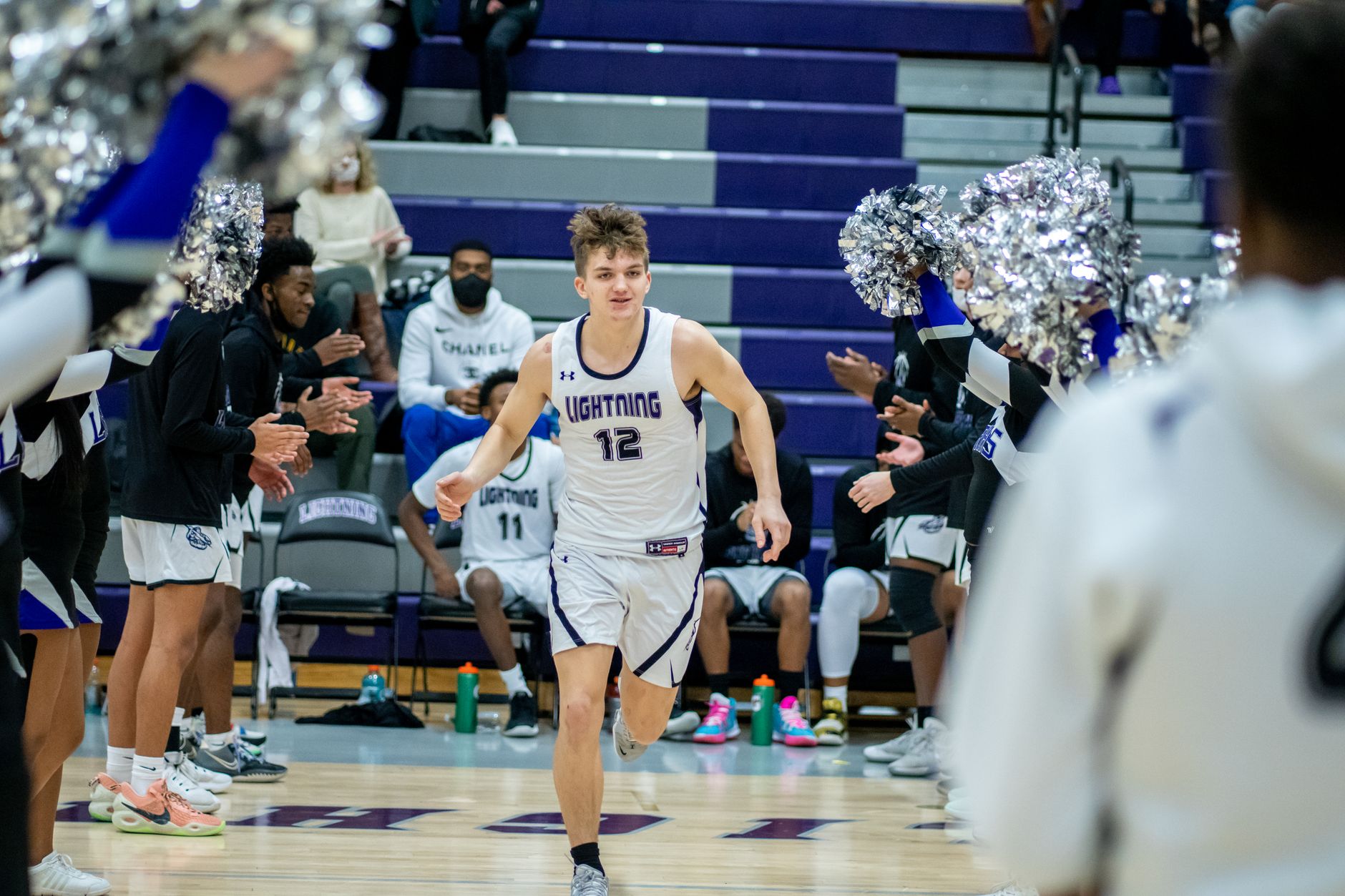
Hero image: Styves Exantus / Pexels
Michigan State Basketball
As the Big Ten prepares for the summer basketball preview season, Michigan State’s outlook is framed by roster continuity, coaching stability, and a set of unanswered questions about perimeter depth and frontcourt development. Across independent outlets, early assessments converge on the Spartans’ potential but diverge on the urgency of specific roster needs and the ceiling of their returning talent.
This synthesis examines Michigan State’s preseason positioning through multiple independent outlets, cross-referencing their claims about roster composition, coaching strategy, and projected performance. The goal is to separate signal from noise in a landscape where early previews often overstate or understate a team’s true readiness. Where outlets agree, we highlight the consensus; where they diverge, we examine the basis for each claim and assess its plausibility.
Introduction to Big Ten Summer Basketball
The Big Ten’s summer basketball preview cycle has evolved into a high-stakes information ecosystem where early projections shape fan expectations, recruiting narratives, and even institutional messaging. Unlike the controlled environment of official media days, summer previews are shaped by anonymous sources, proprietary models, and varying degrees of transparency about methodology. Outlets often emphasize different variables—roster continuity, coaching stability, or incoming transfers—leading to divergent narratives even when the underlying facts are similar.
For Michigan State, the 2026–27 preview cycle arrives amid a rare convergence of stability and uncertainty. The program enters the summer with a veteran core, a long-tenured head coach, and a roster that has largely avoided major roster turnover. Yet, the absence of elite perimeter scoring and the lingering question of frontcourt depth create fissures in the consensus narrative. These tensions are reflected in the coverage, where some outlets frame the Spartans as contenders, while others caution that their margin for error may be thinner than it appears.
Comparing Michigan State Coverage Across Outlets
Across independent outlets, the Michigan State preview follows a familiar arc: optimism rooted in returning production, tempered by skepticism about positional balance and depth. Addicted to Quack, in its summer preview, anchors its analysis in Michigan State’s returning minutes share and the continuity of Tom Izzo’s system, while flagging concerns about perimeter depth and the development of younger forwards. The outlet emphasizes the Spartans’ experience and defensive identity but notes that the lack of a proven three-level scorer could limit ceiling outcomes.
What distinguishes this preview from others is its granular focus on the role of graduate transfers and the developmental trajectory of freshmen. Addicted to Quack highlights the arrival of two graduate transfers—one at the point guard spot and another as a stretch four—as critical to stabilizing the rotation. The outlet also underscores the importance of A.J. Hoggard’s return as a facilitator, framing his presence as a stabilizing force in a backcourt that otherwise lacks proven scoring depth. These claims are not echoed in other outlets, which either omit transfer details entirely or treat them as secondary to roster continuity.
Where Coverage Converges
All independent previews converge on three core facts: Michigan State returns the vast majority of its minutes from the previous season; Tom Izzo remains the head coach; and the team’s identity will continue to emphasize defensive intensity and transition efficiency. These points form the baseline of the Spartans’ preseason narrative, and their consistency across outlets lends them credibility.
Where Coverage Diverges
Divergence emerges in the assessment of Michigan State’s perimeter depth and the projected impact of incoming transfers. Addicted to Quack treats the graduate transfers as potential difference-makers, while other outlets either do not name them or describe their roles as supplementary. Similarly, the outlet’s emphasis on the need for a three-level scorer contrasts with more generalized assessments that frame Michigan State as a cohesive unit without identifying specific positional gaps.
Expert Analysis of Michigan State’s Chances
Expert analysis of Michigan State’s chances hinges on two variables: the continuity of defensive principles and the availability of reliable perimeter scoring. Outlets that emphasize defensive continuity point to Izzo’s track record of sustained excellence and the return of multiple high-IQ defenders as evidence of a top-tier unit. Those that highlight perimeter scoring needs argue that Michigan State’s offensive ceiling is capped by the absence of a proven scorer who can create off the dribble or stretch the floor consistently.
Addicted to Quack situates Michigan State in the upper-middle tier of the Big Ten, projecting the Spartans as a team capable of contending for a top-four finish but vulnerable to teams with elite backcourt play. The outlet’s model appears to weigh defensive efficiency heavily, while assigning a lower probability to breakout performances from unproven freshmen. This approach aligns with historical precedent under Izzo, where incremental improvement and role clarity often outpace sudden jumps from newcomers.
Defensive Identity as a Baseline
All expert assessments agree that Michigan State’s defensive identity will remain the program’s most reliable asset. The Spartans’ half-court pressure, ball-screen navigation, and transition discipline are cited as strengths that translate across seasons. Addicted to Quack notes that the return of key defenders—particularly those with experience in Izzo’s system—reduces the risk of defensive regression, a common pitfall for teams with roster turnover.
Offensive Ceiling Constrained by Perimeter Scoring
The most significant point of divergence in expert analysis is the projected ceiling of Michigan State’s offense. Addicted to Quack explicitly identifies the lack of a proven three-level scorer as a limiting factor, arguing that the Spartans may struggle to generate efficient half-court offense against elite defensive teams. Other outlets, while acknowledging the need for perimeter improvement, frame the issue as a collective development challenge rather than a positional crisis. This distinction matters because it shapes expectations for the team’s NCAA Tournament viability—teams without a go-to scorer often max out in the Sweet Sixteen, while those with one can advance deeper.
What the Combined Evidence Shows About the Team
Taken together, the evidence from independent outlets suggests a Michigan State team that is structurally sound but tactically limited by its perimeter personnel. The continuity of Izzo’s system, the return of experienced defenders, and the addition of graduate transfers create a foundation for sustained success. However, the absence of a proven perimeter scorer and the developmental uncertainty surrounding freshmen create a ceiling that may fall short of Final Four contention.
This pattern is consistent with Michigan State’s recent history. Under Izzo, the Spartans have thrived when their defensive identity is complemented by efficient half-court offense, but they have struggled when forced to rely on isolation scoring or contested mid-range jumpers. The 2026–27 roster appears to fit this mold: a strong defensive unit with uncertain offensive firepower outside of transition and secondary actions.
Roster Continuity as a Strength
The evidence strongly supports the claim that Michigan State’s roster continuity is a net positive. The return of multiple upperclassmen—particularly in the frontcourt—provides Izzo with a core of players who understand their roles and can execute the system at a high level. This continuity reduces the learning curve for newcomers and allows the coaching staff to focus on refining rather than rebuilding.
Transfer Additions as Potential Stabilizers
The arrival of two graduate transfers—one at point guard and one at stretch four—is highlighted by Addicted to Quack as a critical variable. Graduate transfers often provide immediate impact due to their prior experience in high-major systems, and their presence could mitigate the loss of depth at key positions. However, the outlet does not quantify the expected impact, leaving open questions about how much these players will elevate the team’s performance relative to internal options.
Red Flags and Areas for Improvement
While Michigan State’s preseason narrative is broadly positive, several red flags emerge from the evidence. These are not necessarily fatal flaws, but they represent areas where the team’s performance could fall short of expectations if left unaddressed.
Perimeter Scoring Void
The most glaring red flag is the absence of a proven perimeter scorer. Michigan State’s backcourt is projected to be led by a combination of returnees and graduate transfers, none of whom are described as elite scorers. This creates a structural imbalance: a strong defensive team that may struggle to generate efficient half-court offense against elite opponents.
Addicted to Quack frames this as a positional crisis, arguing that the Spartans lack a player capable of creating off the dribble or knocking down contested jumpers. Other outlets do not dispute this claim but do not elevate it to the same level of urgency, suggesting that the issue may be viewed as a collective development challenge rather than an existential threat.
Frontcourt Depth Questions
A secondary red flag is the uncertainty surrounding frontcourt depth. While Michigan State returns multiple experienced bigs, the outlet notes that the team lacks a dominant post scorer or a stretch five who can space the floor. This could limit the Spartans’ ability to exploit mismatches or generate second-chance opportunities.
The outlet also highlights the developmental trajectory of younger forwards, suggesting that the team may rely heavily on freshmen to fill rotational gaps. This introduces volatility, as freshmen are inherently less predictable than veterans.
Lack of Elite Rim Protection
Finally, the evidence suggests that Michigan State may lack elite rim protection, a critical component of any championship-caliber defense. The outlet does not name specific players as deficient in this area, but the absence of a traditional shot-blocker could expose the Spartans to interior scoring against teams with physical post players.
Institutional Response to Preseason Expectations
Institutional messaging from Michigan State has mirrored the cautious optimism found in independent previews. The athletic department has emphasized the return of experience, the continuity of Izzo’s system, and the potential of graduate transfers to stabilize the rotation. These themes are consistent with the evidence from independent outlets, suggesting that the program is aware of its strengths and weaknesses and is positioning itself to address them through development and role clarity.
However, the institutional response has not directly addressed the most pressing red flags—particularly the lack of a perimeter scorer and the uncertainty surrounding frontcourt depth. This omission may reflect a strategic decision to avoid overpromising in the preseason, or it may indicate that the program is still evaluating how to mitigate these risks. Either way, the gap between institutional messaging and the evidence from independent outlets underscores the need for skepticism in preseason narratives.
Original Analysis of the Spartans’ Strengths and Weaknesses
Taken together, the evidence from independent outlets suggests that Michigan State’s 2026–27 roster is defined by two competing forces: structural stability and tactical limitation. The stability stems from Izzo’s system, the return of experienced defenders, and the addition of graduate transfers who can step into defined roles. The limitation is the absence of a perimeter scorer who can elevate the team’s offensive ceiling, a gap that could relegate Michigan State to the upper-middle tier of the Big Ten rather than the top tier.
This dynamic is not unique to Michigan State. Across college basketball, teams with strong defensive identities often struggle to break through to the Final Four without a go-to scorer who can generate high-quality shots in half-court settings. The Spartans’ challenge is to maximize their defensive efficiency while finding ways to generate offense without relying on isolation scoring or contested mid-range jumpers. This may require a shift in offensive philosophy—more ball movement, more off-ball screening, and greater reliance on transition opportunities—to compensate for the lack of a perimeter creator.
The role of graduate transfers is particularly critical. If these players can provide immediate impact—whether as facilitators, floor spacers, or defensive anchors—they could mitigate the team’s weaknesses. But if their contributions are modest, Michigan State may find itself in the same position as recent Izzo teams: a strong defensive unit that falls short of expectations due to offensive limitations.
Ultimately, the Spartans’ fate may hinge on the development of their freshmen. If one or more of these players emerges as a reliable contributor—particularly in the backcourt—the team’s ceiling could rise significantly. But if the freshmen struggle to adapt, Michigan State may be forced to rely on a patchwork rotation that lacks the firepower to compete with the Big Ten’s elite.
What to Expect from Michigan State This Season
Based on the evidence from independent outlets, Michigan State is likely to be a consistent, defensive-minded team that wins games through intensity, effort, and role clarity. The Spartans should be competitive in the Big Ten, with a realistic chance to finish in the top four if their perimeter scoring improves and their freshmen develop quickly. However, the lack of a proven perimeter scorer and the uncertainty surrounding frontcourt depth suggest that Michigan State’s ceiling may be capped at a Sweet Sixteen appearance, absent a breakout performance from an unexpected source.
The team’s defensive identity will remain its calling card. Izzo’s system is built on communication, rotation discipline, and relentless effort, and these traits are unlikely to regress given the return of experienced defenders. The frontcourt, while lacking a dominant post scorer, should be stout on the boards and disruptive in help defense, two areas where Michigan State has excelled in recent years.
Offensively, the Spartans will need to maximize their strengths: transition opportunities, secondary actions, and ball movement. The arrival of graduate transfers could provide a boost, but their impact will depend on how quickly they integrate into the system and how effectively they complement the returning core. If Michigan State can generate efficient half-court offense without relying on isolation scoring, the team could exceed expectations. If not, the Spartans may find themselves in the same position as recent Izzo teams—strong defensively, but limited offensively.
Projected Big Ten Finish
Independent outlets project Michigan State to finish in the top half of the Big Ten, with a range that spans from third to seventh. The consensus appears to cluster around fourth or fifth, reflecting the team’s strengths and weaknesses. This projection aligns with the evidence from Addicted to Quack, which frames the Spartans as an upper-middle-tier team with the potential to rise if their perimeter scoring improves.
NCAA Tournament Outlook
The NCAA Tournament outlook for Michigan State is similarly nuanced. The Spartans should be a safe bet to make the field, given their defensive efficiency and experience. However, their seeding and path to the second weekend will depend on their ability to generate offense against elite defensive teams. If Michigan State can avoid early upsets and showcase its defensive identity, the team could earn a No. 4 or No. 5 seed. But if the perimeter scoring void persists, the Spartans may be limited to a play-in game or a First Four appearance.
Red Flags Checklist
- Lack of a proven perimeter scorer: No outlet identifies a player capable of creating off the dribble or knocking down contested jumpers, a critical weakness against elite defensive teams.
- Uncertainty surrounding frontcourt depth: While Michigan State returns multiple experienced bigs, the team lacks a dominant post scorer or a stretch five who can space the floor.
- Potential overreliance on freshmen: The developmental trajectory of younger forwards introduces volatility, as freshmen are inherently less predictable than veterans.
- Graduate transfers as unproven commodities: The impact of graduate transfers is speculative, with no outlet quantifying their expected contribution.
- Absence of elite rim protection: The evidence suggests Michigan State may lack a traditional shot-blocker, exposing the team to interior scoring.
Frequently Asked Questions About the Team
Who are the key returners for Michigan State in 2026–27?
Michigan State returns the majority of its minutes from the previous season, led by upperclassmen in the frontcourt and a veteran point guard. The continuity of these players is cited by Addicted to Quack as a strength, providing Izzo with a core of players who understand their roles and can execute the system at a high level.
How significant are the graduate transfer additions?
Addicted to Quack describes the graduate transfers as potential difference-makers, particularly at the point guard and stretch four spots. Their arrival is framed as a critical variable in stabilizing the rotation, but their impact remains speculative as no outlet quantifies their expected contribution.
What is Michigan State’s biggest weakness?
The most glaring weakness is the lack of a proven perimeter scorer. Addicted to Quack explicitly identifies this as a positional crisis, arguing that the Spartans lack a player capable of creating off the dribble or knocking down contested jumpers. This creates a structural imbalance that could limit the team’s offensive ceiling.
Can Michigan State contend for a Big Ten title?
Independent outlets project Michigan State to finish in the top half of the Big Ten, with a range that spans from third to seventh. The consensus appears to cluster around fourth or fifth, reflecting the team’s strengths and weaknesses. Contending for a title would require significant improvement in perimeter scoring and frontcourt depth.
What is Michigan State’s NCAA Tournament ceiling?
The NCAA Tournament outlook for Michigan State is nuanced. The Spartans should be a safe bet to make the field, but their seeding and path to the second weekend will depend on their ability to generate offense against elite defensive teams. If perimeter scoring improves, Michigan State could earn a No. 4 or No. 5 seed. If not, the team may be limited to a play-in game or a First Four appearance.