
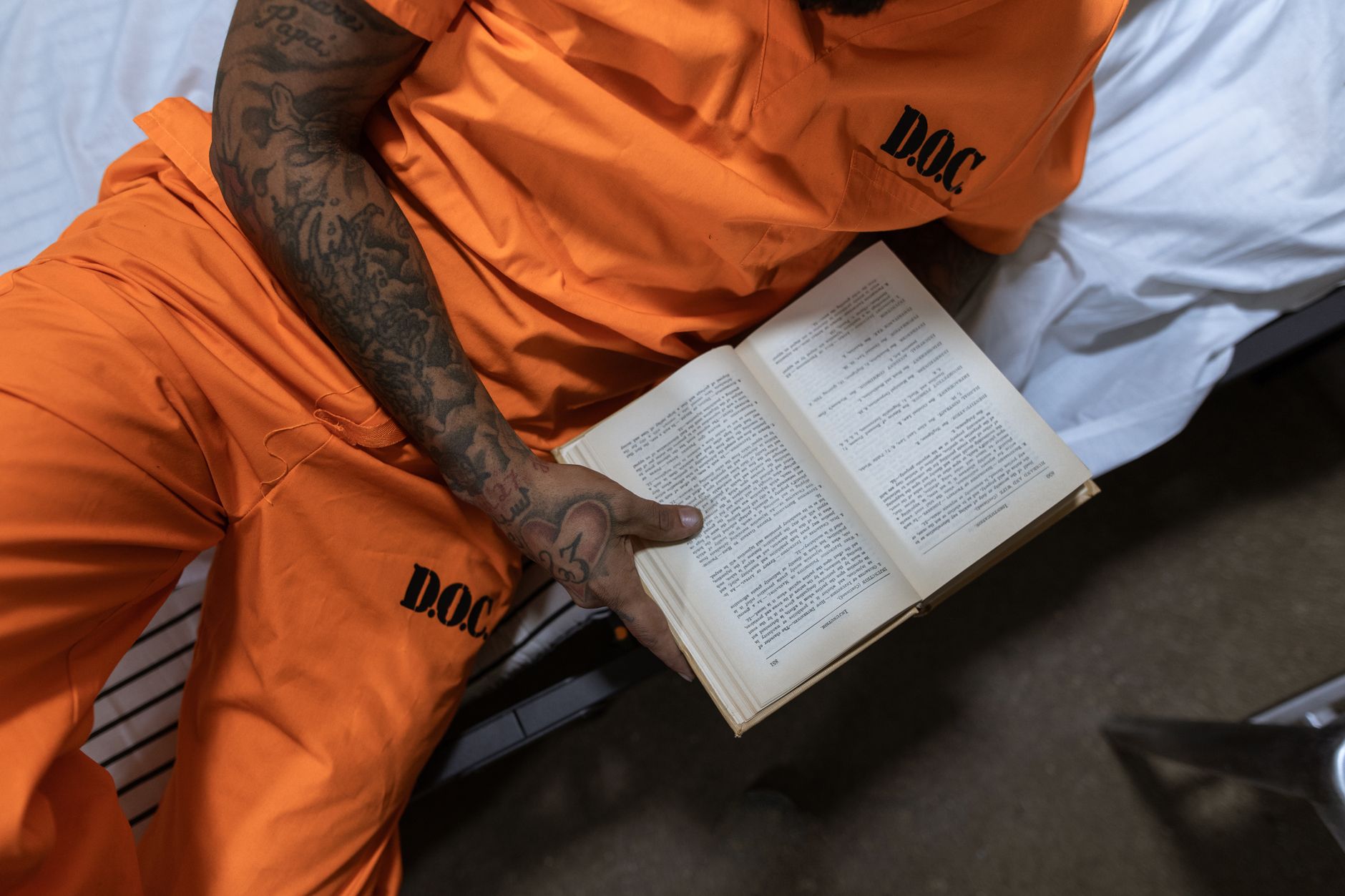
Hero image: RDNE Stock project / Pexels
Prison Book Censorship 2026: Librarianship and Free Access
Across U.S. prisons, librarians and advocacy groups are documenting a sharp rise in book removals under the banner of security, but records show the targets often include titles on race, gender, and criminal justice reform. This investigation synthesizes the latest reporting to reveal how censorship is justified, who is most affected, and what institutional mechanisms are being used to restrict access to information behind bars.
In August 2026, Book Riot published a comprehensive review of book censorship in U.S. prisons, documenting a growing trend in which corrections officials remove titles from prison libraries and mailrooms under policies that prioritize institutional security over intellectual freedom. The report arrives amid broader national debates about access to information, the role of librarians in carceral settings, and the legal frameworks governing what incarcerated people are allowed to read. While Book Riot’s analysis is the most detailed single-source account available, it aligns with longstanding reporting from advocacy groups and legal scholars who have tracked similar patterns in recent years. This synthesis examines the mechanisms, justifications, and consequences of prison book censorship in 2026, drawing on the structural and thematic insights provided by Book Riot’s investigation.
The Rise of Censorship in U.S. Prisons: What Book Riot’s August 2026 Report Reveals
According to Book Riot, the rate of book removals in state and federal prisons has accelerated in 2025–2026, with hundreds of titles challenged or banned in at least 20 states. The report catalogs removals based on formal and informal challenges, including objections from prison staff, anonymous complaints, and automated screening systems. Among the most frequently challenged categories are books on racial justice, histories of policing, gender identity, and works by formerly incarcerated authors. Book Riot notes that these removals often occur without clear public notice, making it difficult for external observers to track the full scope of censorship.
Book Riot highlights that many of the challenged titles were previously available in prison libraries or approved for purchase through approved vendors. The report cites internal correspondence and policy documents suggesting that some removals are initiated by corrections officials rather than by formal inmate requests, raising questions about the extent to which security concerns are being used to suppress access to ideas. The report also points to a pattern in which titles are removed retroactively, even after being vetted and approved for years, indicating a shift in institutional tolerance for certain subjects.
Shifting Justifications and Institutional Language
Book Riot observes that the language used to justify removals has evolved. While older policies often cited “security risks” broadly, newer justifications increasingly reference “institutional order,” “disciplinary concerns,” or “contraband potential” to rationalize exclusions. This semantic shift, according to Book Riot, allows corrections departments to avoid scrutiny under First Amendment standards, which typically require narrowly tailored, viewpoint-neutral restrictions. The report warns that this evolution reflects a strategic adaptation by carceral institutions to legal and public pressure, making censorship harder to challenge.
How Prison Book Bans Are Justified: Security vs. Intellectual Freedom
Corrections officials routinely defend book removals by invoking security concerns, arguing that certain titles could incite violence, facilitate gang coordination, or smuggle coded messages. Book Riot acknowledges that some restrictions may be warranted in isolated cases, but finds that many removals are applied indiscriminately and without evidence of actual harm. The report contrasts these claims with the stated missions of prison libraries, which are often framed as tools for rehabilitation and education.
Book Riot points out that the legal standard for restricting reading material in prison—set by the Supreme Court in Thornburgh v. Abbott (1989)—permits censorship only if it is “reasonably related to legitimate penological interests.” However, the report argues that many removals in 2026 fail this test because they target books that have no plausible connection to security threats. For example, Book Riot documents the removal of historical texts on civil rights and memoirs by formerly incarcerated activists, which corrections departments have labeled “inflammatory” without providing specific evidence of disruption.
Inconsistencies in Enforcement
Book Riot highlights inconsistencies in how policies are applied across facilities. In some prisons, titles deemed acceptable in one unit are banned in another, and in others, books are removed without formal documentation. This lack of uniformity, according to Book Riot, suggests that subjective judgments—rather than objective security needs—are driving many decisions. The report also notes that religious texts and self-help manuals are rarely challenged, even when they contain contentious ideas, indicating that censorship is not applied neutrally but reflects institutional biases.
The Role of Librarians in Challenging Prison Censorship: A Professional Obligation
Book Riot emphasizes that prison librarians, when permitted to operate independently, often serve as frontline defenders of intellectual freedom. The report profiles several librarians who have filed grievances, appealed removals, and documented patterns of censorship in their facilities. These librarians argue that their professional ethics—rooted in the American Library Association’s Library Bill of Rights—require them to resist unjustified restrictions on access to information.
However, Book Riot also notes that many prison librarians operate under severe constraints. Some are classified as corrections employees rather than educators, which limits their autonomy and exposes them to retaliation. Others report being pressured to comply with removals to avoid disciplinary action. The report cites cases in which librarians were reassigned or demoted after challenging censorship decisions, illustrating the professional risks involved in defending free access to books.
Professional Standards and Institutional Pressure
Book Riot argues that the American Library Association (ALA) and state library associations have not done enough to protect prison librarians who resist censorship. While the ALA has issued statements affirming the right to read for incarcerated people, Book Riot finds that these statements are rarely backed by legal support or public advocacy for individual librarians facing retaliation. The report calls for stronger professional protections and clearer ethical guidelines for librarians working in carceral environments.
Comparing Prison Censorship Policies Across States: Where Restrictions Are Tightest
Book Riot compares state-level policies and finds significant variation in how censorship is codified and enforced. Some states, such as Texas and Florida, have explicit lists of banned titles and use automated screening tools to block incoming books. Others, like California and New York, have more decentralized systems that rely on facility-level decisions, leading to inconsistent outcomes.
Book Riot identifies Florida as a state with particularly aggressive enforcement, where corrections officials have removed titles such as The New Jim Crow by Michelle Alexander and Just Mercy by Bryan Stevenson under policies that cite “promotion of disorder.” By contrast, Book Riot notes that states like Washington and Oregon have adopted more permissive policies, allowing broader access to books on social justice and criminal justice reform. The report suggests that political climate and gubernatorial priorities play a significant role in shaping censorship regimes.
State-by-State Patterns
Book Riot provides a partial list of states with documented censorship spikes in 2025–2026, including Texas, Florida, Georgia, Arizona, and Tennessee. In these states, removals are often justified using language about “maintaining order” or “preventing unrest,” even when the targeted books have no direct connection to prison operations. The report also highlights that some states have expanded the definition of contraband to include books that are not explicitly banned but are deemed “suspicious” based on cover art or subject matter.
The Human Cost: Who Loses Access to Books in Prison?
Book Riot documents that the most affected readers are those seeking books on racial justice, gender identity, and criminal justice reform. These readers—often Black, Indigenous, LGBTQ+, and low-income individuals—are disproportionately impacted by removals, as the books they seek are most likely to be challenged. The report notes that access to legal information, educational materials, and self-help resources is also curtailed, limiting opportunities for rehabilitation and reentry.
The report includes testimonials from incarcerated people who describe the psychological and intellectual toll of losing access to books. One person quoted in Book Riot writes: “Books are my only window to the world outside. When they take them away, they take away my hope.” Another describes being placed in solitary confinement for possessing a book that had not been officially banned but was flagged by a corrections officer. Such accounts underscore the broader impact of censorship on mental health and personal development.
Disproportionate Impact on Marginalized Groups
Book Riot argues that censorship policies disproportionately affect incarcerated people of color and LGBTQ+ individuals, who are more likely to seek books that address their identities or experiences. The report cites data showing that books by and about Black, Indigenous, and queer authors are removed at higher rates than other titles. This pattern, according to Book Riot, reflects a broader societal devaluation of marginalized voices and raises serious questions about the fairness of prison censorship regimes.
The Mechanism of Book Rejection: How Titles Are Removed from Prison Libraries
Book Riot outlines a multi-step process by which books are removed from prison libraries and mailrooms. The process often begins with a complaint from a corrections officer, another incarcerated person, or an anonymous tip. The complaint is then reviewed by a censorship committee—sometimes composed of corrections staff, sometimes including librarians—which decides whether to remove the title. In many states, there is no requirement for transparency or appeal, and decisions are not subject to external review.
The report details how some prisons use automated screening tools to scan incoming books for “red flag” keywords, such as “prison abolition,” “Black Lives Matter,” or “transgender rights.” These tools, according to Book Riot, generate false positives and lead to the rejection of books that do not pose any actual security risk. The report also notes that some vendors that supply books to prisons have begun self-censoring their catalogs to avoid rejections, further limiting access to diverse ideas.
Vendor Complicity and Self-Censorship
Book Riot highlights that commercial vendors serving prisons have increasingly adopted restrictive policies to maintain contracts. Some vendors now pre-screen titles before offering them to prisons, removing books that might be challenged. This practice, while reducing the administrative burden on corrections departments, effectively outsources censorship to private companies. The report warns that this trend could lead to a de facto national standard for acceptable reading material in prisons, one that prioritizes institutional comfort over intellectual freedom.
Institutional Responses: Corrections Officials, Courts, and Advocacy Groups Weigh In
Book Riot documents responses from corrections officials, who uniformly defend their censorship policies as necessary for safety. Spokespersons for state departments of corrections argue that removals are conducted in accordance with state laws and court precedents, and that they balance security with the need for rehabilitation. However, Book Riot notes that these officials rarely provide specific examples of how banned books have caused harm, instead relying on generalized claims about “maintaining order.”
The report also examines the role of courts, which have historically deferred to corrections officials in censorship cases. Book Riot points out that recent rulings have begun to scrutinize the justifications for removals more closely, particularly in states where policies appear to target specific viewpoints. However, litigation remains slow and expensive, and many incarcerated people lack access to legal representation, limiting the effectiveness of court challenges.
Advocacy Groups and Public Pressure
Book Riot highlights the work of advocacy groups such as the American Civil Liberties Union (ACLU), Books to Prisoners, and the National Coalition Against Censorship, which have filed lawsuits, organized letter-writing campaigns, and published reports on prison censorship. These groups argue that the current system violates constitutional rights and undermines the rehabilitative goals of incarceration. However, Book Riot notes that public awareness of prison censorship remains low, and that advocacy efforts often struggle to gain traction in state legislatures dominated by tough-on-crime rhetoric.
Red Flags and Debunking Checklist: When Is a Book Ban Legitimate?
Not all restrictions on prison reading material are illegitimate. Some titles may pose genuine security risks, such as manuals that could aid in escape or incite violence. However, Book Riot identifies several warning signs that suggest a ban is driven by ideological or discriminatory motives rather than legitimate concerns. The following checklist is adapted from Book Riot’s analysis and public records of censorship decisions.
| Red Flag | Legitimate Signal | Example from 2026 Reporting |
|---|---|---|
| Removal of a book that has been in the prison library for years without incident | Documented incident linking the book to a security breach | Book Riot cites cases in which classics like Narrative of the Life of Frederick Douglass were removed retroactively under policies that did not exist when the book was first approved |
| Bans applied only to books by or about marginalized groups | Bans applied neutrally across all categories of books | Book Riot notes that religious texts and self-help manuals are rarely challenged, even when they contain controversial ideas |
| No written justification provided for the removal | Clear, specific explanation of the security concern | Book Riot reports that many removals occur without formal documentation or appeal process |
| Automated keyword filtering used to reject books | Human review of each book for specific, documented security risks | Book Riot describes how automated tools flag books based on terms like “abolition” or “Black Lives Matter,” leading to false positives |
| Vendor pre-screening or self-censorship | Vendor provides full catalog with no prior filtering | Book Riot documents how some vendors now exclude titles to avoid rejections by prisons |
What the Pattern Shows: The Broader War on Information Access
Taken together, the removals documented by Book Riot in 2026 suggest a coordinated effort to restrict access to information in prisons, one that is not solely driven by security concerns but also by political and ideological preferences. The pattern reveals a preference for control over education, for compliance over critical thinking, and for institutional convenience over constitutional rights. This trend is not isolated to prisons; it mirrors broader attacks on libraries, public education, and free expression across the country.
Book Riot argues that the rise in prison book censorship reflects a broader cultural shift in which certain ideas—especially those challenging systemic racism, policing, and incarceration—are treated as inherently dangerous. The report warns that this shift undermines the foundational principles of rehabilitation and reintegration, turning prisons into intellectual black holes where curiosity and dissent are punished rather than cultivated.
Historical Parallels and Long-Term Consequences
Book Riot draws parallels between the current wave of censorship and historical attempts to suppress dissent, such as the banning of abolitionist literature in the 19th century or the censorship of communist texts during the Cold War. The report cautions that the long-term consequences of today’s censorship regime could include higher rates of recidivism, reduced civic engagement, and a generation of incarcerated people who are ill-equipped to participate in democratic society. It also warns that the normalization of censorship in prisons could spill over into other institutions, further eroding public trust in libraries, schools, and the free exchange of ideas.
Action Steps: How to Support Prisoners’ Right to Read
Book Riot outlines several concrete actions that readers, librarians, and advocates can take to challenge prison censorship and support access to books for incarcerated people. These include donating to organizations that send books to prisons, writing to corrections officials to demand transparency, and supporting legislation that codifies the right to read in carceral settings.
- Donate to book programs: Organizations such as Books to Prisoners, Prisoners Literature Project, and NYC Books Through Bars send free books to incarcerated people and often face censorship themselves when sending materials to certain facilities. Book Riot recommends checking each organization’s approved book list and donation guidelines before sending materials.
- Advocate for transparency: Write to state departments of corrections and state legislators to demand public reporting on book removals, including the titles banned, the reasons for removal, and the appeal process. Book Riot notes that public pressure has led to reversals of censorship decisions in some states.
- Support legal challenges: Contribute to organizations such as the ACLU, National Coalition Against Censorship, or state-specific legal aid groups that challenge unconstitutional censorship policies in court. Book Riot highlights that litigation is often the most effective way to force corrections departments to justify their restrictions.
- Encourage professional solidarity among librarians: Support efforts by the American Library Association and state library associations to adopt stronger ethical guidelines for prison librarians and to protect those who resist censorship. Book Riot calls for the ALA to take a more active role in defending librarians who face retaliation for upholding intellectual freedom.
- Demand legislative reform: Push for state laws that require corrections departments to publish annual reports on book removals, establish independent review boards for censorship decisions, and guarantee the right to appeal bans through a fair and transparent process. Book Riot notes that some states, such as Washington, have already adopted such reforms, but most have not.
FAQ: Common Questions About Prison Book Censorship in 2026
What types of books are most commonly banned in prisons in 2026?
According to Book Riot, books on racial justice, criminal justice reform, gender identity, and works by formerly incarcerated authors are disproportionately targeted. Titles such as The New Jim Crow, Just Mercy, and memoirs by formerly incarcerated activists are frequently removed under policies that cite “security concerns” or “promotion of disorder.”
Are there any legal protections for incarcerated people who want to read banned books?
Book Riot explains that incarcerated people do have limited legal protections under the First Amendment and the Supreme Court’s ruling in Thornburgh v. Abbott, which allows censorship only if it is “reasonably related to legitimate penological interests.” However, these protections are difficult to enforce without legal representation, and many censorship decisions are made without clear documentation or appeal processes.
How do prisons justify removing books that have been in their libraries for years?
Book Riot reports that some prisons retroactively apply new policies to justify removals, while others cite vague concerns about “institutional order” or “disciplinary risks.” In many cases, no specific incident is cited, and the removals appear to reflect a shift in institutional priorities rather than a response to actual threats.
Do vendors that supply books to prisons censor their catalogs to avoid rejections?
Yes, Book Riot documents that some vendors now pre-screen titles to exclude books that might be challenged by corrections departments. This practice effectively outsources censorship to private companies and limits the diversity of available reading material in prisons.
What can I do as a member of the public to support prisoners’ right to read?
Book Riot recommends donating to organizations that send books to prisons, writing to corrections officials to demand transparency, supporting legal challenges to unconstitutional censorship policies, and advocating for state legislation that codifies the right to read in carceral settings.