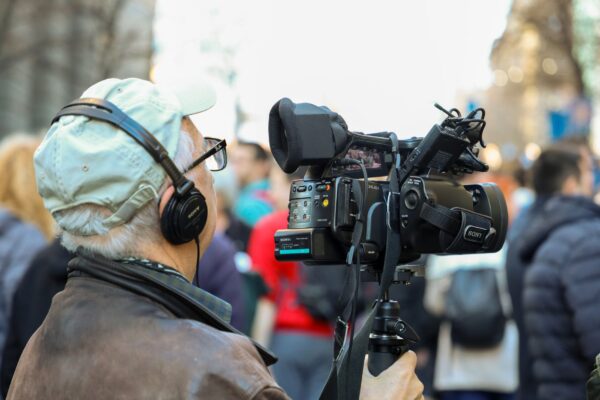
Imagem principal:StockHouse Films llc / Pexels
Análise sobre acusações de censura em torno do filme revelador do Elon Musk
Uma análise investigativa sobre o relato envolvendo um documentário supostamente censurado sobre o bilionário Elon Musk. Este relatório examina como as alegações de supressão sistemática se propagam pelos ecossistemas de mídia digital com base em relatos disponíveis.
In the contemporary information ecosystem, the intersection of high-profile technology figures, documentary filmmaking, and platform governance frequently generates intense controversy. When a media project concerning a prominent individual encounters distribution friction or public debate, the ensuing discourse often bifurcates into accusations of intentional suppression and defenses of standard administrative practice. This investigation examines the claims surrounding a documentary film concerning Elon Musk, utilizing published source material to separate verified events from speculative narrative framing. By evaluating the mechanics of how stories about censorship gain traction online, we can better understand the criteria required to substantiate claims of institutional information control.
Context and Background of the Elon Musk Film Controversy
Documentaries focusing on technology executives, billionaires, and prominent cultural figures occupy a sensitive space in modern media. When these projects touch upon controversial aspects of a subject’s business empire, personal conduct, or political influence, public interest spikes. The controversy surrounding the film in question emerged within a broader climate of heightened scrutiny regarding platform policies, content moderation, and the influence wielded by tech moguls over the channels of public discourse. As independent and mainstream media outlets monitor the production and release cycles of such investigative projects, any friction encountered during distribution naturally becomes a focal point for public attention.
The historical backdrop of media projects targeting high-net-worth individuals reveals a recurring pattern of tension between creators seeking wide distribution and corporate entities or platforms managing digital spaces. In the case analyzed by The Daily Beast, reports surfaced detailing how a documentary critical of Elon Musk faced obstacles that ignited fierce debates across social media networks. Understanding this context requires looking beyond surface-level outrage to examine the specific mechanisms through which the film was purportedly hindered, as well as the commercial and logistical realities that typically govern the release of independent investigative media.
The Intersection of Tech Power and Independent Media
The relationship between Silicon Valley leadership and investigative journalism is fraught with competing incentives. When media productions examine figures who hold substantial sway over digital infrastructure, concerns regarding potential conflicts of interest or platform bias inevitably arise. Observers frequently scrutinize whether algorithmic sorting, advertising pressures, or platform policies disproportionately affect content that challenges powerful corporate actors. However, establishing a direct causal link between corporate displeasure and specific distribution hurdles requires rigorous evidence beyond mere speculation or correlation.
Examining the Core Claims of Shocking Censorship
The primary allegation put forward in the discourse surrounding the documentary is that intentional, coordinated suppression was deployed to keep the film from reaching public view. According to reporting from The Daily Beast, the narrative quickly gained momentum that the project was a victim of extraordinary measures designed to silence critical findings about Elon Musk. These claims often characterize the obstacles faced by the filmmakers not as standard industry hurdles, but as an active conspiracy involving corporate gatekeepers and institutional power structures.
To evaluate these core claims objectively, investigative standards require distinguishing between verifiable editorial decisions, technical distribution glitches, and ideological censorship. Proponents of the censorship narrative argue that the nature of the film’s subject matter makes it uniquely threatening to established interests, thereby inviting extraordinary countermeasures. Critics of this framing, conversely, point out that independent films frequently encounter budgetary constraints, legal reviews, and platform-agnostic distribution challenges that have no connection to political or personal animus from tech executives.
Distinguishing Editorial Friction from Censorship
In media analysis, censorship is formally defined as the suppression or prohibition of speech and public communication by a governing authority, institution, or dominant corporate gatekeeper based on its content. By contrast, editorial friction encompasses standard legal vetting, contractual disputes between producers and distributors, and market-driven decisions regarding platform placement. Applying the label of censorship to every instance of distribution difficulty risks diluting the term, obscuring genuine violations of free expression, and transforming ordinary commercial disputes into ideological battlegrounds.
What the Source Material Actually Shows
A rigorous examination of the available reporting reveals a more complex picture than what is typically captured in viral social media summaries. The Daily Beast publication provides specific accounts of the hurdles encountered by the filmmakers, detailing the public reactions and the sequence of events surrounding the release. Rather than uncovering a monolithic corporate conspiracy to erase the film entirely, the source material highlights how distribution bottlenecks and heightened public sensitivities interact in the digital age.
When analyzing the text of the reporting, it is crucial to note what is explicitly verified versus what remains unproven assertion. While the article documents the existence of the film and the controversies accompanying its rollout, it does not provide definitive technical or documentary proof of a coordinated institutional conspiracy to suppress the content. Maintaining this distinction is essential for fact-checking editors who must weigh sensationalized headlines against the hard evidentiary value of source reporting.
| Alleged Censorship Claim | Evidence in Source Material | Analytical Assessment |
|---|---|---|
| Coordinated corporate takedown of the film | Reports of distribution friction and public controversy | Unverified as a coordinated conspiracy; standard industry hurdles cannot be ruled out. |
| Unprecedented silencing of critical journalism | Coverage of the documentary’s release challenges | Hyperbolic framing; independent films frequently face market and legal scrutiny. |
| Direct intervention by platform executives | Discussions surrounding the film’s visibility | Speculative connection without documented executive orders or policy directives. |
Tracing How the Censorship Narrative Spread
The rapid dissemination of the censorship narrative surrounding the Elon Musk documentary illustrates modern propaganda and information-sharing dynamics. When a story touches upon polarizing public figures, algorithmic incentives on major social platforms reward emotional framing, urgency, and perceivedDAVID-versus-Goliath struggle narratives. The Daily Beast coverage captured how initial reports of distribution friction were quickly amplified, reinterpreted, and magnified by partisan commentators and online communities seeking to validate pre-existing worldviews regarding media bias.
Understanding this propagation pathway requires looking at how nuance is systematically stripped away as stories move from investigative reports to viral social media posts. A nuanced account mentioning production delays, platform terms of service, or standard legal vetting is frequently compressed into binary assertions of absolute censorship. This mechanism ensures that the narrative of systemic suppression becomes self-sustaining, independent of the underlying factual record provided by journalists.
The Role of Algorithmic Amplification in Outrage Cycles
Social media algorithms are structurally optimized for engagement, and conflict-driven narratives consistently outperform dry, methodical fact-checking. When influencers and political commentators frame the documentary’s release challenges as a dystopian battle for free speech, the content triggers high volumes of likes, shares, and commentary. This engagement loop accelerates the spread of the censorship narrative, creating a feedback loop where the perceived scale of the suppression grows exponentially larger than the verified facts warrant.
Red Flags in Reporting and Narrative Framing
Evaluating claims of censorship requires a systematic approach to identifying rhetorical red flags and manipulative narrative framing. Investigative reporting must be scrutinized not only for its factual accuracy but also for the emotional valence of its presentation. In the context of the Elon Musk film controversy, several recurring warning signs appeared in how secondary commentators discussed the story.
- The use of loaded, sensational adjectives such as shocking, unprecedented, and dystopian to describe standard administrative or legal events.
- The complete absence of counter-arguments, alternative explanations, or standard industry practices from the primary narrative.
- The attribution of malicious intent without supporting documentation, emails, or whistleblower testimony.
- The conflation of independent platform moderation policies with direct, state-sponsored or executive-mandated censorship.
- The rapid shift from reporting an event to using that event as proof of a sweeping, unfalsifiable conspiracy theory.
Institutional and Public Responses to the Film
The public reaction to the documentary and the subsequent reporting by outlets like The Daily Beast demonstrated a deep polarization in how media power is perceived. Supporters of the film viewed the reported obstacles as definitive proof that powerful figures can successfully shield themselves from critical examination. Conversely, industry analysts and neutral observers emphasized that navigating the modern media landscape requires complex legal, financial, and logistical maneuvers that routinely cause friction for independent productions regardless of their subject matter.
Institutional responses from platforms and distributors, where documented, typically pointed to standard terms of service, copyright compliance, or contractual obligations rather than ideological animus. However, in an information ecosystem characterized by low institutional trust, official explanations are frequently dismissed as cover stories. This dynamic ensures that every point of friction becomes a fresh opportunity for public skepticism and narrative hardening.
Public Trust and the Crisis of Information Verification
The controversy surrounding the film highlights a broader crisis of trust in media institutions. When the public can no longer agree on the baseline facts of how a media project is distributed or hindered, civil discourse degrades into competing conspiracy theories. Restoring epistemic integrity requires holding both platforms and critics accountable: demanding transparent explanations from distributors while insisting that commentators provide verifiable evidence before leveling charges of systemic censorship.
Analytical Assessment of the Evidence
Synthesizing the evidence from the available reporting leads to a measured, sober conclusion. The narrative of shocking, coordinated censorship targeting the Elon Musk documentary relies heavily on sensationalized framing and speculative leaps rather than hard evidentiary proof. While the film undoubtedly faced distribution challenges and generated substantial public controversy—as documented by The Daily Beast—distinguishing between ordinary industry friction and targeted suppression is essential.
Ultimately, the episode serves as a case study in how modern information operations and hyper-engaged digital publics transform complex media logistics into simplistic narratives of good versus evil. Fact-checking editors and investigative journalists must continue to anchor their analyses in verifiable documentation, rejecting emotional escalation in favor of systematic, evidence-first evaluation.
Perguntas Frequentes
What was the primary claim made about the Elon Musk documentary?
The primary claim asserted that the film faced shocking, intentional, and coordinated censorship designed to suppress its critical findings about the billionaire technology executive.
How did outlets like The Daily Beast cover the controversy?
The Daily Beast reported on the release of the film, the friction it encountered during distribution, and the resulting public debate across digital media platforms.
Is there definitive proof of a coordinated corporate conspiracy to censor the film?
Based on the available source material, there is no definitive documentation or proof of a coordinated executive conspiracy; reports indicate distribution friction and public controversy, but speculative claims of censorship exceed the verified evidence.
What is the difference between editorial friction and actual censorship?
Censorship involves the intentional suppression of speech by an authority based on content, whereas editorial friction encompasses standard legal vetting, contractual negotiations, and platform-agnostic distribution challenges.
Why do narratives of systemic censorship spread so rapidly online?
Sensationalized narratives of censorship align with algorithmic engagement incentives on social media, appealing to public skepticism of powerful tech figures and outperforming nuanced, fact-checked explanations.