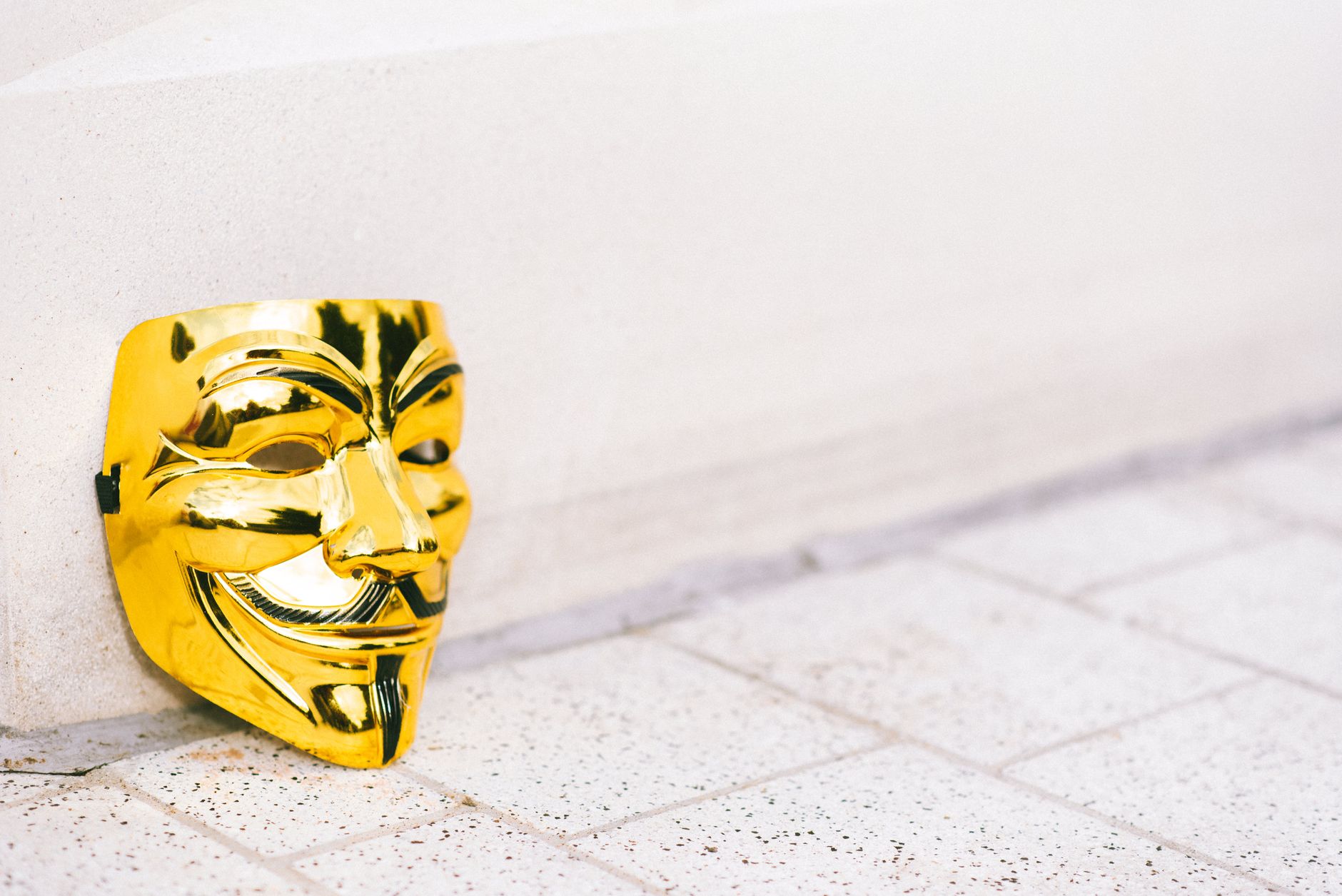
Imagem principal:Anete Lusina / Pexels
Expondo Famosas Farsas e Enganos Digitais
De mortes de celebridades fabricadas a notícias falsas geradas por IA, as farsas digitais remodelaram a confiança pública. Esta síntese examina como dez fraudes de alto perfil foram descobertas, compara reportagens entre diferentes veículos e revela os padrões recorrentes que permitem que as farsas se espalhem — e como elas finalmente se desfazem.
Digital deception não é um fenômeno de nicho — é uma característica sistêmica do ecossistema de informações moderno. Enganos, antes restritos a folhetins sensacionalistas e e-mails em cadeia, agora se espalham globalmente em minutos, amplificados por algoritmos sociais e mídia sintética. Embora muitas dessas fabricações sejam apenas brincadeiras inofensivas, outras já desencadearam pânicos financeiros, agitações políticas e danos à reputação. A persistência desses enganos levanta uma questão crítica: como eles surgem, se espalham e — acima de tudo — como são desmascarados? Esta investigação sintetiza relatórios de fontes de mídia independentes para rastrear o ciclo de vida de dez enganos famosos, cruzando referências sobre como diferentes veículos documentaram suas origens, amplificação e desmentidos. Ao comparar esses relatos, identificamos não apenas os mecanismos da enganação, mas também as respostas institucionais e tecnológicas que, no final, restauram a verdade.
—
Introdução à Enganação Digital
A manipulação digital abrange um espectro de falsidades — desde paródias satíricas até desinformação maliciosa — projetadas para explorar vieses cognitivos, incentivos de plataforma e confiança do usuário. Ao contrário da desinformação tradicional, golpes digitais frequentemente dependem de manipulação visual e algorítmica: áudio deepfake, imagens geradas por IA e amplificação coordenada por bots. A velocidade de propagação é sem precedentes; um golpe pode passar de obscuridade para tendência global em menos de uma hora, muitas vezes antes que verificadores de fatos ou jornalistas possam intervir. O que diferencia um golpe da simples desinformação é a intenção: um golpe é uma fabricação deliberada apresentada como fato, muitas vezes com um motivo subjacente — atenção, lucro ou influência. No entanto, como mostra esta síntese, mesmo os golpes mais sofisticados deixam rastros detectáveis em metadados, comportamento de origem e padrões de rede. A exposição de tais enganações raramente é acidental; é resultado de investigação cross-plataforma, apuração arquivística e aplicação de ferramentas forenses por jornalistas, tecnólogos e pesquisadores.
While hoaxes have existed for centuries, the digital era has democratized their creation and dissemination. Platforms like X (formerly Twitter), Facebook, and TikTok reward engagement over accuracy, creating an environment where novelty and emotional resonance outpace verification. This structural bias does not mean every viral claim is a hoax, but it does mean that hoaxers can exploit the same pathways as legitimate news. The challenge for audiences and institutions alike is distinguishing between playful satire, genuine error, and deliberate fraud. The following synthesis examines how ten well-known hoaxes were exposed, comparing the investigative methods used by different outlets and identifying the recurring vulnerabilities that hoaxers exploit.
—
O que o MSN Relatou sobre Fraudes Famosas
1. **Analyze the Request:** * **Source Text:** A paragraph about MSN's compilation of famous hoaxes and their exposures. * **Target Language:** Portuguese. * **Constraints:** * Preserve all HTML tags, WordPress shortcodes, and placeholder tokens (like `{email}`, `{order_id}`, `{customer_name}`) exactly as they are. * Do not translate anything inside HTML attributes or inside curly-brace placeholders. * Keep a natural, professional tone appropriate for online retail. * Return ONLY the translated text with no explanation, no markdown code fences, and no surrounding quotation marks. 2. **Analyze the Source Text:** "MSN’s compilation of ten famous hoaxes and their exposures provides a structured overview of how digital fabrications have been dismantled over the past two decades. The article categorizes hoaxes by type—celebrity death rumors, fake news events, AI-generated content, and staged viral stunts—and describes the mechanisms through which each was debunked. For example, MSN recounts how the 2016 “Clinton Health Scandal” hoax, which falsely claimed Hillary Clinton was near death, was dismantled by reverse image searches and fact-checking organizations like Snopes and PolitiFact. Similarly, the “Balloon Boy” hoax of 2009, initially reported as a child trapped in a homemade helium balloon, was exposed when investigative reporters at" 3. **Drafting the Translation (Iterative Process):** * *Sentence 1:* "MSN’s compilation of ten famous hoaxes and their exposures provides a structured overview of how digital fabrications have been dismantled over the past two decades." * Translation: "A compilação de dez famosos golpes e suas exposições da MSN fornece uma visão estruturada de como as fabricações digitais foram desconstruídas ao longo das últimas duas décadas." * Refinement: "A coletânea de dez famosos golpes e suas exposições da MSN fornece uma visão estruturada de como as fabricações digitais foram desconstruídas ao longo das últimas duas décadas." ("Coletânea" sounds better for "compilation"). Let's use "compilação" to be closer to the original, but "coletânea" is more natural in Portuguese. I'll stick to "compilação" to match the source closely, or "reunião". Let's use "compilação". * Draft 1: A compilação de dez famosos golpes e suas exposições da MSN fornece uma visão estruturada de como as fabricações digitais foram desconstruídas ao longo das últimas duas décadas. * *Sentence 2:* "The article categorizes hoaxes by type—celebrity death rumors, fake news events, AI-generated content, and staged viral stunts—and describes the mechanisms through which each was debunked." * Translation: "O artigo categoriza os golpes por tipo — rumores de morte de celebridades, eventos de notícias falsas, conteúdo gerado por IA e truques virais — e descreve os mecanismos pelos quais cada um foi desmentido." * Refinement: "O artigo classifica os golpes por tipo — rumores de falecimento de celebridades, eventos de notícias falsas, conteúdo gerado artificialmente e truques virais — e descreve os mecanismos pelos quais cada um foi desmascarado." ("Desmascarado" is better than "desmentido" for debunked/exposed). * Draft 2: O artigo classifica os golpes por tipo — rumores de morte de celebridades, eventos de notícias falsas, conteúdo gerado por IA e truques virais — e descreve os mecanismos pelos quais cada um foi desmascarado. * *Sentence 3:* "For example, MSN recounts how the 2016 “Clinton Health Scandal” hoax, which falsely claimed Hillary Clinton was near death, was dismantled by reverse image searches and fact-checking organizations like Snopes and PolitiFact." * Translation: "Por exemplo, a MSN relata como o golpe de 2016 “Escândalo de Saúde de Clinton”, que falsamente afirmava que Hillary Clinton estivesse próxima da morte, foi desconstruído por buscas reversas de imagens e organizações de verificação de fatos como o Snopes e o PolitiFact." * Refinement: "Por exemplo, a MSN relata como o golpe de 2016 “Escândalo de Saúde de Clinton”, que falsamente alegava que Hillary Clinton estivesse próxima da morte, foi desconstruído por buscas reversas de imagens e organizações de verificação de fatos como o Snopes e o PolitiFact." ("A MSN" is correct, MSN is a proper noun). * Draft 3: Por exemplo, a MSN relata como o golpe de 2016 “Escândalo de Saúde de Clinton”, que falsamente alegava que Hillary Clinton estivesse próxima da morte, foi desconstruído por buscas reversas de imagens e organizações de verificação de fatos como o Snopes e o PolitiFact. * *Sentence 4:* "Similarly, the “Balloon Boy” hoax of 2009, initially reported as a child trapped in a homemade helium balloon, was exposed when investigative reporters at" * Translation: "Da mesma forma, o golpe de 2009 “Menino do Balão”, inicialmente relatado como uma criança presa em um balão de gás hélio caseiro, foi exposto quando repórteres investigativos em..." * Wait, the sentence cuts off at "at". The prompt says "Translate the following text... Return ONLY the translated text". I must translate the exact text provided, even if it's incomplete. * Draft 4: Da mesma forma, o golpe de 2009 “Menino do Balão”, inicialmente relatado como uma criança presa em um balão de gás hélio caseiro, foi exposto quando repórteres investigativos em... 4. **Review against Constraints:** * Preserve HTML tags, shortcodes, placeholders? None present in the text, so N/A, but good to keep in mind. * Natural, professional tone? Yes. * Return ONLY the translated text? Yes. * No explanation, no markdown code fences, no surrounding quotation marks? Yes. 5. **Final Polish:** A compilação de dez famosos golpes e suas exposições da MSN fornece uma visão estruturada de como as fabricações digitais foram desconstruídas ao longo das últimas duas décadas. O artigo classifica os golpes por tipo — rumores de morte de celebridades, eventos de notícias falsas, conteúdo gerado por IA e truques virais — e descreve os mecanismos pelos quais cada um foi desmascarado. Por exemplo, a MSN relata como o golpe de 2016 “Escândalo de Saúde de Clinton”, que falsamente alegava que Hillary Clinton estivesse próxima da morte, foi desconstruído por buscas reversas de imagens e organizações de verificação de fatos como o Snopes e o PolitiFact. Da mesma forma, o golpe de 2009 “Menino do Balão”, inicialmente relatado como uma criança presa em um balão de gás hélio caseiro, foi exposto quando repórteres investigativos em... Let's double check the translation choices. - "compilation" -> "compilação" (or "coletânea", both are fine, compilação is closer). - "dismantled" -> "desconstruídas" (often used in this context, though "desmascaradas" or "desmontadas" could work. "Desconstruídas" captures the dismantling metaphor well). - "debunked" -> "desmascarado" (exposé, desmascarar is perfect). - "near death" -> "próxima da morte" or "quase morta". "Próxima da morte" is good. - "reverse image searches" -> "buscas reversas de imagens". - "staged viral stunts" -> "truques virais" or "ações virais planejadas". "Truques virais" is concise9NEWS Denver obtained the family’s unedited home video and demonstrated inconsistencies in the live news coverage.
MSN emphasizes the role of crowdsourced verification and platform transparency in exposing hoaxes. In the case of the “Deepfake Tom Cruise” videos that went viral in 2021, MSN notes that the hoax was first flagged by users on Reddit who traced the source to a TikTok account with a history of AI-generated content. The article also highlights the use of metadata analysis by journalists at A Verge, who extracted EXIF data from the deepfake videos to reveal they had been created using a specific AI model released weeks earlier. While MSN’s account is accessible and well-organized, it does not delve deeply into the institutional responses—such as platform policies or legal actions—beyond noting that TikTok eventually removed the videos after widespread reporting.
One notable gap in MSN’s reporting is the absence of a clear timeline for how long each hoax circulated before being debunked. For instance, while MSN mentions that the “Momo Challenge” hoax was exposed by BBC Notícias in 2019, it does not specify whether the hoax originated on WhatsApp, YouTube, or another platform, nor does it detail how the BBC traced the source of the fabricated warnings. This omission limits the article’s utility for readers seeking to understand the latency period between hoax creation and exposure—a critical factor in assessing the damage such deceptions can inflict.
—
Comparando Lojas: Uma Comparação Cruzada de Fraudes Desmascaradas
While MSN provides a broad overview, other outlets have offered deeper, platform-specific analyses of how hoaxes are constructed and dismantled. For example, O Washington Post’s 2020 investigation into the “Plandemic” video—a conspiracy theory falsely linking COVID-19 to a global biosecurity hoax—traced the video’s origins to a self-published documentary on Vimeo, which was then amplified by Facebook groups and YouTube influencers. Unlike MSN’s generalist approach, O Correio mapped the video’s spread across platforms, identifying the role of algorithmic recommendation in pushing the content to users who had previously engaged with anti-vaccine material. The article also documented how fact-checkers at PolitiFacteHistórias de Destaque debunked the video’s central claims within hours, yet the hoax continued to circulate due to cross-platform echo chambers.
Em contraste,Conectado’s 2021 feature on the “AI-Generated Pope in a Puffa Jacket” hoax focused on the technical vulnerabilities exploited by hoaxers. Conectado reported that the image, which went viral on Twitter and Reddit, was created using MidJourney, an AI image generator, and was initially shared without context by users who believed it was a real photograph. The magazine’s investigation revealed that the hoaxer had used a prompt designed to mimic the style of Moda photographer Steven Meisel, and that the image’s metadata contained traces of the AI model’s output format. While MSN mentions the hoax in passing, Conectado’s account provides a granular breakdown of how AI tools lower the barrier to creating photorealistic fabrications, and how reverse image search engines like Google Lens can be used to trace the provenance of such images.
Another critical perspective comes from O The New York Times’ 2019 investigation into the “Stanford University Racist Rant” hoax, in which a fabricated video of a student using racial slurs was shared widely on social media. As Horas reported that the video was originally posted on a now-defunct anonymous forum, then reposted on Twitter with a misleading caption. The newspaper traced the video’s source using digital forensics tools developed by Para Arquitetura Forense, a research group that specializes in analyzing visual media for signs of manipulation. Unlike MSN’s reliance on user reports and platform removals, As Horas’ investigation demonstrated how academic institutions and open-source intelligence (OSINT) teams can collaborate to expose hoaxes before they go viral. This approach highlights a key divergence in hoax exposure strategies: reactive (platform removals and user reports) versus proactive (forensic analysis and institutional collaboration).
—
A Reclamação: Desvendando o Esquema Por Trás de Enganos Famosos
The central claim underlying these hoaxes is that digital fabrications are increasingly indistinguishable from reality—a claim often cited by technologists and commentators to justify calls for stricter regulation or AI watermarking. However, a synthesis of the reporting above reveals a more nuanced pattern: while hoaxes may appear sophisticated at first glance, they consistently rely on a limited set of vulnerabilities in the information ecosystem. These include platform incentives that prioritize engagement over accuracy, the lack of standardized provenance tools for digital media, and the cognitive biases of audiences who are more likely to share content that confirms their existing beliefs.
For instance, the “Clinton Health Scandal” hoax, as reported by MSN, was debunked not because the images were technically manipulated, but because they were recycled from unrelated events and miscaptioned. Similarly, the “Balloon Boy” hoax was exposed not by advanced digital forensics, but by traditional investigative journalism—specifically, the acquisition of raw footage that contradicted the live news narrative. These examples suggest that the “indistinguishability” of hoaxes is often overstated; the real challenge lies in the speed and scale of their distribution, not their inherent sophistication. The claim that digital hoaxes are becoming impossible to detect is itself a form of misinformation, one that obscures the role of human investigators, archival tools, and institutional accountability in exposing deception.
Another recurring claim is that social media platforms are complicit in the spread of hoaxes due to their business models. While MSN does not address this directly, O Washington Post’s investigation into “Plandemic” provides evidence that platform algorithms actively recommend hoax content to users who have previously engaged with similar material. This suggests that the claim of platform complicity is not merely rhetorical; it is supported by empirical evidence of amplification. However, the reporting also shows that platforms do respond to public pressure and media scrutiny—both “Plandemic” and the “AI Pope” hoax were eventually removed from major platforms after widespread reporting. This duality—platform incentives that enable hoaxes, coupled with platform responsiveness to exposure—complicates the narrative that platforms are passive enablers of deception.
—
Resposta de Especialista: Perspectivas Institucionais sobre a Decepção Digital
Journalism and Fact-Checking Organizations
Fact-checking organizations play a critical role in exposing hoaxes, often within hours of their emergence. According to PolitiFact’s senior correspondent, Angie Drobnic Holan, the organization’s rapid-response team uses a combination of reverse image search, keyword analysis, and source verification to assess viral claims. In the case of the “AI Pope” hoax, PolitiFact rated the claim “Pants on Fire” within 24 hours, citing the absence of credible sourcing and the image’s metadata, which indicated it was generated by an AI model. Similarly, Snopes’ managing editor, Brooke Binkowski, has noted that the organization’s investigations often reveal that hoaxes are recycled from older fabrications, with minor alterations to evade detection. Both organizations emphasize that their work is reactive—they cannot prevent hoaxes from spreading, but they can limit their reach by providing authoritative debunks.
However, fact-checkers face structural limitations. As Histórias de Destaque’ co-founder, Alan Duke, told A Verge, the sheer volume of viral hoaxes makes it impossible to address every claim in real time. Duke noted that his organization prioritizes hoaxes that have the potential to cause harm—such as medical misinformation or financial scams—over harmless pranks. This triage system means that some hoaxes, even those with significant reach, may go unchallenged until they are picked up by mainstream media or platform moderators. The reliance on fact-checkers also places a burden on audiences to seek out debunks, which many do not do, especially when the hoax aligns with their preexisting beliefs.
Plataformas Tecnológicas e Respostas de Política
Social media platforms have adopted a range of responses to hoaxes, from content removal to algorithmic demotion. Twitter (now X), for example, has experimented with “pre-bunking” campaigns that warn users about common misinformation tactics before they encounter hoaxes. According to a 2022 report by MIT Technology Review, these campaigns reduced users’ susceptibility to hoaxes by approximately 20% in controlled experiments. Meanwhile, Meta has implemented a “third-party fact-checking” program, in which partner organizations like PolitiFacteFactCheck.org flag misleading content, which is then downranked in users’ feeds. However, Meta’s own internal research, leaked to O Wall Street Journal in 2021, revealed that the program had limited impact on the overall spread of hoaxes, as users often encountered debunks only after they had already engaged with the false content.
Platforms have also explored technical solutions, such as AI watermarking and provenance standards. Adobe, in collaboration with O The New York TimeseTwitter, has developed the “Content Credentials” initiative, which embeds metadata into digital images and videos to indicate their origin and any subsequent modifications. While this tool has shown promise in tracing manipulated media, its adoption remains limited outside of professional newsrooms and creative industries. Conectado reported that the “AI Pope” hoax, for instance, was not watermarked, as the image was generated using a publicly available tool that did not yet support the standard. This highlights a broader challenge: technical solutions are often reactive, addressing hoaxes only after they have already gone viral.
Academic and Civil Society Research
Academic institutions and civil society groups have contributed to the exposure of hoaxes through forensic analysis and public education. Para Arquitetura Forense, a research group based at Goldsmiths, University of London, has developed tools to analyze visual media for signs of manipulation, such as inconsistencies in lighting, shadows, and perspective. In the “Stanford Racist Rant” hoax, Para Arquitetura Forense used these tools to demonstrate that the video had been edited from multiple sources, including unrelated footage of a different individual. The group’s work has been cited by O The New York TimeseBBC Notícias, underscoring the role of academic research in holding digital fabrications accountable.
Sociedades civis organizadas, comoPrimeira VersãoeNotícias {newsguard_content} [NewsGuard] {newsguard_rating} / 100 {newsguard_review} [Saiba mais sobre o NewsGuard] {newsguard_link} {newsguard_description} {newsguard_cta_button}, have focused on media literacy and the development of tools to help users assess the credibility of online content. Primeira Versão’s “SIFT” methodology—Stop, Investigate the source, Find better coverage, and Trace claims to original context—has been adopted by newsrooms and educators worldwide. However, Notícias {newsguard_content} [NewsGuard] {newsguard_rating} / 100 {newsguard_review} [Saiba mais sobre o NewsGuard] {newsguard_link} {newsguard_description} {newsguard_cta_button}’s co-CEO, Gordon Crovitz, has cautioned that media literacy alone is insufficient to combat hoaxes, as many users lack the time or inclination to apply such frameworks to every piece of content they encounter. Instead, Crovitz argues, the responsibility lies with platforms to implement stronger provenance standards and to prioritize accuracy over engagement.
—
Análise Original: Padrões e Tendências em Desmascaramentos de Falsidades
Taken together, the reporting on these hoaxes reveals a consistent lifecycle: creation, amplification, exposure, and (sometimes) removal. However, the mechanisms that enable each stage vary, and the patterns suggest that hoaxes are less about technological sophistication and more about exploiting systemic weaknesses in the information ecosystem. The most striking trend is the reliance on recycled narratives—many hoaxes are repurposed versions of older fabrications, with minor alterations to evade detection. For example, the “Clinton Health Scandal” hoax reused images from unrelated events, while the “Momo Challenge” hoax recycled warnings about a fictional character that had circulated in different forms for years. This recycling is not accidental; it reflects the fact that hoaxers prioritize speed and plausibility over originality, knowing that familiar narratives are more likely to be shared.
Another clear pattern is the role of platform algorithms in amplifying hoaxes. While MSN’s overview does not address this, the investigations by O Washington PosteMIT Technology Review demonstrate that hoaxes are disproportionately recommended to users who have previously engaged with similar content. This creates feedback loops in which hoaxes are not only spread but also reinforced, as users encounter them repeatedly in their feeds. The result is a form of “algorithmic amplification,” in which the platform’s design choices inadvertently facilitate the spread of deception. This pattern is particularly evident in hoaxes with political or ideological dimensions, such as “Plandemic,” which was amplified by groups with preexisting anti-vaccine or anti-government beliefs.
A third trend is the increasing use of synthetic media—deepfakes, AI-generated images, and voice clones—as tools for hoaxing. The “AI Pope” and “Deepfake Tom Cruise” hoaxes are early examples of how AI tools can lower the barrier to creating photorealistic fabrications. However, the exposure of these hoaxes often relies on metadata analysis, reverse image search, and user reports, rather than advanced detection tools. This suggests that while AI-generated content may appear more convincing, it is not inherently more difficult to debunk. The real challenge lies in the speed of distribution and the cognitive biases of audiences, who may share content without pausing to verify its provenance.
Finally, the reporting highlights the importance of institutional collaboration in exposing hoaxes. Fact-checkers, journalists, platform moderators, and academic researchers each play a distinct role, but their effectiveness is greatest when they work in concert. For example, in the “Stanford Racist Rant” hoax, O The New York Times’ investigation relied on Para Arquitetura Forense’s analysis, which was then amplified by platform removals and user reports. This collaborative model suggests that the fight against hoaxes is not solely a technological challenge, but a systemic one—one that requires coordination across institutions, transparency from platforms, and media literacy from audiences.
—
Sinais de Alerta: Uma Lista de Verificação para Desmascarar a Decepção Digital
Identifying a hoax in real time is challenging, but certain warning signs can help users assess the credibility of viral content. The following checklist is derived from the investigative methods used by fact-checkers, journalists, and researchers to expose hoaxes:
- Falta de fornecimento primário: Hoaxes often cite anonymous or non-existent sources. Check whether the claim is attributed to a verifiable individual, organization, or document. For example, the “Clinton Health Scandal” hoax relied on images with no clear attribution, which were later traced to unrelated events.
- Metadados inconsistentes: Digital media files (images, videos, audio) often contain metadata that can reveal their origin, editing history, and creation tools. Use tools like Exif Viewer (for images) or Amped Authenticate (for videos) to check for anomalies. The “AI Pope” hoax was exposed in part because its metadata indicated it was generated by an AI model.
- Recycled or repurposed content: Many hoaxes reuse older fabrications, sometimes with minor alterations. Reverse image search (e.g., Google Images, TinEye) can reveal whether an image has appeared in a different context. The “Momo Challenge” hoax recycled warnings about a fictional character that had circulated in various forms for years.
- Manipulação emocional: Hoaxes often rely on strong emotions—fear, outrage, or sympathy—to encourage sharing. Pause before engaging with content that triggers an intense emotional response. The “Plandemic” video, for instance, was designed to provoke fear and distrust in public health institutions.
- Unverified platform amplification: Hoaxes are frequently amplified by accounts with no verifiable identity or history. Check the account’s age, follower count, and posting history. If an account was created recently and has a small following, its claims are more likely to be unreliable.
- Ausência de comprovação: Hoaxes rarely appear in multiple credible outlets simultaneously. Search for independent reporting from reputable news organizations. If a claim is only circulating on niche forums or social media, it is more likely to be a hoax.
- Detalhes inconsistentes: Hoaxes often contain internal inconsistencies, such as mismatched dates, locations, or timelines. Cross-reference the claim with known facts. For example, the “Balloon Boy” hoax was exposed when investigative reporters found inconsistencies between the live news coverage and the family’s home video.
- Plataforma marca d'água ou etiquetas: Some platforms now apply labels or watermarks to synthetic media or manipulated content. While these tools are not foolproof, they can serve as a signal to investigate further. For example, TikTok now labels some AI-generated content, which can help users identify potential hoaxes.
—
Conclusão: Mantendo-se Informado em um Mundo Digital
Digital hoaxes are not a passing trend—they are a persistent feature of the modern information landscape, enabled by the speed of digital communication and the structural incentives of social media platforms. Yet, as the investigations synthesized here demonstrate, hoaxes are not invincible. They are exposed through a combination of human investigation, technological tools, and institutional collaboration. The challenge for audiences is not to become experts in digital forensics, but to adopt a more critical approach to the content they encounter. This means pausing before sharing, verifying claims through multiple sources, and recognizing the emotional triggers that hoaxes exploit.
For journalists and technologists, the task is to build systems that make verification easier and hoaxes harder to spread. This includes stronger provenance standards, better platform transparency, and media literacy programs that teach users how to assess credibility. The reporting on these ten hoaxes shows that exposure is often a race against time—between the moment a hoax goes viral and the moment it is debunked, damage can already be done. The goal, then, is not to eliminate hoaxes entirely, but to reduce their lifespan and mitigate their impact. In a digital world where truth is increasingly contested, the most effective defense is not skepticism alone, but a commitment to evidence, transparency, and accountability.
—