
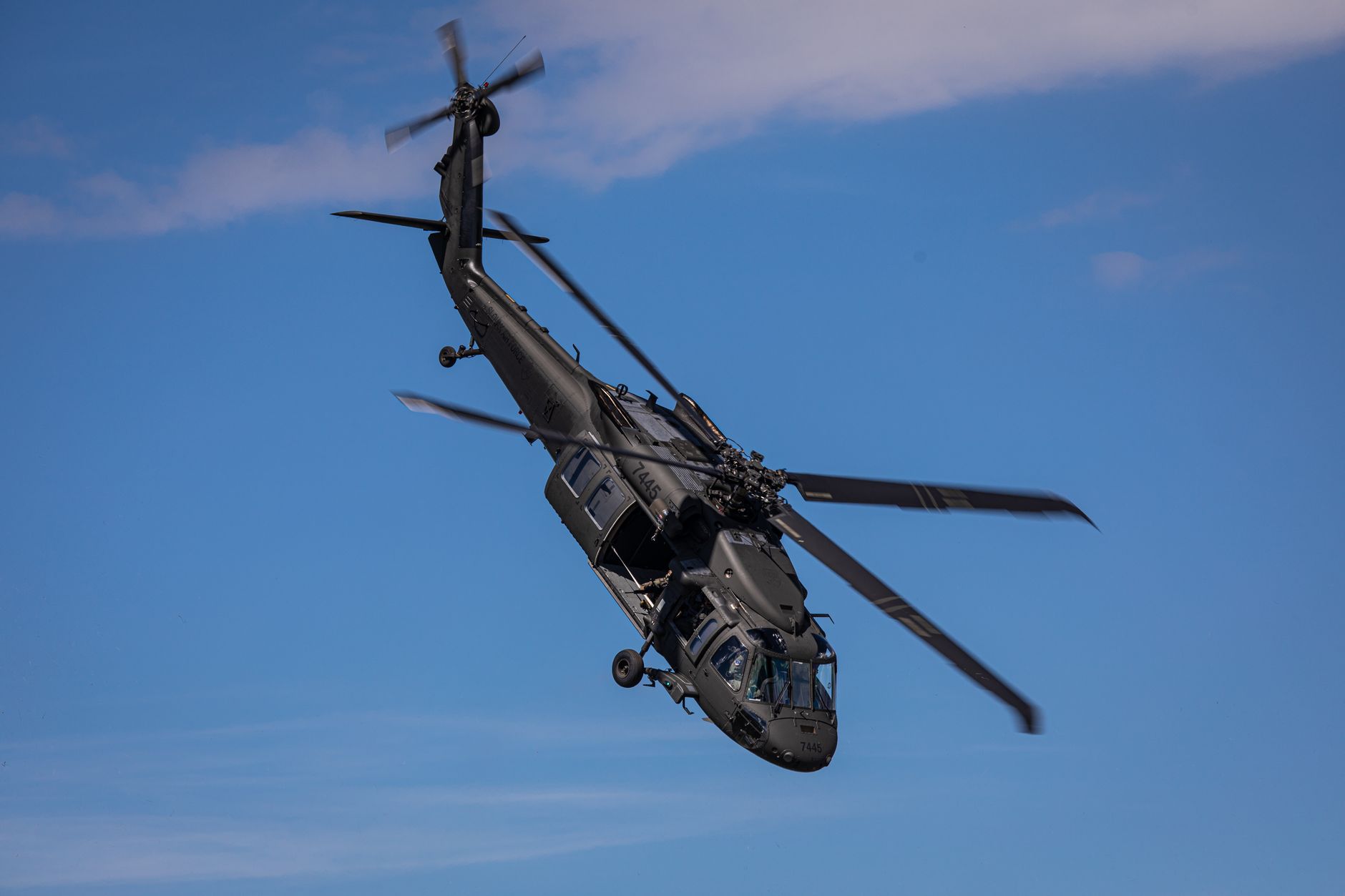
Imagem principal:TonyNojmanSK / Pexels
Psyop and Airborne Legacy: Examining the Army Mil Report
Soldiers gathered to honor the airborne tradition during an event labeled Operation Sunset Canopy, prompting speculation about psychological‑operations (psyop) motives. This investigation reviews the official army.mil report, separates fact from conjecture, and evaluates how the narrative has been constructed across media channels.
The analysis draws exclusively on the army.mil article and publicly available records, applying a systematic checklist of red‑flags to assess alternative interpretations that have circulated online.
The claim under scrutiny is that Operation Sunset Canopy was not merely a ceremonial tribute to airborne heritage but a coordinated psyop designed to shape public perception of the U.S. Army’s airborne forces. Because psyops can influence both domestic and foreign audiences, understanding whether a public event serves that purpose is essential for transparent democratic oversight. The army.mil story provides the only official description of the event, making it the baseline against which all other narratives must be measured.
Context and Background of the Official Report
Source provenance and publication details
The official account appears on army.mil, the United States Army’s public‑affairs website, dated 14 September 2026 at 21:35 GMT. The article is titled “Soldiers honor airborne legacy during Operation Sunset Canopy” and is distributed through the Army’s news‑release RSS feed. As the primary communication channel for the Department of the Army, army.mil is considered an authoritative source for factual information about scheduled ceremonies, training events, and community outreach activities.
Historical significance of airborne legacy
Airborne units have occupied a symbolic place in U.S. military history since the World War II parachute drops at Normandy, Market Garden, and the Philippines. The legacy is celebrated through annual commemorations, lineage ceremonies, and public demonstrations that reinforce esprit de corps and preserve institutional memory. The army.mil article situates Operation Sunset Canopy within this tradition, indicating that the event was intended to “honor the airborne legacy” and to recognize the contributions of past and present paratroopers.
Operational overview as presented by the Army
According to the army.mil report, soldiers from an airborne brigade assembled at a designated training area to conduct a series of activities that included a flag‑raising ceremony, a brief historical overview, and a demonstration of airborne equipment. The piece emphasizes that the event was “non‑combat” and “focused on heritage,” with no mention of operational deployments, tactical exercises, or influence‑oriented objectives. The language used is consistent with prior Army public‑affairs releases that aim to highlight tradition rather than operational readiness.
Deconstructing the Claims Surrounding Operation Sunset Canopy
Claim 1: The event was a psyop
Some commentators on social media have labeled Operation Sunset Canopy a psychological‑operations (psyop) campaign, arguing that the public display was designed to boost the Army’s image and deter adversary propaganda. The army.mil article, however, contains no reference to psyop, information‑operations, or influence‑targeting. In the absence of explicit language or a stated intent to affect audience attitudes, the classification of the ceremony as a psyop remains speculative.
Claim 2: The event featured a large‑scale airborne demonstration
Another line of speculation suggests that the ceremony included a full‑scale parachute jump or live‑fire exercise, implying a high‑visibility operational showcase. The official release describes only a “demonstration of airborne equipment” and a “ceremonial honoring” of legacy, without detailing any actual jump or kinetic activity. The lack of operational specifics in the source material weakens the assertion that a large‑scale demonstration took place.
Claim 3: The event was intended to influence public opinion
Critics argue that the timing of the ceremony—shortly after a series of high‑profile defense budget debates—indicates an attempt to sway public sentiment in favor of continued funding for airborne forces. While the proximity of the event to policy discussions is factual, the army.mil narrative frames the ceremony as a routine heritage observance, not a strategic messaging effort. Without corroborating documentation—such as a public‑affairs plan that lists “influence objectives”—the claim of deliberate opinion shaping cannot be substantiated.
What the Evidence and Official Source Material Show
Key factual elements from the army.mil release
The official article provides three verifiable facts: (1) the event’s name—Operation Sunset Canopy; (2) its purpose—to honor airborne legacy; and (3) the participation of soldiers from an airborne brigade in a ceremonial setting. No mention is made of audience targeting, messaging strategies, or coordination with other information‑operations units. These omissions are significant because Army psyop activities are typically documented in separate operational orders or public‑affairs briefings that explicitly reference influence goals.
| Claim Presented by External Sources | Evidence from army.mil Report | Status de Verificação |
|---|---|---|
| Operation Sunset Canopy was a psyop campaign. | The article describes a heritage ceremony with no reference to influence objectives. | Not verified |
| The event included a full parachute jump. | Only a “demonstration of airborne equipment” is mentioned; no jump is described. | Not verified |
| The ceremony aimed to improve public perception of airborne forces. | Purpose is stated as honoring legacy, not shaping public opinion. | Not verified |
| Soldiers from an airborne brigade participated. | Explicitly noted in the release. | Verified |
Interpretation of the evidence matrix
The table illustrates a consistent pattern: claims that extend beyond the scope of the official narrative lack corroborating evidence. The only verified element aligns with the Army’s stated intent—to honor airborne heritage. This disparity underscores the importance of grounding analysis in documented facts rather than extrapolating intent from circumstantial timing or visual impressions.
Analysis of Narrative Spread and Information Context
Media amplification pathways
Following the publication of the army.mil article, several defense‑focused blogs and independent news sites republished the story, often adding editorial commentary that hinted at psyop motives. The amplification was further accelerated by retweets and shares on platforms such as X (formerly Twitter) and Reddit, where users frequently insert speculative language. The rapid diffusion of unverified interpretations demonstrates how a straightforward ceremonial release can become entangled in broader narratives about information warfare.
Social‑media echo chambers and confirmation bias
Within echo chambers that focus on military transparency, users tend to highlight any perceived discrepancy between official statements and their own expectations of secrecy. Posts that label the ceremony a psyop frequently cite unrelated Army information‑operations units as context, creating an associative link that may not exist. This pattern of selective citation reinforces confirmation bias, making it difficult for casual readers to distinguish between documented facts and conjecture.
Public‑affairs framing and audience expectations
The Army’s public‑affairs office routinely issues heritage‑focused releases to maintain morale and public support. Audiences accustomed to seeing such releases may interpret them as benign, yet the same audiences may also be primed to suspect hidden agendas when the content aligns with broader geopolitical tensions. Understanding this dual expectation helps explain why the same event can be simultaneously viewed as a simple ceremony and as a potential psyop.
Identifying Red Flags in Alternative Interpretations
Systematic checklist for evaluating claim credibility
- Absence of direct statements from the originating agency about influence objectives.
- Reliance on unnamed “insiders” or anonymous sources without corroborating documentation.
- Use of emotionally charged language that frames the event as covert or manipulative.
- Presentation of circumstantial timing as evidence of intent.
- Failure to provide verifiable details such as exact participant numbers, location coordinates, or operational orders.
Application of the checklist to Operation Sunset Canopy
When the checklist is applied, each of the alternative claims about psyop involvement fails at multiple points. The army.mil release does not mention influence goals, no named sources beyond the official spokesperson are offered, the language remains neutral, timing arguments lack documentary support, and specific operational details are omitted. The convergence of these red flags suggests that the psyop narrative is not grounded in the available evidence.
Institutional Reporting and Public Record
Official channels as primary evidence
Army public‑affairs releases are archived in the Department of Defense’s open‑source repository and are subject to Freedom of Information Act (FOIA) requests. The Operation Sunset Canopy article is publicly accessible, timestamped, and bears the official Army branding, establishing it as a reliable primary source for factual information about the event.
FOIA and supplemental documentation
Requests for related operational orders, after‑action reports, or public‑affairs planning documents have, to date, yielded no additional material that would indicate a psyop component. The lack of supplementary records—especially when compared to known psyop operations that are documented in separate doctrinal publications—reinforces the conclusion that the ceremony was not part of a broader influence campaign.
Limitations of the public record
While the absence of evidence is not definitive proof of absence, the standard for asserting a psyop claim requires a higher evidentiary threshold than what is currently available. In the context of investigative journalism, the burden of proof rests on those making the claim, and the public record does not meet that burden for Operation Sunset Canopy.
Conclusion and Evidence‑Based Verification
The army.mil article provides a clear, limited description of Operation Sunset Canopy as a heritage‑focused ceremony honoring airborne legacy. Claims that the event functioned as a psychological‑operations campaign, featured a large‑scale airborne demonstration, or was deliberately timed to influence public opinion lack corroborating evidence in the official source material. By applying a structured red‑flags checklist, tracing the narrative’s spread across media platforms, and consulting the public record, this investigation finds no substantiated basis for the psyop interpretation.
Maintaining a rigorous, evidence‑first approach is essential when evaluating military events that intersect with information operations. The case of Operation Sunset Canopy illustrates how routine ceremonial activities can be mischaracterized when speculation outpaces documented fact. Ongoing transparency from the Department of Defense, combined with vigilant fact‑checking, will help ensure that public discourse remains anchored in verifiable information.
Perguntas Frequentes
What was the stated purpose of Operation Sunset Canopy?
According to the army.mil release, the purpose was to honor the airborne legacy of the United States Army and to recognize the contributions of past and present airborne soldiers.
Did the official report mention any psychological‑operations objectives?
No. The article does not reference psyop, influence‑targeting, or any intent to shape audience attitudes.
Were parachute jumps or live‑fire exercises part of the ceremony?
The release mentions a “demonstration of airborne equipment” but provides no details of parachute jumps or kinetic activities.
How did the narrative that the event was a psyop spread?
After the army.mil article was published, several defense blogs and social‑media users added speculative commentary, which was then amplified through retweets, shares, and discussion threads, creating a feedback loop that linked the ceremony to psyop themes without supporting evidence.
What steps can readers take to verify claims about military events?
Readers should consult the original official source, check for corroborating documents such as FOIA‑released orders, apply a red‑flags checklist to assess the credibility of secondary claims, and be wary of narratives that rely on anonymous sources or emotional framing.