
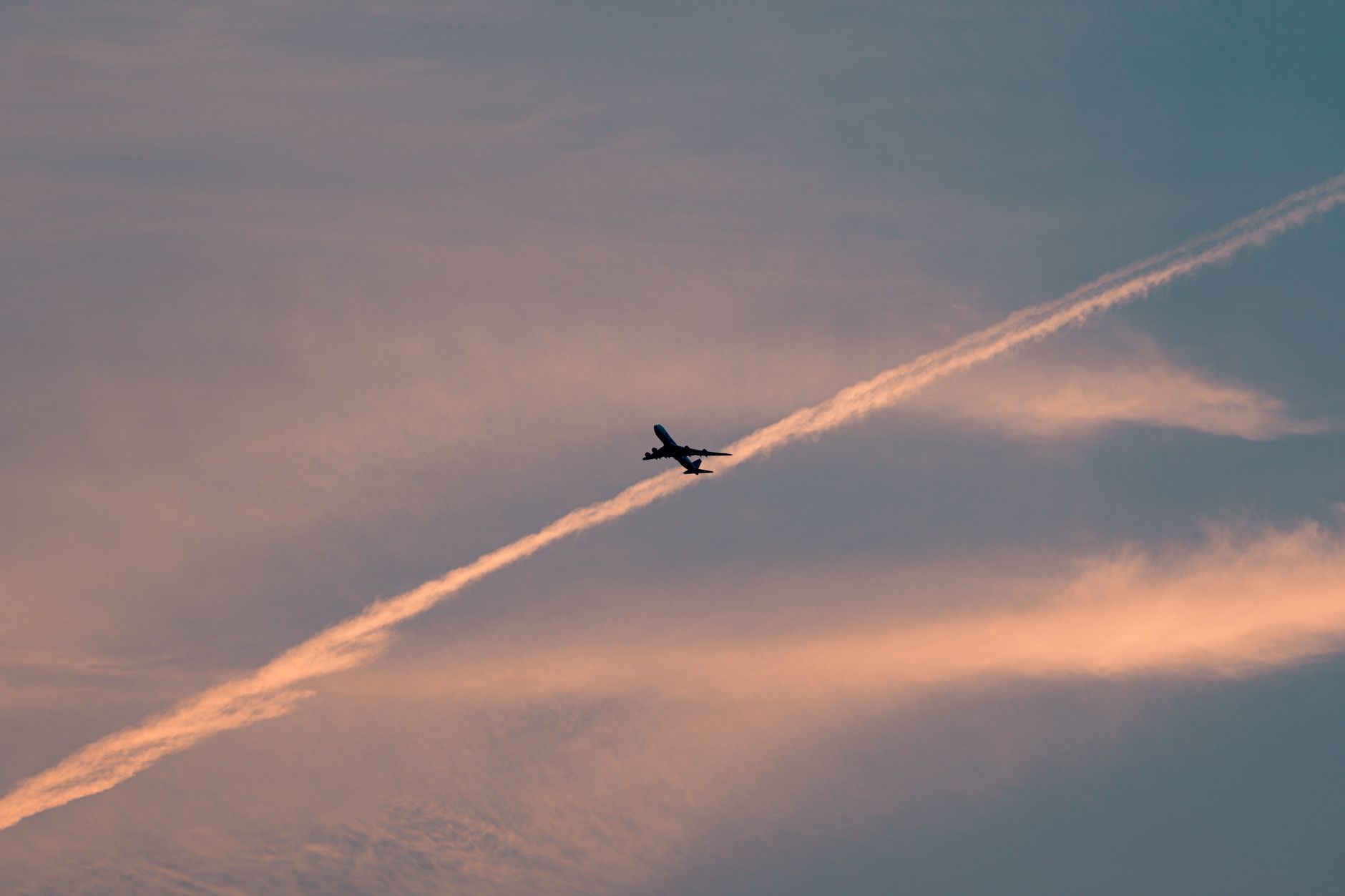
Hero image: Chengxin Zhao / Pexels
Chemtrails Conspiracy Theory: RFK Jr. Claim Investigated
Recent public statements and political maneuvering have thrust long-standing atmospheric conspiracy theories back into the public discourse. An investigation by CNN examines the resurgence of the chemtrails myth, specifically analyzing how prominent figures like Robert F. Kennedy Jr. have engaged with debunked notions about commercial aviation.
In an era where digital communication accelerates the spread of unverified claims, the persistence of atmospheric conspiracy theories highlights a fundamental vulnerability in public science literacy. The notion that ordinary commercial and military aircraft are spraying toxic chemicals or biological agents across the sky—popularly known as the chemtrails conspiracy theory—has circulated for decades without a shred of empirical validation. Recently, this fringe belief gained renewed attention when CNN reported that Robert F. Kennedy Jr. was looking into these claims. Examining how such ideas resurface, the mechanics of actual aircraft emissions, and the psychological appeal of conspiratorial thinking provides crucial context for safeguarding public discourse against financial deception and manufactured misinformation.
Context and Background of the Chemtrails Myth
The origins of the chemtrails conspiracy theory trace back to the late 1990s, emerging shortly after the commercial expansion of the internet allowed fringe ideas to bypass traditional editorial gatekeepers. Proponents of the theory looked at the white, linear cloud formations left behind by high-flying aircraft and claimed they differed fundamentally from normal clouds. According to early iterations of the myth, these trails represented deliberate, clandestine government operations designed to modify the weather, control human populations, or disperse pharmacological agents.
Over the decades, atmospheric scientists, environmental protection agencies, and aviation authorities have repeatedly addressed and refuted these allegations. Despite comprehensive explanations detailing the thermodynamics of flight, believers adapted their narratives to match shifting global events. As CNN detailed in its reporting, these theories have persisted across multiple generations of internet culture, mutating to incorporate contemporary anxieties surrounding climate change, government overreach, and public health initiatives.
The endurance of the myth relies heavily on the misinterpretation of standard aeronautical phenomena. By stripping away basic physics and chemistry, purveyors of the theory construct an alternative reality where standard commercial travel is viewed through a lens of perpetual suspicion. This background establishes a fertile ground for public figures to exploit, whether through genuine misunderstanding or strategic political maneuvering designed to appeal to anti-establishment demographics.
Examining the Recent Claims Surrounding RFK Jr.
The Intersection of Political Influence and Fringe Beliefs
When public figures with significant followings entertain long-debunked conspiracy theories, the impact extends far beyond casual internet speculation. CNN reported that Robert F. Kennedy Jr. expressed involvement in examining the chemtrails theory, a development that instantly vaulted a decades-old fringe internet myth into mainstream news cycles. This elevation of unverified claims creates a false sense of legitimacy, suggesting to skeptics that hidden truths are being uncovered by authorities who dare to question standard scientific consensus.
The Strategic Appeal of Atmospheric Skepticism
The engagement with the chemtrails theory by prominent political actors often serves a distinct rhetorical purpose. By signaling openness to alternative explanations regarding visible atmospheric phenomena, figures can foster solidarity with communities that distrust institutional science and regulatory bodies. However, investigative analysis reveals that this engagement frequently glosses over the mountain of empirical evidence debunking the claims, substituting rigorous scientific inquiry with speculation and innuendo.
Implications for Public Trust
When high-profile individuals lend credence to atmospheric manipulation myths, it erodes public trust in legitimate scientific institutions, such as the National Aeronautics and Space Administration (NASA), the National Oceanic and Atmospheric Administration (NOAA), and the Federal Aviation Administration (FAA). As CNN highlighted, the repetition of these debunked narratives forces scientific communicators to continually expend resources refuting settled facts rather than advancing proactive public education and environmental research.
What the Evidence Shows About Aviation Vapor Trails
The Science of Contrails
The physical reality behind the white lines in the sky is thoroughly documented within atmospheric physics. Condensation trails, or contrails, are simply artificial clouds created when hot, humid engine exhaust mixes with the extremely cold, low-pressure air found at high altitudes, typically above thirty thousand feet. Water vapor instantly condenses around microscopic soot and sulfur particles from jet fuel, freezing into ice crystals.
Variables in Appearance and Persistence
The duration and spread of a contrail depend entirely on atmospheric conditions, specifically humidity and wind shear. In dry air, ice crystals evaporate quickly, causing the trail to dissipate in seconds. In humid air, the crystals persist, spreading out over time to form broad cirrus-like cloud decks. The visual variance of these trails has nothing to do with chemical payloads and everything to do with meteorology.
Comprehensive Scientific Consensus
Extensive studies involving atmospheric scientists and aerospace engineers have consistently analyzed air and particulate samples around flight paths, finding no evidence of anomalous chemical spraying programs. The aviation industry operates under strict regulatory oversight, and the physical constraints of aircraft payload capacities make large-scale atmospheric dusting operations logistically and economically unfeasible.
| Conspiracy Claim | Scientific Reality |
|---|---|
| Persistent trails are secret chemical or biological agents. | Trails are ice crystals formed from water vapor freezing around engine exhaust particles in cold air. |
| Grid-like patterns prove malicious coordination and systematic spraying. | Patterns result from heavy commercial air traffic following established, regulated flight corridors and jet routes. |
| Government agencies are hiding weather modification programs in plain sight. | Meteorological phenomena and cloud persistence are governed by well-understood atmospheric thermodynamics and humidity levels. |
How Long-Standing Atmospheric Myths Spread
The Role of Digital Ecosystems
The mechanisms of modern media consumption play a critical role in keeping the chemtrails narrative alive. Social media algorithms are optimized for engagement, frequently rewarding sensational imagery, dramatic claims, and conspiratorial framing. A simple photograph of a sky crisscrossed by contrails can be captured, stripped of context, and shared globally within minutes as purported proof of a sinister plot.
Confirmation Bias and Pattern Recognition
Human psychology is naturally wired to seek patterns, a survival mechanism that can occasionally misfire into seeing agency where none exists. Proponents of the chemtrails theory engage in confirmation bias, noticing every time a contrail lingers while ignoring the countless days when they dissipate rapidly. When public figures like Robert F. Kennedy Jr. amplify these observations, as reported by CNN, they provide a powerful anchor for confirmation bias among receptive audiences.
The Monetization of Distrust
Beyond psychological factors, an entire cottage industry has formed around the promotion of atmospheric and environmental conspiracy theories. Websites, independent broadcasts, and alternative media platforms frequently monetize this distrust by selling air filtration systems, supplements, or advisory materials designed to protect consumers from manufactured threats, revealing a clear financial incentive behind the perpetuation of the myth.
Red Flags and Misinformation Tactics in Conspiracy Theories
Analyzing the rhetoric surrounding the chemtrails theory reveals consistent misinformation tactics that apply to a broad range of manufactured panics and scientific hoaxes. Recognizing these warning signs allows researchers, journalists, and the general public to evaluate claims critically before accepting them as fact.
The following red flags are characteristic of atmospheric conspiracy theories and related forms of financial and medical misinformation:
- Rejection of Peer-Reviewed Consensus: Dismissing the collective findings of independent atmospheric scientists, aviation engineers, and global regulatory bodies as part of a grand cover-up.
- Vague Attribution of Motives: Failing to provide coherent, evidence-based explanations for why governments or corporations would allegedly poison their own citizens and air supplies.
- Misrepresentation of Normal Phenomena: Presenting standard, well-documented scientific processes—such as thermodynamic condensation—as mysterious or unprecedented anomalies.
- Amplification by Unqualified Voices: Relying on political figures, media personalities, or commentators rather than domain experts when evaluating technical aerospace data.
- Exploitation of Visual Spectacle: Using dramatic, out-of-context photography to evoke emotional panic rather than offering verifiable empirical data or laboratory analysis.
Institutional and Scientific Responses to the Claims
Scientific institutions and regulatory agencies have historically adopted a measured approach to addressing atmospheric myths, though the persistence of the claims has occasionally required formal interagency cooperation. Organizations such as the Environmental Protection Agency (EPA), NASA, and the FAA have routinely fielded inquiries from citizens and lawmakers regarding aircraft emissions.
Official responses typically involve publishing detailed educational materials explaining the chemistry of jet fuel combustion and the formation of contrails. In the past, international scientific groups have also conducted comprehensive reviews and public awareness campaigns to demystify aviation impacts on climate and cloud formation. However, as noted in media coverage of political figures engaging with these myths, institutional debunks often face an uphill battle against deeply entrenched distrust in official oversight.
When prominent individuals prompt renewed governmental or public scrutiny into debunked theories, agencies are placed in the difficult position of having to repeatedly disprove non-existent phenomena. This dynamic underscores the ongoing challenge of science communication in an information environment where sensational claims travel faster and wider than nuanced, evidence-based refutations.
Navigating Reliable Information Regarding Atmospheric Science
Distinguishing between verifiable science and manufactured conspiracy requires adherence to strict informational standards. Readers seeking to understand atmospheric phenomena, aviation emissions, or environmental science should consult peer-reviewed academic literature, reports from accredited meteorological societies, and official data published by international civil aviation organizations.
Critical consumers of news should apply rigorous verification standards when encountering claims about government plots or hidden technological interventions. Checking primary sources, evaluating the consensus of the broader scientific community, and identifying financial or political motivations behind sensational reporting are essential steps in combating misinformation. Relying on evidence-first journalism, such as the reporting provided by CNN on political engagement with these theories, helps ground public debate in verifiable reality.
Frequently Asked Questions Regarding the Chemtrails Theory
What is the difference between contrails and chemtrails?
Contrails are real, scientifically documented condensation trails formed when hot engine exhaust meets cold high-altitude air. Chemtrails is a debunked conspiracy theory term used to describe the unproven belief that these same trails contain secret chemical or biological agents.
Why do some airplane trails persist longer than others?
The persistence and spreading of a trail depend entirely on atmospheric humidity and wind conditions at cruising altitude. High humidity causes ice crystals to linger and spread into cirrus-like clouds, while dry air causes them to evaporate immediately.
Has any credible scientific study ever found evidence of chemtrails?
No. Comprehensive reviews by atmospheric scientists, independent researchers, and environmental agencies have found zero evidence of clandestine chemical spraying programs associated with commercial or military aviation.
Why did Robert F. Kennedy Jr. become associated with this topic?
As reported by CNN, public statements and political activities by Robert F. Kennedy Jr. involved looking into or acknowledging the chemtrails narrative, which brought renewed mainstream attention to a long-standing internet conspiracy theory.
How can the public combat the spread of atmospheric misinformation?
The public can combat misinformation by relying on peer-reviewed scientific consensus, consulting data from accredited regulatory agencies like the EPA and NASA, and critically evaluating claims that lack empirical, verifiable proof.