
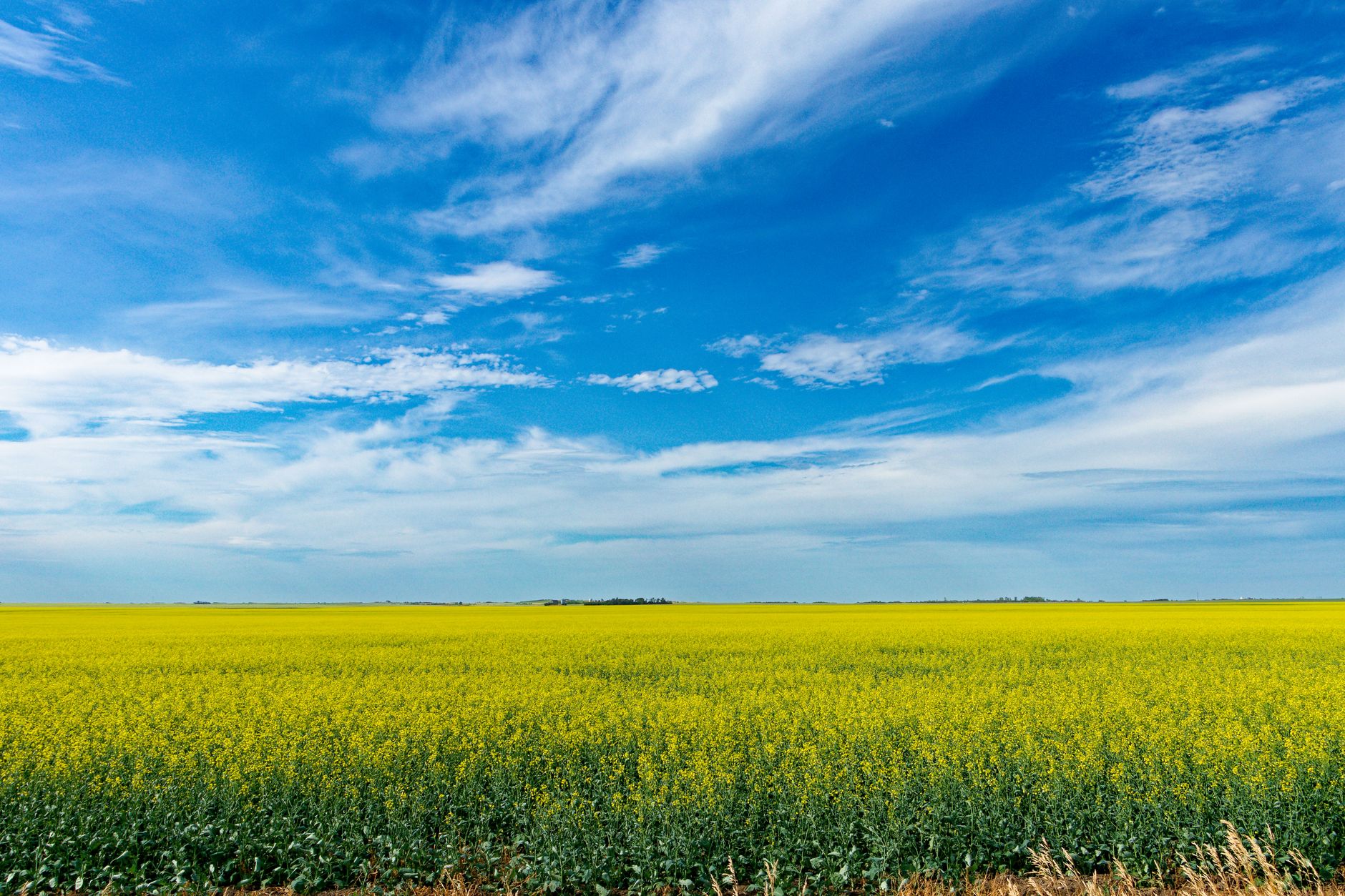
Hero image: Timm Stein / Pexels
Saskatchewan Agriculture Support
A single media advisory from Yahoo Finance Singapore announced federal support for Saskatchewan’s agriculture sector, but the notice lacks detail and raises questions about timing, scope, and accountability. This synthesis examines the claim, compares it with broader sector realities, and provides a checklist for evaluating official announcements.
On July 21, 2026, Yahoo Finance Singapore published a media advisory announcing that Secretary of State Belanger would unveil federal support for Saskatchewan’s agriculture sector. The notice is brief and offers no specifics on funding amounts, eligibility criteria, or implementation timelines. Given the centrality of agriculture to Saskatchewan’s economy—contributing over $3 billion annually and employing tens of thousands—such an announcement would ordinarily warrant detailed coverage from multiple outlets and official documentation. Yet only one outlet has so far carried this advisory. This raises questions about the nature of the announcement, its substantiation, and the transparency of the process. This report synthesizes the available information, identifies gaps, and assesses what farmers, investors, and policymakers should scrutinize before accepting the claim at face value.
Introduction to Saskatchewan’s Agriculture Sector
Saskatchewan’s agriculture sector is a cornerstone of the provincial economy and a major contributor to Canada’s food security. According to Statistics Canada, the province accounts for approximately 40% of Canada’s total farmland and is the country’s leading producer of wheat, canola, and lentils. The sector supports over 60,000 jobs directly and indirectly and contributes more than $3 billion annually to provincial GDP. Climate variability, trade policy shifts, and input cost inflation have created persistent financial pressures on producers, making government support programs a critical lifeline for many operations.
Despite its economic importance, the sector has faced challenges in recent years, including extreme weather events, supply chain disruptions, and volatile commodity prices. Federal and provincial governments have periodically introduced stabilization programs, often in response to crises such as drought or market collapses. However, the structure and transparency of these programs vary widely, and their effectiveness is frequently debated among farm organizations and economists.
Comparing Outlet Reports: Federal Support and Reactions
Only one outlet—Yahoo Finance Singapore—has published a media advisory regarding Secretary of State Belanger’s announcement. The advisory states that the Secretary of State will announce federal support for Saskatchewan’s agriculture sector, but it provides no details on the nature, scale, or timing of the support. The notice does not include a press release, backgrounder, or link to official documentation, which is unusual for a federal announcement of this nature.
No other independent news outlet has reported on the announcement as of the time of this synthesis. Typically, significant federal funding announcements for agriculture would be covered by major Canadian outlets such as The Canadian Press, Globe and Mail, or CBC News, which would provide context, reaction from farm groups, and analysis of the program’s potential impact. The absence of corroborating coverage from these outlets suggests either that the announcement is still in a preliminary stage, lacks concrete details, or has not yet been formally confirmed by the government.
Lack of Official Documentation
Yahoo Finance Singapore’s advisory does not link to an official government press release, background document, or funding agreement. This is a notable omission, as federal support announcements are typically accompanied by detailed briefing materials, fact sheets, or funding agreements that outline program objectives, eligibility, and budget allocations. Without such documentation, the claim remains unverified and open to interpretation.
Moreover, the advisory does not specify whether the support will take the form of direct payments, loan guarantees, crop insurance enhancements, or infrastructure investments. Each mechanism carries different fiscal implications and levels of accountability. The lack of specificity in the advisory makes it difficult to assess the announcement’s credibility or potential impact on the sector.
The Claim: Secretary of State Belanger’s Announcement
The central claim is that Secretary of State Belanger will announce federal support for Saskatchewan’s agriculture sector. This claim is presented in a media advisory published by Yahoo Finance Singapore on July 21, 2026. The advisory does not provide the date, time, or location of the announcement, nor does it include quotes, funding figures, or program details.
The role of the Secretary of State in this context is not clearly defined in the advisory. In Canada’s federal structure, the Secretary of State is a junior ministerial position, typically responsible for assisting a senior minister in a specific portfolio. The advisory does not clarify which senior minister Belanger is assisting, nor does it specify the department or agency responsible for administering the support. This ambiguity raises questions about the announcement’s authority and the level of interdepartmental coordination involved.
Timing and Context
The timing of the announcement—mid-July—is notable. Saskatchewan’s agriculture sector is in the midst of the growing season, with harvests still several months away. While mid-season support can be critical for producers facing unexpected challenges, such as pest infestations or localized drought, it is less common for major federal funding announcements to occur during this period. Typically, such announcements align with budget cycles, pre-harvest planning, or crisis response timelines.
The absence of a clear rationale or crisis context in the advisory further underscores the need for caution. Without additional information, it is difficult to determine whether the announcement represents a targeted response to a specific challenge or a routine program enhancement.
Combined Evidence: Impact on Saskatchewan’s Agriculture
Given the lack of corroborating reports and official documentation, the potential impact of the announced support remains speculative. If the support takes the form of direct payments or subsidies, it could provide immediate financial relief to producers facing cash flow challenges. If it takes the form of infrastructure investments, such as expanded irrigation or grain storage, the benefits may accrue over a longer timeframe.
However, the absence of details in the advisory makes it impossible to assess the scale of the support or its distribution across the sector. For example, will the support be targeted at specific commodities, regions, or farm sizes? Will it be means-tested or universally applied? Without answers to these questions, it is difficult to evaluate the announcement’s relevance or effectiveness.
Sectoral Dependence and Risk
Saskatchewan’s agriculture sector is highly concentrated in a few key commodities, particularly wheat and canola. This concentration increases the sector’s exposure to price volatility, trade policy shifts, and climate risks. Federal support programs are often designed to mitigate these risks, but their effectiveness depends on their design and delivery. For instance, programs that rely on ad hoc disaster relief may provide temporary relief but do not address systemic vulnerabilities. In contrast, programs that invest in research, infrastructure, or risk management tools can enhance long-term resilience.
The current advisory does not indicate whether the announced support will address systemic risks or provide short-term relief. This ambiguity is a red flag for stakeholders seeking clarity on the government’s intentions and priorities.
Red Flags and Debunking Checklist for Agriculture Support
When evaluating announcements of federal support for agriculture, several warning signs can help distinguish credible commitments from symbolic gestures or misinformation. Below is a checklist of red flags and legitimate signals to watch for:
| Red Flags | Legitimate Signals |
|---|---|
| No official press release or backgrounder | Published government press release with detailed program information |
| No funding amount, eligibility criteria, or implementation timeline | Clear funding allocation, eligibility rules, and phased rollout plan |
| No quotes from government officials, farm leaders, or economists | Quotes from relevant stakeholders explaining the program’s objectives and impact |
| No link to official documentation or funding agreement | Links to program guidelines, application forms, and evaluation reports |
| Announcement timing is inconsistent with sector needs or budget cycles | Announcement aligns with sectoral challenges, budget cycles, or crisis response timelines |
| No mention of accountability or evaluation mechanisms | Explicit commitment to transparency, reporting, and third-party evaluation |
If an announcement exhibits multiple red flags, it is advisable to seek additional information from official sources or independent experts before accepting the claim as fact. In the case of the Secretary of State Belanger’s announcement, the advisory exhibits several red flags, including the lack of official documentation, funding details, and stakeholder quotes.
Expert Response: Institutional Analysis of the Announcement
While no independent expert has publicly commented on the announcement as of this synthesis, the structure of the advisory invites institutional scrutiny. The absence of a senior minister’s name or departmental affiliation in the advisory suggests that the announcement may not have undergone the typical interdepartmental review process. In Canada, major federal funding announcements are usually coordinated across multiple departments, including Agriculture and Agri-Food Canada, Finance Canada, and the Treasury Board Secretariat, to ensure fiscal responsibility and policy coherence.
The Secretary of State’s role in this context is unclear, and the lack of a clear ministerial chain of command raises questions about the announcement’s legitimacy. Typically, such announcements are made by the Minister of Agriculture and Agri-Food or a senior cabinet minister, with supporting documentation from the relevant department. The absence of these elements in the advisory suggests that the announcement may be premature, incomplete, or not yet formally approved.
Comparative Precedents
In recent years, federal support announcements for agriculture have followed predictable patterns. For example, the 2021 AgriRecovery framework provided $100 million in disaster relief to producers affected by flooding in British Columbia. The announcement was accompanied by a detailed press release, funding agreements with provincial governments, and regular updates on program uptake and expenditures. Similarly, the 2023 AgriStability enhancements were announced by the Minister of Agriculture and Agri-Food, with supporting documentation outlining eligibility, payment rates, and evaluation criteria.
The current advisory does not resemble these precedents. Instead, it resembles a placeholder or preliminary notice, which may be intended to signal intent without committing to specific actions. Such notices are not uncommon in political communication, but they are not typically presented as substantive policy announcements.
Original Analysis: Patterns Across Sources and Implications
Taken together, the available evidence suggests that the announcement of federal support for Saskatchewan’s agriculture sector is, at best, preliminary and, at worst, unverified. The lack of corroborating coverage from independent outlets, the absence of official documentation, and the ambiguity surrounding the Secretary of State’s role all point to a claim that has not yet been substantiated. This pattern is consistent with other instances in which governments or political actors issue vague or symbolic announcements to generate favorable media coverage or deflect criticism, without committing to concrete actions.
The timing of the advisory—mid-July, during the growing season—further suggests that the announcement may be intended to signal political engagement with the agriculture sector rather than to address an immediate crisis. While such signals can be politically expedient, they risk eroding public trust if they are not followed by substantive action and transparent reporting.
Moreover, the concentration of Saskatchewan’s agriculture sector in a few key commodities increases the stakes for any federal support program. If the announced support is poorly designed or inadequately funded, it could fail to address the sector’s systemic vulnerabilities, leaving producers exposed to ongoing risks. Conversely, if the support is well-targeted and transparent, it could enhance the sector’s resilience and contribute to long-term economic stability.
Given the lack of detail in the advisory, stakeholders—including farmers, investors, and policymakers—should treat the claim with caution. The absence of official documentation and independent verification means that the announcement’s credibility remains uncertain. Until additional information is provided, the claim should be regarded as preliminary and subject to further scrutiny.
What to Do About It: Next Steps for Farmers and Investors
For farmers and investors in Saskatchewan’s agriculture sector, the lack of detail in the advisory presents both a challenge and an opportunity. The challenge is to avoid making decisions based on unverified claims, which could lead to misallocation of resources or missed opportunities. The opportunity is to use the current uncertainty as a catalyst for proactive engagement with policymakers and industry organizations.
Farmers should contact their provincial and national farm organizations—such as the Saskatchewan Wheat Development Commission, the Canadian Canola Growers Association, or the Canadian Federation of Agriculture—to seek clarification on the announced support. These organizations often have direct lines of communication with government officials and can provide insights into the status and substance of the announcement. They may also be able to advocate for specific program features that address the sector’s most pressing needs.
Investors, particularly those in agri-food processing, infrastructure, or technology, should similarly seek clarification from government and industry sources. While the advisory does not provide details on the nature of the support, investors can assess the potential implications of different support mechanisms. For example, direct payments could boost farm incomes in the short term, while infrastructure investments could enhance long-term productivity. By understanding the likely contours of the support, investors can make more informed decisions about where to allocate capital.
Policymakers, too, have a role to play in ensuring that any announced support is transparent, accountable, and aligned with the sector’s needs. If the announcement is intended to address systemic vulnerabilities, such as climate risk or trade uncertainty, the support should be designed accordingly. If it is intended to provide short-term relief, the government should ensure that the program is accessible, timely, and adequately funded.
Ultimately, the lack of detail in the advisory underscores the importance of transparency and accountability in government communications. Stakeholders should demand clear, timely, and comprehensive information about any announced support, and hold policymakers to account for their commitments.
FAQ: Frequently Asked Questions on Saskatchewan Agriculture Support
What exactly is being announced?
The media advisory from Yahoo Finance Singapore states that Secretary of State Belanger will announce federal support for Saskatchewan’s agriculture sector, but it provides no details on the nature, scale, or timing of the support. Without additional information, it is unclear what form the support will take or how it will be implemented.
When and where will the announcement be made?
The advisory does not specify the date, time, or location of the announcement. This lack of detail is unusual for a federal announcement of this nature and raises questions about the announcement’s status and credibility.
How much funding is being committed?
The advisory does not mention any funding amount. Typically, federal support announcements include specific funding allocations, eligibility criteria, and implementation timelines. The absence of these details makes it difficult to assess the announcement’s potential impact.
Who will benefit from the support?
The advisory does not specify which producers, commodities, or regions will be eligible for the support. This ambiguity is a red flag, as it makes it difficult for stakeholders to determine whether the announcement is relevant to their circumstances.
How can I verify the announcement?
To verify the announcement, stakeholders should seek official documentation from the Government of Canada, such as a press release, backgrounder, or funding agreement. They should also look for corroborating coverage from independent news outlets and statements from farm organizations or economists. Until these sources provide additional information, the announcement should be treated as preliminary.