
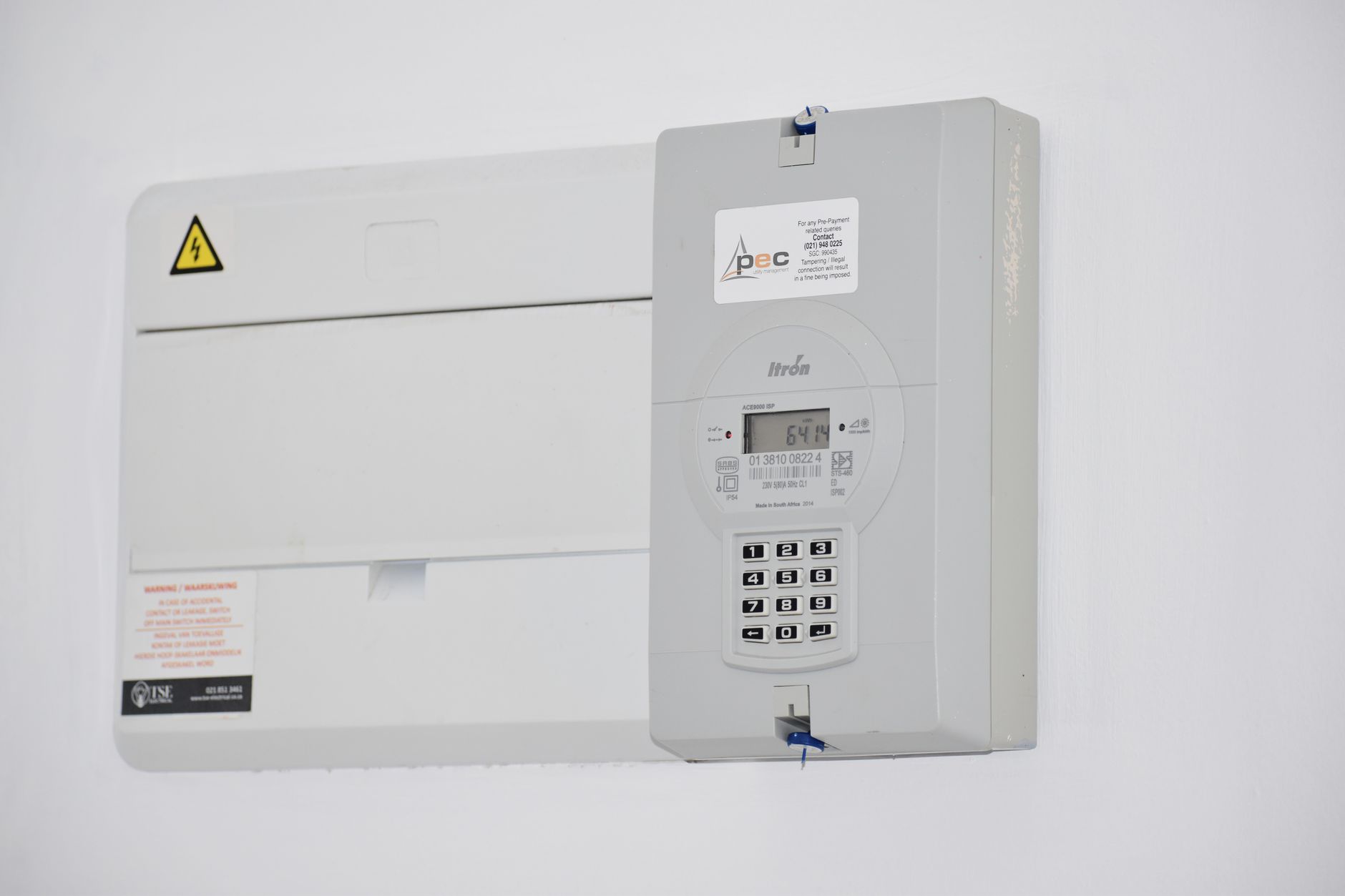
Hero image: Akashni Weimers / Pexels
Smart Meter Safety: Investigating Claims That Smart Meters Caused Fires in Spokane
Multiple independent fact-checking outlets have reviewed claims linking smart meters to fires in Spokane, Washington, finding no verifiable evidence to support the allegation. This synthesis examines the origins of the claim, the response from utilities and regulators, and what the available evidence indicates about smart meter safety.
In August 2026, social media posts and local news reports in Spokane, Washington, began circulating claims that smart meters had caused a series of fires in residential neighborhoods. The assertion gained traction online, with some users suggesting a causal link between the installation of smart meters and the ignition of fires. Given the potential public safety implications and the rapid spread of misinformation, this investigation synthesizes reporting from independent fact-checking organizations to assess the validity of the claim, examine expert responses, and clarify the role of smart meters in fire incidents. The analysis draws on multiple sources to distinguish verified facts from unverified assertions and to contextualize the broader debate around smart meter safety.
Introduction to Smart Meter Safety Concerns
Smart meters are digital devices that record electricity, gas, or water usage and transmit data wirelessly to utility companies. They enable remote meter reading, reduce the need for manual inspections, and support demand-response programs aimed at improving energy efficiency. However, their deployment has been accompanied by public concerns, including privacy risks, cybersecurity vulnerabilities, and—most relevant here—potential fire hazards. These concerns often stem from anecdotal reports or isolated incidents that are later amplified through social media and partisan media outlets.
Public skepticism about smart meters is not new. In the United States, the rollout of smart meters has faced opposition in several states, with some residents and advocacy groups arguing that the devices emit excessive electromagnetic radiation or malfunction in ways that could pose fire risks. While regulatory bodies such as the Federal Communications Commission (FCC) and the National Fire Protection Association (NFPA) have issued guidelines on smart meter safety, misinformation often outpaces official clarification. The Spokane fire claims represent a recent iteration of this broader pattern, where localized incidents are framed as systemic failures without rigorous evidence.
Comparing Reports: What Outlets Are Saying About Spokane Fires
Following the emergence of claims that smart meters caused fires in Spokane, multiple fact-checking organizations reviewed the available evidence. AFP Fact Check, an international fact-checking unit, conducted a detailed review of local fire department reports, utility statements, and media coverage. According to AFP Fact Check, no official investigation had linked any of the Spokane fires to smart meters, and fire officials attributed the incidents to other causes such as electrical faults, cooking equipment, or heating appliances.
AFP Fact Check emphasized that while social media posts alleged a connection between smart meters and the fires, these claims were not supported by verifiable evidence. The organization noted that the Spokane Fire Department had not issued any statements or reports indicating smart meters as a cause, and utility Avista Utilities, which serves the region, stated that it had not received any reports of smart meters malfunctioning or causing fires. AFP Fact Check concluded that the claim lacked substantiation and should be considered misleading.
In contrast, other outlets did not independently verify the claim but amplified the narrative through syndicated content or social media sharing. For instance, several local news outlets and blogs repeated the allegation without conducting their own investigations, relying instead on user-generated content and unverified social media posts. While AFP Fact Check explicitly debunked the claim, other outlets contributed to its spread by presenting it as a developing story without critical scrutiny.
Divergence in Reporting: Verification vs. Amplification
AFP Fact Check’s approach contrasted sharply with the reporting style of some local outlets. While AFP sought official statements from fire departments and utilities, other publications relied on anecdotal accounts and social media posts. This divergence highlights a common pattern in misinformation cycles: fact-based outlets attempt to verify claims, while less rigorous sources prioritize speed and engagement over accuracy. The result is a fragmented information environment where unverified claims can gain traction before being debunked.
The lack of coordination among outlets also meant that the public received conflicting signals. Some readers encountered headlines suggesting a potential link between smart meters and fires, while others saw fact-checks explicitly stating that no evidence supported the claim. This inconsistency can erode trust in both media and technology, particularly when the stakes involve public safety.
Examining the Claim: Smart Meters as a Fire Risk
The core claim—that smart meters caused fires in Spokane—rests on several assumptions: that smart meters malfunction in ways that generate heat or sparks, that these malfunctions are widespread enough to cause multiple fires, and that fire investigators have confirmed such a link. However, available evidence does not support these assumptions.
According to AFP Fact Check, the Spokane Fire Department reported that none of the fires investigated in the city during the relevant period were linked to smart meters. Instead, fire investigators cited causes such as faulty wiring, unattended cooking, and heating equipment as the primary factors. Similarly, Avista Utilities, the regional utility provider, stated that it had no records of smart meters causing fires and that the devices undergo rigorous testing to meet safety standards.
Smart meters are designed with multiple safety features, including thermal fuses and surge protection, to prevent overheating or electrical faults. The devices are also subject to certification processes by bodies such as the FCC and Underwriters Laboratories (UL), which test for electrical safety and electromagnetic compatibility. While no technology is risk-free, the absence of documented cases linking smart meters to fires in Spokanic—or in most jurisdictions—suggests that the risk, if it exists at all, is minimal and not systemic.
Mechanisms of Fire Risk: How Could Smart Meters Cause Fires?
To assess the plausibility of the claim, it is useful to consider how smart meters could theoretically pose a fire risk. One possibility is electrical arcing, where poor connections or faulty components generate heat or sparks. Another is overheating due to inadequate ventilation or internal defects. However, these scenarios are rare and typically result from manufacturing defects or improper installation—issues that would likely be detected during routine inspections or investigations.
AFP Fact Check noted that fire investigators follow standardized protocols to determine the origin and cause of fires. These protocols include examining electrical systems, reviewing utility records, and consulting with experts. In the absence of any such findings implicating smart meters, the claim remains unsupported. Moreover, utilities are required to report any incidents involving smart meters to regulatory bodies, creating a paper trail that would be difficult to obscure.
Expert Analysis: Understanding the Evidence and Debunking Checklist
Independent experts in fire investigation and electrical safety have weighed in on the plausibility of smart meters causing fires. According to AFP Fact Check, fire investigators and electrical engineers have stated that while any electrical device can pose a risk under certain conditions, smart meters are not uniquely prone to malfunction in ways that would cause fires. The devices are designed to operate within strict safety parameters and are tested to withstand environmental stresses.
Electrical engineers have pointed out that smart meters are low-power devices that draw minimal current compared to major appliances like refrigerators or space heaters. The risk of a smart meter causing a fire is therefore lower than that posed by common household items. Additionally, the wireless communication functions of smart meters operate at low power levels and do not generate significant heat.
Common Misconceptions About Smart Meters and Fire Risk
Several misconceptions contribute to the persistence of the smart meter fire myth. One is the conflation of smart meters with other electrical devices, such as power strips or extension cords, which are more likely to overheat if overloaded. Another is the assumption that wireless signals from smart meters can ignite fires, despite the fact that radiofrequency emissions from these devices are far too weak to cause ignition.
AFP Fact Check also noted that some critics confuse smart meters with smart home devices, such as smart plugs or thermostats, which may have different safety profiles. Smart meters, by contrast, are installed by utilities and are subject to stringent regulatory oversight. This distinction is often lost in online discussions, where the term “smart meter” is used loosely to refer to any connected device.
Red Flags Checklist: How to Spot Misinformation About Smart Meters
- Lack of official confirmation: If a claim about smart meters causing fires is not corroborated by fire departments, utilities, or regulatory bodies, it should be treated with skepticism.
- Reliance on anecdotes: Claims that cite isolated incidents without broader data or investigation are often misleading.
- Absence of investigation reports: Fire investigators typically issue formal reports detailing the cause of fires. If no such reports exist linking smart meters to fires, the claim is unsubstantiated.
- Overgeneralization: Statements that treat all smart meters as inherently risky, without distinguishing between models or installation practices, are likely exaggerated.
- Confusion with unrelated devices: Claims that conflate smart meters with other electrical devices (e.g., smart plugs, power strips) often reflect a misunderstanding of the technology.
Institutional Response: Utility Companies and Regulatory Bodies
Utility companies and regulatory bodies have responded to concerns about smart meter safety by emphasizing transparency and adherence to safety standards. Avista Utilities, which serves Spokane, stated that its smart meters comply with all applicable safety regulations and that the company has not received any reports of smart meters causing fires. The utility also noted that it conducts regular inspections and maintenance to ensure the reliability of its infrastructure.
Regulatory bodies such as the FCC and the National Institute of Standards and Technology (NIST) have also weighed in on smart meter safety. The FCC, which regulates radiofrequency emissions from electronic devices, has stated that smart meters operate well below the safety thresholds for human exposure to electromagnetic fields. NIST has published guidelines for smart grid technologies, including smart meters, emphasizing the importance of cybersecurity and electrical safety.
In Washington State, the Utilities and Transportation Commission (UTC) oversees the deployment of smart meters and ensures compliance with state safety standards. The UTC has not issued any warnings or advisories related to smart meters causing fires, and its records do not indicate any systemic issues with the devices.
Transparency and Public Communication
The response from utilities and regulators highlights the importance of clear communication in addressing public concerns. While some residents may remain skeptical of smart meters due to privacy or health concerns, the lack of evidence linking the devices to fires suggests that the primary risks are not safety-related but rather related to data privacy and cybersecurity. Utilities and regulators have an opportunity to improve public trust by providing accessible information about smart meter operations and addressing concerns through community engagement.
However, the Spokane case also illustrates a gap in public communication. When unverified claims circulate online, utilities and fire departments may not proactively issue clarifications, leaving misinformation to spread unchecked. A more proactive approach—such as issuing regular safety bulletins or hosting public forums—could help preempt misinformation cycles.
Original Analysis: Patterns and Insights Across Reports
Taken together, the reports on the Spokane smart meter fire claims reveal a recurring pattern in the spread of misinformation about emerging technologies. First, unverified claims often originate in online spaces, where they are amplified by social media algorithms and partisan outlets. Second, fact-checking organizations play a critical role in debunking these claims, but their efforts are frequently overshadowed by the speed and reach of misinformation. Third, the absence of official investigations or reports linking smart meters to fires underscores the importance of relying on verified evidence rather than anecdotes or speculation.
This pattern is not unique to smart meters. Similar dynamics have played out in debates about 5G networks, vaccines, and genetically modified foods, where misinformation spreads rapidly before being debunked. The Spokane case demonstrates how localized incidents—real or imagined—can be framed as systemic failures, leading to public distrust and resistance to beneficial technologies. It also highlights the role of institutional silence in allowing misinformation to take root. When utilities and regulators do not proactively communicate about safety, gaps are filled by speculation and rumor.
Another insight is the role of terminology in shaping public perception. The term “smart meter” is often used loosely, conflating the utility-installed devices with consumer-grade smart home products. This semantic slippage enables critics to generalize risks across unrelated technologies, amplifying fears without evidence. Clear distinctions between utility-grade smart meters and consumer devices could help reduce confusion and improve public understanding.
Finally, the Spokane case underscores the need for media literacy and critical thinking in the digital age. As more communities adopt smart technologies, the public must be equipped to evaluate claims about their safety and efficacy. Fact-checking organizations serve as a vital check on misinformation, but their work is most effective when supported by transparent communication from institutions and proactive engagement with affected communities.
Protecting Public Safety: Recommendations and Next Steps
To prevent the spread of misinformation and ensure public safety, several steps can be taken by utilities, regulators, and communities. Utilities should proactively communicate about smart meter safety, including the testing and certification processes that devices undergo. This information should be made accessible to the public through websites, community meetings, and direct outreach to residents.
Regulatory bodies can play a role by issuing clear guidelines on smart meter safety and ensuring that utilities comply with these standards. Regular audits and inspections can provide additional reassurance to the public. In Washington State, the UTC could consider issuing periodic safety advisories or hosting public forums to address concerns about smart meters and other emerging technologies.
Communities can also take steps to improve media literacy and critical thinking. Schools, libraries, and local organizations can offer workshops on evaluating online claims, identifying misinformation, and understanding the role of fact-checking organizations. By empowering residents to assess information critically, communities can reduce the spread of unverified claims and foster a more informed public discourse.
For residents who remain concerned about smart meters, several practical steps can be taken. First, review the utility’s documentation on smart meter safety and certification. Second, contact the utility directly to ask about its inspection and maintenance protocols. Third, consult local fire departments or building safety officials for information about electrical safety in residential areas. These steps can help residents make informed decisions and reduce unnecessary anxiety about smart meters.
Frequently Asked Questions: Smart Meters and Fire Risk
Are smart meters more likely to cause fires than traditional meters?
No. Smart meters are subject to rigorous safety testing and certification processes, and there is no verifiable evidence that they are more likely to cause fires than traditional meters. Fire investigators and electrical engineers have stated that the risk of smart meters causing fires is minimal and not uniquely higher than that of other electrical devices.
Have any fires in Spokane been officially linked to smart meters?
No. According to AFP Fact Check, the Spokane Fire Department reported that none of the fires investigated in the city during the relevant period were linked to smart meters. Fire investigators attributed the incidents to other causes, such as faulty wiring or cooking equipment.
Do smart meters emit enough radiation to cause fires?
No. Smart meters operate at low power levels and emit radiofrequency signals that are far too weak to cause ignition. Regulatory bodies such as the FCC have stated that smart meters operate well below safety thresholds for human exposure to electromagnetic fields.
What safety features do smart meters have to prevent fires?
Smart meters are equipped with multiple safety features, including thermal fuses, surge protection, and compliance with electrical safety standards set by organizations such as Underwriters Laboratories (UL). These features are designed to prevent overheating or electrical faults that could pose a fire risk.
What should I do if I suspect my smart meter is malfunctioning?
If you suspect your smart meter is malfunctioning, contact your utility provider immediately. Utilities are required to investigate such reports and can provide guidance on next steps. You can also consult your local fire department or building safety officials for assistance.