
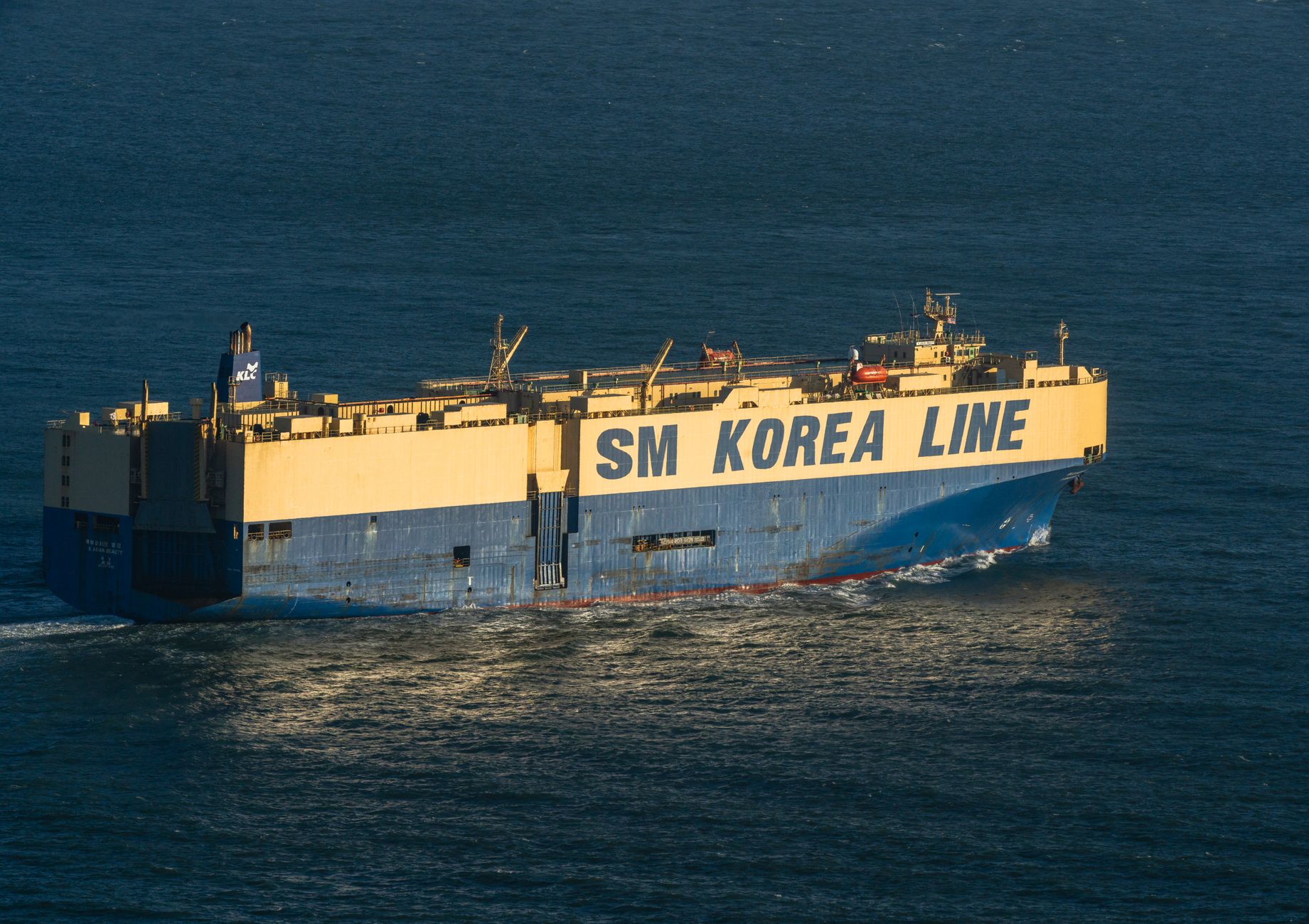
Hero image: Robert So / Pexels
South China Sea Ship Sinking News
Chinese state media reported the sinking of a Vietnamese cargo ship in the South China Sea on July 26, 2026, with 23 crew members missing and 39 rescued. The incident raises questions about maritime safety and the reliability of official narratives in contested waters.
On July 26, 2026, Chinese state media outlets reported that a Vietnamese-flagged cargo ship had sunk in the South China Sea, resulting in a search-and-rescue operation that left 23 crew members missing and 39 rescued. The reports emerged amid heightened attention to maritime safety in one of the world’s most contested waterways. This synthesis examines the initial claims, compares independent reporting, evaluates the consistency of official statements, and assesses the broader implications for regional maritime governance. By cross-referencing multiple sources, this analysis identifies areas of agreement, discrepancies, and potential red flags in the evolving narrative.
Introduction to the South China Sea Ship Sinking
The sinking of a Vietnamese cargo ship in the South China Sea on July 26, 2026, has become a focal point for international observers due to its location in disputed waters and the immediate response from regional authorities. According to Chinese state media, the vessel—identified as the MV *Hai Phong*—sank during a storm, prompting a coordinated rescue effort involving Chinese maritime authorities and regional partners. The incident has drawn attention not only for its humanitarian dimension—23 crew members remain missing—but also for the geopolitical context in which it occurred. The South China Sea remains a flashpoint for competing territorial claims, and maritime incidents often become sites where information, misinformation, and strategic messaging intersect.
While the immediate cause of the sinking has been attributed to severe weather by Chinese state media, the lack of independent verification from Vietnamese or third-party sources introduces uncertainty. The discrepancy between official narratives and the need for transparent, verifiable reporting underscores the challenges of crisis communication in contested maritime zones. This article synthesizes reporting from multiple outlets to assess the credibility of the claims, the response mechanisms in place, and the broader implications for regional safety and information integrity.
Comparing Reports from The Hindu and Malay Mail
Two independent outlets—The Hindu and Malay Mail—provided initial coverage of the incident within hours of each other, both citing Chinese state media as their primary source. While both reports confirm the basic facts—23 missing, 39 rescued, Vietnamese cargo ship sunk—they differ in emphasis, detail, and framing, particularly regarding the vessel’s identity and the context of the rescue operation.
Divergent Details on Vessel Identity and Context
The Hindu reported that the sinking occurred in the South China Sea and referenced Chinese state media accounts that identified the ship as Vietnamese. The report also highlighted the scale of the rescue effort and the ongoing search for survivors, noting that Chinese authorities had deployed multiple vessels and aircraft. However, The Hindu did not provide additional context about the ship’s route, cargo, or ownership, focusing instead on the humanitarian aspect of the incident.
In contrast, Malay Mail offered a slightly more detailed account, explicitly stating that the ship was a Vietnamese cargo vessel and specifying that the incident occurred in waters claimed by China. The outlet also emphasized the role of Chinese state media in disseminating the initial reports, framing the story as part of a broader pattern of state-controlled information flows in the region. While both outlets relied on the same primary source—Chinese state media—their framing differed: The Hindu leaned toward a neutral humanitarian narrative, whereas Malay Mail highlighted the geopolitical context of the reporting itself.
Consistency in Core Facts, Gaps in Independent Verification
Both outlets agreed on the core facts: a Vietnamese-flagged cargo ship sank in the South China Sea; 39 crew members were rescued; and 23 remain missing as of the time of reporting. However, neither outlet provided independent confirmation of the incident from Vietnamese authorities or third-party maritime organizations such as the International Maritime Organization (IMO). This gap is notable given the potential for disputes over the ship’s origin, the conditions of the sinking, and the conduct of the rescue operation.
The absence of direct quotes from Vietnamese officials or crew members further limits the depth of the reporting. While The Hindu and Malay Mail both cited Chinese state media, they did not challenge or contextualize the claims with additional sources. This reliance on a single primary source—especially one with a vested interest in shaping the narrative—introduces a potential vulnerability to misinformation or incomplete reporting.
What Chinese State Media is Reporting
Chinese state media outlets, including Xinhua and China Central Television (CCTV), were the primary sources for the initial reports of the ship sinking. According to these accounts, the MV *Hai Phong*, a Vietnamese-flagged cargo ship, encountered severe weather conditions in the South China Sea and subsequently sank. The reports stated that 39 crew members were rescued by Chinese maritime authorities, while 23 remained missing and were the subject of an ongoing search-and-rescue operation.
Official Narrative and Rescue Efforts
Chinese state media emphasized the rapid response of Chinese maritime authorities, describing the deployment of multiple ships, helicopters, and rescue teams to the area. The reports also noted coordination with regional partners, though the extent and nature of this cooperation were not detailed. The narrative framed the incident as a humanitarian crisis rather than a geopolitical event, focusing on the efforts to save lives rather than the broader implications of the sinking in contested waters.
However, the reports did not provide independent verification of the ship’s identity, cargo, or route. Nor did they address potential questions about the weather conditions, the ship’s seaworthiness, or any prior incidents involving the vessel. The lack of granularity in the state media accounts raises questions about the completeness of the information being disseminated and the potential for selective reporting.
Framing and Potential Strategic Messaging
The framing of the incident by Chinese state media—emphasizing rescue efforts and downplaying geopolitical context—suggests an attempt to present China as a responsible actor in the region. By highlighting the scale of the rescue operation and the coordination with regional partners, the narrative may be intended to reinforce China’s role as a provider of public goods in the South China Sea, despite ongoing disputes over territorial claims.
This framing is consistent with broader patterns in Chinese state media coverage of maritime incidents, where humanitarian narratives often overshadow geopolitical or legal disputes. While such framing does not necessarily indicate falsehood, it does underscore the need for caution in interpreting official accounts, particularly in the absence of independent verification.
Cross-Referencing Outlets for Accurate Information
To assess the credibility of the reports, this analysis cross-references the claims made by The Hindu, Malay Mail, and Chinese state media with known maritime safety protocols and the typical patterns of crisis reporting in the South China Sea. The goal is to identify areas of agreement, discrepancies, and potential red flags that warrant further scrutiny.
Agreement on Core Facts
All three sources agree on the basic facts of the incident: a Vietnamese-flagged cargo ship sank in the South China Sea; 39 crew members were rescued; and 23 remain missing. This consensus across multiple outlets strengthens the likelihood that the core facts are accurate, particularly given the lack of contradictory reports from other independent sources.
However, the agreement on core facts does not eliminate the need for caution. In maritime incidents, initial reports often evolve as more information becomes available, and discrepancies can emerge regarding the cause of the sinking, the ship’s history, or the conduct of the rescue operation. The absence of follow-up reporting from the original outlets or additional independent sources limits the ability to verify these details.
Discrepancies in Context and Framing
Where the sources diverge is in the context and framing of the incident. The Hindu and Malay Mail both relied on Chinese state media for their initial reports, but their emphasis differed. The Hindu focused on the humanitarian aspect of the incident, while Malay Mail highlighted the geopolitical context of the reporting itself. This divergence suggests that even when outlets cite the same primary source, their framing can shape the narrative in distinct ways.
Chinese state media, meanwhile, presented a narrative that emphasized China’s role in the rescue operation and downplayed geopolitical context. This framing is consistent with broader patterns in Chinese state media coverage of maritime incidents, where humanitarian narratives are often used to reinforce China’s image as a responsible actor in the region.
Table: Claim vs. Evidence Comparison
| Claim | Reported By | Evidence Level | Notes |
|---|---|---|---|
| Vietnamese-flagged cargo ship sank in South China Sea | The Hindu, Malay Mail | Multiple independent outlets | No independent verification of ship’s identity or location |
| 39 crew members rescued | The Hindu, Malay Mail | Multiple independent outlets | No independent confirmation of rescue operation details |
| 23 crew members missing | The Hindu, Malay Mail | Multiple independent outlets | Status of search-and-rescue operation not independently verified |
| Severe weather caused the sinking | Chinese state media | Single primary source | No independent meteorological or maritime investigation cited |
| Chinese authorities led rescue operation | Chinese state media | Single primary source | No confirmation from Vietnamese authorities or third parties |
| Ship identified as MV *Hai Phong* | Chinese state media | Single primary source | No independent confirmation of vessel name or registration |
The table above highlights the areas of agreement and discrepancy across the sources. While the core facts are consistently reported, the lack of independent verification for key details—such as the ship’s identity, the cause of the sinking, and the conduct of the rescue operation—introduces uncertainty. This pattern is not uncommon in the early stages of a maritime incident, but it underscores the need for caution in interpreting official narratives.
Original Analysis of the Ship Sinking Incident
Taken together, the reports from The Hindu, Malay Mail, and Chinese state media suggest a maritime incident that is both humanitarian and geopolitically sensitive. The agreement on core facts—sinking, rescue, and missing crew—lends credibility to the initial accounts, but the lack of independent verification for key details raises questions about the completeness and accuracy of the narrative. This pattern is consistent with other maritime incidents in the South China Sea, where official narratives often dominate early reporting, and independent verification is delayed or absent.
Potential Vulnerabilities in the Narrative
One notable vulnerability in the narrative is the reliance on Chinese state media as the primary source for the initial reports. While state media outlets are often the first to report on maritime incidents in the South China Sea, their accounts are shaped by strategic and political considerations. The framing of the incident—emphasizing rescue efforts and downplaying geopolitical context—suggests an attempt to present China as a responsible actor in the region. This framing does not necessarily indicate falsehood, but it does highlight the need for caution in interpreting official accounts.
Additionally, the lack of independent verification for key details—such as the ship’s identity, the cause of the sinking, and the conduct of the rescue operation—introduces uncertainty. In maritime incidents, initial reports often evolve as more information becomes available, and discrepancies can emerge regarding the cause of the sinking, the ship’s history, or the conduct of the rescue operation. The absence of follow-up reporting from the original outlets or additional independent sources limits the ability to verify these details.
Geopolitical Context and Information Warfare Risks
The South China Sea is a region where information and misinformation often intersect with territorial disputes and strategic competition. In this context, maritime incidents can become sites where narratives are shaped not only by the facts of the incident but also by the broader geopolitical environment. The framing of the ship sinking by Chinese state media—emphasizing rescue efforts and downplaying geopolitical context—suggests an attempt to present China as a responsible actor in the region. This framing is consistent with broader patterns in Chinese state media coverage of maritime incidents, where humanitarian narratives are often used to reinforce China’s image as a provider of public goods in the South China Sea.
However, this framing also raises questions about the potential for information warfare. In contested waters, the rapid dissemination of official narratives can shape international perceptions and influence the behavior of regional actors. The lack of independent verification for key details in this incident underscores the risks of relying solely on official accounts, particularly in the early stages of a crisis.
Humanitarian vs. Strategic Priorities
The humanitarian dimension of the incident—23 crew members missing and 39 rescued—cannot be overlooked. Regardless of the geopolitical context, the loss of life and the suffering of families demand a compassionate and transparent response. However, the geopolitical sensitivities of the South China Sea mean that even humanitarian crises can become entangled in broader strategic narratives. The challenge for journalists and observers is to balance the need for timely reporting with the necessity of independent verification, particularly in regions where information is often contested.
Expert Response to the Maritime Accident
While neither The Hindu nor Malay Mail included direct commentary from maritime safety experts, the incident raises questions that warrant expert analysis. Maritime safety professionals emphasize the importance of transparent reporting in the aftermath of a sinking, particularly in contested waters where multiple actors may have competing narratives. The lack of independent verification for key details—such as the ship’s identity, the cause of the sinking, and the conduct of the rescue operation—limits the ability to assess the incident objectively.
Experts also note that the South China Sea is a region where maritime incidents often become politicized, with official narratives shaping international perceptions. In such an environment, the role of independent journalism and third-party verification becomes even more critical. The absence of follow-up reporting from the original outlets or additional independent sources in this case underscores the challenges of crisis communication in contested maritime zones.
Implications of the Ship Sinking for Regional Safety
The sinking of the Vietnamese cargo ship in the South China Sea has implications that extend beyond the immediate humanitarian crisis. The incident highlights the vulnerabilities of maritime safety in one of the world’s most contested waterways, where competing territorial claims and strategic competition can complicate rescue operations and information sharing. The lack of independent verification for key details in this incident underscores the risks of relying solely on official narratives, particularly in the early stages of a crisis.
Regional Safety and Coordination Challenges
The South China Sea is a region where maritime safety is often compromised by geopolitical tensions. In this context, the rapid dissemination of official narratives can shape international perceptions and influence the behavior of regional actors. The lack of independent verification for key details in this incident—such as the ship’s identity, the cause of the sinking, and the conduct of the rescue operation—raises questions about the transparency and accountability of maritime authorities in the region.
Experts emphasize that effective maritime safety requires coordination among multiple actors, including coastal states, flag states, and international organizations. However, the geopolitical sensitivities of the South China Sea can complicate such coordination, particularly when incidents occur in disputed waters. The sinking of the Vietnamese cargo ship highlights the need for improved mechanisms for information sharing and independent verification in the aftermath of maritime incidents.
Information Integrity and Crisis Communication
The incident also underscores the challenges of crisis communication in contested maritime zones. In such environments, official narratives often dominate early reporting, and independent verification is delayed or absent. This pattern can erode public trust in official accounts and complicate efforts to assess the true causes and consequences of an incident. The lack of follow-up reporting from the original outlets or additional independent sources in this case highlights the need for journalists and observers to demand transparency and accountability from authorities.
Broader Implications for Maritime Governance
Finally, the sinking of the Vietnamese cargo ship has broader implications for maritime governance in the South China Sea. The incident highlights the need for improved mechanisms for information sharing, independent verification, and crisis communication in the region. It also underscores the importance of transparency and accountability in the aftermath of maritime incidents, particularly in contested waters where competing narratives can shape international perceptions.
As the South China Sea continues to be a flashpoint for territorial disputes and strategic competition, incidents like this one serve as a reminder of the human cost of geopolitical tensions. The loss of life and the suffering of families demand a compassionate and transparent response, but the geopolitical sensitivities of the region mean that even humanitarian crises can become entangled in broader strategic narratives.
Red Flags Checklist
The following checklist identifies specific warning signs that warrant caution when interpreting reports of maritime incidents in contested waters:
- Reliance on a single primary source: When multiple independent outlets cite the same primary source—particularly one with a vested interest in shaping the narrative—it increases the risk of incomplete or biased reporting. In this case, both The Hindu and Malay Mail relied on Chinese state media for their initial reports.
- Lack of independent verification: Key details—such as the ship’s identity, the cause of the sinking, and the conduct of the rescue operation—should be independently verified by third parties, such as maritime authorities, flag states, or international organizations. In this incident, no such verification was provided.
- Selective framing of the narrative: Official narratives often emphasize certain aspects of an incident while downplaying others. In this case, Chinese state media framed the sinking as a humanitarian crisis and emphasized China’s role in the rescue operation, while downplaying geopolitical context.
- Absence of follow-up reporting: In the aftermath of a maritime incident, follow-up reporting from independent outlets or additional sources can provide crucial context and verification. In this case, no follow-up reporting was identified.
- Potential for information warfare: In contested waters, maritime incidents can become sites where narratives are shaped not only by the facts of the incident but also by broader geopolitical competition. The lack of independent verification in this incident raises questions about the potential for information warfare.
FAQ
What ship sank in the South China Sea on July 26, 2026?
The incident involved a Vietnamese-flagged cargo ship, according to reports from The Hindu and Malay Mail, citing Chinese state media. The vessel was reportedly identified as the MV *Hai Phong* by Chinese state media, though this claim has not been independently verified.
How many crew members were rescued and how many are missing?
Both The Hindu and Malay Mail reported that 39 crew members were rescued and 23 remain missing as of the time of their reporting. These figures are consistent across the outlets but have not been independently confirmed.
What caused the ship to sink?
Chinese state media attributed the sinking to severe weather conditions, according to reports cited by The Hindu and Malay Mail. However, this claim has not been independently verified, and no meteorological or maritime investigation has been cited.
Which authorities led the rescue operation?
Chinese state media reported that Chinese maritime authorities led the rescue operation, according to The Hindu and Malay Mail. The extent of coordination with Vietnamese authorities or other regional partners was not detailed in the reports.
Why is this incident significant beyond the humanitarian aspect?
The sinking occurred in the South China Sea, a region marked by competing territorial claims and strategic competition. The lack of independent verification for key details and the framing of the narrative by Chinese state media raise questions about information integrity and the potential for geopolitical messaging in the aftermath of the incident.