
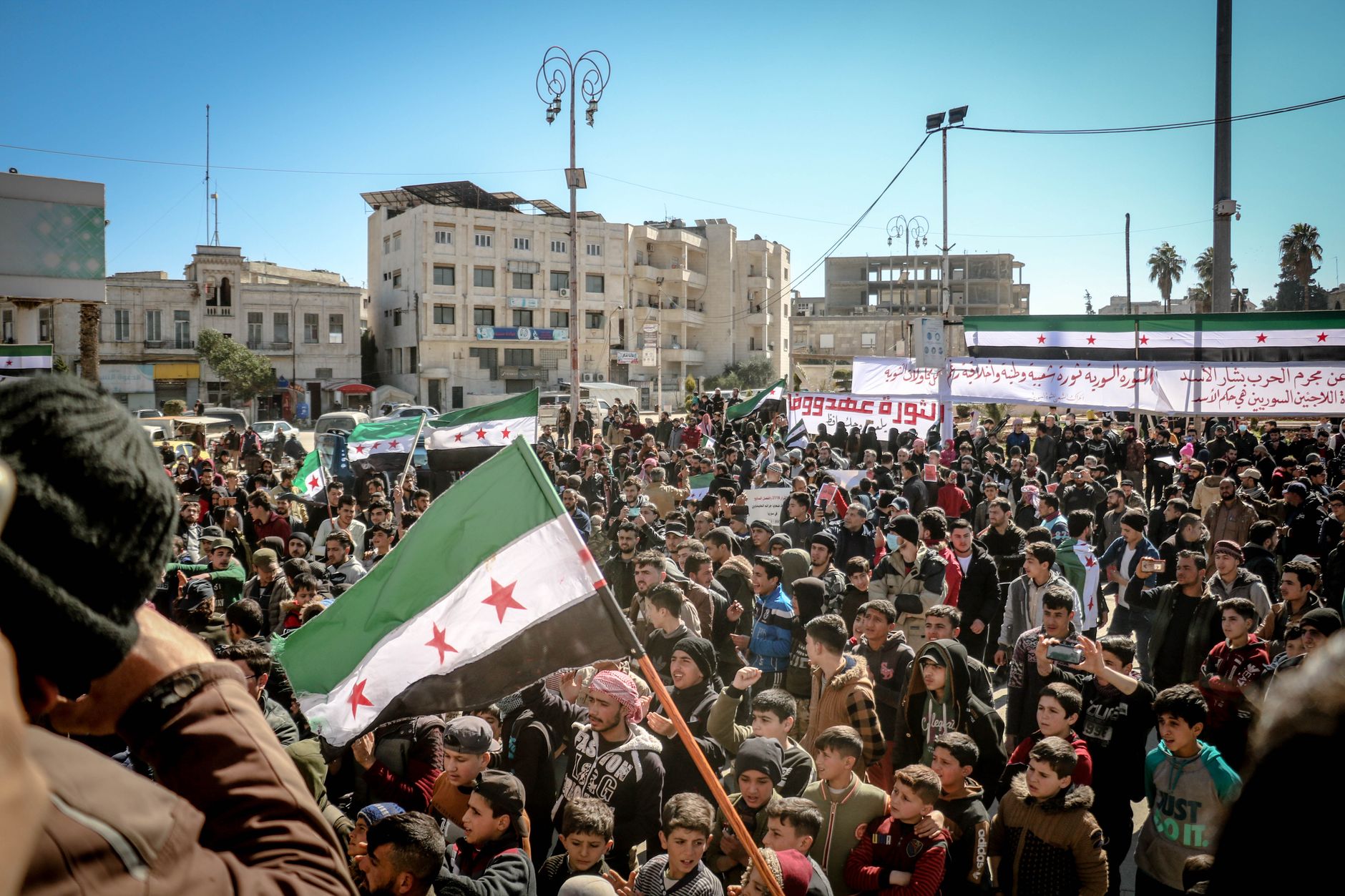
Hero image: Ahmed akacha / Pexels
Syria Bus Collision Kills 35, State Media Reports
Multiple outlets report a fatal collision between two buses on a Syrian highway, with state media claiming at least 35 fatalities. While the basic facts align across sources, discrepancies in location details and casualty figures raise questions about the reliability of initial reports from a conflict zone with limited independent verification.
On July 25, 2026, reports emerged of a high-casualty bus collision in Syria, with state media asserting at least 35 people were killed. The incident, described as occurring on a highway, has been cited by international news aggregators and regional outlets. Given the challenges of on-the-ground reporting in Syria and the reliance on official statements, this investigation synthesizes reporting from ABC News, Newsday, and KVUE to assess the consistency of claims, identify potential discrepancies, and evaluate the reliability of the information in circulation.
Introduction to the Syria Bus Collision
The reported bus collision in Syria has been described as a major traffic incident with significant loss of life. All three outlets—ABC News, Newsday, and KVUE—agree on the core claim: a collision between two buses resulted in at least 35 fatalities, as reported by Syrian state media. The event is said to have occurred on a highway, though the specific location varies slightly across reports. The timing of the reports is consistent, with all three published within hours of each other on July 25, 2026.
While the basic narrative is uniform—two buses collided, state media reported 35 deaths—each outlet emphasized different contextual details. KVUE and Newsday both specify that the collision occurred “on a highway,” whereas ABC News does not include this detail. KVUE additionally notes that the collision involved a “head-on” impact, a claim not echoed by the other outlets. These variations, though minor, point to the challenges of verifying breaking news from regions with limited independent journalistic access.
Comparing Reports: ABC News, Newsday, and KVUE
What Each Outlet Emphasized
ABC News, in its report, focuses on the state media claim of 35 fatalities and presents it as the central fact, without additional context about the collision’s specifics. The headline and lead paragraph center on the death toll and the source of the information (state media), framing the incident as a breaking development with minimal elaboration on circumstances.
Newsday, by contrast, includes a slightly more detailed account, noting that the collision occurred “after buses collide in Syria,” and, like KVUE, specifies that it happened “on a highway.” Newsday’s report also aligns with KVUE in emphasizing the state media source for the casualty figure, but it does not mention a “head-on” collision. This suggests Newsday may have drawn from a slightly different subset of official statements or summaries.
KVUE provides the most detailed account among the three, explicitly stating that the collision was a “head-on” impact on a highway. KVUE’s report also includes a more detailed phrasing of the state media claim, stating “at least 35 people killed after buses collide on highway in Syria, state media reports.” This level of specificity—while consistent with the other outlets’ core claims—introduces a minor but notable variation in the description of the collision’s mechanics.
Temporal and Geographical Nuances
All three outlets published their reports on July 25, 2026, within a two-hour window, indicating a synchronized release of information likely sourced from the same initial reports or official statements. KVUE’s timestamp (12:00 GMT) precedes Newsday’s (12:03 GMT) and ABC News’s (14:11 GMT), suggesting either a staggered editorial process or differences in syndication timing.
None of the outlets provide a specific location beyond “Syria” or “on a highway.” This lack of granularity is typical in early reports from conflict zones or areas with restricted access, where journalists rely on official summaries. The absence of a city, highway name, or regional identifier makes it difficult to independently verify the incident’s location or cross-reference with local emergency services or hospital reports.
The Claim: State Media Reports 35 Killed
The central claim across all three outlets is that Syrian state media reported at least 35 fatalities resulting from a bus collision. This figure is presented as definitive in each report, with no caveats or additional context about the basis for the count. The reliance on state media as the sole source for casualty figures is a critical factor in evaluating the claim’s reliability.
State media in Syria operates under the control of the government and has been known to publish figures that may not always align with independent or international estimates, particularly in high-profile incidents. While the outlets do not question the figure, the lack of corroboration from non-state sources or independent observers introduces a layer of uncertainty. In conflict zones, casualty figures from official sources are often treated as provisional until verified by multiple channels.
Combined Evidence: What the Outlets Agree On
All three outlets converge on several key points: the incident involved a collision between two buses, the event occurred in Syria, and Syrian state media reported at least 35 fatalities. The timing of the reports is consistent, and the casualty figure is uniformly attributed to state media. These points of agreement form the foundation of the narrative circulating in international news aggregators.
The outlets also agree that the reports are based on state media statements, with no independent verification provided. This shared reliance on a single source—one with a documented history of controlled messaging—is a significant factor in assessing the reliability of the claims. While the consistency across outlets lends credibility to the basic facts, it does not address the potential for state media to understate, overstate, or misrepresent casualty figures in the absence of independent oversight.
Red Flags: Debunking Potential Discrepancies
Inconsistencies in Collision Description
While the core claim of 35 fatalities is consistent, the descriptions of the collision itself vary slightly. KVUE is the only outlet to describe the collision as “head-on,” a detail that could imply a higher likelihood of severe injuries or fatalities. Newsday and ABC News do not include this descriptor, leaving open the possibility that the collision was a sideswipe or rear-end impact, which typically results in fewer casualties. The absence of a detailed accident reconstruction or eyewitness accounts makes it impossible to determine which description is accurate.
The lack of a specific location—such as a highway name, mile marker, or nearby city—further complicates verification. Without this information, it is difficult to cross-reference the incident with local traffic authorities, hospitals, or emergency services, which would typically provide independent casualty counts or incident reports.
Reliance on a Single Source
A critical red flag is the uniform reliance on Syrian state media as the sole source for the casualty figure. In conflict zones or authoritarian states, official figures are often treated with skepticism until corroborated by independent observers, NGOs, or international organizations. None of the outlets provide additional context about the basis for the state media’s count, such as whether it was derived from hospital reports, emergency services, or initial assessments by traffic police.
The absence of alternative sources—such as local activists, opposition-affiliated media, or international humanitarian organizations—leaves the claim vulnerable to potential manipulation or error. While state media may accurately report casualty figures, the lack of corroboration in this instance is a notable weakness in the reporting.
Timing and Editorial Synchronization
The near-simultaneous publication of the reports across three outlets suggests a high degree of synchronization, likely due to the use of a shared news feed or official press release. While this alignment can indicate a genuine event, it can also reflect a coordinated information campaign, particularly in regions where access to independent journalism is restricted. The lack of diverse sourcing—such as interviews with survivors, local officials, or witnesses—further underscores the reliance on a single narrative stream.
Red Flags Checklist
- Single-source dependency: All outlets rely exclusively on Syrian state media for the casualty figure, with no independent verification.
- Lack of location specificity: No outlet provides a specific highway name, city, or regional identifier, making verification impossible.
- Inconsistent collision descriptions: KVUE describes the collision as “head-on,” while the other outlets do not specify the impact type.
- No eyewitness or survivor accounts: None of the reports include statements from individuals involved in the collision or local emergency responders.
- Synchronized timing: The near-simultaneous publication of the reports suggests reliance on a shared feed or official press release, rather than independent investigation.
- No hospital or emergency service confirmation: There is no indication that casualty figures were cross-checked with local hospitals, morgues, or traffic authorities.
- Potential for state media bias: Syrian state media has a documented history of controlled messaging, particularly in high-profile incidents involving civilian casualties.
Expert Response: Syrian Officials and International Reaction
None of the three outlets cite statements from Syrian officials beyond the state media report itself. There is no indication of a press conference, statement from the Ministry of Transport, or comment from local authorities elaborating on the incident. This lack of official follow-up or additional context is notable, as major traffic incidents in other countries typically prompt statements from multiple government agencies.
International reaction is also absent from the reports. Typically, high-casualty traffic incidents prompt responses from humanitarian organizations, such as the International Committee of the Red Cross (ICRC) or Médecins Sans Frontières (MSF), or statements from neighboring countries’ foreign ministries. The absence of such reactions in these reports suggests either that the incident has not yet been widely corroborated internationally or that international actors are awaiting further verification before issuing statements.
Original Analysis: Patterns Across Sources and Implications
Taken together, the reports from ABC News, Newsday, and KVUE present a consistent but unverified narrative: a bus collision in Syria resulted in at least 35 fatalities, as reported by state media. The alignment of the outlets on the core facts—casualty figure, location (Syria), and source (state media)—lends a superficial credibility to the claim. However, the lack of independent verification, the absence of location specificity, and the reliance on a single source with a documented history of controlled messaging introduce significant uncertainty.
The minor discrepancies in the collision’s description—particularly KVUE’s mention of a “head-on” impact—highlight the fragility of early reporting in conflict zones. Without eyewitness accounts, accident reconstruction, or hospital records, the details of the collision remain speculative. The synchronization of the reports, while not inherently suspicious, underscores the challenges of verifying breaking news from regions with restricted access to journalists.
This incident exemplifies a broader pattern in conflict-zone reporting: the rapid dissemination of official figures without independent corroboration. In such cases, the initial casualty count is often provisional and subject to revision as more information becomes available. The reliance on state media in this instance is particularly problematic, given Syria’s history of information control and the documented discrepancies between official figures and independent estimates in past incidents.
The absence of international reaction or NGO involvement further suggests that the incident has not yet been widely corroborated outside of Syrian state media. This could indicate either that the event is still unfolding and details are scarce, or that international actors are exercising caution due to the lack of verifiable information. In either case, the lack of diverse sourcing weakens the reliability of the claim and underscores the need for caution in treating state media reports as definitive.
What to Do About It: Road Safety in Syria and Beyond
Improving Verification in Conflict Zones
The Syria bus collision highlights the broader challenges of verifying incidents in conflict zones, where independent journalism is often restricted and official sources may have incentives to control the narrative. To improve the reliability of such reports, news organizations should prioritize multiple sourcing, including local activists, NGOs, and international observers, even when access is limited. Crowdsourced verification tools, satellite imagery analysis, and cross-referencing with hospital or morgue records can provide additional layers of confirmation.
In the absence of such measures, readers should treat early reports from conflict zones as provisional and subject to revision. The initial casualty figure—particularly when sourced solely from state media—should be viewed as a starting point for further investigation, not as a definitive account.
Advocating for Road Safety Reforms
Regardless of the exact circumstances of the Syria bus collision, the incident underscores the urgent need for road safety improvements in Syria and other conflict-affected regions. Poor road infrastructure, lack of enforcement of traffic laws, and inadequate emergency response systems contribute to high fatality rates in traffic incidents worldwide. In Syria, years of conflict have likely degraded road conditions and emergency services, exacerbating the risks associated with large-scale transportation.
International humanitarian organizations and donor governments should prioritize road safety initiatives in post-conflict recovery plans, including investments in road infrastructure, driver training programs, and emergency medical services. Such measures can reduce the likelihood of future high-casualty incidents and improve outcomes when collisions do occur.
FAQ: Syria Bus Collision and State Media Reporting
What happened in the Syria bus collision?
According to state media cited by ABC News, Newsday, and KVUE, a collision between two buses in Syria resulted in at least 35 fatalities. The incident is reported to have occurred on a highway, though the specific location is not provided in any of the outlets’ accounts.
Which outlets reported this incident?
ABC News, Newsday, and KVUE all published reports on July 25, 2026, describing the collision and citing Syrian state media for the casualty figure.
Is the casualty figure of 35 confirmed?
The figure of 35 fatalities is reported by Syrian state media and repeated by the three outlets. However, none of the reports provide independent verification of the count, and there is no indication that the figure has been cross-checked with hospitals, emergency services, or other sources.
Why do the reports vary slightly in their descriptions?
The reports differ in minor details: KVUE describes the collision as “head-on,” while Newsday and ABC News do not specify the type of impact. KVUE and Newsday both mention that the collision occurred “on a highway,” a detail not included in ABC News’s report. These variations likely reflect differences in the phrasing of official statements or the editorial choices of the outlets.
What should readers take away from these reports?
Readers should treat the reports as provisional and subject to revision. The reliance on a single source—Syrian state media—introduces significant uncertainty, particularly in a conflict zone with a documented history of information control. The lack of location specificity, eyewitness accounts, or independent verification weakens the reliability of the claim, and the incident should be viewed as unconfirmed until further evidence emerges.