
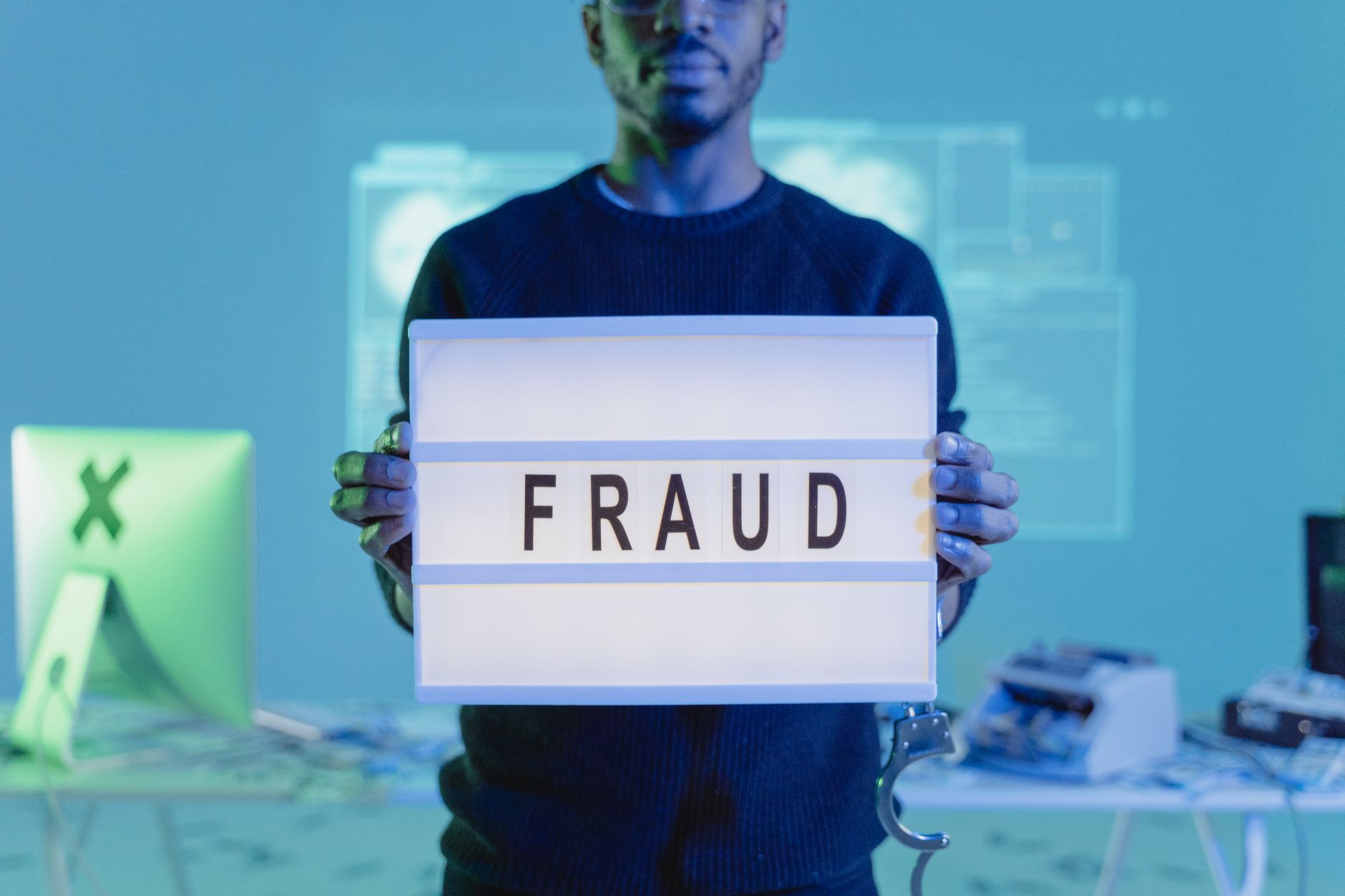
Hero image: Tima Miroshnichenko / Pexels
US Seizes $25M in Crypto Linked to Romance and Investment Scams
The U.S. Department of Justice has moved to forfeit more than $25 million in cryptocurrency tied to widespread romance and investment fraud schemes, according to filings and multiple independent reports. The seizures highlight the growing use of digital assets in financially devastating scams that exploit trust and promise outsized returns.
The U.S. government has initiated civil forfeiture proceedings targeting over $25 million in cryptocurrency linked to romance and investment fraud schemes, according to coordinated reporting from Decrypt, Yahoo Finance, CoinDesk, and TradingView. These outlets describe a coordinated federal action that traces illicit crypto flows through blockchain analysis and legal filings, revealing a pattern of fraud that preys on emotional manipulation and the promise of high-yield returns. While all four outlets confirm the seizure amount and the general nature of the scams, they differ in emphasis: Decrypt and Yahoo highlight the scale and timing of the seizures, CoinDesk focuses on the legal filings and blockchain tracing, and TradingView underscores the market and platform dynamics that facilitate these scams. Taken together, these reports indicate a significant escalation in law enforcement’s response to crypto-enabled fraud, but also underscore persistent challenges in recovering victims’ funds and preventing future abuse.
—
Federal move targets $25M in crypto linked to romance and investment fraud
On July 22, 2026, the U.S. Department of Justice announced it had filed civil forfeiture complaints seeking the seizure of more than $25 million in cryptocurrency tied to romance and investment fraud schemes, according to Decrypt and Yahoo Finance, which published near-simultaneous reports. CoinDesk later detailed the legal filings, noting that the government is pursuing forfeiture under federal anti-fraud statutes and money laundering laws. TradingView’s report emphasized the timing of the seizures relative to broader market conditions, suggesting the action may signal increased scrutiny of crypto platforms and payment rails used by fraudsters.
Decrypt and Yahoo both reported the seizure amount and the dual focus on romance and investment scams, but Decrypt provided additional context about the types of cryptocurrencies involved—specifically Bitcoin and Ethereum—while Yahoo did not specify asset types. CoinDesk’s reporting went further, citing court documents and blockchain analysis firms to trace how victims’ funds were routed through mixers and privacy coins before being consolidated in exchange accounts. TradingView, meanwhile, contextualized the seizures within a broader trend of rising crypto fraud complaints, citing data from the FBI’s Internet Crime Complaint Center (IC3).
The coordinated timing of the reports—all published within hours of each other—suggests a planned disclosure by the DOJ or a coordinated release with trusted media partners. While Decrypt and Yahoo framed the seizures as a major enforcement milestone, CoinDesk’s deeper dive into the legal filings and blockchain tracing added granularity, and TradingView’s market-focused angle highlighted the potential reputational impact on exchanges and trading platforms.
—
Cross-outlet comparison: Where Decrypt, Yahoo, CoinDesk, and TradingView align and diverge
Agreements across outlets
All four outlets agree on the core facts: the U.S. government is seeking to forfeit more than $25 million in cryptocurrency linked to romance and investment fraud schemes. Decrypt, Yahoo, CoinDesk, and TradingView each report that the seizures are part of a broader federal effort to disrupt crypto-enabled fraud, and all note that the scams typically involve victims being lured through social engineering and fake investment platforms. Each outlet also emphasizes the sophistication of the fraud operations, describing how perpetrators use fake profiles, urgent language, and fabricated returns to extract funds.
Divergences in emphasis and detail
Decrypt and Yahoo prioritize the scale and timing of the seizures, with both framing the action as a significant enforcement milestone. Decrypt adds detail about the cryptocurrencies involved—Bitcoin and Ethereum—while Yahoo does not specify asset types. CoinDesk, by contrast, focuses on the legal and technical underpinnings of the seizures, citing court filings and blockchain analysis to show how funds were laundered through mixers and privacy coins. TradingView takes a market-oriented approach, situating the seizures within a broader trend of rising crypto fraud and suggesting that the action may pressure exchanges and trading platforms to enhance due diligence.
Where Decrypt and Yahoo describe the seizures in broad strokes, CoinDesk’s reporting reveals the investigative mechanics: the use of chainalysis tools, the identification of wallet clusters, and the tracing of funds to exchange accounts. TradingView, meanwhile, highlights the role of social media and dating platforms in facilitating the initial contact with victims, a detail not emphasized by the other outlets.
Notable gaps
None of the outlets provide a comprehensive breakdown of the number of victims, total losses, or geographic distribution of the scams. CoinDesk’s legal filings analysis suggests multiple clusters of activity, but the reports do not quantify the number of individual cases or the average loss per victim. TradingView mentions IC3 data trends but does not cite specific statistics. Decrypt and Yahoo focus on the seizure amount and the types of scams, without delving into recovery rates or victim demographics.
—
The scam mechanics: How romance and investment frauds funnel crypto to criminals
Initial contact and trust-building
According to Decrypt and Yahoo, romance scams typically begin on social media or dating platforms, where perpetrators create fake profiles and cultivate relationships over weeks or months. The scammers use emotional manipulation—expressing affection, sharing personal stories, and claiming to be in crisis—to build trust. Once trust is established, they pivot to investment opportunities, often involving cryptocurrency. CoinDesk’s reporting adds that these scammers frequently pose as experienced traders or financial advisors, using professional-looking websites and fabricated trading dashboards to lend legitimacy to their schemes.
TradingView emphasizes the role of urgency and secrecy in these pitches, noting that victims are often told to act quickly to avoid missing out on “once-in-a-lifetime” opportunities. The outlet also highlights the use of encrypted messaging apps—such as Telegram or WhatsApp—to coordinate transactions and maintain control over the victim’s decision-making.
Funneling funds into crypto and laundering proceeds
Once a victim agrees to invest, they are directed to transfer funds to a wallet controlled by the scammer, often under the guise of “depositing” money into a fake trading platform or “verifying” their account. Decrypt and Yahoo describe how victims are instructed to purchase cryptocurrency—typically Bitcoin or Ethereum—on legitimate exchanges and then transfer it to wallets provided by the scammers. CoinDesk’s reporting reveals that these wallets are often reused across multiple victims, and that funds are quickly moved through mixers or privacy coins to obscure their origin.
The DOJ’s forfeiture filings, as cited by CoinDesk, describe a layered laundering process: funds are first sent to high-risk exchanges or mixing services, then routed through multiple wallet addresses, and finally consolidated in accounts controlled by the perpetrators. TradingView adds that some scammers use decentralized finance (DeFi) protocols to further obscure the flow of funds, swapping tokens or providing liquidity in pools to break transaction trails.
Exit and cash-out
According to CoinDesk, the final stage involves converting illicit crypto into fiat currency or stablecoins, often through exchanges with weak or nonexistent know-your-customer (KYC) controls. Decrypt and Yahoo note that some perpetrators withdraw funds directly to bank accounts or prepaid cards, while others use over-the-counter (OTC) brokers to convert crypto to cash without triggering compliance alerts. TradingView highlights the role of peer-to-peer (P2P) platforms in certain regions, where fraudsters exploit gaps in local regulations to move funds across borders.
—
Combined evidence: What the forfeiture filings and chain analysis reveal
CoinDesk’s reporting provides the most detailed account of the forensic trail underpinning the seizures. Citing court documents, CoinDesk describes how federal investigators used blockchain analytics tools to trace victims’ funds from the point of deposit on exchanges through a series of obfuscation steps—including the use of mixers like Tornado Cash and the conversion to privacy coins such as Monero—before the funds were consolidated in wallets linked to known fraudulent schemes. The outlet also notes that the forfeiture complaints identify specific wallet addresses and exchange accounts tied to the scams, suggesting that law enforcement has identified both the perpetrators and their financial infrastructure.
Decrypt and Yahoo both reference the scale of the seizures—over $25 million—but do not provide granular details about the blockchain analysis or the specific legal mechanisms used to pursue forfeiture. TradingView, meanwhile, contextualizes the seizures within a broader enforcement trend, noting that the DOJ has increasingly relied on civil forfeiture in crypto fraud cases, particularly when traditional criminal prosecutions are complicated by jurisdictional hurdles or the use of mixers and privacy tools.
Taken together, the reports suggest that the $25 million seizure is not an isolated incident but part of a larger, data-driven effort to disrupt crypto-enabled fraud. The use of blockchain analytics to trace funds through mixers and privacy coins indicates that investigators are adapting to the sophistication of modern fraudsters, while the civil forfeiture mechanism allows the government to target illicit proceeds even when the perpetrators remain unidentified.
—
Who is affected: Demographics, losses, and recovery challenges for victims
While none of the outlets provide a comprehensive breakdown of victim demographics, Decrypt and Yahoo describe the typical victim as someone who has been emotionally manipulated through a prolonged romance scam or lured by promises of high returns in fake investment platforms. TradingView references FBI IC3 data suggesting that older adults—particularly those aged 50 and above—are disproportionately targeted in romance scams, often losing life savings or retirement funds. CoinDesk’s reporting implies multiple victim clusters, but does not quantify the number of individuals affected or the average loss per case.
Decrypt and Yahoo both emphasize the psychological and financial devastation experienced by victims, noting that many are reluctant to report the crimes due to shame or fear of judgment. TradingView adds that victims often face significant barriers to recovery, including the irreversible nature of crypto transactions, the use of mixers and privacy coins, and the jurisdictional challenges of pursuing perpetrators across borders. CoinDesk’s legal filings analysis suggests that even when illicit funds are seized, returning them to victims may be complicated by the need to prove ownership and the potential dissipation of funds through further laundering.
The reports collectively highlight a troubling pattern: victims of romance and investment scams often lose not only their money but also their trust in digital finance, making them hesitant to engage with legitimate crypto services in the future. The lack of standardized victim support mechanisms—particularly for crypto-related fraud—further compounds the harm, leaving many without recourse.
—
How these scams spread: Platforms, tactics, and red flags to watch
Platforms most exploited
TradingView identifies social media platforms and dating apps as the primary vectors for initial contact in romance scams, noting that perpetrators exploit the perceived authenticity of these platforms to build trust. Decrypt and Yahoo describe how scammers use fake profiles on Facebook, Instagram, and dating sites like Tinder or Match.com to initiate relationships. CoinDesk adds that investment scams often originate on YouTube, Twitter/X, or Telegram, where fraudsters post “educational” content or “exclusive” trading signals to attract victims.
Decrypt and Yahoo also highlight the role of messaging apps—such as WhatsApp, Telegram, and Signal—in coordinating transactions and maintaining control over victims. TradingView notes that some scammers use Discord or Slack communities to create the illusion of a supportive “trading group,” where victims are encouraged to share their “success stories” (which are, in fact, fabricated) to lure others.
Tactics used to deceive victims
All four outlets describe a common playbook: scammers build trust over weeks or months, then pivot to investment opportunities with promises of high returns. CoinDesk’s reporting reveals that investment scams often involve fake trading platforms with real-time dashboards showing fabricated profits, while romance scams use emotional appeals—such as medical emergencies or travel crises—to extract funds. TradingView emphasizes the use of urgency and secrecy, with victims told to act quickly or risk losing their “investment.”
Decrypt and Yahoo note that scammers frequently use professional-looking websites, fake testimonials, and even impersonate legitimate financial advisors or celebrities to lend credibility to their schemes. CoinDesk adds that some perpetrators create entire “ecosystems” of fake companies, websites, and social media accounts to simulate legitimacy.
Red Flags Checklist
- Unsolicited contact: Receiving romantic or investment messages from someone you don’t know, especially on social media or dating apps.
- Rapid relationship escalation: Being rushed into a serious relationship or investment opportunity without time for due diligence.
- Requests for crypto payments: Being asked to purchase cryptocurrency or transfer it to a wallet address, particularly under the guise of “deposits” or “verification.”
- Urgency and secrecy: Being pressured to act quickly or told not to discuss the opportunity with friends, family, or financial advisors.
- Fake platforms and dashboards: Being directed to a website or app that shows fabricated returns or account balances.
- Impersonation of authority figures: Being contacted by someone claiming to be a financial advisor, lawyer, or government official.
- Inconsistent stories: The person’s background, job, or location doesn’t align with verifiable details (e.g., claiming to be in New York but using UK English in messages).
- Refusal to meet in person or video call: Avoiding face-to-face interactions despite claiming to be in a committed relationship or working in finance.
- Overly consistent “winnings”: Investment platforms showing unrealistic, steady returns with no volatility or risk disclosures.
- Use of mixers or privacy coins: Being asked to send funds to a wallet address that is later associated with mixers like Tornado Cash or privacy coins like Monero.
—
Expert and institutional response: DOJ, blockchain analytics, and enforcement trends
CoinDesk’s reporting highlights the DOJ’s increasing reliance on civil forfeiture in crypto fraud cases, particularly when traditional criminal prosecutions are complicated by jurisdictional challenges or the use of mixers and privacy tools. The outlet notes that the forfeiture complaints cite violations of wire fraud, money laundering, and conspiracy statutes, signaling a multi-pronged legal strategy. Decrypt and Yahoo both describe the seizures as part of a broader federal effort to disrupt crypto-enabled fraud, while TradingView situates the action within a trend of rising enforcement activity.
TradingView emphasizes the role of blockchain analytics firms—such as Chainalysis, TRM Labs, and CipherTrace—in supporting law enforcement investigations. The outlet notes that these firms provide tools to trace funds through mixers and privacy coins, identify wallet clusters, and map illicit networks. CoinDesk’s reporting aligns with this, describing how investigators used chainalysis to trace victims’ funds from exchanges to mixers and ultimately to exchange accounts controlled by the perpetrators.
Decrypt and Yahoo both reference statements from the DOJ or FBI, though neither outlet provides direct quotes. TradingView, meanwhile, highlights the role of international cooperation, noting that some of the seized funds were traced to exchanges or wallet addresses outside the U.S., requiring coordination with foreign law enforcement agencies. CoinDesk’s legal filings analysis suggests that the forfeiture complaints may serve as a template for future cases, particularly as fraudsters increasingly rely on crypto and decentralized tools to obscure their activities.
Taken together, the reports indicate that U.S. authorities are adapting their enforcement strategies to the realities of crypto-enabled fraud, combining civil forfeiture, blockchain analytics, and international cooperation to disrupt illicit networks. However, the lack of standardized victim support mechanisms and the irreversible nature of crypto transactions remain significant challenges.
—
Pattern recognition: What the $25M seizure signals about crypto-enabled fraud
Taken together, these reports suggest that the $25 million seizure is not an isolated enforcement action but part of a broader shift in how law enforcement targets crypto-enabled fraud. The coordinated timing of the disclosures—across Decrypt, Yahoo, CoinDesk, and TradingView—suggests a deliberate strategy to signal both to perpetrators and to the public that crypto fraud will not go unchallenged. CoinDesk’s detailed account of the blockchain analysis and legal filings indicates that investigators are now equipped with sophisticated tools to trace funds through mixers and privacy coins, a capability that was less common just a few years ago.
The use of civil forfeiture, as highlighted by CoinDesk, allows the government to target illicit proceeds even when the perpetrators remain unidentified, a tactic that may become more common as fraudsters increasingly rely on decentralized tools to obscure their activities. Decrypt and Yahoo’s emphasis on the scale of the seizures underscores the financial magnitude of the problem, while TradingView’s market-focused angle suggests that the action may pressure exchanges and trading platforms to enhance due diligence and compliance.
However, the reports also reveal persistent gaps: none of the outlets provide a comprehensive breakdown of victim demographics or recovery rates, and the lack of standardized support mechanisms for crypto fraud victims remains a critical weakness. The irreversible nature of crypto transactions, combined with the sophistication of modern laundering techniques, means that even successful seizures may not fully compensate victims. The pattern, then, is one of escalating enforcement coupled with evolving tactics by fraudsters—and an urgent need for better victim support and prevention strategies.
—
Actionable steps: Reporting, recovery, and prevention for individuals and platforms
For individuals
If you suspect you have been targeted by a romance or investment scam, the first step is to cease all communication with the perpetrator and document all interactions, including messages, wallet addresses, and transaction IDs. Report the incident to your local law enforcement agency and file a complaint with the FBI’s Internet Crime Complaint Center (IC3) at www.ic3.gov. While recovery of crypto funds is rare, reporting the crime increases the chances that law enforcement can disrupt the fraudsters’ operations and prevent future victims.
Decrypt and Yahoo both emphasize the importance of educating friends and family—particularly older adults—about the red flags of romance and investment scams. TradingView suggests that individuals should verify any investment opportunity through independent sources, such as the SEC’s www.sec.gov or FINRA’s www.finra.org, and to be wary of any request to send cryptocurrency to a wallet address.
For platforms and exchanges
TradingView highlights the role of social media platforms, dating apps, and crypto exchanges in facilitating these scams, and calls for stronger due diligence and user education. Decrypt and Yahoo note that exchanges are increasingly under pressure to implement robust KYC and transaction monitoring systems, particularly for high-risk activities such as transfers to mixers or privacy coins. CoinDesk’s reporting suggests that blockchain analytics firms can provide tools to identify suspicious wallet clusters and flag high-risk transactions before they are processed.
The reports collectively indicate that platforms must balance user privacy with fraud prevention, adopting measures such as transaction velocity checks, wallet clustering analysis, and user education campaigns. TradingView also suggests that exchanges should collaborate with law enforcement and share threat intelligence to disrupt illicit networks.
For law enforcement and policymakers
CoinDesk’s reporting on the use of civil forfeiture and blockchain analytics suggests that law enforcement is adapting to the realities of crypto-enabled fraud. However, the lack of standardized victim support mechanisms and the irreversible nature of crypto transactions remain critical challenges. Policymakers may need to consider measures such as mandatory reporting of crypto fraud, standardized victim compensation funds, and enhanced penalties for fraudsters who use mixers or privacy tools to obscure their activities.
Decrypt and Yahoo both emphasize the need for international cooperation, noting that many fraudsters operate across borders and rely on exchanges with weak or nonexistent KYC controls. TradingView suggests that global standards for crypto transaction monitoring and user verification could help reduce the prevalence of these scams.
—
FAQ
What is the scope of the $25 million seizure?
The U.S. Department of Justice has filed civil forfeiture complaints seeking the seizure of more than $25 million in cryptocurrency tied to romance and investment fraud schemes, according to Decrypt, Yahoo, CoinDesk, and TradingView. The action targets funds that were allegedly obtained through wire fraud, money laundering, and conspiracy, and involves multiple types of cryptocurrencies, including Bitcoin and Ethereum.
How can victims recoup their losses?
Victims of crypto-enabled fraud face significant challenges in recovering their losses due to the irreversible nature of blockchain transactions and the use of mixers and privacy coins. The best course of action is to report the crime to law enforcement—such as the FBI’s IC3—and to document all interactions and transaction details. While recovery is rare, reporting the crime increases the chances that law enforcement can disrupt the fraudsters’ operations and prevent future victims.
What types of cryptocurrencies are involved?
Decrypt reports that the seized funds include Bitcoin and Ethereum, while Yahoo does not specify the types of cryptocurrencies involved. CoinDesk’s reporting suggests that investigators used blockchain analysis to trace funds through mixers and privacy coins, indicating that the seizures may include a range of digital assets.
How do these scams typically begin?
According to Decrypt, Yahoo, and TradingView, romance scams typically begin on social media or dating platforms, where perpetrators create fake profiles and cultivate relationships over weeks or months. Investment scams, as described by CoinDesk and TradingView, often originate on YouTube, Twitter/X, or Telegram, where fraudsters post “educational” content or “exclusive” trading signals to attract victims.
What should I do if I suspect I’ve been targeted?
If you suspect you have been targeted by a romance or investment scam, cease all communication with the perpetrator and document all interactions, including messages, wallet addresses, and transaction IDs. Report the incident to your local law enforcement agency and file a complaint with the FBI’s IC3. Verify any investment opportunity through independent sources and be wary of any request to send cryptocurrency to a wallet address.
—
Sources & References
- Decrypt — US Seizes More Than $25M in Crypto Tied to Investment and Romance Scams
- Yahoo — US Seizes More Than $25M in Crypto Tied to Investment and Romance Scams
- CoinDesk — U.S. seeks forfeiture of $25 million in crypto tied to romance and investment scams
- TradingView — US seeks forfeiture of $25M in crypto tied to romance, investment scams