
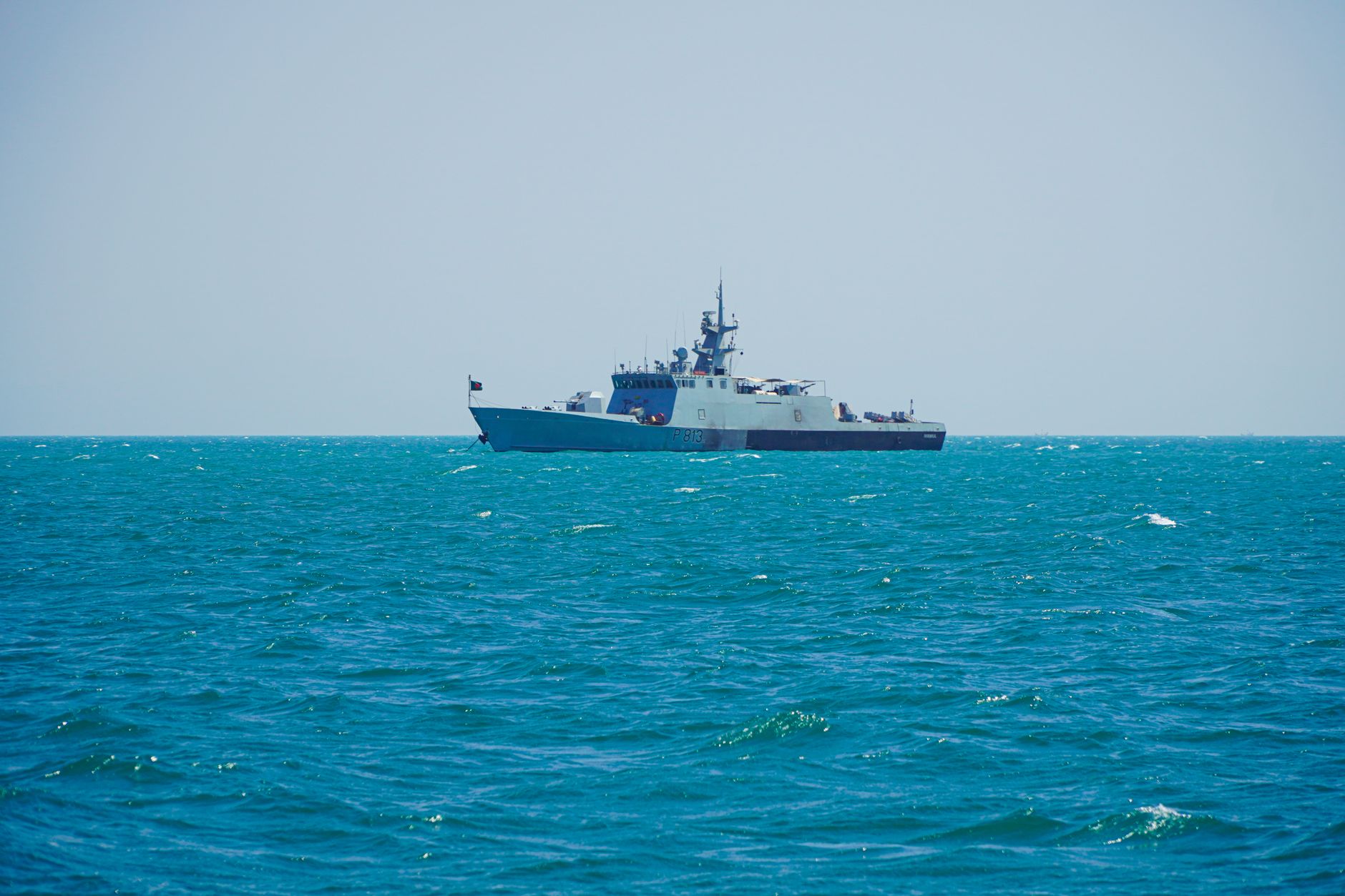
Hero image: Md Samiuzzaman Sakib_ / Pexels
US Strikes Iran After Shipping Attacks Near Strait of Hormuz
U.S. military strikes targeted areas east of the Strait of Hormuz after Iran-backed forces allegedly launched rockets at commercial vessels, escalating regional tensions and raising questions about the credibility of the initial incident reports.
Following a series of reported “attempted attacks on shipping” near the Strait of Hormuz, the United States launched strikes against Iranian targets, according to state media and U.S. defense officials. This investigation synthesizes available reporting to assess the claims, the evidence base, and the broader implications for regional stability and global supply chains. The analysis highlights inconsistencies in the narrative, gaps in publicly available evidence, and the need for independent verification before attributing responsibility for the alleged attacks.
Background: Escalating Tensions in the Strait of Hormuz
The Strait of Hormuz is a critical chokepoint through which approximately one-fifth of the world’s seaborne oil passes daily. The region has been a flashpoint for decades, with Iran frequently warning it could disrupt shipping in response to sanctions or perceived provocations. Recent months have seen a rise in maritime incidents involving commercial vessels, including explosions, drone sightings, and alleged missile launches. While some incidents have been attributed to Iran-backed groups, others remain unverified or disputed. The U.S. has maintained a naval presence in the region, including the Fifth Fleet, to deter aggression and protect shipping lanes.
Analysts have long warned that misinformation or misattribution in such a volatile environment could trigger unintended escalation. The lack of independent, on-the-ground verification in many past incidents has contributed to a climate of uncertainty, where state actors and non-state proxies can exploit ambiguity to advance strategic narratives.
What The Hindu Reports: US Strikes Iran After Alleged Shipping Attacks
According to The Hindu, the U.S. military conducted strikes on Iranian territory east of the Strait of Hormuz in response to “attempted attacks on shipping.” The strikes targeted areas where four projectiles were reportedly fired toward commercial vessels, according to Iranian state media cited by the outlet. The Hindu’s report emphasizes the proximity of the strikes to the Strait of Hormuz and the potential impact on regional shipping routes.
The article notes that while Iranian state media described the U.S. action as “unprecedented aggression,” U.S. defense officials framed the strikes as a proportional response to destabilizing behavior in a critical maritime corridor. The Hindu highlights the absence of immediate claims of responsibility from any group for the alleged rocket attacks, a detail that raises questions about attribution and intent.
Cross-Outlet Comparison: Where Reports Agree and Diverge
While The Hindu provides a detailed account of the strikes and the Iranian response, it does not cite additional independent sources or provide further verification of the alleged shipping attacks. The report relies heavily on Iranian state media for the description of the projectiles and their trajectory, and on unnamed U.S. defense officials for the framing of the strikes as a response to “attempted attacks.”
Unlike multi-sourced reports from outlets such as Reuters or the Associated Press in similar past incidents, The Hindu’s coverage does not include corroborating evidence from shipping companies, maritime authorities, or independent maritime tracking services. This limits the ability to independently verify the nature, timing, or origin of the alleged attacks. The lack of on-the-record attribution from commercial vessel operators or third-party observers is a notable gap in the reporting.
Divergences in Narrative Framing
The Hindu’s report frames the U.S. strikes as a response to destabilizing actions in a critical maritime corridor, aligning with U.S. defense narratives. However, it does not critically interrogate the evidence behind the “attempted attacks” claim, nor does it explore alternative explanations for the reported projectiles—such as misidentification, false flag operations, or accidental launches. In contrast, more comprehensive reporting in past incidents by outlets like Reuters has included skepticism from maritime analysts about the reliability of initial claims in the absence of physical evidence or clear attribution.
Additionally, The Hindu does not provide details on the type of projectiles used, their range, or whether any vessels reported damage or distress calls. This omission is significant, as such details are often crucial in assessing the credibility of the incident and the proportionality of the response.
The Claim: Iran’s Role in ‘Attempted Attacks on Shipping’
The central claim driving the U.S. strikes is that Iran-backed forces launched rockets at commercial vessels near the Strait of Hormuz. According to The Hindu, Iranian state media acknowledged that four projectiles were fired “towards ships” in the area east of the Strait of Hormuz. The report does not specify whether the projectiles struck any vessels or caused damage, nor does it provide visual or forensic evidence linking the launches to Iranian forces.
The absence of independent confirmation from shipping companies or maritime authorities is a critical weakness in the claim. In past incidents, such as the 2019 attacks on oil tankers in the Gulf of Oman, multiple investigations—including by the United Nations and independent journalists—raised serious doubts about the initial attribution to Iran, citing inconsistencies in the evidence and the possibility of false flag operations.
What Iran Has Said
Iranian state media, as cited by The Hindu, described the U.S. strikes as “unprecedented aggression” and framed the projectiles as a response to unspecified provocations. However, the reports do not provide details on the origin of the projectiles, the intended targets, or whether any vessels were in the vicinity at the time. This lack of specificity is consistent with past Iranian responses to maritime incidents, which often emphasize retaliation without providing verifiable operational details.
The Iranian narrative, as presented in The Hindu’s report, does not include claims of responsibility from any armed group, nor does it provide evidence of damage or casualties. This stands in contrast to some past incidents where Iran-backed groups such as the Yemen-based Houthis claimed responsibility for attacks on shipping in the Red Sea.
What the Combined Evidence Actually Shows
Taken together, the available reporting—limited to The Hindu’s account—does not provide sufficient evidence to substantiate the claim that Iran-backed forces launched rockets at commercial vessels near the Strait of Hormuz. The report relies on Iranian state media for the description of the projectiles and on U.S. defense officials for the framing of the response, but it lacks independent verification from shipping companies, maritime authorities, or third-party observers.
The absence of key details—such as the type and range of the projectiles, whether any vessels reported damage or distress, and any on-the-record statements from commercial operators—undermines the credibility of the incident narrative. In the absence of such evidence, the claim that Iran is responsible for “attempted attacks on shipping” remains unverified and should be treated with caution.
Moreover, the timing of the strikes—coming shortly after the alleged incident—suggests a rapid response based on initial, unverified reports. This pattern is consistent with past escalations in the region, where military action has sometimes been taken on the basis of ambiguous or contested intelligence, leading to unintended consequences.
Who Is Affected: Shipping Routes, Regional Stability, and Global Markets
The Strait of Hormuz is a vital artery for global oil and gas supplies, with approximately 20% of seaborne petroleum passing through its narrow waters daily. Any disruption—whether real or perceived—can trigger volatility in energy markets and increase shipping costs. The reported projectiles and subsequent U.S. strikes raise immediate concerns for commercial vessels transiting the area, particularly those flying flags associated with the U.S. or its allies.
Shipping companies may reroute vessels to avoid the Strait of Hormuz, increasing transit times and costs. Insurance premiums for vessels operating in the region could also rise, further straining global supply chains. The psychological impact on maritime operators—amid a backdrop of heightened tensions—could lead to precautionary measures that, in themselves, constitute a form of disruption.
Regional stability is also at risk. The strikes risk drawing Iran into a cycle of retaliation, potentially involving proxy forces in Iraq, Syria, Lebanon, or Yemen. Such escalation could draw in other regional actors, including Gulf states and Israel, further destabilizing an already volatile environment.
Global markets are sensitive to geopolitical risk in the Gulf, and even the perception of a crisis can drive up oil prices. While the immediate market reaction may be muted due to the lack of clear evidence or damage, the potential for prolonged uncertainty could have longer-term effects on energy prices and economic confidence.
Red Flags and Debunking Checklist: Evaluating the Evidence
The following checklist highlights specific warning signs and inconsistencies in the reporting that should prompt skepticism about the claims of “attempted attacks on shipping” and the subsequent U.S. strikes.
- Lack of independent verification: No shipping companies, maritime authorities, or third-party observers have publicly confirmed the alleged attacks. All details are sourced from Iranian state media or unnamed U.S. defense officials.
- Absence of damage or distress reports: No vessels have reported being struck or sustaining damage, nor have any distress calls been logged with maritime authorities.
- No claims of responsibility: No armed group—including Iran-backed proxies—has claimed responsibility for the alleged attacks, a notable omission in a region where such claims are often made promptly.
- Vague operational details: The reports do not specify the type, range, or trajectory of the projectiles, nor do they provide timestamps or coordinates for the alleged launches.
- Rapid military response: The U.S. strikes were launched shortly after the alleged incident, suggesting a response based on unverified intelligence—a pattern associated with past missteps in the region.
- State media reliance: The primary source for the incident narrative is Iranian state media, which has a documented history of selective reporting and omission in past maritime incidents.
- No forensic or visual evidence: There are no photographs, videos, satellite imagery, or other forensic evidence publicly available to corroborate the claims of projectile launches or their proximity to vessels.
- Proportionality concerns: The U.S. strikes targeted areas east of the Strait of Hormuz, but the reports do not clarify whether the alleged projectiles originated from those same areas or whether the targets were directly linked to the incident.
Expert and Institutional Responses to the Strikes
While The Hindu’s report does not include direct responses from independent experts or international institutions, the framing of the strikes as a response to “attempted attacks on shipping” aligns with typical U.S. defense narratives in the region. However, the lack of detailed evidence or independent verification limits the ability to assess the legitimacy of the response.
In past incidents, institutions such as the United Nations, the International Maritime Organization (IMO), and independent maritime security firms have called for thorough, independent investigations before attributing responsibility. The absence of such calls in this case—at least in the reporting available—may reflect the early stage of the crisis or the lack of credible evidence thus far.
Regional actors, including Gulf states and Iran’s neighbors, have historically adopted cautious stances in such crises, emphasizing de-escalation and dialogue. The lack of immediate regional condemnation or support for the U.S. strikes in the available reporting suggests a wait-and-see approach, likely driven by uncertainty about the facts.
Original Analysis: What the Pattern of Reporting Suggests About Escalation Risks
Taken together, the available reporting—limited as it is—suggests a pattern familiar from past crises in the Strait of Hormuz: a rapid escalation cycle driven by unverified claims, state media narratives, and military responses based on ambiguous intelligence. The absence of independent verification, the reliance on state media sources, and the lack of forensic or visual evidence are red flags that have, in the past, led to misattribution and unintended escalation.
This pattern is particularly dangerous in a region where miscalculation can have global consequences. The Strait of Hormuz is not only a chokepoint for oil supplies but also a symbolic battleground where narratives of aggression and retaliation are easily amplified. When such narratives are not grounded in verifiable evidence, they risk becoming self-fulfilling prophecies, drawing parties into cycles of action and reaction that serve no strategic purpose.
The rapid U.S. response, while framed as proportional, appears to have been initiated without public evidence that would satisfy independent scrutiny. This raises questions about the decision-making process and whether alternative explanations—such as misidentified fishing boats, accidental launches, or false flag operations—were adequately considered. In the absence of such consideration, the risk of escalation is heightened, not diminished.
Moreover, the lack of claims of responsibility from any armed group is itself a significant anomaly. In a region where proxy warfare and asymmetric tactics are common, the absence of such claims is a strong indicator that the incident narrative may be incomplete or inaccurate. This should prompt policymakers and analysts to exercise caution before endorsing military action or attributing blame.
What Should Be Done Next: Policy and Diplomatic Pathways
Given the lack of verifiable evidence and the high stakes involved, the following steps should be prioritized to prevent further escalation and restore credibility to the incident narrative:
- Demand independent verification: The United Nations, the International Maritime Organization, and neutral maritime security firms should be granted immediate access to the alleged incident site, vessels in the area, and any physical evidence such as debris or projectile fragments.
- Establish a fact-finding mechanism: A joint international investigation—including representatives from neutral states—should be convened to assess the claims of “attempted attacks on shipping” and the proportionality of the U.S. response. This mechanism should operate under a mandate that prioritizes transparency and impartiality.
- De-escalate military posturing: Both the U.S. and Iran should refrain from further military actions or threats while the investigation is ongoing. This includes halting additional strikes, redeployments, or public statements that could be interpreted as escalatory.
- Engage regional stakeholders: Gulf states, European partners, and other stakeholders with influence in Tehran should work to mediate de-escalation and encourage restraint. Regional forums, such as the Gulf Cooperation Council or the Arab League, could play a constructive role in facilitating dialogue.
- Review intelligence-sharing protocols: The U.S. and its allies should review the intelligence underlying rapid military responses in the region to ensure that such actions are grounded in verifiable evidence and not driven by ambiguous or contested reports.
- Support maritime security initiatives: The International Maritime Organization and other bodies should accelerate efforts to improve maritime domain awareness in the Strait of Hormuz, including real-time tracking, independent patrols, and crisis communication protocols for commercial vessels.
Without these steps, the risk of further miscalculation—and the potential for a broader conflict—remains unacceptably high.
FAQ: Clarifying Key Questions About the US-Iran Conflict in the Strait of Hormuz
What exactly did Iran do that prompted the U.S. strikes?
According to The Hindu, Iranian state media reported that four projectiles were fired “towards ships” east of the Strait of Hormuz. However, the report does not specify whether any vessels were struck, damaged, or reported distress. No independent sources, including shipping companies or maritime authorities, have confirmed the incident.
Did any ships report being attacked or damaged?
No. The available reporting—limited to The Hindu’s account—does not include any statements from commercial vessels, shipping companies, or maritime authorities confirming an attack or damage. The absence of such reports is a significant gap in the incident narrative.
Has Iran acknowledged responsibility for the projectiles?
Iranian state media, as cited by The Hindu, acknowledged that projectiles were fired toward ships but did not claim responsibility or provide operational details such as the origin, timing, or intended targets. This lack of specificity is consistent with past Iranian responses to maritime incidents.
Why did the U.S. strike Iran so quickly after the alleged incident?
The rapid U.S. response suggests a decision based on initial, unverified reports—an approach that has, in the past, led to missteps in the region. The absence of independent verification and the reliance on state media sources raise questions about the intelligence underlying the strikes.
What should happen next to prevent further escalation?
An independent, international investigation should be launched to verify the claims, assess the proportionality of the U.S. response, and restore credibility to the incident narrative. Both the U.S. and Iran should refrain from further military actions while the investigation is ongoing, and regional stakeholders should engage in de-escalation efforts.