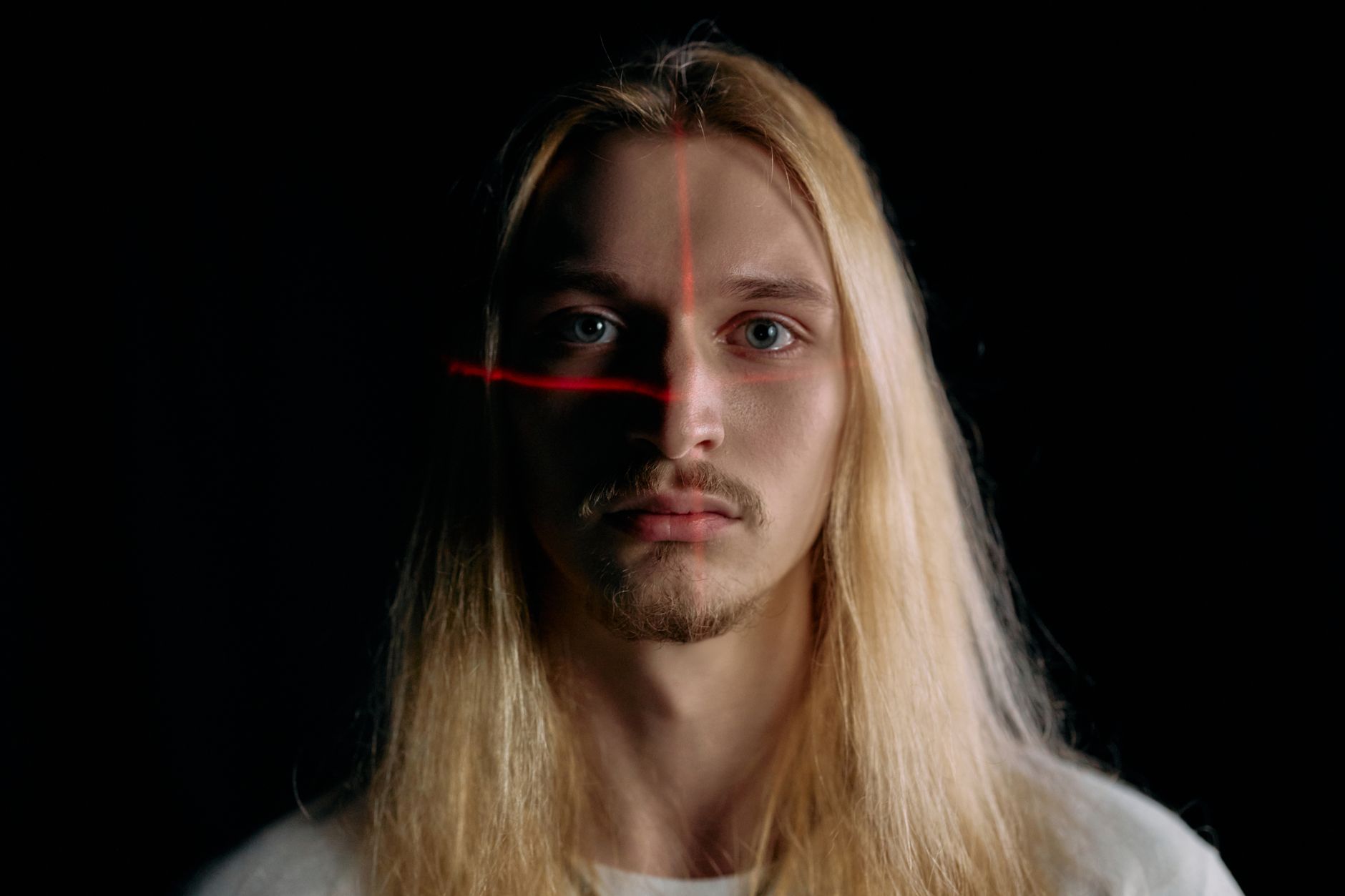
الصورة الرئيسية:قطن برو ستوديو / بيكسيلز
Detecting Deepfakes: Combating Digital Manipulation Today
As synthetic media grows increasingly sophisticated, verifying the authenticity of digital content has become a paramount challenge for journalists, technologists, and the public. A comprehensive examination of reporting from CBS News reveals how rapidly evolving algorithms are rendering traditional methods of observation obsolete, leaving society to grapple with an environment where even audio-visual reality is deeply suspect.
In an era defined by ubiquitous digital connectivity, the proliferation of synthetic media represents a fundamental challenge to the integrity of public information. The ability to artificially generate or alter video, audio, and imagery with high fidelity has shifted from the realm of science fiction into everyday technology accessible via consumer-grade software. As malicious actors and pranksters alike deploy these tools to fabricate convincing evidence of events that never occurred, the imperative for rigorous fact-checking and advanced technological countermeasures has never been more urgent. Understanding the mechanics of this deception is the first step toward reclaiming a shared baseline of objective truth.
Context: The Rise of Synthetic Media and Digital Manipulation
The historical trajectory of media fakery has evolved from crude, analog photo-retouching to algorithmic synthesis driven by artificial intelligence and machine learning. Early iterations of digital manipulation required specialized technical skills, substantial computational power, and hours of painstaking manual labor. Today, deep learning architectures—specifically generative adversarial networks and diffusion models—automate the process of mapping human facial expressions, vocal inflections, and environmental textures onto arbitrary digital canvases.
According to reporting published by CBS News, this technological leap has democratized the creation of hyper-realistic forgeries. What once required Hollywood-grade visual effects studios can now be executed on standard consumer hardware or cloud-based platforms within minutes. This shift has radically altered the threat landscape, moving digital deception from a niche enterprise practiced by sophisticated state actors to a pervasive tool available to anyone with an internet connection.
The societal implications of this democratization are profound. When anyone can generate a convincing video of a public figure making inflammatory statements or a private citizen engaged in compromising behavior, the foundational trust required for democratic discourse, legal proceedings, and journalism begins to erode. CBS News emphasizes that the primary danger is not merely that specific fakes will deceive audiences, but that the pervasive existence of synthetic media creates a blanket state of suspicion where authentic documentation can be dismissed as a fabrication—a phenomenon known as the liar’s dividend.
The Scope of the Problem: When Reality Becomes Suspect
The contemporary information ecosystem is saturated with competing narratives, but the introduction of flawless synthetic media adds an entirely new dimension of cognitive friction. When the eyes and ears can no longer be trusted as primary witnesses to truth, society faces a crisis of verification. CBS News highlights that this vulnerability extends across multiple domains, including political interference, financial fraud, reputational destruction, and the distortion of historical events.
Financial markets, for example, are highly sensitive to real-time information. A fabricated audio clip of a corporate executive announcing sudden bankruptcy or regulatory investigation can cause instantaneous fluctuations in stock prices before the deception is uncovered and debunked. Similarly, in the political sphere, deepfakes deployed during election cycles can manipulate voter sentiment, damage candidates, or sow generalized distrust in the electoral process. The scope of the problem is bounded only by the imagination of those seeking to exploit human cognitive biases.
Furthermore, the psychological impact of pervasive synthetic media alters how individuals interact with digital content. As CBS News observed, audiences are increasingly adopting a posture of reflexive cynicism. When every piece of dramatic or controversial footage is greeted with automatic skepticism, genuine investigative reporting exposing real corruption or wrongdoing suffers. The erosion of baseline reality impairs the public’s ability to hold institutions and individuals accountable.
What CBS News Discovered Regarding Deepfake Technology
The Evolution of Visual and Audio Fidelity
In its comprehensive reporting on the subject, CBS News documented the staggering speed at which deepfake technology has advanced. Early examples were often betrayed by unnatural blinking rates, inconsistent lighting across facial features, and noticeable blurring around the edges of manipulated mouths or hair. Modern iterations, however, have largely resolved these technical artifacts through the implementation of advanced neural rendering techniques that seamlessly blend synthetic elements into natural video backgrounds.
The Human Element and Cognitive Vulnerability
Beyond the technical specifications of the algorithms, CBS News investigated the human psychology that makes deepfake deception so effective. Humans are hardwired to trust audio-visual cues; seeing a trusted face deliver a message triggers deep-seated evolutionary responses that bypass rational skepticism. Malicious actors exploit this cognitive shortcut, leveraging emotional triggers such as outrage, fear, or empathy to ensure that fabricated content is shared widely across social media networks before fact-checkers can intervene.
The Verification Gap
A central finding of the CBS News investigation is the widening gap between the speed at which synthetic media can be produced and distributed versus the time required for forensic experts to verify its authenticity. While automated generation takes mere seconds, rigorous authentication often demands hours of detailed frame-by-frame analysis by specialized analysts. This temporal asymmetry ensures that deceptive content frequently achieves its primary objective—viral reach and ideological impact—long before a definitive debunking can be published.
The Mechanisms Behind Creating and Spreading Deepfakes
To effectively combat digital manipulation, one must understand the underlying mechanics of how deepfakes are engineered and disseminated. The creation process typically relies on machine learning models trained on vast datasets of target individuals. For a facial swap or puppetry deepfake, the algorithm ingests hundreds or thousands of photographs and video clips of the subject from various angles, learning the exact geometry of bone structure, skin texture, micro-expressions, and lighting interactions.
Once the model achieves sufficient proficiency, it can superimpose the target’s likeness onto a different body performing different actions and speaking different words. Audio deepfakes, or voice clones, operate on a similar principle, utilizing short samples of a person’s spoken voice to map phonetic structures and synthesize entirely new speech with matching cadence, pitch, and regional accents. This generated audio can then be paired with the visual deepfake to create a complete, synchronized multimedia illusion.
The dissemination of these artifacts is heavily accelerated by algorithmic recommendation systems on social media platforms. These architectures are optimized for user engagement, which is frequently driven by sensational, surprising, or polarizing content. Because deepfakes are intentionally crafted to provoke strong emotional reactions, they perform exceptionally well within these distribution channels, traveling faster and wider than dry, corrective factual reporting.
Evaluating the Evidence: Challenges in Spotting Fakes
Detecting digital manipulation requires a systematic approach to evaluating evidence, yet analysts face significant hurdles as technology improves. The table below outlines the contrast between traditional red flags associated with early deepfakes and the sophisticated indicators required for modern synthetic media analysis.
| Analytical Category | Legacy Indicators (Early Fakes) | Modern Indicators (Advanced Fakes) |
|---|---|---|
| Facial Dynamics | Unnatural blinking, robotic head movements, poor skin texture rendering. | Micro-expressions, subtle skin blood-flow changes (photoplethysmography), dynamic lighting consistency. |
| التناغم الصوتي-المرئي | Noticeable lag between lip movements and phonetic output. | Precise phonetic alignment, algorithmic breath sounds, synthesized ambient room noise matching. |
| Contextual Provenance | Implausible scenarios easily debunked by basic geographic or chronological checks. | Plausible scenarios set in realistic environments, requiring cryptographic metadata verification. |
| Forensic Traceability | Obvious pixelation, compression artifacts, and edge-blending errors. | Subtle frequency-domain anomalies in pixel grids detectable only via specialized spectral analysis. |
As demonstrated in the comparison above, relying solely on casual visual inspection is no longer sufficient. While early fakes could be caught by observant viewers noticing an irregular blink or blurred jawline, modern synthetic media requires deep forensic tools that examine the pixel-level mathematics and frequency domains of digital files.
Institutional and Technological Responses to Manipulation
In response to the growing threat of unverified digital media, technology companies, academic institutions, and international standards bodies are developing robust defensive frameworks. One prominent technological avenue is cryptographic provenance—a system backed by coalitions such as the Coalition for Content Provenance and Authenticity (C2PA) that attaches tamper-evident metadata to media files at the moment of capture, certifying their origin and any subsequent edits.
Furthermore, artificial intelligence researchers are building counter-algorithms specifically designed for detecting deepfakes. These detection tools scan video and audio files for mathematical inconsistencies that escape the human eye, such as unnatural heartbeat patterns inferred from facial color fluctuations or specific mathematical noise signatures left behind by neural generation models. However, this remains an arms race; as detectors become more proficient, generative models adapt to minimize those specific forensic footprints.
Regulatory bodies are also examining legal frameworks to hold creators and distributors of malicious deepfakes accountable, particularly in the contexts of non-consensual sexual imagery, financial fraud, and election interference. These legislative efforts aim to establish clear penalties for deceptive media while safeguarding freedom of expression and legitimate satirical or artistic works.
Actionable Steps for Detecting Deepfakes
While automated tools and forensic analysts play a critical role, everyday media consumers can adopt rigorous habits to evaluate suspicious content. The following checklist provides actionable warning signs to help identify potential digital manipulation.
- Examine the lighting and shadows: Look for inconsistencies in light sources reflecting off the subject’s face, eyes, and surrounding environment, as generative models frequently miscalculate complex shadow angles.
- Scrutinize accessories and edges: Inspect glasses, earrings, hair strands, and collar lines for blurring, warping, or sudden shimmering artifacts where the synthetic overlay meets the natural video frame.
- Listen closely to audio quality: Check for sudden shifts in background noise, robotic vocal cadence, metallic artifacts, or audio that sounds mismatched to the apparent acoustic environment of the room.
- Check primary sources and corroboration: Cross-reference sensational or unexpected footage with reputable, mainstream news outlets and official institutional channels to see if other independent reporters have verified the event.
- Investigate the provenance: Look for metadata indicators, publication history, and original upload details to trace the video back to its earliest known appearance on the internet.
- Apply the skepticism filter: Be particularly vigilant when viewing content that triggers an intense emotional reaction, as malicious actors intentionally weaponize outrage and fear to bypass critical thinking.
الأسئلة الشائعة حول كشف التزييف العميق
ما هوDeepfake بالضبط؟
A deepfake is a piece of synthetic media—video, audio, or imagery—generated or heavily altered using deep learning artificial intelligence algorithms to falsely depict real individuals saying or doing things they never actually did.
Can the human eye alone reliably detect modern deepfakes?
No. While early deepfakes exhibited obvious visual flaws like awkward blinking or blurry edges, modern synthetic media has achieved such high fidelity that casual observation is frequently insufficient, necessitating specialized forensic tools and metadata verification.
What role does metadata play in combating digital manipulation?
Metadata provides a digital paper trail for media files. Initiatives like cryptographic provenance embed verifiable tamper-evident signatures into files at the point of capture, allowing verifiers to confirm whether a video or image has been altered since its creation.
Why are audio deepfakes considered just as dangerous as visual ones?
Audio deepfakes, or voice clones, can be generated from very brief vocal samples. Because telephone calls, radio broadcasts, and voice notes rely entirely on sound, convincing audio forgeries can easily facilitate financial fraud, impersonation, and political deception without requiring complex video generation.
What should I do if I encounter a suspected deepfake online?
Do not share or amplify the content. Report the material to the platform hosting it, check reputable fact-checking organizations to see if it has been debunked, and look for primary source corroboration before accepting the media as authentic.