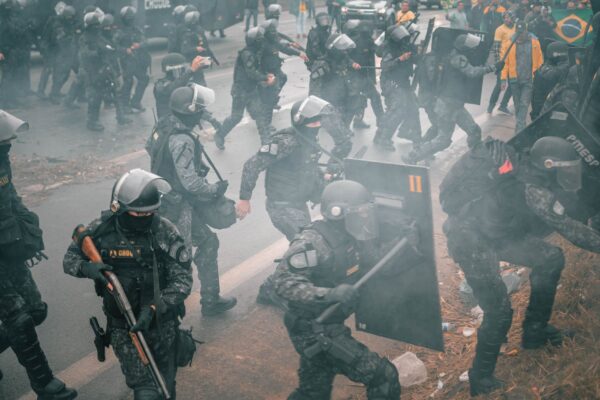
الصورة الرئيسية:بافل دانيلوك / بيكسلز
إسرائيل: حملة ضد قطر تتسرب إلى تحليلات الانتخابات
Recent investigative reporting details how a coordinated geopolitical influence operation has crossed national borders to impact domestic democratic processes. By analyzing the mechanics of foreign messaging, this report examines how anti-Qatar narratives infiltrate election cycles.
In an era where digital information ecosystems are increasingly vulnerable to foreign manipulation, the intersection of geopolitical conflict and domestic electoral integrity has become a primary security concern. Al Jazeera reported on how an alleged anti-Qatar campaign orchestrated by Israeli actors has begun to bleed into national elections, raising critical questions about sovereignty, foreign influence, and the protection of democratic institutions. Examining these developments requires an adherence to rigorous fact-checking methodologies, mapping out how targeted messaging operations transition from international strategic communications into domestic political interference.
Context and Background of the Reported Campaign
The operational framework surrounding the reported anti-Qatar messaging campaign involves distinct state and non-state actors utilizing digital platforms to shape public perception. According to Al Jazeera, these strategic communication efforts are designed to undermine Qatar’s diplomatic standing, particularly regarding its mediating roles in regional conflicts and its financial and political relationships with various international entities. Understanding the genesis of these narratives requires examining the broader geopolitical tensions that make such influence operations attractive to foreign strategists seeking to alter policy outcomes abroad.
Geopolitical influence campaigns rarely operate in a vacuum. They typically leverage existing domestic political vulnerabilities, polarized media environments, and pre-existing public anxieties within target nations. Al Jazeera detailed how these operations rely on sophisticated networks of digital assets, including automated accounts, coordinated inauthentic behavior, and proxy commentators, to amplify specific talking points. These methods allow foreign actors to obscure their fingerprints while injecting partisan wedge issues into foreign political debates.
The Mechanics of Cross-Border Influence
The transmission mechanism from international dispute to domestic election interference depends heavily on digital intermediation. When foreign narratives target a specific country’s electoral discourse, they often exploit algorithmic vulnerabilities inherent in major social media platforms. By focusing on emotionally resonant themes such as security, corruption, or foreign allegiance, campaign operators can accelerate the distribution of unverified claims among partisan factions.
Furthermore, Al Jazeera noted that these campaigns often coordinate with local political operatives or sympathetic media outlets within the target country. This localization process ensures that foreign talking points are adapted to fit domestic political vernaculars, making them appear homegrown rather than imported. Fact-checking organizations tracking these developments emphasize that identifying the source of origin remains one of the most significant challenges for election security officials.
Examining Al Jazeera’s Reporting on Election Interference
The core of the recent controversy stems from Al Jazeera’s investigative findings, which traced specific narratives appearing in domestic election campaigns back to coordinated foreign influence networks. Al Jazeera documented instances where campaign discourse regarding foreign policy, international aid, and diplomatic alliances was directly influenced by talking points generated by the alleged anti-Qatar campaign. This overlap demonstrates a deliberate strategy to force foreign policy disputes onto the domestic ballot.
Analyzing the methodology behind Al Jazeera’s reporting involves looking at the evidentiary trail left by digital influence operations. Investigative journalists often rely on metadata analysis, network mapping, and leaked or uncovered communication strategies to establish the connection between foreign state objectives and domestic electoral outcomes. According to Al Jazeera, the convergence of these interests highlights a growing vulnerability in democratic states where foreign actors attempt to pick electoral winners and losers by shaping voter perceptions.
Tracing the Digital Footprint
In examining how foreign campaigns integrate into local elections, digital forensic investigations look for specific behavioral patterns. Al Jazeera highlighted the synchronized timing of narrative rollouts, where identical talking points appear across multiple independent-seeming accounts simultaneously. This coordinated amplification is a hallmark of professionalized influence operations rather than organic grassroots political discourse.
Additionally, the financial and organizational backing of these networks often points toward specialized public relations firms and state-aligned entities. While the direct attribution of cyber operations can be technically complex, investigative reporting by outlets like Al Jazeera relies on corroborating financial flows, structural overlaps in messaging infrastructure, and internal documentation to substantiate claims of foreign election interference.
The Evidence Surrounding Anti-Qatar Narratives
Evaluating the credibility of any influence operation requires a systematic comparison of the assertions made by the campaign against verifiable evidence. The anti-Qatar narratives documented in the reporting typically center on allegations of funding extremist groups, exerting undue influence over Western institutions, or acting in bad faith during international negotiations. However, independent analysts and investigative reports frequently find these claims to be exaggerated, decontextualized, or entirely fabricated to serve immediate strategic interests.
Al Jazeera presented evidence demonstrating that the dissemination of these narratives spikes during critical political junctures, such as ahead of national votes or parliamentary debates concerning Middle Eastern policy. This temporal correlation strongly suggests that the timing of these disclosures is calculated to maximize electoral disruption rather than to inform the public in good faith. Fact-checkers must therefore separate legitimate diplomatic critique from manufactured propaganda designed to manipulate domestic voters.
| فئة المطالبة | Typical Narrative Pushed | Verifiable Evidence / Counter-Analysis |
|---|---|---|
| Diplomatic Mediation | Portraying mediation efforts as malicious interference | International bodies recognize Qatari mediation as vital for hostage releases and conflict resolution. |
| Financial Influence | Alleging covert funding of domestic political entities | Investigations show decentralized digital networks amplifying unverified rumors without financial proof. |
| Electoral Alignment | Claiming specific candidates are compromised by foreign states | Targeted rhetoric designed to weaponize foreign policy disagreements for domestic political point-scoring. |
| Information Operations | Presenting coordinated bot activity as authentic citizen outrage | Digital forensics reveal synchronized posting patterns originating from foreign infrastructure hubs. |
How Disinformation Spreads Into Democratic Elections
The transition of foreign disinformation into domestic electoral politics follows a predictable lifecycle, moving from fringe digital spaces into mainstream political discourse. Initially, polarizing claims regarding foreign actors like Qatar are seeded within low-accountability online forums or specialized partisan blogs. From there, these claims are picked up by hyper-partisan media outlets and amplified by digital influencers who may be unaware of—or indifferent to—the foreign origin of the narrative.
Al Jazeera’s coverage underscores the danger of this diffusion process. Once a foreign policy grievance enters the domestic political bloodstream, it becomes a tool for domestic candidates to attack their opponents. This creates a feedback loop where foreign propaganda is legitimized and perpetuated by domestic political actors seeking short-term electoral advantages, severely compromising the integrity of democratic debates.
دور التضخيم الخوارزمي
Modern information ecosystems are engineered to maximize user engagement, a metric that heavily favors sensational, divisive, and emotionally charged content. Foreign influence operations exploit this architectural reality by tailoring anti-Qatar messaging to trigger outrage and tribalism among voters. Algorithms, designed to serve users more of what they interact with, inadvertently act as force multipliers for state-sponsored propaganda.
As Al Jazeera pointed out, democratic institutions have been slow to adapt to these algorithmic vulnerabilities. Legislative frameworks are often outdated, focusing on traditional campaign finance rather than digital influence operations. Consequently, foreign actors can inject destabilizing narratives into an election at a fraction of the cost of traditional advertising, bypassing regulatory oversight.
Analytical Checklist for Evaluating Geopolitical Claims
To assist researchers, journalists, and citizens in assessing claims related to foreign influence and electoral interference, evidence-based verification requires evaluating several distinct warning signs. When encountering sensational reports or viral claims regarding foreign actors during an election cycle, investigators should run through the following operational checklist:
- Source Provenance: Can the original origin of the claim be traced to a verified, accountable institution, or does it emerge from anonymous digital networks?
- Temporal Correlation: Does the timing of the narrative release coincide suspiciously with a critical voting window, debate, or legislative deadline?
- Coordination Indicators: Do multiple accounts or media outlets push identical phrasing simultaneously, indicating synchronized inauthentic behavior?
- التأثير العاطفي: Does the messaging rely heavily on fear, outrage, and xenophobia rather than verifiable policy analysis?
- Verifiable Documentation: Is the claim supported by primary source evidence, such as financial audits, official government records, or forensic metadata?
- Motivations of Amplifiers: What do the domestic political figures amplifying the claim stand to gain electorally from its circulation?
Institutional and Media Responses to the Allegations
The exposure of foreign influence operations infiltrating democratic elections demands a robust institutional response from electoral commissions, cybersecurity agencies, and independent media watchdogs. Following the release of Al Jazeera’s findings, pressure has mounted on democratic governments to enhance their monitoring of foreign digital interference and to enforce stricter transparency rules on political advertising and social media platforms.
However, responses from targeted governments and political parties have often been fragmented. While some officials call for immediate bipartisan inquiries into foreign meddling, others attempt to weaponize the allegations for partisan gain, accusing their domestic opponents of colluding with foreign interests. This polarization hinders effective oversight and leaves democratic systems exposed to ongoing manipulation.
The Challenge of Media Literacy
Media organizations play a dual role in this landscape. While rigorous journalism by outlets like Al Jazeera exposes covert influence campaigns, the wider media ecosystem often struggles to report on disinformation without inadvertently spreading it further. Headlines that repeat false claims—even to debunk them—can reinforce those narratives in the public consciousness.
Consequently, media watchdogs emphasize the need for precision in reporting. Editors must ensure that investigations into foreign campaigns clearly delineate between proven facts, expert analysis, and unverified allegations, preventing the press from becoming an unwitting conduit for propaganda.
Understanding the Broader Implications for Electoral Integrity
The bleeding of foreign anti-Qatar campaigns into domestic elections signifies a dangerous evolution in global information warfare. When domestic political processes can be co-opted by foreign actors pursuing regional geopolitical goals, the fundamental premise of national sovereignty is eroded. Voters are no longer making choices based purely on domestic priorities, but are instead reacting to imported narratives designed to serve foreign state interests.
Protecting electoral integrity in this environment requires a paradigm shift. Cybersecurity, foreign intelligence, and domestic election administration can no longer operate in isolation from one another. As Al Jazeera’s reporting demonstrates, modern campaigns are holistic, combining cyber capabilities, financial networks, and psychological operations to influence the democratic process from the outside in.
Frequently Asked Questions on the Al Jazeera Investigation
What is the core allegation made in Al Jazeera’s report regarding the anti-Qatar campaign?
Al Jazeera reported that an organized geopolitical campaign targeting Qatar has successfully integrated its narratives into domestic election cycles, influencing voter perception and political discourse in foreign democracies.
How do foreign actors inject their narratives into domestic elections?
Campaign operators utilize coordinated digital networks, automated accounts, and sympathetic local intermediaries to amplify divisive talking points, ensuring foreign grievances are adopted by domestic political factions.
Why are anti-Qatar narratives specifically used in these influence operations?
These narratives leverage ongoing debates over international mediation, foreign policy, and regional security to provoke emotional reactions and create wedge issues that benefit specific political factions.
What role do social media algorithms play in spreading these influence operations?
Social media algorithms prioritize engagement, unintentionally amplifying sensational, divisive, and coordinated foreign propaganda because it triggers high volumes of user interaction and outrage.
How can voters and researchers identify foreign disinformation during an election?
Observers should check for anonymous sourcing, suspicious timing coinciding with voting windows, coordinated posting behavior across multiple accounts, and a lack of verifiable primary evidence.