
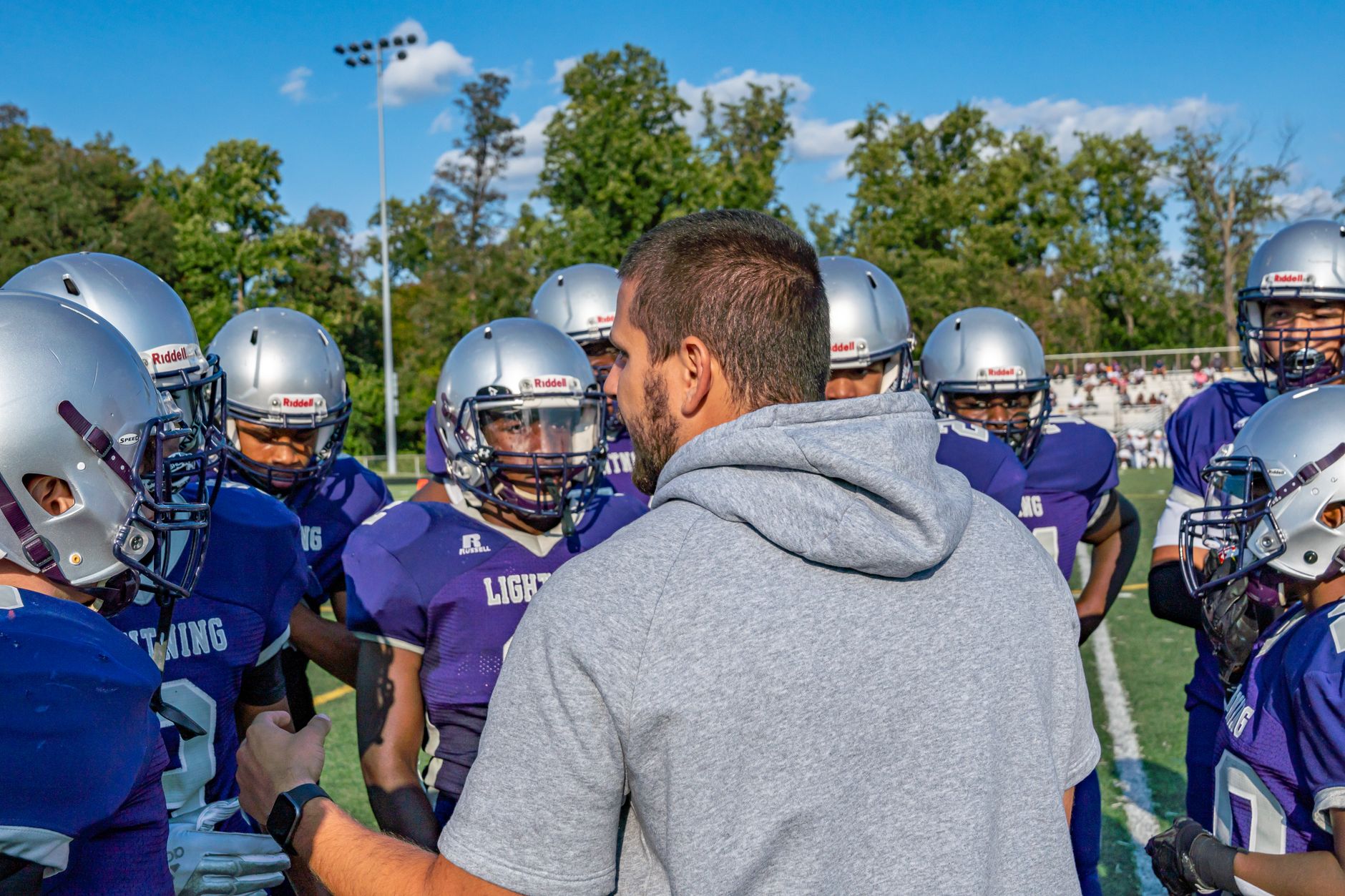
Imagen principal:Styves Exantus / Pexels
Jackson State Football Media Day: Players Discuss Fall Practice
Jackson State football held its annual Media Day on August 20, 2026, offering a first look at fall camp expectations and player insights. Coverage from WLBT and the Clarion-Ledger highlighted team dynamics, player reflections on conditioning, and off-field themes such as favorite foods. This synthesis examines where the two outlets aligned, where they diverged, and what the combined evidence reveals about narrative control and public perception in college football media.
Each August, college football programs open their doors to local and regional media for Media Day, a ritualized event where coaches and players offer soundbites, pose for photos, and set early-season narratives. For Jackson State—a program with a storied history in the Southwestern Athletic Conference (SWAC) and a growing national profile under coach Alex Haynes—the 2026 Media Day was an opportunity to project competitiveness, showcase player development, and reinforce institutional messaging. This investigation synthesizes reporting from WLBT and the Clarion-Ledger, two Mississippi-based outlets with overlapping but distinct editorial priorities, to assess how the event was framed, what details were emphasized or omitted, and what the pattern in coverage suggests about narrative control in college football media. Where one outlet focused on competitive expectations, the other highlighted player-centric themes; where both described conditioning and preparation, their emphases revealed different editorial lenses.
Jackson State Football Media Day: What Happened and Why It Matters
Jackson State football’s Media Day on August 20, 2026, served as the first public forum for the Tigers to present their 2026 campaign ahead of fall camp and the opening game. The event, held at the team’s indoor facility, featured head coach Alex Haynes, assistant coaches, and a rotating group of players who spoke with reporters about conditioning, positional depth, and personal anecdotes. According to both WLBT and the Clarion-Ledger, the session was designed to project readiness and team cohesion, with players emphasizing physical preparation and shared goals.
Media Day is not merely a logistical checkpoint; it is a narrative engine in college football. Programs use it to shape early-season expectations, manage fan morale, and influence recruiting narratives. For a program like Jackson State—positioned in a competitive SWAC division and seeking to elevate its profile—the event carries added significance. WLBT’s report framed the day as a bridge between past struggles and future aspirations, while the Clarion-Ledger emphasized the human elements of the team, including player food preferences and personal reflections. Together, these approaches illustrate how local media can amplify both institutional messaging and player-driven storytelling, often in complementary but distinct ways.
WLBT and Clarion-Ledger Coverage: What Each Outlet Reported
WLBT: Competitive Expectations and Program Narrative
WLBT’s coverage positioned Media Day within a broader narrative of resurgence and accountability. The outlet reported that head coach Alex Haynes framed fall camp as a “make-or-break” period for the Tigers, with players acknowledging the need to improve on last season’s shortcomings. WLBT highlighted a player’s comment about “earning every rep” and the team’s stated goal of returning to SWAC championship contention. The report also included a brief reference to positional battles and the return of key contributors, suggesting a focus on competitive readiness rather than off-field distractions.
WLBT’s framing leaned toward institutional messaging: the Tigers were positioning themselves not just to participate, but to dominate. The outlet described the event as part of a deliberate push to reset expectations after a transitional season, with Haynes quoted on the importance of “process over results” in the early weeks of camp. This approach aligns with a common local-media strategy: reinforcing coach-led narratives that prioritize accountability, work ethic, and upward trajectory.
Clarion-Ledger: Player Voices and Personal Storytelling
The Clarion-Ledger’s report, by contrast, centered on player voices and lighter, human-interest themes. The outlet highlighted players’ favorite foods—including fried chicken, pizza, and burgers—presenting a more accessible, relatable image of the team. It also included quotes about conditioning and camaraderie, but placed greater emphasis on the players’ personalities and off-field lives. The Clarion-Ledger described Media Day as a moment where athletes could “let their guard down” and share personal anecdotes, contrasting with the more formal tone of institutional messaging.
This approach reflects the Clarion-Ledger’s broader editorial focus on community and culture, especially in covering historically Black colleges and universities (HBCUs). By foregrounding player preferences and casual remarks, the outlet humanized the team and made the program feel more approachable to general audiences. While WLBT’s report leaned institutional, the Clarion-Ledger’s leaned relational—two complementary but distinct lenses on the same event.
Cross-Outlets Comparison: Where WLBT and Clarion-Ledger Agree and Diverge
Both outlets agreed on the core elements of Media Day: it was held on August 20, 2026, at Jackson State’s indoor facility; players discussed conditioning and preparation; and coach Alex Haynes emphasized accountability and process. They also both included direct quotes from players about the physical demands of fall camp and the team’s collective mindset. These points of agreement suggest a shared factual baseline: the event occurred as described, and the themes of readiness and teamwork were central.
Where the outlets diverged was in emphasis and selection of details. WLBT prioritized competitive expectations and institutional messaging, quoting Haynes on the need to “earn every rep” and framing the Tigers as aiming for SWAC contention. The Clarion-Ledger, meanwhile, emphasized player-centric themes, including favorite foods and personal reflections, which humanized the athletes and made the team feel more relatable. This divergence reflects differing editorial priorities: WLBT leaned toward narrative control through institutional authority, while the Clarion-Ledger leaned toward narrative expansion through personal storytelling.
The table below summarizes the key points of agreement and divergence between the two outlets:
| Tema | WLBT Emphasis | Clarion-Ledger Emphasis | Agreement Level |
|---|---|---|---|
| Media Day date and location | August 20, 2026, at Jackson State indoor facility | August 20, 2026, at Jackson State indoor facility | Full agreement |
| Conditioning and preparation | Players discussed physical demands and earning reps | Players discussed conditioning and teamwork | Full agreement |
| Coach messaging | Haynes emphasized accountability and process | Haynes’ messaging not directly quoted | Partial agreement (inferred) |
| Competitive expectations | Explicit focus on SWAC championship contention | Implied through player quotes, not emphasized | Partial agreement |
| Player human-interest themes | Not included | Favorite foods, personal anecdotes | Divergence |
Key Quotes and Themes from Jackson State Players
Conditioning and Accountability
Both outlets included quotes from players emphasizing the intensity of fall camp. WLBT reported one player saying the team is “earning every rep” and that conditioning is “where champions are made.” The Clarion-Ledger quoted a player describing camp as “the time to put in the work” and another noting that “everyone is pushing each other.” These quotes, while brief, reinforce a shared theme: preparation is non-negotiable, and the team’s identity is built on discipline.
The repetition of “earning,” “work,” and “pushing” across outlets suggests a coordinated messaging effort, whether intentional or emergent. Players’ language aligns with coach-led narratives about accountability, which is common in preseason coverage. The consistency in phrasing across outlets—even with different editorial emphases—indicates a strong internal narrative being externalized through player voices.
Personal Storytelling and Relatability
The Clarion-Ledger’s inclusion of players’ favorite foods introduced a lighter, more personal dimension to the coverage. One player cited fried chicken as a favorite, another pizza, and a third burgers, with the outlet framing these preferences as part of the team’s culture. WLBT did not include these details, reflecting its focus on institutional messaging. The Clarion-Ledger’s approach aligns with a broader trend in sports media toward humanizing athletes, especially in HBCU coverage, where community and culture are central themes.
These personal touches serve a dual purpose: they make the team feel accessible to fans and media consumers, and they subtly reinforce the idea that players are “regular people” with relatable habits. While WLBT’s report centered on performance and expectations, the Clarion-Ledger’s added a layer of cultural authenticity that can strengthen fan connection and institutional pride.
What the Combined Evidence Reveals About Fall Practice and Team Dynamics
Taken together, the WLBT and Clarion-Ledger reports suggest a Jackson State team that is self-consciously rebuilding its identity around discipline, accountability, and cohesion. The repeated emphasis on “earning reps” and “pushing each other” indicates a program-wide commitment to process over outcome—a common refrain in programs seeking to rebound from underperformance. The inclusion of player quotes about conditioning in both outlets reinforces the idea that this messaging is not just coach-driven but internalized by the team.
The divergence in coverage—WLBT’s institutional focus versus the Clarion-Ledger’s player-centric storytelling—also reveals how local media can amplify different facets of the same story. WLBT’s framing positions the Tigers as contenders with a clear mission, while the Clarion-Ledger’s framing makes the team feel like a community asset. This dual amplification can strengthen the program’s public image by appealing to both competitive ambitions and cultural resonance.
Notably absent from either report were specific references to injuries, depth-chart controversies, or off-field distractions—topics that often surface in preseason coverage of other programs. The silence on these issues suggests either strong internal discipline in messaging or editorial choices to foreground positivity. Either way, the combined evidence presents a Jackson State team that is unified, focused, and projecting confidence.
Who Is Affected by This Coverage and How It Spreads
The primary audiences for this coverage are Jackson State fans, prospective recruits and their families, and the broader Mississippi sports community. For fans, the coverage reinforces hope and expectation; for recruits, it presents a narrative of upward mobility and cultural fit; for the community, it positions the Tigers as a source of local pride. The Clarion-Ledger’s human-interest angle, in particular, can make the program feel more approachable to families considering HBCU options, while WLBT’s competitive framing can attract attention from analysts and rival fans.
The coverage also affects institutional messaging. By amplifying coach and player quotes about accountability and process, local media help Jackson State’s administration project stability and ambition. This, in turn, can influence donor confidence, alumni engagement, and even local government support for athletic facilities. The Clarion-Ledger’s cultural framing, meanwhile, strengthens the team’s connection to the broader Jackson community, which is essential for HBCU programs that rely heavily on local identity and pride.
Finally, the coverage spreads through social media, where clips of player quotes and photos from Media Day are shared across platforms. WLBT’s institutional framing may be repurposed by fan accounts and alumni groups to emphasize competitive goals, while the Clarion-Ledger’s human-interest content may be shared by community pages and HBCU advocacy groups. This multi-platform amplification ensures that the narratives—discipline and relatability—reach different segments of the audience, reinforcing the program’s image in diverse ways.
Red Flags and Debunking Checklist: What to Watch For in Football Media
Preseason coverage, especially Media Day events, is fertile ground for subtle narrative manipulation. Below is a checklist of red flags and legitimate signals to help readers distinguish between authentic reporting and constructed narratives:
- Overuse of coach jargon: Phrases like “earning every rep,” “process over results,” or “team-first mentality” are common in preseason narratives. While they can reflect genuine culture, they can also be coached talking points. Ask: Are these phrases echoed by multiple players, or are they isolated coach quotes?
- Lack of critical context: If a program is coming off a losing season, Media Day coverage that omits past struggles or injury concerns may be selective. Look for whether outlets mention context or simply present a polished image.
- Human-interest inflation: While player stories add color, they can also distract from substantive issues like depth-chart uncertainty or academic concerns. Ask: Is the human-interest content balanced with performance-related reporting?
- Sourcing anónimo: Quotes attributed to “a player” or “a source close to the program” without attribution can be used to amplify narratives without accountability. Look for on-the-record quotes and specific attributions.
- Repetición de puntos de discusión: If multiple outlets or social media accounts repeat the same phrases or themes without independent verification, it may indicate coordinated messaging rather than organic reporting. Cross-check claims across outlets and platforms.
- Lack of data or metrics: Preseason coverage often relies on anecdotes rather than performance data. Ask: Are there measurable indicators (e.g., returning production, recruiting rankings) to support the narrative?
- Overemphasis on “underdog” or “contender” labels: Terms like “sleeping giant” or “championship contender” can be aspirational rather than descriptive. Look for evidence—returning starters, recruiting gains, or improved strength metrics—to justify such labels.
Expert and Institutional Responses to Media Day Narratives
Neither WLBT nor the Clarion-Ledger included direct responses from external experts or institutional stakeholders beyond the Jackson State program itself. However, the absence of critical voices—such as SWAC rivals, independent analysts, or faculty representatives—is typical of preseason coverage, which tends to prioritize promotional narratives over critical scrutiny. This pattern reflects a broader industry norm in college football media, where early-season narratives are often framed as aspirational rather than analytical.
In the absence of external critiques, the burden of verification falls on the reader. The consistency of player quotes about conditioning and accountability across outlets suggests internalization of a program narrative, but it does not constitute independent validation. Readers should treat the combined evidence as indicative of team culture rather than predictive of on-field success.
Original Analysis: What the Pattern in Coverage Suggests About Jackson State Football’s Narrative Control
Taken together, the WLBT and Clarion-Ledger reports suggest a Jackson State football program that has successfully cultivated a coherent, multi-layered narrative ahead of the 2026 season. The institutional messaging—discipline, accountability, championship aspirations—is reinforced by player quotes and amplified by local media. Simultaneously, the human-interest layer—favorite foods, personal anecdotes—expands the team’s cultural footprint, making it more relatable to diverse audiences.
This dual narrative strategy is not unique to Jackson State, but it is particularly effective for HBCU programs seeking to balance competitive ambition with community identity. The Clarion-Ledger’s emphasis on culture and relatability aligns with the historical role of HBCUs as cultural anchors, while WLBT’s focus on competitive expectations aligns with the modern emphasis on measurable success in college sports. The result is a program image that feels both aspirational and authentic.
Importantly, the lack of critical context or external validation in either report does not indicate deception, but it does highlight the limitations of preseason coverage. Narrative control in this context is less about hiding flaws and more about curating a first impression. The Jackson State Tigers emerge from Media Day as a team with a clear identity, strong internal messaging, and a media ecosystem that amplifies rather than interrogates that identity. Whether this narrative withstands the rigors of fall camp and the season remains to be seen—but for now, the program’s image is tightly controlled and effectively distributed.
What to Do Next: How Fans and Analysts Should Interpret Media Day Insights
For fans, Media Day provides a useful snapshot of team culture and early-season messaging, but it should not be treated as predictive of performance. The quotes about conditioning and accountability are valuable for understanding the team’s mindset, but they are not substitutes for game film, depth-chart analysis, or injury reports. Fans should use Media Day coverage as a starting point for deeper analysis, not as a final judgment.
For analysts and recruiters, Media Day narratives can offer clues about program priorities and player buy-in, but they should be cross-checked with independent sources. The repetition of phrases like “earning every rep” across outlets may indicate a strong internal culture, but it may also reflect a coordinated messaging strategy. Analysts should look for corroborating evidence—such as third-down conversion rates from the previous season or recruiting class rankings—to assess whether the narrative matches reality.
For journalists, Media Day is an opportunity to move beyond soundbites and ask probing questions about depth, injuries, and academic progress. The absence of these topics in both WLBT and Clarion-Ledger reports does not mean they are unimportant; it means they were not prioritized in the coverage. Future reporting should fill these gaps to provide a more complete picture of the program.
Preguntas frecuentes
When was Jackson State Football Media Day held in 2026?
Jackson State Football Media Day was held on August 20, 2026, at the team’s indoor facility, according to both WLBT and the Clarion-Ledger.
What did Jackson State players say about fall camp preparation?
Players emphasized the intensity of conditioning and the need to “earn every rep,” with quotes about putting in the work and pushing each other appearing in both WLBT and Clarion-Ledger coverage.
Did the Clarion-Ledger include any human-interest themes in its coverage?
Yes, the Clarion-Ledger highlighted players’ favorite foods—including fried chicken, pizza, and burgers—as part of its coverage, presenting a more personal and relatable image of the team.
Did WLBT mention competitive expectations for Jackson State in 2026?
Yes, WLBT reported that coach Alex Haynes framed fall camp as a “make-or-break” period, with players and coaches discussing the goal of returning to SWAC championship contention.
Are there any red flags in the Media Day coverage from WLBT and the Clarion-Ledger?
While the coverage is largely positive and promotional, readers should be cautious of overused coach jargon, lack of critical context, and the absence of data-driven analysis. These are common in preseason coverage and do not necessarily indicate deception, but they do limit the depth of the narrative.