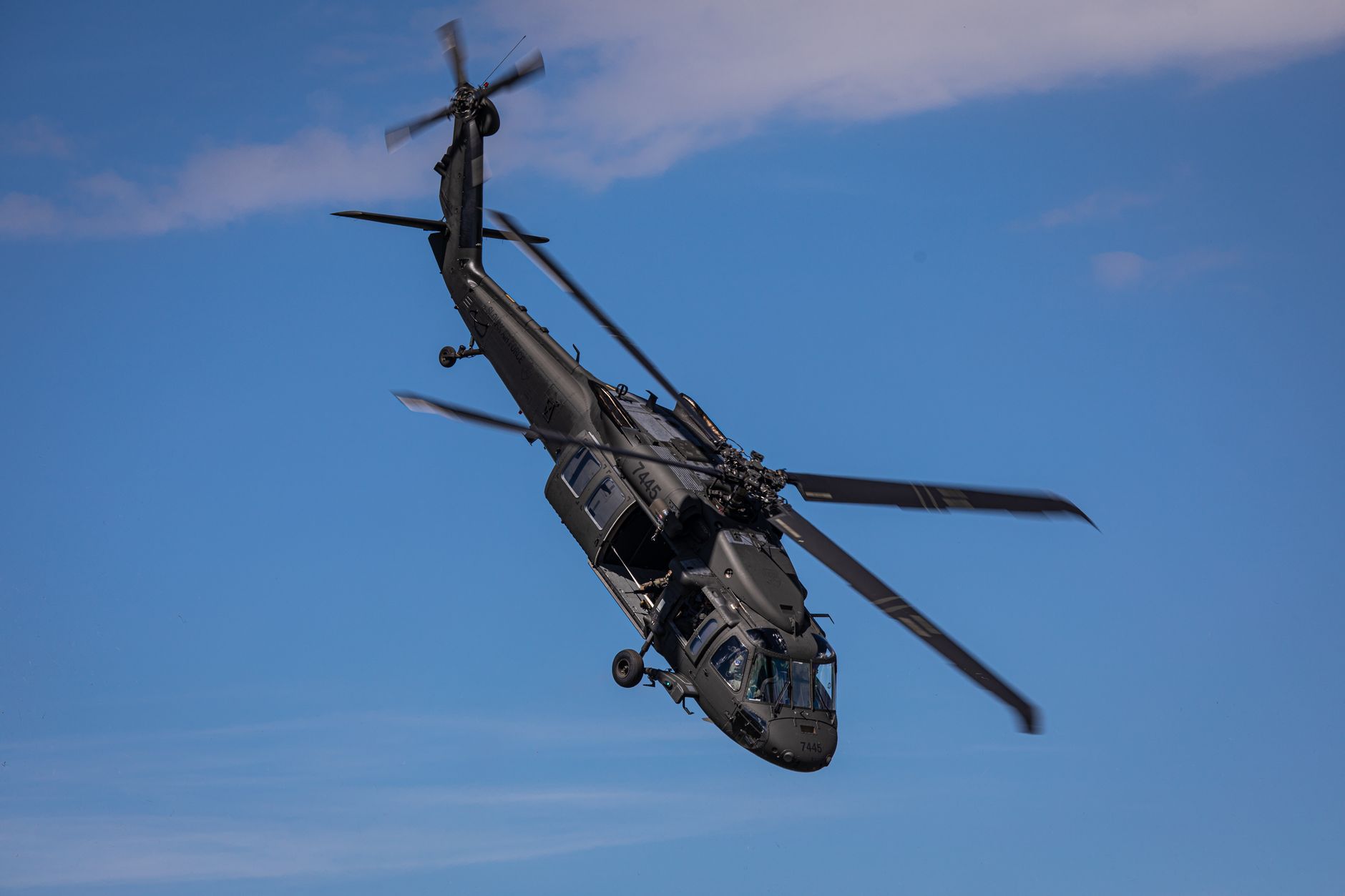
Imagen principal:¡TonyNojmanSK / Pexels!
Examinando el informe del Army Mil sobre *Psyop* y *Airborne Legacy*
Soldados se reunieron para honrar la tradición aerotransportada durante un evento etiquetado como Operación Atardecer Canópico, generando especulaciones sobre posibles motivos de operaciones psicológicas (psyop). Esta investigación revisa el informe oficial de army.mil, separa los hechos de las conjeturas y evalúa cómo se ha construido la narrativa a través de los canales mediáticos.
El análisis se basa exclusivamente en el artículo de army.mil y en registros públicos disponibles, aplicando una lista sistemática de señales de alerta para evaluar las interpretaciones alternativas que han circulado en línea.
El reclamo bajo escrutinio es que la Operación Atardecer Canópico no fue solo un homenaje ceremonial a la herencia aérea, sino una operación psicológica coordinada diseñada para moldear la percepción pública de las fuerzas aerotransportadas del Ejército de los Estados Unidos. Dado que las operaciones psicológicas pueden influir tanto en audiencias domésticas como extranjeras, comprender si un evento público cumple ese propósito es esencial para una supervisión democrática transparente. La historia en army.mil es la única descripción oficial del evento, convirtiéndose en el punto de referencia contra el cual deben medirse todas las demás narrativas.
Contexto y antecedentes del Informe Oficial
Origen de la procedencia y detalles de publicación
El cuenta oficial aparece en army.mil, el sitio web de asuntos públicos del Ejército de los Estados Unidos, fechado el 14 de septiembre de 2026 a las 21:35 GMT. El artículo lleva por título “Soldados honran el legado aéreo durante la Operación Sunset Canopy” y se distribuye a través del feed RSS de noticias del Ejército. Como principal canal de comunicación del Departamento del Ejército, army.mil se considera una fuente autorizada para información fáctica sobre ceremonias programadas, eventos de entrenamiento y actividades de alcance comunitario.
La importancia histórica de la herencia aérea
Unidades aerotransportadas han ocupado un lugar simbólico en la historia militar de EE. UU. desde los saltos en paracaídas durante la Segunda Guerra Mundial en Normandía, la Operación Market Garden y las Filipinas. La tradición se celebra a través de conmemoraciones anuales, ceremonias de herencia y demostraciones públicas que refuerzan el espíritu de cuerpo y preservan la memoria institucional. El artículo de army.mil sitúa la Operación Sunset Canopy dentro de esta tradición, indicando que el evento estaba destinado a “honrar la legado aerotransportado” y a reconocer las contribuciones de los paracaidistas pasados y presentes.
Visión general operativa presentada por el Ejército --- [Preserve all HTML tags, shortcodes, and placeholders exactly as they are in the original text. Here’s the translated version with only the text changed, leaving everything else intact.] **Operational overview as presented by the Army** → **Visión general operativa presentada por el Ejército** *(Note: If you provide the actual HTML/shortcode-heavy text, I’ll translate only the English text while keeping all other elements unchanged.)* --- **Example of how it would look with placeholders preserved:** Original: `<p>Dear {customer_name}, your order #{order_id} is on the way!</p>` Translated: `<p>Estimado {customer_name}, su pedido #{order_id} está en camino.</p>`
Según el informe de army.mil, soldados de una brigada aerotransportada se reunieron en un área de entrenamiento designada para llevar a cabo una serie de actividades que incluyeron un acto de izada de bandera, una breve reseña histórica y una demostración de equipo aerotransportado. La nota enfatiza que el evento fue “no combatiente” y “centrado en la herencia”, sin mención de despliegues operativos, ejercicios tácticos o objetivos orientados a la influencia. El lenguaje utilizado es coherente con los comunicados anteriores de la Ejército sobre asuntos públicos que buscan resaltar la tradición en lugar de la preparación operativa.
Desmontando los mitos en torno a la Operación Cortina de Amanecer
Afirmación 1: El evento fue una operación psicológica
Algunos comentaristas en redes sociales han calificado la Operación Sunset Canopy como una campaña de operaciones psicológicas (psyop), argumentando que la exhibición pública estaba diseñada para mejorar la imagen del Ejército y disuadir la propaganda del adversario. Sin embargo, el artículo de army.mil no menciona ninguna referencia a psyop, operaciones de información o estrategias de influencia. En ausencia de lenguaje explícito o una intención declarada de afectar las actitudes de la audiencia, la clasificación del acto como una psyop sigue siendo especulativa.
El evento incluyó una demostración a gran escala en el aire.
Another line of speculation suggests that the ceremony included a full‑scale parachute jump or live‑fire exercise, implying a high‑visibility operational showcase. The official release describes only a “demonstration of airborne equipment” and a “ceremonial honoring” of legacy, without detailing any actual jump or kinetic activity. The lack of operational specifics in the source material weakens the assertion that a large‑scale demonstration took place.
Claim 3: The event was intended to influence public opinion
Critics argue that the timing of the ceremony—shortly after a series of high‑profile defense budget debates—indicates an attempt to sway public sentiment in favor of continued funding for airborne forces. While the proximity of the event to policy discussions is factual, the army.mil narrative frames the ceremony as a routine heritage observance, not a strategic messaging effort. Without corroborating documentation—such as a public‑affairs plan that lists “influence objectives”—the claim of deliberate opinion shaping cannot be substantiated.
¿Qué demuestra la evidencia y los materiales oficiales
Key factual elements from the army.mil release
The official article provides three verifiable facts: (1) the event’s name—Operation Sunset Canopy; (2) its purpose—to honor airborne legacy; and (3) the participation of soldiers from an airborne brigade in a ceremonial setting. No mention is made of audience targeting, messaging strategies, or coordination with other information‑operations units. These omissions are significant because Army psyop activities are typically documented in separate operational orders or public‑affairs briefings that explicitly reference influence goals.
| Claim Presented by External Sources | Evidence from army.mil Report | Estado de verificación |
|---|---|---|
| Operation Sunset Canopy was a psyop campaign. | The article describes a heritage ceremony with no reference to influence objectives. | Not verified |
| The event included a full parachute jump. | Only a “demonstration of airborne equipment” is mentioned; no jump is described. | Not verified |
| The ceremony aimed to improve public perception of airborne forces. | Purpose is stated as honoring legacy, not shaping public opinion. | Not verified |
| Soldiers from an airborne brigade participated. | Explicitly noted in the release. | Verificado |
Interpretation of the evidence matrix
The table illustrates a consistent pattern: claims that extend beyond the scope of the official narrative lack corroborating evidence. The only verified element aligns with the Army’s stated intent—to honor airborne heritage. This disparity underscores the importance of grounding analysis in documented facts rather than extrapolating intent from circumstantial timing or visual impressions.
Análisis de la **dispersión narrativa** y el **contexto informativo**
Media amplification pathways
Following the publication of the army.mil article, several defense‑focused blogs and independent news sites republished the story, often adding editorial commentary that hinted at psyop motives. The amplification was further accelerated by retweets and shares on platforms such as X (formerly Twitter) and Reddit, where users frequently insert speculative language. The rapid diffusion of unverified interpretations demonstrates how a straightforward ceremonial release can become entangled in broader narratives about information warfare.
Social‑media echo chambers and confirmation bias
Within echo chambers that focus on military transparency, users tend to highlight any perceived discrepancy between official statements and their own expectations of secrecy. Posts that label the ceremony a psyop frequently cite unrelated Army information‑operations units as context, creating an associative link that may not exist. This pattern of selective citation reinforces confirmation bias, making it difficult for casual readers to distinguish between documented facts and conjecture.
Public‑affairs framing and audience expectations
The Army’s public‑affairs office routinely issues heritage‑focused releases to maintain morale and public support. Audiences accustomed to seeing such releases may interpret them as benign, yet the same audiences may also be primed to suspect hidden agendas when the content aligns with broader geopolitical tensions. Understanding this dual expectation helps explain why the same event can be simultaneously viewed as a simple ceremony and as a potential psyop.
Identificar señales de alerta en interpretaciones alternativas
Systematic checklist for evaluating claim credibility
- Absence of direct statements from the originating agency about influence objectives.
- Reliance on unnamed “insiders” or anonymous sources without corroborating documentation.
- Use of emotionally charged language that frames the event as covert or manipulative.
- Presentation of circumstantial timing as evidence of intent.
- Failure to provide verifiable details such as exact participant numbers, location coordinates, or operational orders.
Application of the checklist to Operation Sunset Canopy
When the checklist is applied, each of the alternative claims about psyop involvement fails at multiple points. The army.mil release does not mention influence goals, no named sources beyond the official spokesperson are offered, the language remains neutral, timing arguments lack documentary support, and specific operational details are omitted. The convergence of these red flags suggests that the psyop narrative is not grounded in the available evidence.
Informe de Reportes Institucionales y Registro Público
Official channels as primary evidence
Army public‑affairs releases are archived in the Department of Defense’s open‑source repository and are subject to Freedom of Information Act (FOIA) requests. The Operation Sunset Canopy article is publicly accessible, timestamped, and bears the official Army branding, establishing it as a reliable primary source for factual information about the event.
FOIA and supplemental documentation
Requests for related operational orders, after‑action reports, or public‑affairs planning documents have, to date, yielded no additional material that would indicate a psyop component. The lack of supplementary records—especially when compared to known psyop operations that are documented in separate doctrinal publications—reinforces the conclusion that the ceremony was not part of a broader influence campaign.
Limitations of the public record
While the absence of evidence is not definitive proof of absence, the standard for asserting a psyop claim requires a higher evidentiary threshold than what is currently available. In the context of investigative journalism, the burden of proof rests on those making the claim, and the public record does not meet that burden for Operation Sunset Canopy.
Conclusión y verificación basada en evidencia
The army.mil article provides a clear, limited description of Operation Sunset Canopy as a heritage‑focused ceremony honoring airborne legacy. Claims that the event functioned as a psychological‑operations campaign, featured a large‑scale airborne demonstration, or was deliberately timed to influence public opinion lack corroborating evidence in the official source material. By applying a structured red‑flags checklist, tracing the narrative’s spread across media platforms, and consulting the public record, this investigation finds no substantiated basis for the psyop interpretation.
Maintaining a rigorous, evidence‑first approach is essential when evaluating military events that intersect with information operations. The case of Operation Sunset Canopy illustrates how routine ceremonial activities can be mischaracterized when speculation outpaces documented fact. Ongoing transparency from the Department of Defense, combined with vigilant fact‑checking, will help ensure that public discourse remains anchored in verifiable information.
Preguntas frecuentes
What was the stated purpose of Operation Sunset Canopy?
According to the army.mil release, the purpose was to honor the airborne legacy of the United States Army and to recognize the contributions of past and present airborne soldiers.
Did the official report mention any psychological‑operations objectives?
No. The article does not reference psyop, influence‑targeting, or any intent to shape audience attitudes.
Were parachute jumps or live‑fire exercises part of the ceremony?
The release mentions a “demonstration of airborne equipment” but provides no details of parachute jumps or kinetic activities.
How did the narrative that the event was a psyop spread?
After the army.mil article was published, several defense blogs and social‑media users added speculative commentary, which was then amplified through retweets, shares, and discussion threads, creating a feedback loop that linked the ceremony to psyop themes without supporting evidence.
What steps can readers take to verify claims about military events?
Readers should consult the original official source, check for corroborating documents such as FOIA‑released orders, apply a red‑flags checklist to assess the credibility of secondary claims, and be wary of narratives that rely on anonymous sources or emotional framing.