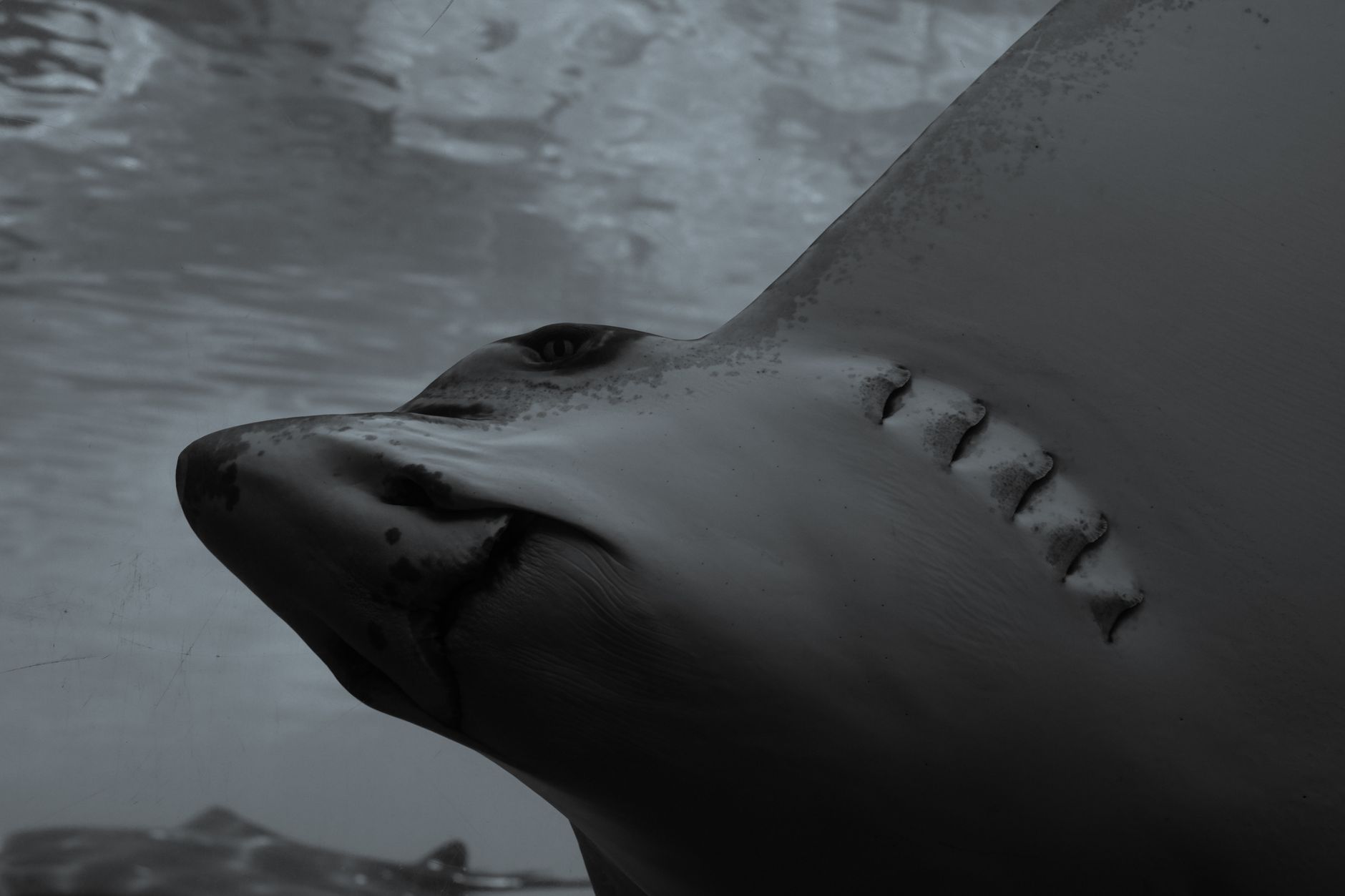
Imagen principal:Valeriia Miller / Pexels
Desmontando los mitos sobre las debilidades de los tiburones: nuevo estudio cuestiona creencias comunes
Recent scientific findings have successfully dismantled a widespread misconception regarding how sharks interact with their environment and defend themselves. According to a report published by The Independent, fresh research offers critical insights that reshape our understanding of marine biology. This investigative report examines the mechanics behind this correction and why separating wildlife fact from fiction matters for conservation.
Public understanding of apex predators in the marine environment has long been shaped by popular culture, cinematic representations, and anecdotal folklore. Among the most pervasive narratives is the belief that sharks possess an absolute vulnerability—a specific biological weakness that can be easily exploited to incapacitate or deter them. However, as scientific methodologies advance, researchers are systematically testing these long-held assumptions against empirical observation. By evaluating the actual behavioral and physiological traits of sharks, modern marine science is replacing sensationalized myths with verifiable data.
Examining the Popular Narrative Surrounding Shark Vulnerabilities
For decades, public discourse surrounding shark encounters has frequently centered on purported silver bullets for defense. Media representations and sensationalized documentaries have often popularized the notion that striking or manipulating a single anatomical feature will instantly neutralize an approaching shark. This cultural fixation has created a generalized public perception that apex marine predators are uniquely fragile when confronted with specific stimuli.
Such narratives persist because they offer a comforting sense of agency to humans entering marine ecosystems. The psychological appeal of a simple, universal weakness tends to overshadow the complex behavioral dynamics of wild animals. When a specific vulnerability becomes embedded in popular culture, it is frequently repeated without empirical scrutiny, transforming unverified assertions into accepted pseudo-fact within casual conversations.
The persistence of these narratives also highlights a broader vulnerability in public science literacy. When complex physiological systems are reduced to single-point failure mechanisms, audiences lose sight of the evolutionary adaptations that actually govern animal behavior. Examining how these narratives take root is essential for understanding why rigorous fact-checking is necessary in modern marine conservation reporting.
The Origin and Spread of the Common Misconception
Tracing the trajectory of misinformation regarding shark weaknesses reveals how informal observations and recreational diving lore can morph into widespread conventional wisdom. Early accounts from fishermen, divers, and early marine explorers frequently noted localized reactions when sharks encountered sudden physical barriers or unusual sensory inputs. Over time, these specific, context-dependent observations were stripped of their nuances and generalized into absolute rules.
As mass media expanded through television broadcasts and internet platforms, these oversimplified claims found a receptive audience. Sensational headlines and dramatic visual media amplified the idea that sharks possessed a fatal flaw. The Independent highlighted how deeply entrenched these misconceptions had become within public consciousness before recent scientific inquiries began challenging the underlying assumptions.
The viral nature of digital media further accelerated the spread of these unverified claims. Social media platforms, video-sharing sites, and sensationalist blogs often prioritize engagement over accuracy, allowing dramatic assertions about wildlife vulnerabilities to circulate globally without peer review. This digital echo chamber reinforces the misconception, making it more difficult for evidence-based corrections to reach the general public.
What the New Study Actually Reveals About Sharks
The release of recent research has fundamentally altered the parameters of this discussion. As detailed by The Independent, the study directly addresses the purported shark weakness, demonstrating that the reality of shark physiology and behavioral response is far more complex than previously assumed. Rather than reacting in a predictable, vulnerable manner to a single trigger, sharks exhibit sophisticated sensory integration and adaptive defensive responses.
The research demonstrates that sharks rely on a multifaceted network of sensory inputs, including the ampullae of Lorenzini, lateral line systems, and acute olfaction. When subjected to the conditions previously thought to induce a specific weakness, individual sharks displayed varied, context-dependent reactions rather than a uniform shutdown or retreat. This variability underscores the inadequacy of treating complex predatory organisms through the lens of a single vulnerability.
Behavioral Adaptations Under Examination
Researchers closely monitored how sharks modulate their swimming speeds, orientation, and sensory focus when encountering novel stimuli. The findings indicate that these animals are capable of rapid behavioral adjustments, neutralizing attempts to exploit presumed physical weaknesses. Instead of showing compliance with the popular myth, the subjects exhibited calculated avoidance or investigative behavior.
Physiological Resilience
Beyond behavioral shifts, the study explored the underlying physiological mechanisms that protect sharks from environmental stressors. Their cartilaginous skeletons, robust musculature, and efficient circulatory systems provide substantial resilience. The research confirms that evolutionary pressures have equipped sharks with overlapping defense mechanisms, rendering simplistic notions of a primary weakness scientifically unfounded.
| Popular Myth | Empirical Evidence |
|---|---|
| Sharks have a single universal physical weakness. | Sharks exhibit complex, variable behavioral and physiological resilience. |
| Targeting specific areas causes immediate incapacitation. | Animals demonstrate rapid adaptive responses and sensory integration. |
| Defensive measures are universally effective across all species. | Reactions vary significantly by species, context, and environmental conditions. |
Analyzing the Evidence Presented in Recent Research
The credibility of the recent findings rests upon rigorous methodological frameworks employed by marine biologists and behavioral researchers. Controlled observation, telemetry tracking, and high-speed underwater videography were utilized to record interactions without artificially altering the subjects’ natural behaviors. This empirical rigor separates documented scientific discovery from anecdotal speculation.
By compiling extensive datasets across multiple subjects and varying environmental conditions, the research team was able to identify statistically significant patterns. The Independent noted that these findings provide a definitive counterweight to decades of speculative lore. The data systematically invalidates the core tenets of the popular misconception, offering a clear baseline for future marine studies.
Furthermore, peer-review scrutiny ensures that the conclusions drawn from the study are anchored strictly in observable metrics. Researchers accounted for potential confounding variables, such as water temperature, lighting conditions, and prior exposure to human activity. This meticulous approach guarantees that the debunking of the shark weakness myth is built upon an unassailable foundation of verifiable evidence.
Implications for Marine Science and Public Understanding
The correction of this widespread misconception carries profound implications for both academic research and practical marine safety. For marine scientists, the study emphasizes the necessity of continuously questioning established paradigms and re-evaluating historical assumptions through modern technological capabilities. It encourages a shift toward more holistic models of predator-prey dynamics.
For the general public and ocean-goers, accurate information replaces false confidence with genuine awareness. Relying on debunked myths regarding shark weaknesses can lead to risky behaviors or misplaced assumptions during marine activities. Understanding that sharks are adaptable, complex predators encourages respectful coexistence and adherence to evidence-based safety guidelines.
Conservation efforts also benefit immensely from accurate public perceptions. Misinformation often fuels irrational fear, which can undermine political and social support for marine protection policies. By establishing a factual baseline regarding shark capabilities, researchers and journalists can foster a more rational, conservation-oriented appreciation for these vital ocean inhabitants.
Evaluating How Misinformation Shapes Animal Perceptions
The propagation of myths surrounding wildlife vulnerabilities is part of a larger pattern of human-animal interaction shaped by fear and fascination. Throughout history, apex predators have been subjected to exaggerated folklore that either demonizes them or trivializes their biological complexity. Examining these patterns helps media analysts and scientists recognize the vectors through which misinformation spreads.
When sensationalized claims go unchecked, they distort conservation priorities and misguide public policy. Educational institutions and science communicators must actively counter these narratives with transparent, evidence-driven reporting. The correction highlighted by The Independent serves as a case study in how rigorous research can successfully pierce through layers of entrenched cultural myth.
Addressing misinformation requires a concerted effort to dismantle sensationalism at its source. Media outlets bear a responsibility to vet claims regarding wildlife behavior rigorously before publication. By prioritizing scientific consensus over dramatic appeal, public discourse can evolve toward a more accurate and respectful understanding of the natural world.
Summary of Findings and Future Research Directions
The recent scientific investigation into shark vulnerabilities has successfully laid to rest a persistent and misleading misconception. As reported by The Independent, empirical observation has proven that sharks do not possess the simplistic weaknesses long claimed by popular lore. Instead, these apex predators demonstrate advanced sensory integration, behavioral adaptability, and robust physiological resilience.
Future research will continue to build upon these findings by exploring how changing ocean climates and human pressures impact shark behavior. Scientists aim to expand telemetry studies across wider geographic ranges and diverse species. These ongoing efforts will further refine our understanding of marine ecosystems and ensure that public knowledge remains synchronized with empirical reality.
Red Flags Checklist for Wildlife Misinformation
- Relies on a single, miraculous trick or physical weakness to neutralize a complex wild animal.
- Lacks citation of peer-reviewed studies, relying instead on anonymous anecdotes or viral video clips.
- Uses highly sensationalized language designed to evoke fear, panic, or unwarranted confidence.
- Oversimplifies complex biological systems and evolutionary adaptations into absolute rules.
- Fails to account for species-specific variations and environmental contexts in wildlife interactions.
Preguntas Frecuentes
What specific misconception did the recent study debunk?
The study debunked the popular belief that sharks possess a single, universal physical weakness that can be easily exploited to instantly incapacitate or deter them.
Which publication reported on these scientific findings?
The Independent published the comprehensive report detailing the new research and its implications for understanding shark behavior.
How do sharks actually respond to stimuli previously thought to cause vulnerabilities?
Instead of displaying predictable weakness, sharks exhibit complex sensory integration, rapid behavioral adaptations, and robust physiological resilience.
Why is public misinformation about shark weaknesses dangerous?
Relying on debunked myths can lead to false confidence during marine activities, while generalized fear can undermine evidence-based conservation policies.
What methods did researchers use to reach their conclusions?
Researchers utilized controlled observation, telemetry tracking, and high-speed underwater videography to gather verifiable data across multiple subjects and conditions.