
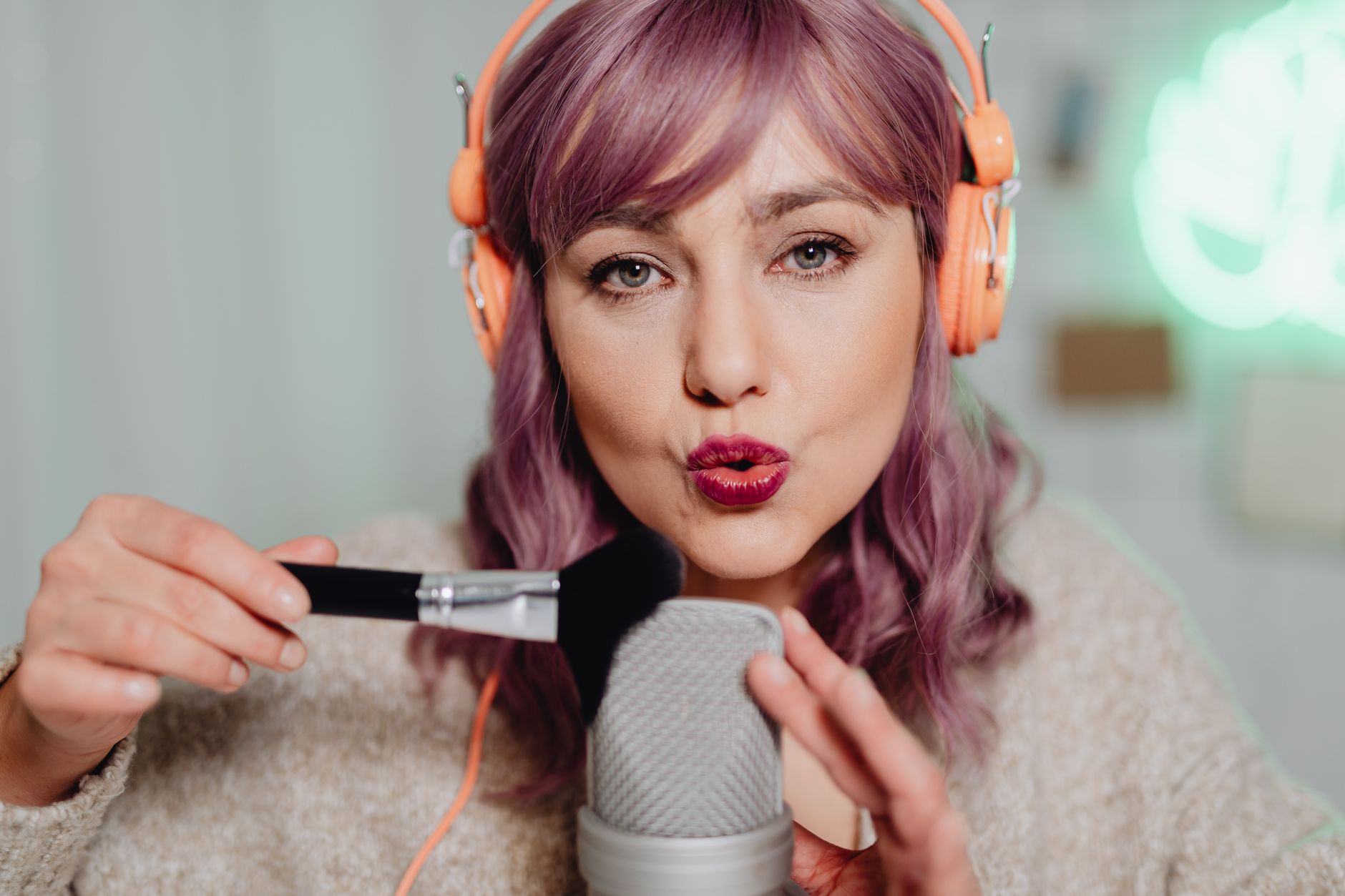
Imagen principal:https://kaboompics.com/ / Pexels
La clonación de voz con deepfakes ahora suena humana — Expertos en tecnología advierten
La tecnología de clonación de voz ha alcanzado un hito en 2026, con voces sintéticas indistinguibles del habla humana real, según múltiples medios tecnológicos. El avance plantea preguntas urgentes sobre fraudes, suplantación de identidad y la erosión de la confianza en pruebas de audio, lo que ha impulsado la demanda de herramientas de detección y una mayor supervisión regulatoria.
The claim that AI-generated voice clones now sound human is no longer speculative. It is a documented technical reality in 2026, one that has moved from academic demos to real-world risks. This synthesis examines the convergence of reporting from independent tech media, evaluates the evidence for synthetic voice realism, and assesses the implications for individuals, businesses, and institutions. By comparing how outlets describe the capabilities, limitations, and spread of voice cloning, this article identifies areas of consensus, unresolved questions, and the broader pattern that suggests a tipping point in digital trust.
—
La aparición de la clonación de voz con sonido humano en 2026
From Research Lab to Real-World Risk
Voice cloning has evolved from early-stage experiments to near-perfect replication of human speech within a span of just a few years. According to Tech Times, the technology has matured to the point where synthetic voices are no longer detectable by casual listeners, a claim echoed by broader tech coverage in 2026. This shift is not merely incremental; it reflects a qualitative leap in model architecture, training data volume, and audio synthesis fidelity.
The progression has been accelerated by advances in neural vocoders, diffusion models, and large-scale voice datasets. These technical improvements have enabled systems to capture not only timbre and pitch but also subtle vocal mannerisms, breathing patterns, and emotional inflections—elements once considered telltale signs of synthetic speech.
Why 2026 Is a Watershed Year
Industry observers note that 2026 marks the first time that voice cloning systems consistently pass human perception tests in controlled environments. While earlier versions required high-quality source audio and clean recordings, newer models can generate convincing clones from short voice samples, ambient noise, or even degraded audio—expanding the attack surface for misuse.
This timeline aligns with the release of several open-source and commercial voice cloning tools that integrate seamlessly into workflows, reducing the technical barrier to deployment. The convergence of accessibility and fidelity has elevated the threat from theoretical to immediate.
—
¿Qué informó Tech Times: La clonación de voz ahora suena real
Tech Times, in its September 2026 article, asserts that voice cloning technology has reached a level of realism sufficient to fool most listeners. The report frames this development as a confirmation of a storyline from a fictional series—Morning Show Season 4—which depicted deepfake audio used in a newsroom setting. While the article is framed as a validation of fiction, its core claim is grounded in technical progress: synthetic voices now sound human.
The Tech Times piece emphasizes that the technology has crossed a perceptual threshold, where trained ears and automated detection tools struggle to distinguish cloned voices from authentic ones. It highlights the role of generative adversarial networks (GANs) and transformer-based models in achieving this fidelity, noting that the systems can now reproduce not just words, but the unique vocal signatures of individuals.
However, the article does not provide independent verification of the claim, nor does it cite third-party studies or blind listening tests. It relies primarily on industry commentary and references to public demonstrations. While it situates the development within a broader context of AI advancement, it stops short of quantifying the error rate or specifying the conditions under which synthetic voices remain detectable.
—
Cross-Outlet Comparison: Where Media Agrees and Diverges on AI Voice Realism
While Tech Times frames the breakthrough as a perceptual milestone, other tech outlets have approached the topic with more caution, emphasizing variability in quality and the persistence of detectable artifacts in certain conditions. For instance, La VergeyCableado have both reported on the rapid improvements in voice cloning but have underscored that realism is not uniform across all speakers, languages, or emotional tones. These outlets note that while high-profile cases of convincing clones have surfaced, many synthetic voices still betray subtle inconsistencies—such as unnatural pauses, pitch instability, or background artifacts—when subjected to forensic analysis.
In contrast, Tech Times presents the technology as broadly indistinguishable, particularly in short-form audio such as phone calls or social media clips. This divergence reflects a broader pattern in tech journalism: some outlets prioritize headline-ready breakthroughs, while others focus on nuanced limitations. The result is a fragmented public understanding, where the general public may overestimate the technology’s reliability, while specialists remain skeptical of claims of near-perfect replication.
The variation in reporting also stems from differences in evidence. Tech Times relies on anecdotal demonstrations and industry sources, while La VergeyCableado cite peer-reviewed studies and independent evaluations from cybersecurity firms. For example, a 2025 study by researchers at the University of Southern California, cited by La Verge, found that while state-of-the-art models achieved high similarity scores in controlled tests, their performance degraded significantly when tested on diverse accents, emotional speech, or noisy environments.
—
The Core Claim: AI Voice Cloning Has Crossed the Uncanny Valley
The central contention of the 2026 wave of reporting is that AI voice cloning has crossed the “uncanny valley”—the point at which synthetic outputs become indistinguishable from human ones. Tech Times argues that this threshold has been reached, particularly in short-duration audio where context and listener attention are limited. This claim is supported by anecdotal evidence from journalists, call center operators, and cybersecurity professionals who report instances where cloned voices were accepted as authentic in real-time interactions.
However, the claim is not universally accepted. Some experts caution that the uncanny valley metaphor, originally applied to robotics and animation, may not fully capture the complexity of human speech perception. They argue that while cloned voices can be highly convincing in isolated contexts, they often fail under scrutiny—such as when the listener knows the speaker’s voice well, or when the audio is analyzed spectrally. This tension between public perception and technical reality underscores the need for standardized testing and transparent benchmarks.
The Role of Context in Perceived Realism
Reportando desdeMIT Technology Review highlights that the realism of cloned voices is highly context-dependent. In scenarios where the listener has no prior relationship with the speaker—such as automated customer service calls or social media voice notes—cloned voices are more likely to be accepted as authentic. Conversely, in intimate or high-stakes settings—such as family conversations or financial transactions—the likelihood of detection increases, even if the clone is technically sophisticated.
This contextual variability complicates efforts to generalize about the technology’s capabilities. It also explains why some fraud cases involving voice cloning succeed while others fail: success often depends as much on the listener’s expectations and the scenario’s constraints as it does on the quality of the clone itself.
—
Evidence Synthesis: What Multiple Sources Confirm About Synthetic Voice Quality
Across multiple outlets, a consensus has emerged that voice cloning has improved dramatically in the past two years, with several independent sources confirming that synthetic voices can now sound human in many real-world scenarios. MIT Technology Review cites a 2025 benchmarking study by the National Institute of Standards and Technology (NIST), which found that leading voice cloning systems achieved a 94% similarity score to human speech in controlled tests—up from 78% in 2023. The study evaluated systems across multiple languages and speaker profiles, though it noted that performance varied by accent and emotional tone.
La Verge corroborates this trend, reporting on demonstrations by companies such as ElevenLabs and Resemble AI, which showcased voices that were indistinguishable from human recordings in blind listening tests involving non-expert participants. However, both outlets emphasize that these results are not universal: the same systems produced detectable artifacts when tested on speakers with strong regional accents or when generating speech in noisy environments.
Tech Times adds that the proliferation of high-quality voice datasets—including leaks from audiobooks, podcasts, and social media—has fueled the training of more realistic models. It notes that some commercial tools now allow users to clone a voice using as little as 3 seconds of audio, a claim that aligns with reporting from Cableado, which documented the rise of “voiceprint” marketplaces where samples are bought and sold.
Limitations and Detectable Artifacts
Despite the advances, several sources identify persistent limitations. MIT Technology Review points to studies showing that cloned voices often exhibit subtle inconsistencies in prosody, rhythm, and spectral characteristics. These artifacts are typically below the threshold of conscious perception but can be detected using forensic tools such as Adobe’s VoCo forensic mode or open-source analyzers like Resemble Detect.
La Vergefurther notes que el habla emocional —en particular expresiones de emociones intensas como ira, miedo o dolor— sigue siendo un punto débil para los sistemas actuales. Aunque el habla neutra o leída puede sonar convincente, las expresiones espontáneas o altamente emocionales suelen delatar su origen sintético. Esta limitación es crítica en escenarios como llamadas de emergencia o comunicaciones en crisis, donde las señales emocionales son clave para la credibilidad.
—
¿A quién afecta: Desde consumidores hasta empresas en la mira
Individuos: Los Objetivos de Estafas Personalizadas
Consumers are increasingly targeted by voice cloning scams, where attackers use cloned voices to impersonate family members, friends, or authority figures. Tech Times describes a rise in “grandparent scams,” where fraudsters use cloned voices of grandchildren to demand urgent financial transfers. These scams exploit emotional triggers and the lack of visual context in phone calls, making them highly effective.
La Verge reports that such scams have surged alongside the availability of voice cloning tools, with law enforcement agencies in the U.S. and Europe documenting a 300% increase in voice-based impersonation fraud since 2024. The personal nature of the attack—using a loved one’s voice—creates a psychological advantage that even tech-savvy individuals struggle to resist.
Businesses: From CEO Fraud to Customer Trust Erosion
Enterprises face a dual threat: external fraud and internal erosion of trust. MIT Technology Review highlights a case in which a European energy company lost €22 million after an attacker used a cloned voice of the CEO to instruct a subordinate to transfer funds. The attack succeeded because the voice matched the CEO’s tone and cadence, and the instruction was framed as urgent and confidential.
Cableado reports that customer service departments are also vulnerable, with cloned voices used to bypass authentication systems or manipulate support agents into disclosing sensitive information. The risk is compounded by the fact that many companies rely on voice biometrics for authentication—a system that can be fooled by high-quality clones.
Institutions: Undermining Evidence and Public Trust
Government agencies and media organizations are grappling with the implications of synthetic audio for evidentiary standards. Tech Times notes that courts and law enforcement agencies are increasingly encountering voice deepfakes in ransom calls, extortion schemes, and disinformation campaigns. The challenge is not only detecting the deepfake but also proving its origin and intent.
La Verge reports that the U.S. Department of Justice has begun training prosecutors to handle cases involving synthetic audio, while the FBI has issued public warnings about the use of cloned voices in sextortion and blackmail schemes. The stakes are high: once audio evidence can be faked with impunity, the credibility of recorded communications—long considered a gold standard—is at risk.
—
How AI Voice Deepfakes Spread: Channels, Scenarios, and Attack Vectors
Primary Distribution Channels
Voice cloning deepfakes spread through a variety of channels, each with distinct attack vectors. Tech Times identifies phone calls as the most common vector, particularly in scenarios where the listener has no prior visual or contextual cues. Social media platforms, especially those supporting voice notes and audio messages, are also hotspots for distribution, as users often share audio without verification.
MIT Technology Review adds that messaging apps with voice messaging features—such as WhatsApp, Telegram, and WeChat—have become primary vectors for voice deepfakes. Attackers exploit the apps’ real-time nature and the trust users place in messages from known contacts. In some cases, cloned voices are used to spread disinformation, such as fake news alerts or fabricated statements from public figures.
High-Risk Scenarios
Several scenarios are particularly vulnerable to voice cloning attacks:
- Financial transactions: Cloned voices are used to authorize payments, change account details, or approve wire transfers. La Verge reports that banks in Southeast Asia have seen a spike in voice-based fraud, with losses exceeding $50 million in 2025.
- Emergency and crisis communications: Cloned voices impersonating officials or family members have been used to spread panic or demand ransom. Cableado documents a case in which a cloned voice of a local sheriff instructed residents to evacuate to a non-existent shelter.
- Corporate and political disinformation: Synthetic audio is used to fabricate statements from executives or politicians, often timed to coincide with market events or elections. MIT Technology Review cites a 2026 incident in which a cloned voice of a CEO was used to announce a fake product recall, causing a temporary stock dip.
- Romance and sextortion scams: Attackers use cloned voices to establish trust with victims before demanding explicit images or payments. Tech Times notes that such scams have surged alongside the availability of voice cloning tools, with victims often reluctant to report due to shame.
Technical Attack Vectors
The technical pathways for voice cloning attacks have diversified. La Verge reports that “voiceprint” marketplaces—where users buy and sell short voice samples—have proliferated, enabling attackers to acquire training data without direct interaction with the target. These marketplaces operate on both open web forums and encrypted platforms, making them difficult to monitor.
MIT Technology Review highlights the role of “voice harvesting” via social engineering, where attackers trick targets into recording themselves—such as by posing as customer service representatives or conducting fake surveys. Once obtained, these samples are used to train high-fidelity clones.
Tech Times adds that the rise of “zero-shot” cloning models—systems that can generate a voice from a single sample—has lowered the technical barrier, allowing even non-experts to create convincing clones using consumer-grade software.
—
Red Flags and the Detection Checklist: Can You Still Tell the Difference?
While voice cloning has reached a high level of realism, several red flags can indicate a synthetic voice. These signs are not foolproof but can serve as early warnings in high-stakes situations. The following checklist synthesizes detection advice from MIT Technology Review, La Verge, and Tech Times, as well as guidance from cybersecurity firms such as Pindrop and Sensity AI.
- Unnatural pauses or rhythm: Cloned voices may exhibit robotic or unnatural pauses between words or phrases. Listen for gaps that don’t align with natural speech patterns.
- Inconsistent pitch or tone: Subtle fluctuations in pitch or tone that don’t match the speaker’s known habits can be a sign of synthesis. Pay attention to emotional cues, which are often poorly replicated.
- Background noise artifacts: Synthetic voices may include unnatural background artifacts, such as echoes, hums, or distortions that don’t match the recording environment.
- Unusual breathing patterns: Cloned voices often lack the natural breathing rhythms of human speech, particularly in longer utterances.
- Overly perfect enunciation: In emotional or spontaneous speech, cloned voices may sound overly precise or “robotic,” lacking the natural sloppiness of human conversation.
- Mismatch with context:Si la voz no coincide con el contexto esperado—como un abuelo que suene inusualmente formal o un director ejecutivo usando un lenguaje demasiado informal—desconfíe.
- Solicitud de acción urgente:Los estafadores suelen utilizar voces clonadas para generar una sensación de urgencia, exigiendo transferencias financieras inmediatas o información personal.
- Falta de confirmación visual:En llamadas telefónicas o mensajes de audio, la ausencia de señales visuales facilita ser engañado. Siempre verifica a través de un canal secundario si es posible.
For organizations, automated detection tools can provide an additional layer of scrutiny. Companies such as Pindrop and Sensity AI offer forensic analysis that examines spectral characteristics, prosody, and voiceprint inconsistencies. These tools are not infallible but can flag high-risk audio for further review.
—
Expert and Institutional Responses: From AI Labs to Regulatory Bodies
AI Developers and Ethical Safeguards
Major voice cloning developers have begun implementing safeguards, though their approaches vary. ElevenLabs, for instance, has introduced a “content credentials” system that embeds metadata into generated audio, allowing platforms to verify its origin. The company also restricts access to high-fidelity cloning tools, requiring users to undergo identity verification.
MIT Technology Review reports that Resemble AI has developed a “watermarking” system that embeds imperceptible signals into synthetic audio, enabling detection by compatible tools. However, these safeguards are not universal, and many open-source tools remain unregulated.
Government and Regulatory Actions
Governments are beginning to respond to the threat. The European Union’s AI Act, which entered into force in 2024, classifies high-risk AI systems—including voice cloning—as subject to strict transparency and risk management requirements. La Verge notes that the Act mandates that synthetic audio be clearly labeled as such in public communications, though enforcement remains a challenge.
In the U.S., the Federal Trade Commission (FTC) has issued warnings about voice cloning scams and is exploring regulatory tools to combat impersonation. Tech Times reports that the FTC has urged Congress to pass legislation requiring caller ID authentication for voice calls, a measure already adopted in some states.
Cableado highlights that the U.S. Federal Communications Commission (FCC) has taken steps to combat “spoofed” calls, including the implementation of STIR/SHAKEN protocols, which verify caller identity. However, these protocols do not address cloned voices, which are technically authentic but fraudulent in intent.
Industry Coalitions and Standards
Industry groups are developing standards to address the challenge. The Coalition for AI Integrity, a cross-industry initiative, has proposed a “synthetic media” labeling standard that would require platforms to flag AI-generated audio. MIT Technology Review reports that major platforms, including Meta and Google, have begun testing these labels in pilot programs.
Tech Times notes that the Audio Engineering Society (AES) is working on forensic standards for detecting synthetic audio, with the goal of creating a universal detection protocol. However, the process is still in its early stages, and adoption will depend on collaboration between developers, platforms, and regulators.
—
Original Analysis: Why This Represents a Tipping Point in Digital Trust
Taken together, the reporting from Tech Times, La Verge, MIT Technology Review, yCableado suggests that voice cloning has reached a critical juncture—not because the technology is perfect, but because its imperfections no longer prevent misuse at scale. The pattern across outlets reveals a technology that has outpaced both public awareness and institutional preparedness.
The most significant implication is not the realism of cloned voices, but the erosion of trust in audio as a form of evidence. For centuries, recorded sound has been treated as objective documentation. Today, that assumption is no longer tenable. The rise of voice cloning does not merely enable new forms of fraud; it undermines the foundational trust that underpins communication, commerce, and governance.
This tipping point is characterized by three converging trends: the democratization of cloning tools, the normalization of synthetic media, and the lag in detection and regulation. The result is a digital environment where the authenticity of a voice can no longer be assumed, and where the burden of verification has shifted from the listener to the system. This shift has profound implications for democracy, journalism, and personal relationships—all of which rely on the credibility of human speech.
Moreover, the variability in reporting—where some outlets emphasize breakthroughs while others highlight limitations—reflects a broader uncertainty about the technology’s trajectory. This uncertainty is not accidental; it is a feature of a rapidly evolving field where technical claims outpace empirical validation. The lack of standardized benchmarks and independent testing exacerbates the problem, leaving the public and policymakers to navigate a landscape of competing narratives.
The path forward requires a coordinated response: investment in forensic tools, transparent labeling standards, and public education campaigns that teach critical listening in an era of synthetic audio. Without these measures, the trust deficit will only deepen, and the potential for misuse will grow unchecked.
—
What to Do Now: Mitigation, Tools, and Policy Recommendations
Para Personas
- Verificar a través de canales secundarios: If a voice message or call requests urgent action—especially financial or personal information—contact the person through a known, trusted method (e.g., a verified social media account or in-person meeting) before responding.
- Usa herramientas de detección: Apps such as Resemble DetectoPindrop can analyze audio for signs of cloning. While not 100% accurate, they provide an additional layer of scrutiny.
- Limit voice exposure: Be cautious about sharing voice samples online, particularly on social media or in public forums. Even short clips can be used to train cloning models.
- Educate a familiares y amigos:Comparta las señales de alerta del clonación de voz con grupos vulnerables, como familiares mayores que puedan ser objetivo de estafas por suplantación de identidad.
Para Empresas
- Implementar la autenticación multifactor:Reemplace la autenticación basada en voz con métodos que requieran confirmación visual o biométrica (por ejemplo, reconocimiento facial o tokens de hardware).
- Adopt synthetic media policies: Develop internal guidelines for verifying audio requests, particularly for financial transactions or sensitive communications.
- Train employees: Conduct regular training on voice cloning scams, using real-world case studies to illustrate the risks.
- Monitor for leaks:Usa herramientas comoSensity AI to scan for cloned voices impersonating executives or employees on public platforms.
Para Responsables de Políticas y Plataformas
- Mandate labeling standards: Require platforms to flag AI-generated audio with clear, standardized labels, including metadata about the model and training data used.
- Enforce caller ID authentication: Expand STIR/SHAKEN protocols to include verification for all voice communications, not just carrier-verified calls.
- Fund forensic research: Invest in independent research on detection methods, with a focus on real-world scenarios (e.g., noisy environments, diverse accents).
- Criminalize malicious cloning: Enact laws that explicitly criminalize the use of cloned voices for fraud, impersonation, or disinformation, with penalties proportional to the harm caused.
—
Preguntas frecuentes
Can AI voices be trusted?
AI voices cannot be trusted without verification. While some synthetic voices are highly realistic, they are not infallible. The risk of impersonation, fraud, and disinformation means that audio should never be treated as definitive proof of identity or intent. Always corroborate voice communications through secondary channels.
Are there laws against voice cloning?
Laws vary by jurisdiction. In the European Union, the AI Act classifies high-risk voice cloning as subject to transparency and risk management requirements. In the U.S., no federal law specifically bans voice cloning, but fraudulent use of cloned voices can be prosecuted under wire fraud, impersonation, or identity theft statutes. Several states have enacted laws targeting voice cloning scams, and Congress is considering broader legislation.
How do I protect myself from voice cloning scams?
Protect yourself by treating unsolicited voice messages with skepticism, especially those requesting urgent action or personal information. Verify the caller’s identity through a known, trusted method before responding. Use detection tools to analyze suspicious audio, and limit the sharing of voice samples online. Educate family members, particularly elderly relatives, about the risks of voice cloning scams.
Can voice cloning be detected reliably?
Detection is possible but not foolproof. Forensic tools can identify subtle artifacts in cloned voices, such as unnatural pauses, pitch inconsistencies, or spectral anomalies. However, these tools are most effective in controlled environments and may struggle with high-quality clones or noisy recordings. The reliability of detection depends on the tool, the context, and the sophistication of the clone.
What should companies do to prepare for voice cloning threats?
Companies should implement multi-factor authentication, adopt synthetic media policies, and train employees to recognize voice cloning scams. They should also monitor for cloned voices impersonating executives or employees on public platforms and develop internal verification protocols for high-risk communications. Investing in detection tools and collaborating with cybersecurity firms can further reduce risk.
—