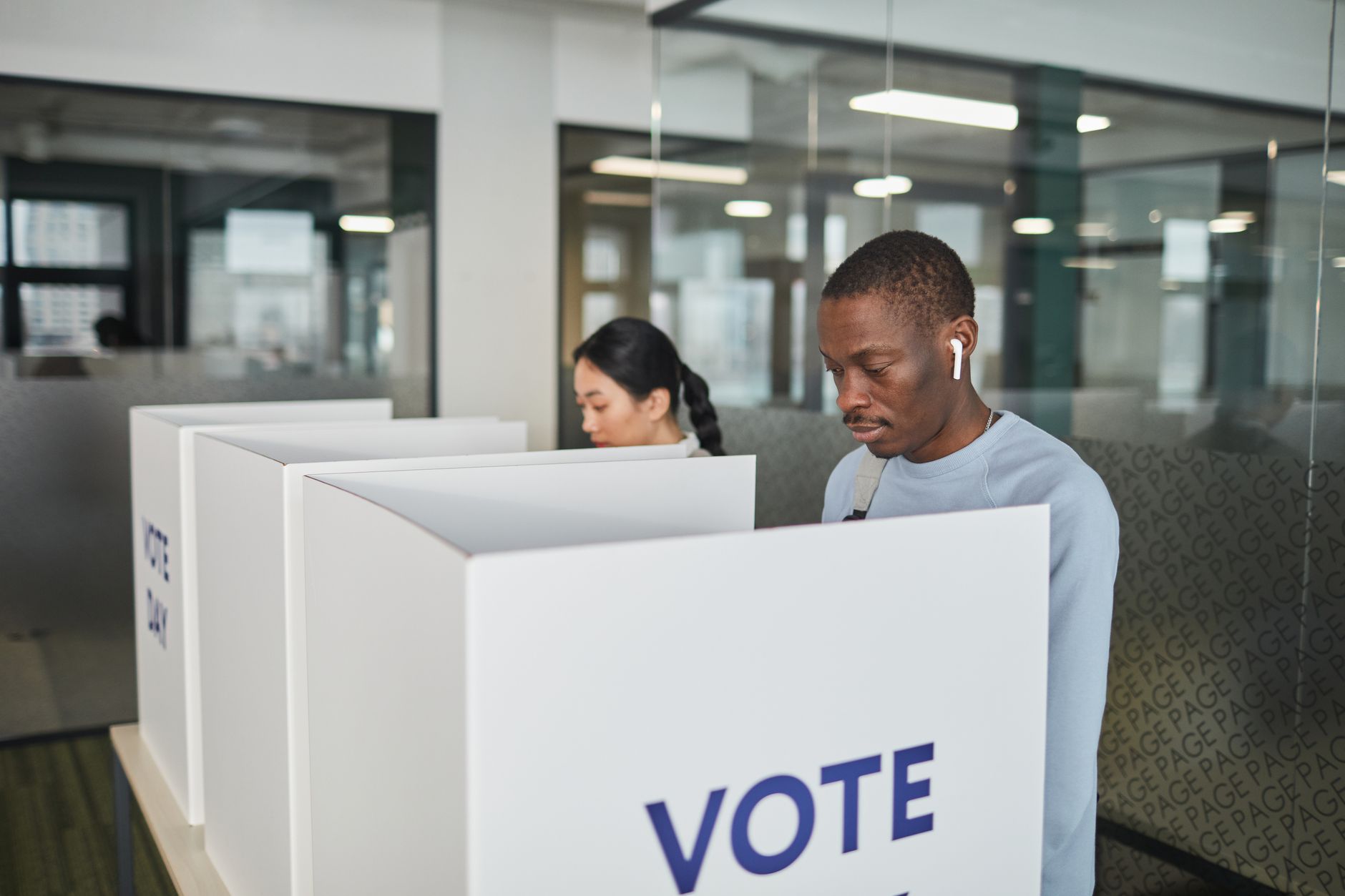
Imagen principal:Edmond Dantès / Pexels
Votaciones Electrónicas No Manipulan los Resultados: ¿Qué Demuestra la Evidencia?
Persistent allegations regarding automated vote manipulation during elections continue to circulate across digital platforms, frequently targeting electronic tabulation equipment. A detailed examination by Snopes addresses these claims by analyzing the mechanical realities, testing procedures, and human errors that typically account for perceived voting machine anomalies.
Elections form the foundational architecture of democratic self-governance, relying heavily on public trust in the accuracy and security of vote tabulation systems. When viral claims emerge alleging that electronic voting hardware is deliberately altering voter choices, they strike directly at the credibility of democratic outcomes. To evaluate these assertions rigorously, investigative journalists and fact-checking editors must look past sensationalized online narratives and examine the empirical evidence, institutional safeguards, and mechanical realities governing modern election infrastructure. By breaking down the specific mechanisms at play, we can distinguish between deliberate electoral fraud narratives and the well-documented, routine causes of Election Day irregularities.
Context: Examining Claims About Election Hardware
The landscape of election administration in many democratic nations, particularly the United States, is decentralized, utilizing a wide variety of hardware vendors, paper ballot systems, and optical scanners. According to reporting by Snopes, public anxiety surrounding this infrastructure often intensifies during major election cycles, driven by rapid information dissemination on social media platforms where isolated incidents are frequently amplified out of context. Understanding how voting machines actually operate within this complex, multi-layered environment requires looking at the historical context of election technology adoption and the rigorous oversight frameworks built to protect it.
Electronic voting machines and ballot-marking devices are subjected to stringent certification standards before they ever touch a polling place. Snopes notes that these systems are engineered to isolate tabulation functions from external networks, rendering remote hacking or covert, real-time code manipulation practically impossible under standard operational conditions. Despite these technical barriers, public skepticism persists, fueled by misunderstandings of user interfaces, calibration issues, and human error during data entry or reporting. Investigative analysis demands that we examine these distinct failure modes rather than accepting sweeping, generalized accusations of electronic tampering.
The Claim: Allegations of Deliberate Vote Switching
Viral social media posts and partisan commentators frequently allege that voting machines are programmed to covertly switch votes from one candidate to another during the casting or tabulation process. These claims often feature firsthand anecdotes from voters who assert that pressing a selection for Candidate A resulted in a highlighted box or printed confirmation for Candidate B. According to Snopes, these allegations frequently frame the perceived anomaly as a deliberate, malicious act orchestrated by election officials, software vendors, or partisan actors aiming to subvert the electoral will of the public.
Further compounding these allegations are assertions that algorithms hidden within the machine’s source code automatically reallocate percentages of votes behind the scenes. Snopes points out that these dramatic claims of automated vote flipping are typically presented without verifiable technical proof, relying instead on grainy video footage, unverified personal testimonies, or misinterpretations of standard user interface behavior. When these viral claims are subjected to systematic fact-checking and forensic review, a different picture emerges—one rooted in touchscreen calibration drift, voter marking errors, and misread unofficial reporting totals.
What the Evidence Shows Regarding Voting Systems
Air-Gapped Architecture and Physical Security
The physical security of voting machines is maintained through strict chain-of-custody protocols, tamper-evident seals, and secure storage facilities. Snopes emphasizes that voting machines are air-gapped, meaning they are never connected to the internet or wide-area networks during voting operations. This fundamental design choice completely eliminates the possibility of remote software updates or external code injection on Election Day, neutralizing the core mechanism alleged by conspiracy theories involving real-time vote switching.
Paper Trails and Post-Election Audits
Modern voting technology overwhelmingly incorporates verifiable paper trails, allowing election officials to cross-reference electronic tallies with physical ballots. According to Snopes, jurisdictions routinely conduct post-election audits, including rigorous risk-limiting audits, where a statistically significant sample of physical paper ballots is hand-counted to verify that the electronic totals match the physical record. These audits consistently demonstrate that electronic tabulation systems accurately reflect the choices marked by voters on their paper records.
| Claim About Voting Machines | Evidencia empírica y realidad |
|---|---|
| Machines are connected to the internet and manipulated remotely. | Voting machines are air-gapped and lack network interfaces during operation. |
| Software algorithms deliberately switch votes between candidates. | Systems undergo rigorous source-code review and pre-election logic and accuracy testing. |
| Touchscreen calibration errors indicate deliberate rigging. | Calibration drift can cause misalignment, which is routinely caught by pre-tests and voter review. |
| Unofficial reporting discrepancies prove vote theft. | Variations in reporting speeds across jurisdictions reflect normal administrative workflows. |
Understanding Common Election Day Anomalies
Touchscreen Calibration Drift
One of the most frequent mechanical explanations for perceived vote switching is touchscreen calibration drift, particularly in older resistive touch displays. Snopes explains that physical wear, environmental temperature changes, and repeated use can cause the touch sensor grid to misalign with the visual display underneath. When this occurs, a voter pressing a specific button may register an input slightly offset from their intended target. This is a hardware calibration issue, not a deliberate software mechanism designed to alter election outcomes.
Voter Marking Errors and Ballot Design
Human error accounts for a substantial share of reported anomalies on Election Day. Voters hurried by long lines or confused by complex ballot layouts may inadvertently select an unintended option or fail to properly review their summary screens before casting their ballot. Snopes highlights that ballot-marking devices and optical scanners are designed to provide review screens and warning prompts when undervotes or overvotes occur, yet voters occasionally miss these prompts, leading to post-voting regret and misplaced suspicions about machine reliability.
Evaluating the Sources of Misinformation
The propagation of claims regarding deliberate vote switching often follows a predictable lifecycle across digital media ecosystems. Snopes documents how unverified assertions are frequently generated by anonymous social media accounts, detached from local context, and amplified by partisan influencers seeking to undermine trust in democratic institutions. These sources routinely strip away crucial nuance, ignoring official explanations provided by bipartisan election boards and independent technical experts.
A critical examination of these information sources reveals a heavy reliance on emotional resonance rather than verifiable evidence. Snopes notes that viral posts highlighting alleged machine failures rarely include follow-up reporting when election officials investigate the claim, replicate the issue, and resolve it through standard troubleshooting procedures. Understanding the incentives behind the dissemination of election misinformation is essential for journalists and citizens striving to maintain a fact-based public discourse.
Institutional Oversight and Testing Processes
Pre-Election Logic and Accuracy Testing
Before any vote is cast, election authorities subject every voting machine to comprehensive Logic and Accuracy (L&A) testing. Snopes reports that these tests involve running pre-determined batches of test ballots through the equipment to verify that every candidate and ballot measure registers correctly. Bipartisan election observers, representatives from political parties, and independent inspectors frequently witness these public tests to ensure total transparency and build confidence in the hardware before the polls open.
Bipartisan Certification Boards
The deployment of voting technology is overseen by bipartisan election boards, state secretaries of state, and accredited federal testing laboratories. Snopes details how these bodies evaluate voting systems against stringent federal voluntary voting system guidelines. This multi-tiered institutional oversight ensures that no single vendor, political party, or election official has unilateral control over the programming, deployment, or auditing of election hardware.
Practical Steps for Verifying Election Information
Navigating the complex information environment surrounding elections requires a disciplined, skeptical approach to unverified viral claims. Citizens and journalists can employ specific verification strategies to ensure they are relying on accurate data rather than election mythology:
- Consult official statements from bipartisan local, county, and state election authorities before sharing claims of machine failure.
- Examine whether reported anomalies have been investigated and resolved through standard maintenance or calibration protocols.
- Look for independent reporting from established news organizations that verify claims with bipartisan election officials and technical experts.
- Distinguish between preliminary, unofficial reporting totals and certified final election results.
- Review documentation of pre-election logic and accuracy testing and post-election audit results in your local jurisdiction.
Frequently Asked Questions on Voting Machines
Are voting machines connected to the internet during elections?
No, voting machines and electronic tabulators are strictly air-gapped, meaning they operate entirely offline and do not connect to the internet or external networks while ballots are being cast and tabulated, preventing remote interference.
What causes a voting machine to select the wrong candidate on a screen?
When a screen registers a different selection than intended, it is typically caused by touchscreen calibration drift—a physical misalignment between the touch-sensitive overlay and the display underneath—rather than a deliberate software glitch.
How do election officials ensure voting machines are accurate before use?
Election authorities conduct mandatory Logic and Accuracy tests prior to every election, running pre-audited test decks through the machines in public view to confirm that votes are recorded and tallied correctly for every contest.
Do voting machines leave a paper record for auditing purposes?
The vast majority of modern voting systems utilize paper ballots or produce verifiable paper voter-verified audit trails, which allow election officials to conduct hand recounts and rigorous post-election audits to verify electronic results.
Can software on voting machines covertly alter vote counts?
Independent testing laboratories, rigorous source-code certification standards, and post-election audits make covert software manipulation virtually impossible without detection by bipartisan oversight boards and physical paper verification processes.
Red Flags Checklist for Election Claims
- Vague accusations of vote tampering lacking specific precinct locations, machine serial numbers, or official documentation.
- Screenshots or videos stripped of context, showing only isolated interface interactions without verified follow-up from election officials.
- Claims asserting that voting machines are connected to foreign servers or the internet, contrary to established air-gapping security standards.
- Social media posts urging immediate sharing while explicitly discouraging readers from checking official municipal or state election board updates.
- Anonymous accounts presenting unverified hearsay as definitive proof of widespread, coordinated electoral fraud.