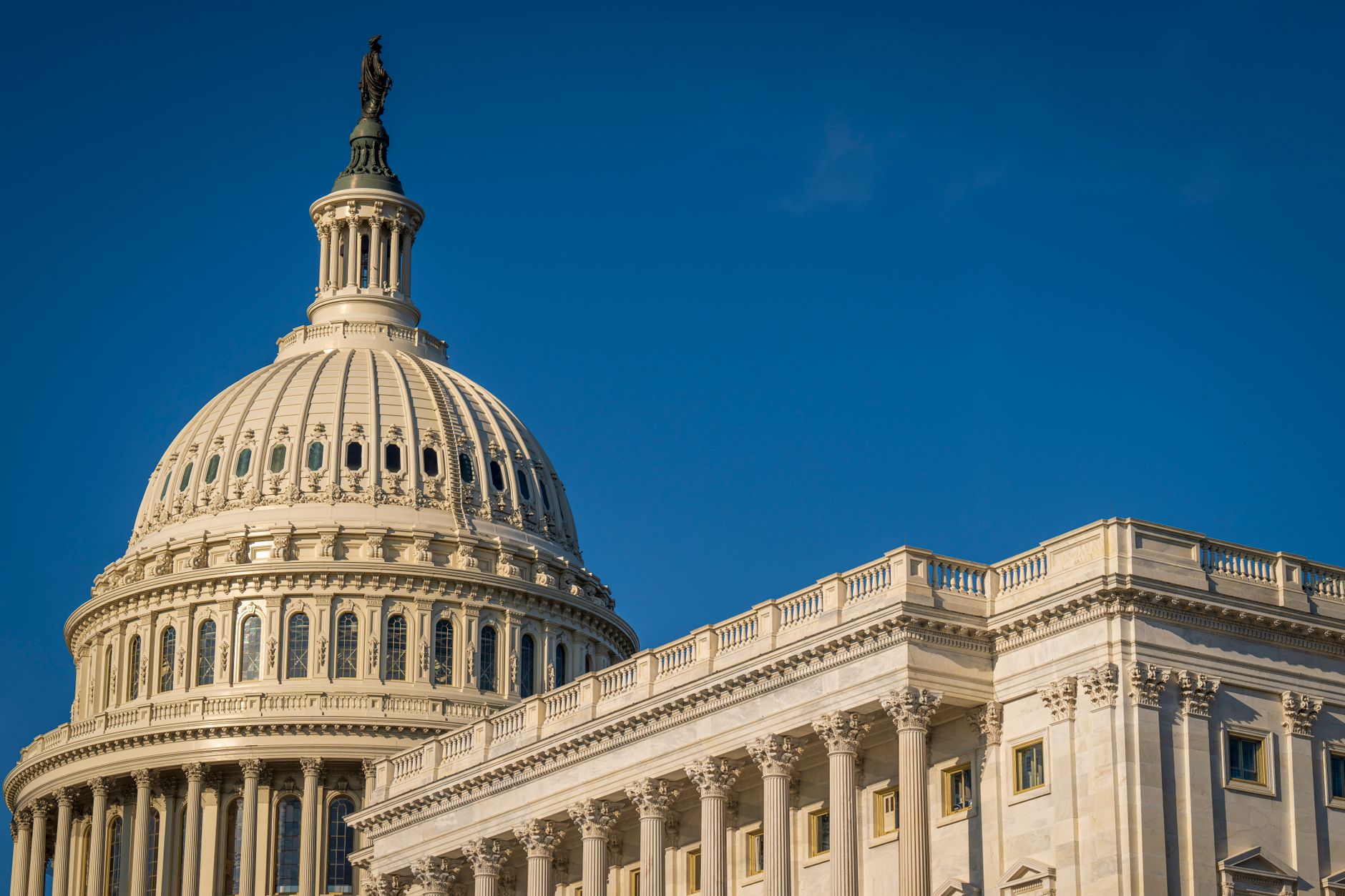
Hero image: Mark Stebnicki / Pexels
US Senate Candidates Data Centers Kansas Race Fact Check
As data centers expand rapidly across the United States, infrastructure demands and energy grid impacts have become major focal points in local and federal elections. A recent examination by the Kansas City Star evaluates where U.S. Senate candidates stand on data centers in the Kansas race. This investigative fact check analyzes the available reporting framework,candidate stances,and the broader policy implications for voters.
The rapid expansion of digital infrastructure,including massive server farms and data processing hubs,has transformed local economic development discussions into high-stakes political battlegrounds. In Kansas,the intersection of high energy consumption,water usage,and tax incentives has thrust the issue of data centers into the spotlight of the United States Senate race. Voters are increasingly demanding clarity on how candidates propose to balance technological progress with grid reliability and consumer costs. To separate political rhetoric from verifiable policy positions,this investigation examines the reporting provided by the Kansas City Star and evaluates the documented stances of the candidates seeking to represent Kansas in Washington.
Introduction to the Kansas Senate Race and Data Center Debate
Data centers represent a unique form of modern industrial development. Unlike traditional manufacturing facilities that may rely heavily on heavy freight logistics or specialized labor pools,data centers are primarily defined by their staggering electrical load and cooling water requirements. As artificial intelligence applications,cloud computing,and enterprise data storage multiply,technology firms scout aggressively for regions offering affordable land,favorable tax structures,and robust energy access. Kansas has emerged as a compelling target for such developments,triggering intense debate among community members,utility regulators,and political aspirants.
The debate in the Kansas Senate race centers on whether state and federal leaders should court these multi-billion-dollar investments or impose stricter regulatory guardrails. Proponents argue that data centers bring significant capital investment,construction jobs,and a growing property tax base to local municipalities. Critics and cautious observers,however,raise urgent concerns regarding the strain placed on local electrical grids,potential increases in residential utility bills,and the long-term sustainability of water resources. This tension forms the core narrative examined by regional journalists attempting to provide accountability before voters cast their ballots.
Understanding the political dynamics requires looking closely at how candidates frame these competing priorities. Some contenders lean heavily into pro-growth messaging,emphasizing economic diversification and technological leadership. Others emphasize consumer protection,grid security,and environmental stewardship. Evaluating these positions demands rigorous attention to the source material and a careful parsing of what candidates have formally committed to the record versus what remains generalized campaign rhetoric.
Examining the Source Material and Reporting Framework
When analyzing political claims regarding complex industrial projects,fact-checkers must anchor their investigations in verified journalism and public records. The primary evidentiary foundation for this evaluation comes from the Kansas City Star,which published dedicated coverage examining the specific stances of U.S. Senate candidates on data centers in the Kansas race. Established regional reporting provides the essential baseline for establishing what candidates have said,when they said it,and how their platforms align with current legislative realities.
The reporting framework utilized by the Kansas City Star relies on candidate interviews,campaign statements,public voting records where applicable,and evaluations of local economic development policies. In assessing such coverage,fact-checkers look for consistency across public appearances and policy papers. Discrepancies between public rhetoric tailored for specific audiences and formal policy positions often reveal the underlying political calculations driving campaign messaging.
Evaluating Journalistic Integrity and Context
Establishing a reliable fact-checking foundation requires examining the context in which reporting occurs. Regional newspapers play a vital role in holding federal candidates accountable to local constituents,as national platforms frequently overlook localized infrastructure disputes. The Kansas City Star reporting offers a localized lens through which broader national debates over energy policy,tech monopolies,and federal oversight intersect with Kansas interests.
Furthermore,investigative standards demand that researchers distinguish between direct candidate quotes,campaign staff characterizations,and independent journalistic analysis. By isolating the specific claims highlighted in the Kansas City Star coverage,voters can better assess the validity of campaign promises regarding data center regulation,tax incentives,and energy market integration.
Candidate Stances on Data Centers According to the Record
Candidate positions on data centers are rarely monolithic,often encompassing a blend of economic development enthusiasm and regulatory caution. According to reporting from the Kansas City Star,the candidates in the Kansas Senate race have articulated distinct approaches to managing the influx of digital infrastructure projects. These positions reflect broader ideological divides within national politics regarding the appropriate scope of government intervention in private industry and energy markets.
While some contenders emphasize an unvarnished free-market approach—arguing that state governments should actively roll out the red carpet to attract high-tech capital—others advocate for cautious oversight. The latter group typically highlights the need to protect everyday ratepayers from absorbing the infrastructure upgrade costs necessitated by high-load industrial consumers like server farms.
Navigating Economic Incentives and Utility Burdens
A central friction point in the data center debate involves the use of targeted tax incentives. Tech companies frequently demand significant property tax abatements or sales tax exemptions on equipment purchases before committing to a site location. According to the Kansas City Star,candidates face mounting scrutiny over whether these public subsidies genuinely benefit local communities or primarily enrich multi-national corporations while shifting tax burdens onto homeowners.
Additionally,the integration of data centers into local utility cooperatives and investor-owned utility territories presents complex regulatory challenges. Candidates must address whether utilities should be permitted to build new fossil-fuel or renewable generation capacity specifically to serve data centers without jeopardizing grid stability for residential and small business customers. The record shows varying degrees of willingness among Senate contenders to address these intricate utility governance questions.
Analyzing the Broader Policy Implications for Kansas
The debate over data centers in the Kansas Senate race extends far beyond local zoning boards and municipal tax discussions. Federal policy heavily influences energy transmission corridors,environmental regulations,and telecommunications infrastructure standards. Consequently,a U.S. Senator representing Kansas holds significant leverage in shaping the national framework governing digital infrastructure expansion.
One major policy implication involves energy grid reliability. As data centers demand uninterrupted,round-the-clock power,regional transmission organizations must manage unprecedented baseload demands. If federal energy regulators fail to properly oversee wholesale power markets,Kansas residents could face both heightened energy costs and an increased risk of grid instability during peak weather events. Candidates positioning themselves as champions of grid resilience must articulate clear strategies for federal oversight of interstate energy transmission.
Water Conservation and Environmental Pressures
Beyond electrical consumption,large-scale data centers require substantial water resources for cooling systems,particularly during hot summer months. In regions where agricultural irrigation and municipal water supplies are already carefully managed,the introduction of massive industrial water users can exacerbate local resource competition. While federal legislation rarely dictates local water rights directly,U.S. Senators influence federal environmental policies,grants for water infrastructure modernization,and inter-state compact enforcement.
The Kansas City Star reporting highlights how candidates navigate these intersecting environmental and economic pressures. Voters evaluating the contenders must consider whether proposed economic gains justify the long-term resource commitments required by modern data processing facilities.
Fact-Checking Claims and Evaluating the Evidence
Rigorous fact-checking requires confronting misleading claims made during political campaigns and measuring them against verified evidence. In the context of the Kansas Senate race,candidates frequently make broad assertions regarding job creation,tax revenue generation,and energy market impacts associated with proposed data center developments.
To provide a clear analytical breakdown of these competing narratives,the following table compares common campaign claims regarding data centers with the documented evidence and findings from regional reporting.
| Campaign Claim | Evidence and Reporting Analysis | Fact-Check Verdict |
|---|---|---|
| Data centers create thousands of permanent,high-paying local jobs. | Reporting indicates that while construction phases employ many tradespeople,operational staffing requirements are generally low,often numbering fewer than one hundred permanent roles per facility. | Exaggerated; conflates temporary construction employment with long-term operational jobs. |
| Tax incentives for data centers automatically pay for themselves through indirect economic activity. | Economic impact studies show mixed results; heavy tax abatements often defer municipal revenue gains for decades,placing immediate pressure on local infrastructure budgets. | Unproven / Context-Dependent; requires rigorous localized cost-benefit analysis. |
| Data center electricity demands will not affect residential utility rates. | Utility experts and consumer advocates note that massive new industrial loads frequently necessitate expensive transmission upgrades,costs that are often distributed across all customer classes. | Misleading; ignores standard utility rate-making mechanisms regarding grid upgrades. |
Evaluating these claims demonstrates the necessity of looking past generalized campaign talking points. Journalists and fact-checkers must continually press candidates for specific policy mechanisms rather than broad rhetorical commitments to economic growth or environmental protection.
Public Impact and Infrastructure Considerations
The physical reality of data center development touches communities in tangible ways,from heavy construction traffic on rural roads to the hum of industrial cooling fans. For Kansas residents,these infrastructure considerations are not abstract policy concepts but immediate neighborhood realities. U.S. Senate candidates must address how federal transportation funding,telecommunications grants,and energy grid modernization initiatives intersect with local community concerns.
Furthermore,transparency in local and federal decision-making remains a persistent public concern. Residents frequently report learning about massive data center proposals only after preliminary agreements have been reached between corporate developers and local officials. Fact-checking the candidates involves examining their commitments to government transparency,public notice requirements,and community input channels in industrial siting processes.
Grid Capacity and National Security Dimensions
As data centers increasingly handle critical financial,governmental,and healthcare data,their security and energy resilience take on national security dimensions. Federal policy makers must evaluate the vulnerability of concentrated digital infrastructure hubs to cyberattacks,physical sabotage,and extreme weather disruptions. Candidates seeking a Senate seat are expected to address how federal intelligence and infrastructure protection agencies coordinate with state authorities to safeguard these vital nodes.
The Kansas City Star reporting underscores the importance of connecting local infrastructure decisions to these broader national imperatives. Voters benefit from understanding that a vote in a Senate election carries implications for national digital security and interstate energy grid coordination.
Red Flags Checklist
When evaluating political rhetoric and campaign promises regarding complex industrial developments like data centers,investigative journalists look for specific warning signs of misleading communication. The following checklist outlines actionable red flags for voters and researchers:
- Vague promises of massive job numbers without distinguishing between short-term construction labor and permanent operational staff.
- Dismissal of legitimate grid capacity and utility rate concerns as partisan obstructionism rather than addressing technical engineering realities.
- Reliance on proprietary economic impact studies commissioned directly by corporate developers without independent public auditing.
- Absence of concrete proposals regarding water resource management and long-term environmental sustainability.
- Refusal to address whether local taxpayers will shoulder the upfront costs of transmission line and substation upgrades.
Conclusion and Summary of Candidate Positions
The debate over data centers in the Kansas Senate race highlights the complex challenges lawmakers face as they navigate the demands of modern technological expansion alongside the needs of local communities. Based on reporting from the Kansas City Star,candidates have staked out varying positions,ranging from aggressive promotion of pro-growth tax incentives to calls for heightened consumer protection and grid oversight.
Ultimately,voters must weigh these competing approaches against verified evidence regarding job creation,utility rate impacts,and resource sustainability. By maintaining a rigorous,evidence-first focus on policy mechanisms rather than campaign slogans,citizens can better evaluate which candidates are prepared to address the profound infrastructure demands shaping the future of Kansas.
Frequently Asked Questions
What is the primary focus of the Kansas City Star reporting on data centers in the Senate race?
The reporting examines where U.S. Senate candidates in Kansas stand on the rapid expansion of data centers,focusing on their views regarding economic incentives,utility impacts,and regulatory oversight.
Why are data centers a major issue in Kansas elections?
Data centers consume massive amounts of electricity and water while offering substantial capital investments. This creates a contentious debate over economic growth versus grid reliability and potential increases in residential utility bills.
Do data centers create a large number of permanent jobs?
According to regional economic analyses,while data centers generate significant short-term construction jobs,their long-term operational staffing requirements are typically quite small relative to the scale of the facility.
How do tax incentives affect local communities hosting data centers?
Tax abatements and exemptions can attract multi-billion-dollar tech investments,but critics and investigative reports caution that they can also delay municipal revenue generation and shift infrastructure costs onto local residents.
What role does a U.S. Senator play regarding data center infrastructure?
A U.S. Senator influences federal energy policy,interstate transmission grid regulations,telecommunications standards,and federal grants supporting infrastructure modernization and resource conservation.