
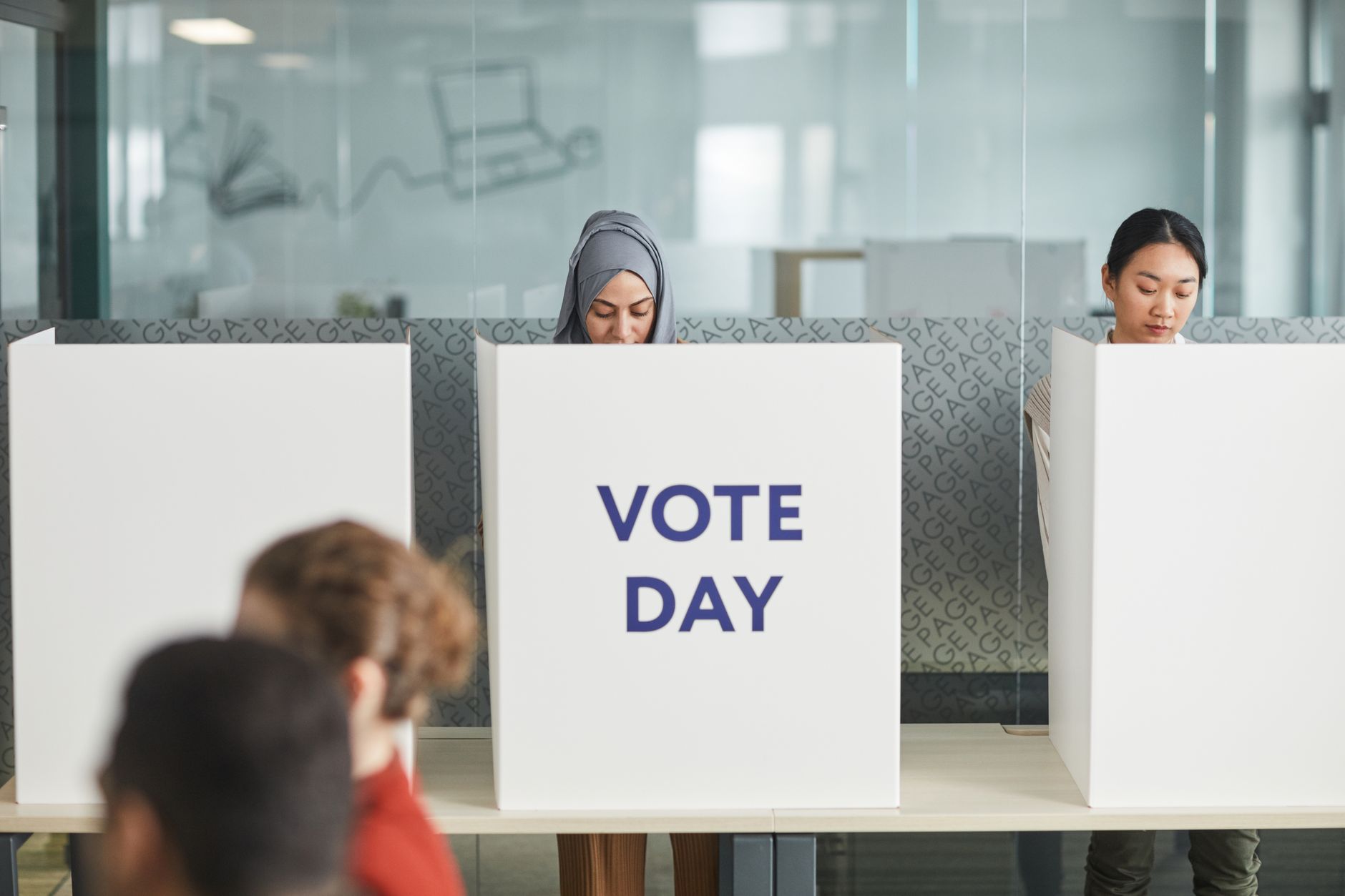
Imagen principal:Edmond Dantès / Pexels
Protección contra fraudes electorales con IA: Pruebas de defensas antes de noviembre
As generative artificial intelligence matures into a pervasive tool for communication, democratic institutions face unprecedented pressure to secure electoral integrity. A recent analysis published by justsecurity.org examines the operational realities, systemic vulnerabilities, and emerging defensive measures deployed ahead of the pivotal November vote.
The intersection of advanced artificial intelligence and democratic voting processes has transformed from a speculative future scenario into an immediate operational challenge. Often framed as the second artificial intelligence election, the current cycle tests whether technological safeguards, regulatory frameworks, and institutional oversight can keep pace with scalable, automated manipulation. According to reporting from justsecurity.org, the core of the issue lies not merely in the existence of deepfakes or synthetic text generation, but in the systematic erosion of baseline trust required for functional civic participation. This investigation examines how systemic vulnerabilities are being tested, the mechanics of modern disinformation campaigns, and the concrete measures being deployed to protect the electoral ecosystem.
Context and Background on the Second AI Election
The evolution of digital interference in democratic processes has shifted significantly over recent electoral cycles. While initial concerns centered on basic social media bot networks and manually coordinated foreign influence operations, the widespread availability of generative artificial intelligence has democratized the production of persuasive synthetic media. This shift marks what analysts designate as the second artificial intelligence election, where machine learning models are leveraged to automate the creation and distribution of text, audio, and video at unprecedented speed and scale.
Understanding this trajectory requires examining how baseline technology has outpaced historical regulatory guardrails. Earlier election cycles experienced localized experiments with synthetic media, but the current landscape is defined by commercial accessibility and commercialization of generative tools. According to justsecurity.org, these technological advancements have fundamentally altered the economics of disinformation, allowing bad actors to bypass traditional production bottlenecks and flood information ecosystems with micro-targeted narratives designed to suppress turnout or inflame social divisions.
The urgency surrounding these developments stems from the compounding nature of information degradation. When voters are repeatedly exposed to fabricated audio of candidates or synthetic news reports that mimic credible outlets, public skepticism expands beyond malicious content to legitimate reporting and official announcements. This environment complicates the efforts of election administrators who rely on clear, trusted channels of communication to convey vital logistical details about voting procedures, deadlines, and results certification.
Examining the Safeguards Being Tested Before November
In response to the escalating threats posed by synthetic media, technology platforms, civil society organizations, and election officials have introduced a suite of defensive safeguards designed to intercept harmful content before it achieves mass distribution. These measures encompass cryptographic provenance standards, watermarking initiatives, accelerated trust-and-safety enforcement protocols, and cross-sector information sharing partnerships aimed at identifying emerging attack vectors.
However, testing these safeguards under real-world conditions reveals significant operational friction. While major platform operators have publicly committed to labeling AI-generated content and restricting the generation of political figures, enforcement remains inconsistent across different social networks and messaging applications. As justsecurity.org points out, the decentralized and encrypted nature of many modern communication channels means that harmful synthetic media can circulate widely outside the reach of centralized moderation teams.
Furthermore, the defensive posture relies heavily on reactive mechanisms rather than proactive prevention. Detection tools struggle to keep pace with rapid iterations of open-source models that run locally on consumer hardware, bypassing commercial safety filters entirely. This technological gap places a heavy burden on human moderators and fact-checkers, who must manually verify and debunk claims in real time while operating under the intense time constraints of an active electoral cycle.
The Role of Cryptographic Provenance
One of the primary technical safeguards being evaluated involves content provenance standards developed by industry coalitions. These standards embed cryptographic metadata into digital files at the point of capture or creation, allowing verification systems to trace the lineage of an image, video, or audio clip. While promising in theory, implementation hurdles remain high. Legacy capture devices lack this technology, and bad actors can easily strip metadata or re-encode media to evade verification checks.
Platform Policy Enforcement and Friction
Technology companies have attempted to build friction into their generation tools by implementing rigid guardrails against political deepfakes. Yet, as justsecurity.org highlights, malicious actors routinely exploit loopholes in commercial application programming interfaces or transition to unaligned open-source models. The resulting patchwork of corporate policies creates varying degrees of protection depending on which platform a voter happens to use.
What Just Security Reports Regarding AI Vulnerabilities
The analysis provided by justsecurity.org details specific structural vulnerabilities that threaten the integrity of the electoral process. Rather than focusing solely on sensational scenarios like high-profile deepfakes of national candidates, the reporting underscores the insidious threat of localized voter suppression campaigns driven by automated text and targeted micro-messaging. These campaigns exploit granular demographic data to feed specific communities false information regarding polling place closures, identification requirements, or voting dates.
Another critical vulnerability identified in the reporting involves the exploitation of administrative communication channels. Local election offices, which often operate with limited cybersecurity resources and outdated IT infrastructure, represent attractive targets for disruption. Attackers can leverage synthetic voice cloning and spear-phishing techniques to impersonate election officials, issuing fraudulent directives to poll workers or sowing confusion among local media outlets during critical reporting windows.
The cumulative effect of these vulnerabilities is an asymmetric information environment where the cost of generating disinformation is near zero, while the cost of verifying, debunking, and repairing reputational damage is exceptionally high. Justsecurity.org emphasizes that this dynamic threatens to overwhelm the institutional capacity designed to protect the democratic process, forcing defenders into a perpetual state of triage.
| Threat Vector | Operational Mechanism | Current Defensive Countermeasure | Identified Limitation |
|---|---|---|---|
| Synthetic Audio Impersonation | Cloning candidate voices to fabricate controversial statements or emergency declarations. | Audio authentication tools and rapid-response fact-checking desks. | Detection models lag behind real-time distribution on encrypted networks. |
| Localized Voter Suppression | Deploying automated text campaigns with false logistical data to specific precincts. | Enhanced platform monitoring and partnerships with election clerks. | Decentralized messaging apps impede effective centralized enforcement. |
| Administrative Spear-Phishing | Using AI-generated communications to impersonate election officials and disrupt logistics. | Staff cybersecurity training and multi-factor authentication protocols. | Varying resource levels across thousands of independent local jurisdictions. |
The Mechanics of Modern Disinformation Campaigns
To evaluate the efficacy of current safeguards, it is necessary to examine the operational mechanics that modern disinformation campaigns employ. Contemporary operations are rarely crude, one-off fabrications; instead, they operate as sophisticated, multi-stage campaigns designed to exploit psychological biases and amplify existing societal fractures. The integration of artificial intelligence allows these campaigns to scale personalization, tailoring narratives to resonate with specific sub-cultures, ideological factions, or geographic regions.
The initial stage of a campaign frequently involves the seeding of synthetic assets within fringe online communities or compromised accounts. Once the material gains initial traction or emotional resonance, coordinated amplification networks—often combining automated bots with human actors—push the content into mainstream information feeds. By the time fact-checkers or platform moderators flag the material, the core narrative has already been internalized by vulnerable target audiences, illustrating the persistent challenge of the proverbial “first-mover advantage” in information warfare.
Furthermore, modern campaigns frequently utilize a strategy known as “liar’s dividend.” When the public becomes aware that deepfakes and synthetic media are prevalent, bad actors and politicians alike can easily dismiss genuine, documented evidence of wrongdoing as artificial fabrications. As reported by justsecurity.org, this erosion of shared factual consensus undermines accountability mechanisms across the board, making it increasingly difficult for observers to distinguish between verified reporting and malicious deception.
Institutional Responses and Defensive Measures
Defending the electoral ecosystem requires coordinated action across federal agencies, state and local election offices, independent media organizations, and technology platforms. Institutional responses have increasingly focused on information-sharing frameworks that allow rapid dissemination of threat intelligence. When a novel disinformation technique or coordinated campaign is detected in one jurisdiction, alerting mechanisms are designed to notify peers across the country to prevent replication.
At the state and local levels, election administrators have established dedicated rapid-response teams tasked with monitoring local information ecosystems and issuing timely, authoritative corrections to false rumors. These efforts are supported by federal cybersecurity agencies that provide vulnerability assessments, technical guidance, and infrastructure monitoring to secure voter registration databases and tabulation networks against malicious intrusion.
However, institutional coordination is frequently hampered by bureaucratic friction, jurisdictional boundaries, and legal constraints regarding free expression. Government agencies must carefully navigate First Amendment protections, ensuring that efforts to combat foreign and domestic disinformation do not inadvertently infringe upon legitimate political speech or public discourse. Balancing robust security with constitutional safeguards remains a delicate and ongoing institutional challenge.
Evaluating the Preparedness of Election Infrastructure
Assessing overall electoral preparedness heading into November requires looking beyond software filters and examining the human and physical infrastructure underpinning the vote. Thousands of local election officials, many of them part-time workers or volunteers, sit on the front lines of defense against both physical disruption and informational attacks. Their ability to recognize and deflect AI-enabled social engineering attempts is a critical metric of national resilience.
Training programs have expanded significantly since previous election cycles, incorporating scenario-based simulations that train poll workers and administrative staff to identify deepfakes, synthetic phishing attempts, and coordinated rumors designed to disrupt operations. Yet, resource disparities remain a glaring weakness. While large metropolitan counties may possess dedicated communications staff and advanced cybersecurity tools, rural and underfunded jurisdictions often lack the capacity to maintain constant vigilance against sophisticated digital threats.
As noted by justsecurity.org, bridging this resource gap is essential for ensuring a uniform baseline of security nationwide. An adversary seeking to undermine confidence in an election outcome does not need to compromise a secure federal system; targeting the weakest link in a decentralized local infrastructure can yield disproportionate psychological and political impact.
Practical Guidance for Voters and Observers
In an environment saturated with synthetic media and automated deception, individual media literacy serves as a vital line of defense. Voters and observers must adopt a posture of critical verification, particularly when encountering emotionally charged content designed to provoke outrage, fear, or immediate action regarding voting procedures.
- Verify source credibility by checking established, non-partisan news organizations and official government portals rather than relying solely on social media forwards.
- Inspect audio and video for unnatural visual artifacts, abrupt cuts, robotic intonation, or lighting inconsistencies that often betray synthetic generation.
- Confirm critical logistical details—such as polling place locations, registration deadlines, and ID requirements—directly through official state or local election websites.
- Exercise heightened skepticism toward sensational content that lacks corroboration from multiple independent reporting outlets.
- Avoid sharing unverified media or rumors that appear designed to delegitimize election processes or discourage participation.
Preguntas Frecuentes
What defines the second artificial intelligence election?
The second artificial intelligence election refers to the current electoral cycle where generative machine learning models are widely accessible, enabling the rapid, automated production and distribution of synthetic text, audio, and video designed to influence public opinion and manipulate information ecosystems.
What are the primary vulnerabilities highlighted by Just Security?
Reporting from justsecurity.org emphasizes threats related to localized voter suppression campaigns, automated micro-targeting of false logistical information, and spear-phishing attacks utilizing synthetic voice cloning to impersonate election officials and disrupt administrative workflows.
How do cryptographic provenance standards work?
Cryptographic provenance standards embed verifiable metadata into digital media files at the point of capture, allowing automated systems to track the origin and history of an image or video to determine whether it has been synthetically altered.
What is the liar’s dividend?
The liar’s dividend is a psychological and political phenomenon where the widespread existence of deepfakes allows bad actors to dismiss authentic, documented evidence of wrongdoing by falsely claiming that the genuine evidence is a synthetic fabrication.
How can voters protect themselves against AI-driven disinformation?
Voters can protect themselves by cross-checking sensational claims with established news outlets, verifying voting logistics directly through official government election websites, and maintaining healthy skepticism toward unverified social media content designed to provoke intense emotional reactions.
Lista de Señales de Alerta
- Audio or video files featuring abrupt cadence changes, unnatural visual blending, or lack of independent media corroboration.
- Urgent, high-pressure messages demanding immediate action regarding voter registration status or polling place changes from unverified senders.
- Social media accounts displaying rapid follower growth, automated posting patterns, and a singular focus on inflammatory political narratives.
- Lack of verifiable cryptographic metadata or clear chain-of-custody markers on viral multimedia clips depicting controversial candidate statements.
- Claims regarding election irregularities or administrative failures that circulate exclusively on unmoderated messaging apps without official confirmation.