
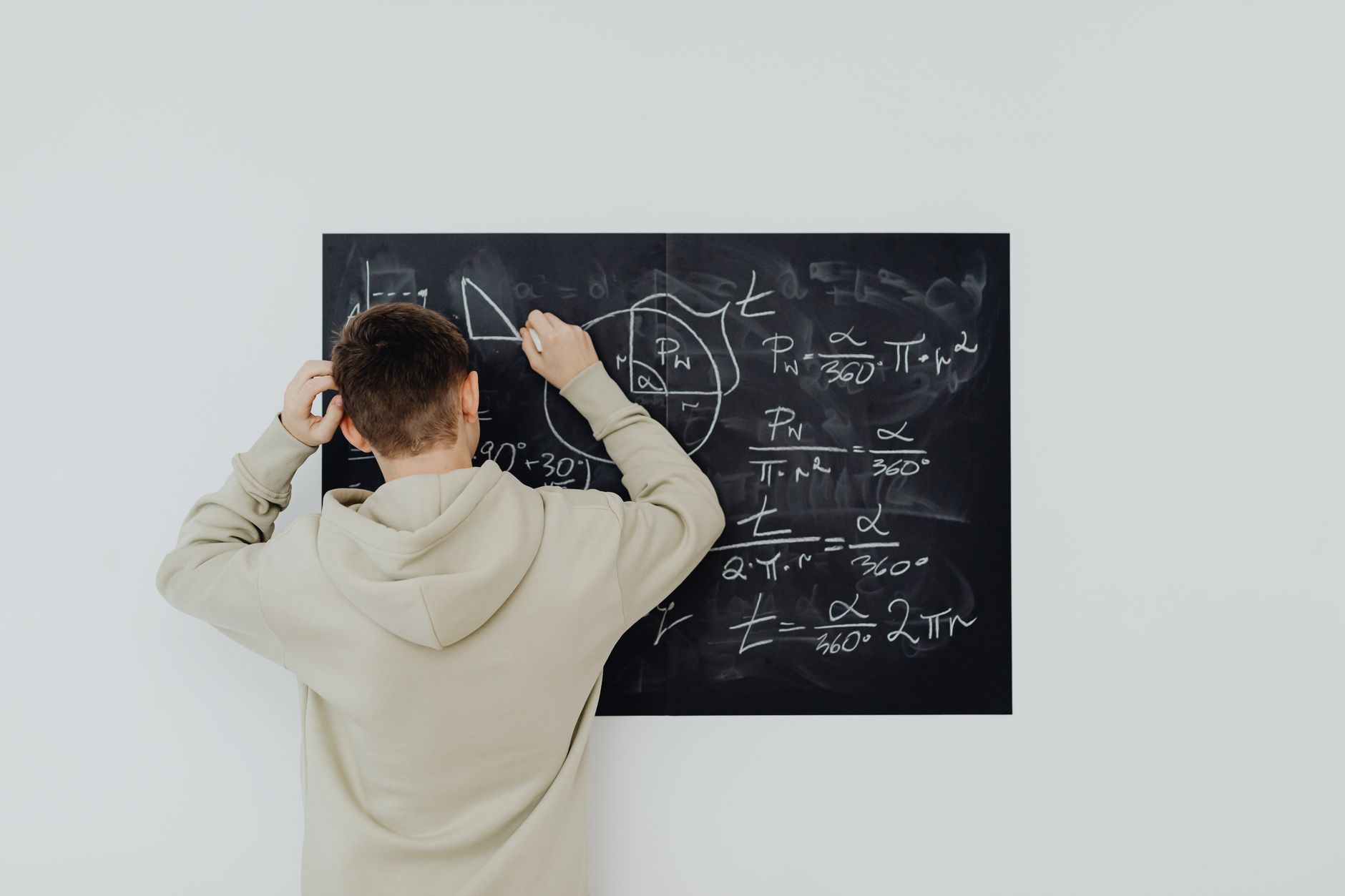
Imagen principal:https://kaboompics.com/ / Pexels
Reclamación sobre problemas de matemáticas de OpenAI para 2026: Verificación de datos de Tech-Insider
Este informe investigativo examina las afirmaciones digitales en circulación sobre capacidades avanzadas de inteligencia artificial y métricas matemáticas. Utilizando metodologías rigurosas de verificación, analizamos los patrones de difusión y las pruebas subyacentes de los anuncios tecnológicos publicados en el ecosistema mediático.
En el dinámico panorama de la periodismo de inteligencia artificial, las afirmaciones extraordinarias sobre las capacidades algorítmicas aparecen con frecuencia en publicaciones digitales. Un ejemplo destacado surgió cuando tech-insider.org publicó un artículo titulado *OpenAI afirma haber resuelto más de 100 problemas matemáticos en 24 días [2026]*. A medida que los sistemas de inteligencia artificial se implementan cada vez más para resolver tareas complejas de razonamiento y cómputo, evaluar la veracidad, los métodos y el contexto de difusión de estos anuncios es vital para la comprensión pública y la responsabilidad corporativa. Esta investigación analiza la documentación disponible, evalúa los estándares de verificación y desglosa cómo se reportan los hitos técnicos en los canales de medios modernos.
Contexto y antecedentes de la reclamación tecnológica de OpenAI
El anuncio sobre los modelos de inteligencia artificial que resuelven problemas matemáticos avanzados llega en un período de intensa competencia comercial entre los principales desarrolladores tecnológicos. Los participantes de la industria destacan con frecuencia los logros en benchmarks para señalar su superioridad tecnológica ante consumidores, inversores y organismos reguladores. En este entorno, las afirmaciones sobre capacidades de razonamiento automatizado tienen un gran peso económico y científico, ya que la resolución de problemas matemáticos se considera tradicionalmente un indicador clave de simulación cognitiva avanzada en sistemas de software.
Según el informe publicado por tech-insider.org, el núcleo del anuncio gira en torno a un hito cuantitativo específico: una agregación reportada de más de cien problemas matemáticos resueltos en un período temporal comprimido de menos de un mes. Este tipo de afirmaciones suele surgir de comunicados de prensa corporativos, documentos internos o demostraciones públicas. Sin embargo, rastrear el origen exacto de estas métricas requiere distinguir entre la validación científica revisada por pares y los mensajes promocionales corporativos.
Al evaluar las afirmaciones tecnológicas de este tipo, los periodistas de investigación deben examinar las definiciones operativas empleadas por la entidad que las anuncia. ¿Qué constituye un problema matemático resuelto dentro de un marco de pruebas automatizadas? ¿Se trata de teoremas novedosos, preguntas de competencias académicas estandarizadas o variaciones de problemas existentes dentro del corpus de entrenamiento? Sin una documentación transparente de los parámetros de prueba, las afirmaciones cuantitativas sobre la competencia matemática arriesgan exagerar las capacidades de generalización autónoma de los modelos de lenguaje grandes.
Análisis del informe de Tech-Insider.Org sobre más de 100 problemas matemáticos
Análisis de la Difusión Digital
The report from tech-insider.org, indexed via digital news aggregation feeds on Tuesday, September 22, 2026, serves as a primary vehicle for publicizing the OpenAI math problems claim. An analysis of the text reveals how technical assertions are packaged for general consumption. The framing of the article emphasizes speed and scale—specifically highlighting the numeric threshold of one hundred problems and the twenty-four-day timeframe—to generate reader engagement and underscore the velocity of artificial intelligence development.
Analizando las métricas subyacentes
When media outlets amplify corporate metrics without independent corroboration, readers receive an incomplete picture of technological reality. The tech-insider.org coverage presents the reported milestone as a straightforward engineering triumph. Yet, investigative analysis necessitates asking whether the underlying data has been subjected to independent replication. In the context of the reported 100+ math problems, the distinction between a controlled demonstration and generalized, out-of-distribution mathematical reasoning remains a critical investigative boundary.
The Role of Aggregators in Tech Journalism
Digital reporting ecosystems frequently rely on rapid syndication, where specific claims are amplified across multiple secondary blogs and news portals without independent verification. The dissemination of the tech-insider.org article illustrates this systemic vulnerability. When a single publication relays a manufacturer’s internal benchmark as an objective industry fact, secondary networks often echo the assertion, creating an illusion of widespread consensus and independent confirmation where none actually exists.
¿Qué Revela el Material Original Sobre la Línea Temporal de 24 Días?
Temporal claims—such as the twenty-four-day window cited in the tech-insider.org report—are frequently utilized in technology journalism to convey rapid acceleration and iterative momentum. However, a strict examination of the available source material demonstrates that such timelines often obscure the months or years of foundational research, dataset curation, and infrastructure development that precede a public announcement.
The tech-insider.org publication highlights the twenty-four-day span as a notable period of intensive problem-solving activity. From a rigorous investigative perspective, it is necessary to question whether this window represents the total training duration, the evaluation phase, or merely the public release cycle of a pre-trained model interacting with a specific test suite. Conflating the timeline of an evaluation benchmark with the actual developmental history of an artificial intelligence architecture misrepresents the mechanics of machine learning engineering.
Furthermore, compressed timelines reported in digital news items rarely account for resource expenditure, compute cluster scales, or human-in-the-loop fine-tuning. By isolating a twenty-four-day period as the primary metric of success, the coverage abstracts away the vast energy, financial, and computational inputs required to achieve benchmark performance. Documenting these omitted variables is essential for establishing an accurate record of technological progress.
Evaluación de los estándares de verificación en las afirmaciones tecnológicas de IA
The standards governing the verification of artificial intelligence claims differ significantly from traditional scientific publishing. While academic journals require rigorous peer review, reproducible codebases, and open data sharing, corporate announcements often rely on proprietary demonstrations and closed testing environments. This dichotomy creates substantial challenges for fact-checkers and investigative journalists attempting to verify assertions published by outlets like tech-insider.org.
To establish credibility, technological reporting must adhere to several baseline verification principles. First, claims of benchmark superiority should be accompanied by publicly accessible evaluation datasets that allow third-party researchers to reproduce the stated results. Second, the criteria used to judge success—such as the definition of a solved math problem—must be explicitly defined rather than left to ambiguous corporate interpretation. The absence of these standards in standard digital reporting necessitates a posture of healthy skepticism.
| Reclamar Característica | Corporate Promotional Framing | Rigorous Evidence Standard |
|---|---|---|
| Problem Definition | Broad assertion of solving “advanced math problems” | Itemized list of specific theorems, proofs, or competition grades |
| Timeline Accuracy | Highlighting a rapid 24-day sprint | Comprehensive history including prior foundational training epochs |
| Reproducibilidad | Proprietary demonstration in a controlled environment | Open-source weights, prompts, and verifiable evaluation scripts |
| Verificación Independiente | Uncorroborated relay of internal metrics | Peer-reviewed replication by disinterested third-party academics |
En el contexto institucional y experto que rodea el anuncio
Placing the tech-insider.org report into broader institutional context requires examining how independent mathematicians, computer scientists, and epistemic watchdogs view automated reasoning benchmarks. While artificial intelligence models have demonstrated proficiency in pattern recognition and syntactical generation, experts frequently caution against conflating statistical probability matching with genuine mathematical comprehension.
Mathematical problem-solving involves formal logic, proof verification, and the ability to detect subtle fallacies—domains where language models have historically exhibited systematic vulnerabilities, including hallucinations and logical inconsistencies. When an outlet reports that an artificial intelligence system has solved over one hundred problems, expert consensus typically demands clarification on whether the model verified its own proofs using formal theorem provers (such as Lean or Isabelle) or merely generated text that resembled a correct human-written solution.
The failure of mainstream digital reporting to engage with these technical nuances highlights a persistent gap in tech journalism. Publications that prioritize speed over depth often omit the critical caveats articulated by research scientists, leaving readers with an exaggerated perception of artificial intelligence capabilities. Documenting this discrepancy is a central function of evidence-based investigative journalism.
Lista de señales de alerta para evaluar afirmaciones sobre avances en IA
When evaluating breaking reports regarding artificial intelligence capabilities—such as those examined in this investigation—readers, editors, and researchers should look out for specific warning signs that distinguish substantiated scientific advancements from marketing-driven hype:
- The absence of links to peer-reviewed papers, pre-print servers, or reproducible code repositories.
- Heavy reliance on corporate press releases or unverified internal benchmarking data as the sole source of facts.
- Vague quantitative milestones (e.g., “100+ problems”) without clear definitions of difficulty levels or testing criteria.
- Sensationalized temporal framing (e.g., “solved in 24 days”) that obscures the long-term cumulative nature of machine learning development.
- Lack of independent commentary from disinterested academic experts or domain specialists not affiliated with the developing company.
- Proprietary testing environments that prevent external researchers from auditing the prompts, data contamination, or evaluation conditions.
Conclusiones y Futuras Implicaciones para el Periodismo Tecnológico
The dissemination of the OpenAI math problems claim by tech-insider.org underscores the ongoing challenges facing digital technology reporting. As artificial intelligence systems become deeply integrated into public discourse, the journalistic standards applied to corporate announcements must evolve. Uncritical repetition of internal metrics misinforms the public, distorts market understanding, and undermines the credibility of the broader technology press.
Moving forward, establishing a rigorous, evidence-first approach to covering artificial intelligence requires demanding transparency, scrutinizing quantitative timelines, and consulting independent domain experts before amplifying sensational milestones. By maintaining these analytical standards, investigators and fact-checkers can help ensure that public discourse remains grounded in verifiable evidence rather than promotional hyperbole.
Preguntas Frecuentes
What specific claim was made by tech-insider.org regarding OpenAI?
The tech-insider.org report asserted that OpenAI systems successfully resolved over one hundred mathematical problems within a compressed twenty-four-day timeframe during 2026.
Why is independent verification important for AI benchmark claims?
Independent verification ensures that performance metrics are reproducible, free from data contamination, and evaluated under standardized conditions rather than closed, promotional environments controlled by the developer.
What distinguishes corporate press releases from peer-reviewed scientific studies?
Peer-reviewed studies require rigorous third-party auditing, open methodologies, and formal replication, whereas corporate press releases are designed primarily for public relations and commercial positioning.
How do media aggregators contribute to the spread of unverified tech claims?
Aggregators often rapidly syndicate original reporting without conducting independent fact-checking, creating an echo chamber that amplifies corporate claims as established facts.
What role do theorem provers play in verifying mathematical AI claims?
Formal theorem provers provide rigorous, machine-checkable verification of mathematical proofs, helping to distinguish between genuine logical deduction and probabilistic text generation.